
Chào anh chị em,
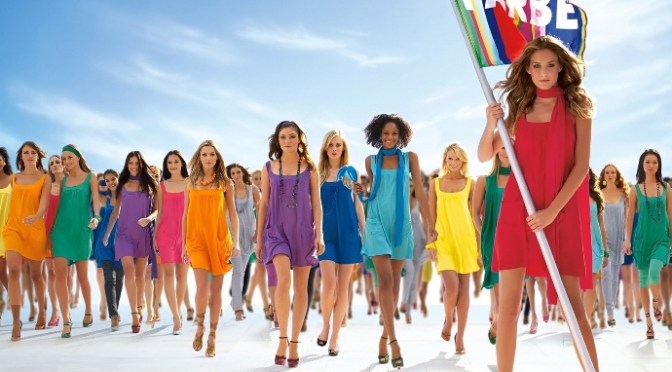
Các bạn vào các siêu thị mua sắm áo quần thì sẽ thấy kỹ nghệ thời trang phong phú và cạnh tranh kinh khủng – đủ mọi tiệm thời trang lớn nhỏ với đủ mọi nhãn hiệu, cho đủ mọi loại khách hàng, đủ mọi lứa tuổi, và mọi điều kiện kinh tế – giàu nghèo, trung bình, đại gia kinh tế – và bạn có thấy cơ quan nào của nhà nước quản lý hay lèo lái kỹ nghệ thời trang hay không? Đương nhiên là có các cơ quan nhà nước lo quản lý các vấn đề chung chung của mọi công ty như việc buôn bán thành thật, không gian dối, thông tin về các sản phẩm độc hại đến sức khỏe v.v… Nhưng nói chung về thời trang thì chẳng ai phải lo quản lý và lèo lái; dù vậy kỹ nghệ thời trang vẫn phát triển vượt bực, vì kỹ nghệ thời trang được tự do phát triển, và do đó mọi công ty tự do cạnh tranh ì đùng. Khi có nhiều cạnh tranh thì tự nhiên sẽ có nhiều sản phẩm tốt với giá cả phải chăng, cho mọi loại khách hàng trên thị trường. Tóm lại, kỹ nghệ thời trang là một thị trường rất tự do – tự do cạnh tranh, tự do sản xuất, tự do mua bán – cho nên thị trường thời trang luôn cực kỳ phong phú.
Bây giờ, hãy liếc qua tôn giáo một chút. Đây là bài báo mới của Vietnam Net (Global) ngày Aug. 4, 2026 với tiêu đề “Kiến tạo thể chế để tôn giáo đồng hành cùng dân tộc.” Mình chỉ trích dẫn vài câu đây đó trong bài để nói sơ qua điều mình muốn nói về thị trường hoạch định và thị trường tự do:
- 71 năm – Hành trình của bản lĩnh và trách nhiệm
Ngày 2/8/1955, Ban Tôn giáo Chính phủ được thành lập trong bối cảnh đất nước còn nhiều khó khăn, thử thách. - Bước vào thời kỳ hòa bình, đổi mới và phát triển, ngành tiếp tục phát huy vai trò tham mưu, quản lý nhà nước về tín ngưỡng, tôn giáo; hướng dẫn các tổ chức tôn giáo thực hiện phương châm hành đạo gắn bó, đồng hành cùng dân tộc. Qua đó, ngành ngày càng khẳng định vai trò là cầu nối tin cậy giữa Đảng, Nhà nước với các tổ chức tôn giáo.
- Nếu trước năm 1990 cả nước chỉ có 3 tổ chức tôn giáo được công nhận thì đến nay Nhà nước đã công nhận và cấp chứng nhận đăng ký hoạt động cho 43 tổ chức thuộc 16 tôn giáo, với khoảng 27,7 triệu tín đồ (chiếm khoảng 27% dân số), hơn 61.000 chức sắc, gần 145.000 chức việc và gần 30.000 cơ sở thờ tự. [TĐH: chỉ 27% dân số VN mà thôi, thế 73% kia thì sao? Trong khi 95% dân số VN có tín ngưỡng].
- Nếu vai trò cầu nối là dấu ấn xuyên suốt chặng đường 71 năm xây dựng và phát triển, thì công tác hoàn thiện thể chế chính là điểm nhấn nổi bật của ngành trong giai đoạn hiện nay -tham mưu xây dựng Luật Tín ngưỡng, tôn giáo năm 2016 đến Luật Tín ngưỡng, tôn giáo (sửa đổi) năm 2026.
- Bên cạnh các nhiệm vụ thường xuyên, Ban Tôn giáo Chính phủ sẽ tiếp tục triển khai hiệu quả các kết luận của Bộ Chính trị, Ban Bí thư và các đề án của Thủ tướng Chính phủ liên quan đến công tác tín ngưỡng, tôn giáo… đồng thời tổ chức tổng kết công tác quản lý nhà nước đối với hoạt động đào tạo của các tôn giáo …để đề xuất hoàn thiện cơ chế, chính sách phù hợp với yêu cầu phát triển trong giai đoạn mới.
Chúng ta có thể thấy khác với thị thường trang phục, “thị trường” tôn giáo được quản lý chặt chẽ với một hệ thống hành chính, pháp lý và chính trị cực lớn. Mình chẳng muốn nói gì về chính trị, mà chỉ muốn nói một chân lý về thị trường: Nếu ta muốn một thị trường phát triển tốt thì hãy để nó tự do tự phát triển. Càng quản lý chặt chẽ, thị trường càng ngợp thở và không phát triển được.
“Thị trường” tôn giáo cũng thế. Muốn các tôn giáo phát triển tốt thì hãy để tôn giáo phát triển tự do. Càng quản lý nhiều thì tôn giáo càng chết ngợp.
Đây là quy luật kinh tế, nhưng các hoạt động phi kinh tế của con người cũng đều được chi phối y hệt như kinh tế – như xã hội dân sự, các hoạt động từ thiện, giáo dục (cả trường công lẫn trường tư), nghệ thuật trình diễn (như âm nhạc), thể thao…
Càng để thị trường được tự do vùng vẫy và càng ít quản lý, thì thị trường càng có nhiều cạnh tranh; mà càng nhiều cạnh tranh thì mọi sản phẩm đểu có chất lượng cao và giá cả thấp (cho loại người tiêu thụ mà sản phẩm đó nhắm vào).
Tôn giáo không nằm ngoài quy luật kinh tế này. Muốn tôn giáo phát triển tốt thì hãy để tôn giáo phát triển tự do như rừng rậm.
Nam-mo A-di-đà Phật. God loves.
Với yêu thương,
Hoành
o0o
The fashion industry and managing religions
Dear Brothers and Sisters,
When you visit shopping malls to buy clothes, you witness a fashion industry that is incredibly diverse and fiercely competitive—featuring shops of all sizes and brands catering to every type of customer, age group, and economic background, from the average consumer to the ultra-wealthy. Yet, do you see any state agency actively managing or steering the fashion industry itself? Of course, there are government bodies that oversee general business isues like fair trade practices, monitor the market for health hazards, and so on. However, the fashion industry requires no direct state management or steering; it thrives precisely because it enjoys the freedom to develop, allowing companies to compete vigorously. Intense competition naturally leads to a wide array of quality products at reasonable prices for all market segments. In short, the fashion industry operates as a truly free market—characterized by free competition, production, and trade—resulting in an incredibly diverse marketplace.
Now, let us briefly turn our attention to religion. Here is a recent article from VietnamNet (Global) dated August 4, 2026, titled “Establishing institutional frameworks for religion to walk alongside the nation.” I would like to quote a few lines from my translation of the article to illustrate my point regarding planned markets versus free markets:
- 71 Years – A Journey of Courage and Responsibility
On August 2, 1955, the Government Committee for Religious Affairs was established amidst a period of significant national hardship and challenges.
- Entering the era of peace, renewal, and development, the sector has continued to fulfill its role in providing counsel and exercising state management over beliefs and religions; it guides religious organizations in implementing a guiding principle of practice that remains closely aligned with and accompanies the nation. In doing so, the sector increasingly affirms its role as a trusted bridge between the Party and State and religious organizations.
- While only three religious organizations were recognized nationwide prior to 1990, the State has now recognized and granted operational registration certificates to 43 organizations across 16 religions, comprising approximately 27.7 million followers (about 27% of the population), over 61,000 clergy members, nearly 145,000 religious functionaries, and nearly 30,000 places of worship. [TĐH: This accounts for only 27% of Vietnam’s population; what about the remaining 73%? Especially considering that 95% of the population holds some form of belief or spiritual practice.]
- Acting as a bridge has been the defining characteristic throughout its 71-year history of development, and now the refinement of institutional frameworks stands out as the sector’s key highlight in the current period—ranging from advising on the 2016 Law on Belief and Religion to the upcoming (amended) Law on Belief and Religion scheduled for 2026.
- Alongside its routine duties, the Government Committee for Religious Affairs will continue to effectively implement the conclusions of the Politburo and the Secretariat, as well as the Prime Minister’s schemes regarding belief and religious affairs. Simultaneously, it will review state management of religious training activities to propose policy and mechanism refinements suited to the development requirements of the new era.
It is evident that, unlike the clothing market, the religious “market” is tightly regulated by a massive administrative, legal, and political apparatus. I have no desire to discuss politics; I simply wish to state a fundamental market truth: for a market to thrive, it must be allowed to develop freely and organically. Excessive regulation stifles the market, preventing it from growing.
The religious “market” is no exception. For religions to flourish, it must be allowed to develop freely. Excessive regulation stifles it.
This economic principle also works for all human activities outside the economic sphere—such as civil society, charity, education (both public and private schools), the performing arts (like music), sports…— all are governed by the very same principle.
The freer is the market and the less it is regulated, the greater is the competition; and the fiercer the competition, the higher is the quality and the lower is the price of products (relative to groups of target consumers).
Religion is no exception to this economic rule. To see religion thrive, let it grow freely, like a wild forest.
Namo Amitabha Buddha. Deus diligit.
With compassion,
Hoành
o0o
© copyright 2026
Trần Đình Hoành
Permitted for non-commercial use
http://www.dotchuoinon.com

