
Anh nghĩ tôi là người dã man dốt nát
Và anh đã đi nhiều nơi
Tôi đoán là phải vậy
Nhưng tôi không thể thấy
Nếu tôi là người man dã
Tai sao có nhiều điều anh lại không biết?
Anh không biết…
Anh nghĩ là anh làm chủ bất kì miếng đất nào anh đạp chân lên
Quả Đất chỉ là một vật chết, anh có thể nói
Nhưng tôi biết mỗi tảng đá, mỗi gốc cây, mỗi sinh vật
Có một đời sống, một linh hồn, một tên tuổi
Anh nghĩ là chỉ có một loại người duy nhất là người
Là người nhìn giống anh và suy nghĩ giống anh
Nhưng nếu anh theo vết chân của người xa lạ
Anh sẽ chẳng học được rằng anh không biết cái anh không biết
Anh đã bao giờ nghe tiếng tru của sói đến ánh trăng ngô xanh (*)
Hay hỏi mèo rừng gầm gừ tại sao lại gầm gừ?
Anh có thể hát với tất cả mọi giọng của núi rừng?
Anh có thể vẽ với tất cả mọi màu của gió?
Anh có thể vẽ với tất cả mọi màu của gió?
Đến đây chạy trên những lối nhỏ lẫn khuất trong rừng
Đến đây nếm những trái dâu ngọt nắng của Đất
Đến đây lăn lộn giữa những phong phú quanh anh
Và chỉ một lần thôi, hãy tự hỏi tất cả đáng giá bao nhiêu
Mưa bão và dòng sông là các anh của tôi
Bồ nông và rái cá là bạn của tôi
Và tất cả chúng ta liên kết với nhau
Trong một vòng tròn, một vòng lăn không bao giờ hết
Cây hòe có thể cao bao nhiêu?
Nếu anh chặt nó đi, anh sẽ chẳng bao giờ biết
Và anh sẽ không bao giờ nghe triếng sói tru đến ánh trăng ngô xanh
Vì dù chúng ta da trắng hay da đồng
Ta cần hát với tất cả mọi giọng của núi rừng
Ta cần vẽ với tất cả mọi màu của gió
Anh có thể làm chủ Đất và vẫn
Làm chủ chỉ Đất cho đến khi
Anh có thể vẽ với tất cả mọi màu của gió

Chú thích: (*) “Blue corn moon”, trăng ngô xanh, theo chính tác giả Stephen Schwartz, chẳng có nghĩa gì cả. Người da đỏ gọi “tháng” là “moon”. Ngày rằm trăng tròn là corn moon, nếu đó là mùa bắp/ngô. “Green corn moon” là ngày rằm tháng 8 (dương lịch) Shwartz thấy chữ “green” không hợp trong câu, nên đổi thành “blue corn moon”. Chẳng có nghĩa gì cả. Ở đây ta dịch là “trăng ngô xanh” cho đẹp, nhưng cũng chẳng có nghĩa gì cả. 🙂 Nhưng nghệ thuật thường chẳng cần nghĩa lý.
Sau đây là câu trả lời nguyên thủy của tác giả:
- http://answers.yahoo.com/question/index?qid=20080407061034AAgjAfK
Dear Sir: I have been trying to find what a Blue Corn Moon represents in Indian Lore. Can you please Help me with this information? Thank you, Lloyd Sparks
Dear Mr. Sparks: Thanks for your interest. I feel somewhat guilty to have to tell you that the phrase “blue corn moon” has no actual meaning in Indian lore. I made it up because I liked the sound of it. Its basis is this: In preparation for doing the lyrics to POCAHONTAS, I read a lot of Native American poetry. One of the phrases I came across, in a love poem, was : “I will come to you in the moon of green corn.” (The Native Americans called their months “moons” and named them according to something that happened seasonally, such as the arrival of green corn.) The phrase stuck in my head, but I didn’t think the lyric : “Have you ever heard the wolf cry to the green corn moon” really worked, because of the association of the moon and green cheese, plus the “ee” sound in it, etc. So I changed it to blue corn moon, which I thought had a nice resonance to it because of the phrase “blue moon” and the fact that there are things like blue corn tortillas, etc. Even though it’s not authentic, and actually implies Southwestern tribes rather than the Northeastern Algonkians of Pocahontas, I used it in the lyric and it obviously served me very well. This is probably far more than you wanted to know, but that’s the derivation of the phrase, for whatever it’s worth to you.
Sincerely,
Stephen Schwartz
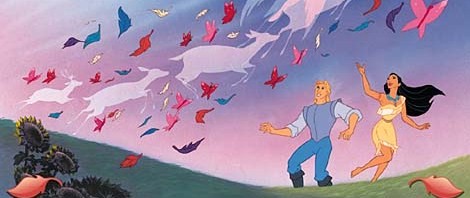
Colors of the Wind, do Alan Menken viết nhạc, Stephen Schwartz viết lời, và Juhy Kuhn hát, được cả giải Oscar lẫn giải Golden Globe 1995 về Bản Nhạc Nguyên Thủy Hay Nhất (Best Original Song) từ phim hoạt họa Potahontas của Disney. Bản nhạc cũng thắng giải Grammy về Bản Nhạc Hay Nhất Viết Cho Phim.
Colors of the Wind trình bày cái nhìn của thổ dân da đỏ rằng trái đất là một vật sống nơi loài người liên kết với tất cả mọi loài trong thiên nhiên.
Phim Pocahontas dựa trên truyện có thật về công chúa Pocahontas, con của tù trưởng bộ lạc Powhatan, yêu một đại úy da trắng trên John Smith, và cả hai sau nhiều khó khăn đã chận được cuộc chiến giữa các người di dân da trắng từ Anh quốc và bộ lạc Powhatan ở vùng ngày nay là tiểu bang Virginia.
Potahontas – Colors of the Wind – Judy Kuhn
Colors of the Wind
Music: Alan Menken
Lyrics: Stephen Schwartz
Singing: Judy Kuhn
You think I’m an ignorant savage
And you’ve been so many places
I guess it must be so
But still I cannot see
If the savage one is me
How can there be so much that you don’t know?
You don’t know …
You think you own whatever land you land on
The Earth is just a dead thing you can claim
But I know every rock and tree and creature
Has a life, has a spirit, has a name
You think the only people who are people
Are the people who look and think like you
But if you walk the footsteps of a stranger
You’ll learn things you never knew you never knew
Have you ever heard the wolf cry to the blue corn moon
Or asked the grinning bobcat why he grinned?
Can you sing with all the voices of the mountains?
Can you paint with all the colors of the wind?
Can you paint with all the colors of the wind?
Come run the hidden pine trails of the forest
Come taste the sunsweet berries of the Earth
Come roll in all the riches all around you
And for once, never wonder what they’re worth
The rainstorm and the river are my brothers
The heron and the otter are my friends
And we are all connected to each other
In a circle, in a hoop that never ends
How high will the sycamore grow?
If you cut it down, then you’ll never know
And you’ll never hear the wolf cry to the blue corn moon
For whether we are white or copper skinned
We need to sing with all the voices of the mountains
We need to paint with all the colors of the wind
You can own the Earth and still
All you’ll own is Earth until
You can paint with all the colors of the wind
 Đọt Chuối Non