All posts by Trần Đình Hoành

I am an attorney in the Washington DC area, with a Doctor of Law in the US, attended the master program at the National School of Administration of Việt Nam, and graduated from Sài Gòn University Law School. I aso studied philosophy at the School of Letters in Sài Gòn. . I have worked as an anti-trust attorney for Federal Trade Commission and a litigator for a fortune-100 telecom company in Washington DC. I have taught law courses for legal professionals in Việt Nam and still counsel VN government agencies on legal matters. I have founded and managed businesses for me and my family, both law and non-law. I have published many articles on national newspapers and radio stations in Việt Nam. In 1989 I was one of the founding members of US-VN Trade Council, working to re-establish US-VN relationship. Since the early 90's, I have established and managed VNFORUM and VNBIZ forum on VN-related matters; these forums are the subject of a PhD thesis by Dr. Caroline Valverde at UC-Berkeley and her book Transnationalizing Viet Nam. I translate poetry and my translation of "A Request at Đồng Lộc Cemetery" is now engraved on a stone memorial at Đồng Lộc National Shrine in VN. I study and teach the Bible and Buddhism. In 2009 I founded and still manage dotchuoinon.com on positive thinking and two other blogs on Buddhism. In 2015 a group of friends and I founded website CVD - Conversations on Vietnam Development (cvdvn.net). I study the art of leadership with many friends who are religious, business and government leaders from many countries. I have written these books, published by Phu Nu Publishing House in Hanoi: "Positive Thinking to Change Your Life", in Vietnamese (TƯ DUY TÍCH CỰC Thay Đổi Cuộc Sống) (Oct. 2011) "10 Core Values for Success" (10 Giá trị cốt lõi của thành công) (Dec. 2013) "Live a Life Worth Living" (Sống Một Cuộc Đời Đáng Sống) (Oct. 2023) I practice Jiu Jitsu and Tai Chi for health, and play guitar as a hobby, usually accompanying my wife Trần Lê Túy Phượng, aka singer Linh Phượng.

Tâm Xả – Upekkha – Equanimity

Chào anh chị em

Tâm Xả (Upekkha) trong Phật giáo là trạng thái tâm bình thản, buông xả, không luyến ái cũng không ghét bỏ, giữ sự quân bình trước mọi thăng trầm (được/mất, khen/chê, tôn vinh/dèm pha, vui/khổ).

Đây là yếu tố thứ 4 trong Tứ Vô Lượng Tâm (Từ-Bi-Hỷ-Xả), thể hiện sự thông suốt, chấp nhận thực tại mà không bám chấp hay thờ ơ.

Tứ Vô Lượng Tâm (Từ Bi Hỉ Xả ) gồm:

Từ (p. Metta, s. Maitri, e. Loving-kindness): Yêu thương, mong muốn mang lại hạnh phúc cho người khác.

Bi (p. s. Karuna. e. Compassion): Lòng trắc ẩn, muốn chia sẻ và xoa dịu nỗi đau của người khác. Continue reading Tâm Xả – Upekkha – Equanimity →

China isn’t chasing growth, it’s selling predictability in a fractured world

QUORA

Icon for China Focus

China Focus ·Posted by Catchjoey Mar 23

I remember a report reads that a fund manager said, “In geopolitics, everyone talks about risk, but money only cares about who can price it.” Watching the signals coming out of the China Development Forum 2026, that line suddenly feels less like a joke and more like a framework.

Held at Diaoyutai State Guesthouse just after China’s Two Sessions, the forum carried an unusually coherent message: in a world where geopolitical tensions, supply chain fragmentation, and protectionism are all intensifying, China is positioning itself not as the loudest player, but as the most predictable one. That distinction matters more than it sounds. In Washington’s policy language, uncertainty is often weaponized, through tariffs, export controls, and strategic ambiguity. In Beijing’s language, uncertainty is treated as something to be absorbed, managed, and reduced.

Continue reading China isn’t chasing growth, it’s selling predictability in a fractured world →

Lòng hỷ – Mudita – Sympathetic Joy

Chào anh chị em,

“Từ Bi Hỷ Xả” (Tứ Vô Lượng Tâm) thường được dịch sang tiếng Anh là “Four Immeasurables” hoặc “Four Sublime States”. Cụm từ này bao gồm 4 tâm thái: Từ (Loving-kindness), Bi (Compassion), Hỷ (Sympathetic Joy), và Xả (Equanimity).

Dưới đây là chi tiết từng từ:

Từ (p. Metta, s. Maitri, e. Loving-kindness): Yêu thương, mong muốn mang lại hạnh phúc cho người khác.

Bi (p. s. Karuna. e. Compassion): Lòng trắc ẩn, muốn chia sẻ và xoa dịu nỗi đau của người khác. Continue reading Lòng hỷ – Mudita – Sympathetic Joy →

Did ancient Vietnam ever have any sort of large empire?

QUORA

Profile photo for Tim Tran

Tim Tran · 

Vietnamese-born Chinese 1y

Some may refer to the kingdom of Xích Quỷ (2879–2524 BCE) established by King Kinh Dương, in which written records described it of this size:

Unfortunately, this is legendary, and not real. There is no evidence of Xích Quỷ’s existence or being this big. At most, the records written centuries later were referring to the Baiyue tribes as a whole. In reality, those tribes never formed a united nation.

Some may refer to the kingdom of Văn Lang (7th cent.–258 BCE) established by Lạc Long Quân, in which written records described it of this size:

Unfortunately, this is also legendary, and not real, with the same basis as Xích Quỷ’s. However, it was plausible that the kingdom of Văn Lang was real, just not this big, and was ruled by the Lạc Việt, of whom China and Vietnam have differing opinions on its location. According to official Vietnamese history, this was its actual size:

Continue reading Did ancient Vietnam ever have any sort of large empire? →

Tâm bất biến giữa dòng đời vạn biến – Unwavering heart amidst the ever-changing currents of life

Chào anh chị em,

Nếu mình gặp bão lụt, nước vào ngập nóc nhà, như chúng ta thấy thường xuyên nhiều nơi ở nước ta, thì chúng ta làm gì? Quýnh quáng và ngã ra chết hay sao?

Thực sự là người dân ở các vùng lũ lụt, đã quen với lũ lụt, và họ bình tĩnh chèo ghe đi qua lũ lụt, mặc áo phao để bơi, nhai mì ăn liền chưa nấu, gọi điện thoại chờ các lực lượng cứu hộ… Nói chung là họ bình tĩnh giải quyết vấn đề. Đó là “Tâm bất biến giữa dòng đời vạn biến.” Continue reading Tâm bất biến giữa dòng đời vạn biến – Unwavering heart amidst the ever-changing currents of life →

During 1979 Sino-Vietnamese conflict why did China decide to withdraw their troops when the road to Hanoi lay open and the city could have fallen to China?

QUORA

Profile photo for Andrew Dang

Interested in the Sino-Vietnamese War of 19794y

Andrew Dang · 

In short answer, during the Sino-Vietnamese War, after suffering a large number of casualties and before the coming of the Vietnamese crack troops, the Chinese People’s Liberation Army (P.L.A) had to withdraw their forces. The “road to Hanoi lay open and the city could have fallen to China” was also a war myth. In fact, all the roads from the border regions to Hanoi were heavily fortified and garrisoned by several main force divisions of the People’s Army of Vietnam (P.A.V.N).

Continue reading During 1979 Sino-Vietnamese conflict why did China decide to withdraw their troops when the road to Hanoi lay open and the city could have fallen to China? →

Tu núi về chợ – From the mountain to the market

Chào anh chị em,

Có lẽ các bạn đều có nghe qua về Thập Mục Ngưu Đồ (10 Bức Tranh Trâu) của Thiền tông về luyên tâm và dụng tâm. Mình có viết về Thập Mục Ngưu Đồ trên ĐCN ở đây.

Nói vắn tắt là tu tâm và dụng tâm là hai giai đoạn: (1) Tìm nơi vắng vẻ tu tâm, và (2) tu kha khá rồi thì đi về sống ở chợ để giúp đời giúp người, và cứu đời cứu người. Continue reading Tu núi về chợ – From the mountain to the market →

Why did the Viet Cong wear rubber sandals in the jungle during the Vietnam War?

QUORA


The Viet Cong and North Vietnamese forces commonly wore rubber sandals (often called “Ho Chi Minh sandals” or dép lốp) for practical, tactical, economic, and cultural reasons. Key factors:

  • Cost and availability
    • Made from recycled car or truck tire soles, these sandals were extremely cheap to produce and easy to repair or replace in the field.
    • Local cobblers could cut and strap soles quickly using scrap materials, enabling mass distribution without industrial supply lines.
  • Durability and suitability for terrain
    • Thick tire rubber resisted sharp stones, thorns, and rough trails better than many civilian shoes.
    • Rubber tolerates recurrent wet conditions—jungle streams, mud, monsoon rains—without rapid deterioration that leather suffers from.
  • Maintenance and logistics
    • Minimal maintenance required (no polishing, waterproofing); replacements were simple.
    • Lightweight and compact for guerrilla mobility; easier to carry spares than heavy boots.
  • Noise discipline and stealth
    • Thin, flexible soles allowed quieter movement over hard jungle paths and dry leaves compared with rigid-soled boots.
    • Soldiers could move more silently during ambushes, reconnaissance, and tunnel work.
  • Cultural and practical familiarity
    • Many Vietnamese civilians already used similar footwear for daily life; soldiers were accustomed to them from childhood.
    • Sandals dried quickly and were comfortable during long patrols in hot, humid climate.
  • Tactical trade-offs
    • Sandals offered speed, silence, and simplicity but less protection against punctures, snakebite, and extreme rough ground than combat boots.
    • Viet Cong tactics emphasized mobility, concealment, and use of local terrain (trails, rice paddies, tunnels), reducing need for heavy foot protection.

Examples and outcomes

Continue reading Why did the Viet Cong wear rubber sandals in the jungle during the Vietnam War? →

Đường vào địa ngục được lót bằng ý tốt – The way to hell is paved with good intentions

Chào anh chị em,

“Đường vào địa ngục được lót bằng ý tốt” cho nên bố mẹ thương con nên bắt con học Y dù con chỉ muốn học Nhạc, bắt con gái lấy người đàn ông bố mẹ thấy tốt dù con không yêu, bắt con dâu ngoan phục vụ cả họ hàng nhà chồng như osin không công; nhà nước tính toán giáo dục có chất lượng bằng đủ thứ rào cản thi cử cho nên các em tới lớp 9 mà không thi lên được lớp 10 thì tương lai đại học gần như zero; chồng muốn che chở vợ nên muốn vợ gọi mình là anh dù vợ lớn tuổi hơn mình cả chục năm và đã từng là cô giáo của mình; nước lớn thấy nước nhỏ “vi phạm nhân quyền” (nhưng có dầu hỏa) và bắt nước nhỏ phải ngưng “vi phạm nhân quyền” bằng các dội bom và xâm lược… Continue reading Đường vào địa ngục được lót bằng ý tốt – The way to hell is paved with good intentions →

Why Vietnam’s new leader chose China again (and again)

QOURA

Icon for China Focus

China Focus · 

Posted by

Jiangqin HuangApr 15

Here’s something that doesn’t happen every day. Just one week after being elected Vietnam’s president, To Lam flew to Beijing for a state visit. Oh, and by the way—he’s also the Communist Party chief. This is his *second* time making China his first overseas trip after taking a new top job. The first was in August 2024, within 10 days of becoming party general secretary.

So what’s going on?

Continue reading Why Vietnam’s new leader chose China again (and again) →

Did the South Vietnamese people suffer after the Vietnam War ended?

QUORA

Profile photo for Kien Do

Kien Do · Language Teacher (Retired)Updated Dec 7

Yes. They suffered — big time.

Life in South Vietnam after the Communist takeover in 1975 was marked by political oppression, property confiscation, economic hardship, and deep social upheaval.

There was a popular saying at the time: “If a lamp post could walk, it would flee the country too.”

That’s how bad it was, in a nutshell.

Let me expand — just a little.

Continue reading Did the South Vietnamese people suffer after the Vietnam War ended? →

China just rewrote the rules of “going global”, but not the way you think

QUORA

Icon for China Focus

China Focus · Posted by CatchjoeyApr 9

I was in New York a few years ago when a senior executive from a Chinese state-owned enterprise (SOE) said something that stuck with me: “Going global is easy. Staying global is hard.” At the time, it sounded like a cliché. Today, it reads more like a policy diagnosis.

On April 8, China quietly made a move that many outside observers may underestimate: the State-owned Assets Supervision and Administration Commission of the State Council established a dedicated bureau for overseas state-owned assets. On paper, it looks administrative. In reality, it signals a structural upgrade in how China thinks about globalization, not expansion first, governance second, but both simultaneously.

Continue reading China just rewrote the rules of “going global”, but not the way you think →

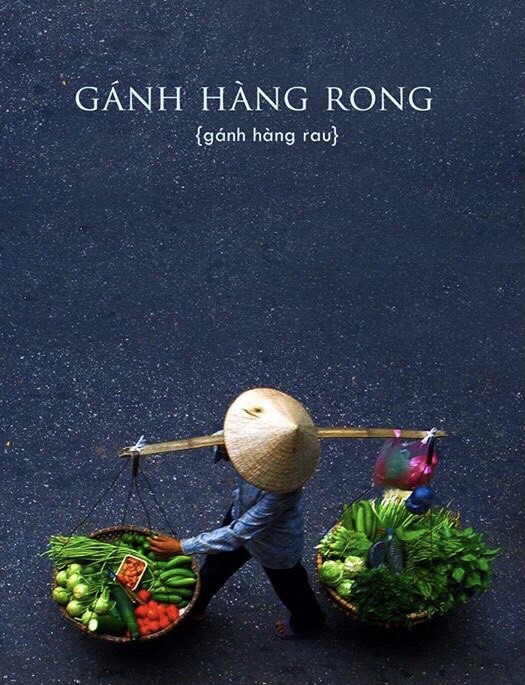
Những gánh hàng rong cuối cùng nơi đô thị – UNESCO công nhận văn hóa bán hàng rong là di sản

Xem toàn toàn bộ video phóng sự tại đây

Gánh hàng rong là nét đẹp văn hóa của người Việt

ticketgo.vn 15/08/2022 Văn hóa nghệ thuật

Bạn đã bao giờ từng mua hàng ở những gánh hàng rong? Bạn đã bao giờ ngẩn ngơ trước màu sắc rực rỡ trên những chiếc xe đạp cũ kỹ len lỏi qua từng con phố nhỏ?

 Nét đẹp của đường phố khi xuất hiện những gánh hàng rong

Gánh hàng rong đã tồn tại ở mảnh đất phố thị từ xa xưa cho đến bây giờ, từ thuở xưa của kinh thành Thăng Long khi người dân thủ đô mưu sinh trên lề đường, trong những khu chợ dân sinh đủ các tầng lớp. Mỗi lần nhắc đến văn hóa hàng rong, người ta đều mặc nhiên xem nó như một điều thân thuộc, một nét đẹp văn hóa đặc sắc của Hà thành.

Continue reading Những gánh hàng rong cuối cùng nơi đô thị – UNESCO công nhận văn hóa bán hàng rong là di sản →

Stranger Things – Gái khoe hàng

Icon for Stranger Things

QUORA

Posted by Leola Gilbert 2y

Young ladies, this is for you!!! 🤗

A woman arrived in a store wearing clothes that showed her body all too well. The shop owner, being a wise older man, took a good look at her, asked her to sit down, looked straight into her eyes, and said something she would never forget for the rest of her life.

Continue reading Stranger Things – Gái khoe hàng →

What happened during the Vietnam War that nobody talks about today?

QUORA

Profile photo for Bob Wilson

Bob Wilson · Former Professional geoscientist 7mo

I think most people are aware of the horrors that happened during the Vietnam war.

But it’s seldom talked about.

Agent Orange was used to kill the jungle, with no attention paid to the effects of people who were soaked in it.

Continue reading What happened during the Vietnam War that nobody talks about today? →