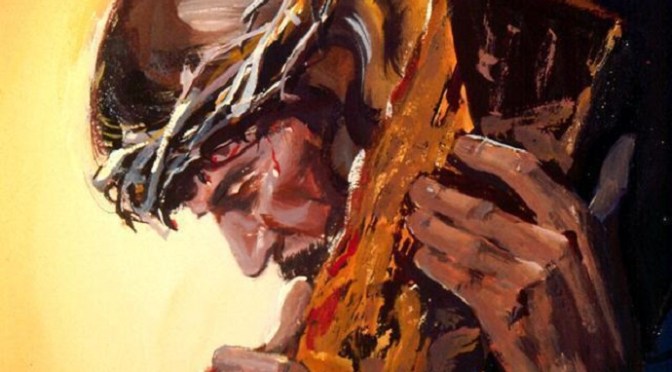
Trong những câu nói của Chúa Giêsu mà mình đều thích, có một câu làm mình nhớ và nhức nhối hơn cả, đó là câu Giêsu nói sau khi đã bị đóng đinh vào thập giá và trước khi chết: “Chúa ơi, Chúa ơi, sao Người lại bỏ rơi con?” (Matthew 27:46).
Mình chẳng biết tiếng Aramaic – cổ ngữ mà dân vùng Trung đông thời đó dùng – nhưng câu này nghe âm Aramaic còn nhức nhối hơn cả âm tiếng Việt hay tiếng Anh. Âm Aramaic: “Eli, Eli, lema sabachthani?” Âm tiếng Việt: “Chúa ơi, Chúa ơi, sao Người lại bỏ rơi con?” Âm tiếng Anh: “My God, My God, why have you forsaken me?” Continue reading Chúa ơi, Chúa ơi, sao Người lại bỏ rơi con?→
Last year, the United States and Vietnam celebrated our 25th anniversary of diplomatic relations. Over the past several decades, the bilateral relationship between our countries has made significant strides, to the point where our nations now cooperate on a wide range of issues, including fighting COVID-19 and preparing for future health security threats, combatting climate change, and addressing shared legacies of war. We have deepened our economic ties as Vietnam’s second largest trading partner and its top export market worldwide, and our support for one another is mutually reinforcing: a vibrant Vietnamese economy is critical to the supply chains Americans depend on, a point that COVID-19 has made clear when production shutdowns abroad have led to difficulties in shipping goods at hom10e. Our security relationship has dramatically expanded as we support Vietnam’s independence and sovereignty, particularly in the maritime domain. The United States and Vietnam have also advanced capacities to prevent, detect, and respond to infectious disease threats through our partnership on the Global Health Security Agenda. The already-robust and growing partnership between our peoples has resulted in nearly 30,000 Vietnamese studying in the United States, contributing nearly $1 billion to the U.S. economy, and the opening of a Peace Corps office in Hanoi.
The Vice President’s travel to Vietnam signifies the United States’ deep commitment not only to the region, but also to the U.S. – Vietnam relationship. In bilateral meetings with Vietnamese leaders, Vice President Harris reaffirmed the U.S. commitment to a strong, prosperous, and independent Vietnam, as well a free, open, healthy, and resilient Indo-Pacific region.
COVID-19 and Health Security: The Vice President reinforced the United States’ commitment to leading the world in ending the COVID-19 pandemic. She announced new COVID-19 vaccine donations to Vietnam, critical support for vaccine distribution, and the opening of a new regional CDC office to enhance health security cooperation.
Vaccine donation: Recognizing the critical toll that the COVID-19 has taken on both our countries, and the Biden-Harris Administration’s effort to serve as an arsenal of vaccines for the world, the Vice President announced that the U.S. is donating an additional one million doses of Pfizer vaccine to Vietnam, bringing our total donation to Vietnam to 6 million doses.
COVID-19 technical and programmatic assistance: Through the American Rescue Plan Act (ARPA) and other emergency assistance funding to date, USAID and CDC are supporting Vietnam’s response to COVID-19 with an additional $23 million in technical assistance and programmatic support, bringing the total assistance provided since the start of the pandemic to nearly $44 million. This assistance will accelerate equitable access to and delivery of safe and effective COVID-19 vaccines, strengthen Vietnam’s health system to respond to COVID-19, and build capacity to detect and monitor COVID-19 and future disease threats. USAID also provided the Vietnam Red Cross $1 million to reduce the impacts and prevent the spread of COVID-19 in vulnerable communities.
Support for vaccine distribution: The Department of Defense has committed to provide 77 ultra-low temperature vaccine freezers to assist vaccination distribution efforts in all 63 provinces. These freezers are specially designed to accommodate the most extreme vaccine storage requirements, significantly enhancing Vietnam’s national vaccine distribution network.
Emergency Operations: Through the Defense Threat Reduction agency, the U.S. provided two Regional Public Health Emergency Operations Centers, which are now operating 24/7 to collect and share COVID-19 surveillance information through the Ministry of Health.
Launch of the new CDC Southeast Asia Regional Office: The Vice President launched the U.S. Centers for Disease Control and Prevention (CDC) Southeast Asia Regional Office in Hanoi alongside Vietnam’s Deputy Prime Minister and Health Ministers from ASEAN and Papua New Guinea. The CDC office will advance global health security by maintaining a sustainable presence in the region, enabling a rapid and effective response to health threats—wherever they occur—and reinforcing CDC’s core mission of protecting Americans.
Combatting Climate Change: The Vice President and Vietnamese government and civil society leaders agreed on the importance of combatting the climate crisis, increasing resilience, and collaborating towards a clean energy future.
Leveraging the Private Sector in Climate Action: USAID and the Vietnam Chamber of Commerce and Industry (VCCI) signed a Memorandum of Understanding (MOU) to boost Vietnam’s competitiveness, expand market opportunities for U.S. companies, and strengthen Vietnam’s environmental policy. This MOU with VCCI will improve VCCI’s focus on sustainability, green technology and climate change. USAID also intends to support VCCI in developing a Green Index to help U.S. businesses select provinces that are investing in green operations.
Expanding Clean Energy and Electric Vehicles: The U.S. government announced the Vietnam Low Emission Energy Program II (V-LEEP II), a five-year, $36 million USAID project which aims to accelerate Vietnam’s transition to a clean, secure, and market-driven energy system. The project will work to improve government energy planning, increase competition to encourage U.S. private sector involvement in energy service provision, and increase clean energy systems. The project will help Vietnam scale up adoption of electric motorbikes and implement the Direct Power Purchase Agreement (DPPA) mechanism to allow businesses to procure electricity directly from private firms producing renewable energy.
Protecting the Mekong Delta region: Through USAID, the U.S. government launched the Mekong Coastal Habitat Conservation project, a new three-year, $2.9 million project with the International Union for Conservation of Nature (IUCN). This project aims to protect key coastal habitats in the Mekong Delta region for sustainable fisheries, climate change adaptation and biodiversity conservation.
Accelerating Climate-Smart Agriculture: The United States welcomed Vietnam joining the Agricultural Innovation Mission for Climate (AIM4C), an initiative announced at President Biden’s Leaders’ Summit on Climate that will be launched at COP-26 in November 2021. AIM4C participants will work together to accelerate global agricultural innovation and the adoption of climate smart technologies. Together the United States and Vietnam, along with our global partners, can address shared climate challenges and create innovative solutions to improve food security and drive economic growth around the world.
Development Assistance and Market Access: The Vice President emphasized the Biden-Harris Administration’s efforts to promote economic growth and opportunity.
Promoting women and ethnic-minority owned enterprises: The U.S. government announced the Improving Private Sector Competitiveness (IPSC) project, a $36 million USAID flagship effort to grow women and ethnic minority-owned businesses and promote job-growth in rural areas through the adoption of new U.S. technology.
Support for Vietnam’s transition to a digital economy: The U.S. government announced the Workforce for an Innovation and Startup Ecosystem (WISE), a USAID project providing up to $2 million to support Vietnam’s effort to transition from an economy dominated by labor intensive, low-skilled industry to a workforce better equipped to participate in the global digital economy. Building Vietnam’s digital skills will increase opportunities for trade between the United States and Vietnam and will promote U.S. technologies.
Lower tariffs on U.S. exports: U.S. farmers and pork producers will have greater access to markets in Vietnam — the United States’ seventh largest agricultural export market — as a result of Vietnam’s positive consideration of our proposal to eliminate or reduce MFN import duties on corn, wheat, and pork products. These tariff cuts allow U.S. farmers to provide Vietnam with quality and competitively-priced products while also helping reduce the U.S. trade deficit with Vietnam
Human Rights & Civil Society: The Biden-Harris Administration is putting human rights at the center of our foreign policy and, while in Vietnam, Vice President Harris emphasized the essential role that civil society plays in global development.
Promoting civil society and grassroots advocacy: The United States supports Vietnam’s civil society and advocates for freedom of expression, belief, and association in Vietnam—as raised by the Vice President in her government meetings. Additionally, the Vice President will hold a meeting on August 26th with representatives of grassroots advocacy groups, in which she will emphasize the critical role of civil society as a driver of sustainable development and inclusive prosperity.
Addressing Legacy of War Issues: The United States and Vietnam have overcome a difficult past to become trusted partners. Vice President Harris committed to Vietnamese government leaders our resolve to continue addressing shared war legacy issues.
Addressing shared war legacies: The United States commits to provide an additional $17.5 million for surveying and clearing unexploded ordnance (UXO), demonstrating our continued pledge to addressing war legacy issues. The State Department commits to continue extensive UXO survey and clearance projects, build capacity for the national mine action center, and implement risk education initiatives to save lives and create economic opportunities.
Support for persons with disabilities: The U.S. government, through USAID, announced two new awards to local Vietnamese organizations, in support of persons with disabilities: Raising Voices, Creating Opportunities II and Hold My Hand II. These projects, with a total budget of approximately $4 million, will support persons with disabilities by improving their quality of life and promoting their social inclusion. As one of our oldest war legacy initiatives, under Senator Leahy’s War Victims Fund since 1989, disability programming has long served as a core element of bilateral cooperation.
Security Cooperation: The United States supports Vietnam’s enhancement of its maritime security and law enforcement capabilities.
Commitment to a Security Partnership: The United States and Vietnam affirmed our commitment to continuing our high-level security cooperation in support of a strong, prosperous and independent Vietnam, including humanitarian engagements like Pacific Partnership and visits by U.S. ships, including aircraft carriers.
Increasing our Coast Guard Partnership: The Vice President discussed the deep ties between the Vietnam and U.S. Coast Guards, including the possible provision of a third U.S. Coast Guard high-endurance cutter, subject to the will of Congress. This cutter would complement two other U.S.-provided cutters, a fleet of 24 patrol boats, base facilities, piers, law enforcement training, and other joint activities that bolster Vietnam’s capacity to contribute to maritime security in the South China Sea.
Expanding humanitarian and disaster response cooperation: The U.S. and Vietnam committed to establish a medical trauma exchange between the Vietnam Military and the Department of Defense to expand humanitarian and disaster response capacity, while cooperatively advancing critical patient care for soldiers, veterans, and the people of Vietnam.
Investments in the Bilateral Relationship: Vice President Harris and Vietnamese government leaders reaffirmed the strength of U.S.-Vietnam Comprehensive Partnership, as signified by the signing of a new U.S. Embassy compound and the opening of Peace Corps Vietnam.
Opening of Peace Corps Vietnam: The Vice President is announcing the launch of Peace Corps Vietnam, which marks the conclusion of 17 years of negotiations, and opens a new era of opportunities for young Americans to serve abroad and foster people-to-people ties between our two countries. Peace Corps Vietnam will welcome its inaugural cohort of Peace Corps Volunteers in 2022.
New U.S. Embassy Compound Signing: The Vice President will be witnessing the signing of the lease for the new U.S. Embassy Compound in Hanoi, Vietnam to symbolize the future of our partnership. The U.S. Embassy celebrated the 25th anniversary of normalization in 2020, and formalizing the lease agreement allows us to look ahead to the next 25 years and beyond of U.S. engagement in Vietnam.
Reinforcing International Norms on the Peaceful Exploration of Space: The United States and Vietnam support efforts to ensure space activities are conducted in a responsible and sustainable manner.
The United States and Vietnam recognize the growing importance of space in providing benefits to all humanity, to tackling climate challenges and ensuring development on Earth. We also exchanged views on the Artemis Accords during the visit and acknowledge the pivotal role international cooperation plays in sustaining the outer space environment to maximize the benefits space offers. In this regard, the United States and Vietnam are committed to a civil space dialogue, to take place in the first quarter of 2022 which would serve to align our goals of ensuring space activities are conducted in a responsible and sustainable manner.
Support for Higher Education: Vice President Harris underscored the United States’ commitment to the future of Vietnam and the enduring nature of the U.S.-Vietnam partnership. Partnering on education reform: USAID announced the Partnership for Higher Education Reform, a five-year project providing up to $14.2 million to strengthen teaching, research, innovation, and governance within the three largest national universities in Vietnam. With U.S. university and private sector partners, the project will support inclusive economic opportunities for nearly 150,000 Vietnamese students in support of a strong, prosperous, and independent Vietnam as a vital U.S. partner.
Chính quyền TP HCM kiến nghị Bộ Tài chính và Y tế cho các cơ sở y tế tư nhân được điều trị bệnh nhân Covid-19 theo yêu cầu và được thu giá dịch vụ tương ứng.
Phó thủ tướng Vũ Đức Đam thị sát Bệnh viện Đa khoa quốc tế Hoàn Mỹ Thủ Đức khi chuyển đổi công năng thành Trung tâm Điều trị Covid-19, ngày 26/7. Ảnh do bệnh viện cung cấp
Nội dung trên được đề cập trong văn bản khẩn gửi hai bộ Y tế và Tài chính về việc chi trả chi phí cho các cơ sở y tế tư nhân tham gia điều trị bệnh nhân Covid-19 do Phó chủ tịch UBND thành phố Phan Thị Thắng ký ngày 23/8.
Trường hợp ngân sách nhà nước đảm bảo một phần hoặc toàn bộ chi phí điều trị cho bệnh nhân, thành phố đề nghị các Bộ Y tế và Tài chính hướng dẫn mức chi trả cho các bệnh viện tư nhân khi điều trị bệnh nhân Covid-19.
WHO official Maria Van Kerkhove said Tuesday that misinformation about Covid and vaccines appears to have gotten worse and is keeping people from getting the shots, driving an increase in cases.
In July, U.S. Surgeon General Vivek Murthy declared Covid misinformation a “serious public threat.”
Most unvaccinated Americans think the Covid vaccines are more of a threat to their health than contracting the virus itself, according to Kaiser Family Foundation data.
RT: Maria Van Kerkhove, Head a.i. Emerging Diseases and Zoonosis at the World Health Organization (WHO), speaks during a news conference on the situation of the coronavirus at the United Nations in Geneva, Switzerland, January 29, 2020.Denis Balibouse | Reuters
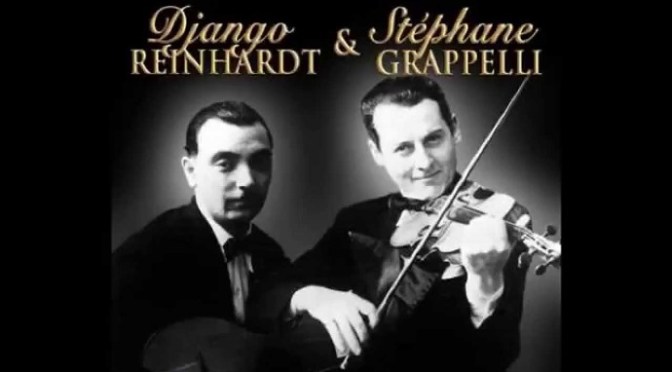
Minor Swing là một bản nhạc jazz gypsy phổ biến được Django Reinhardt và Stéphane Grappelli sáng tác.
Stéphane Grappelli (26 tháng 1 năm 1908 – 1 tháng 12 năm 1997) là nghệ sĩ violin người Pháp nổi tiếng, và là một trong số những nghệ sĩ đã thành công trong việc đưa cây vĩ cầm vào nhạc jazz.
Django Reinhardt, tên thật là Jean Reinhardt, (23 tháng 1 năm 1910 – 26 tháng 5 năm 1953) là nhạc sĩ, nghệ sĩ guitar nhạc jazz người Pháp – Romania. Ông được coi là một trong những nghệ sĩ lớn nhất của thế kỷ XX, là nghệ sĩ jazz tiêu biểu đầu tiên và quan trọng nhất tới từ châu Âu. Continue reading Minor Swing→
Rất nhiều thầy lớn dạy con người bình đẳng, và mọi thầy đều có ấn tượng mạnh đối với mình. Và trong số các bài học bình đẳng đó của các thầy, bài học có ấn tượng mạnh nhất trên tâm trí mình là bài học của Chúa Giêsu: “Thầy gọi các anh em là bạn.” (I have called you friends. 15 John 15). Continue reading Bài học bình đẳng ấn tượng→
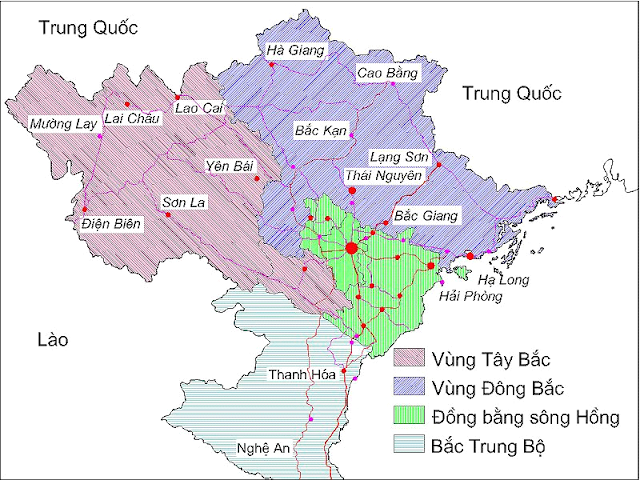
Vùng Tây Bắc là vùng miền núi phía Tây của miền Bắc Việt Nam, còn được gọi là Tây Bắc Bắc Bộ và là một trong 3 tiểu vùng địa lý tự nhiên của Bắc Bộ Việt Nam (hai tiểu vùng kia là Vùng Đông Bắc và Đồng Bằng sông Hồng). Vùng Tây Bắc có chung đường biên giới với Lào và Trung Quốc, tổng diện tích gần 55.000km2.
Nhìn theo hình kỷ hà, vùng Tây Bắc là một hình thang có đáy lớn ở phía bắc (gồm Lai Châu và Lào Cai) giáp Mông Tự, Trung Quốc. Đáy nhỏ là tỉnh Hòa Bình giáp với Thanh Hóa về hướng nam. Phía đông tiếp giáp vùng Đông Bắc qua rặng Hoàng Liên Sơn. Phía tây giáp với Luông Phabang của Lào mà đỉnh xa nhất của Tây Bắc tiếp giáp với Lào là A Pa Chải.
Dưới thời Pháp, Tây Bắc có tên gọi là xứ Thái tự trị. Đến năm 1955 lại đổi thành Khu tự trị Thái Mèo gồm ba tỉnh là Lai Châu, Sơn La, Nghĩa Lộ. Từ năm 1962 – 1975 gọi là Khu tự trị Tây Bắc. Hiện nay, cụm từ Tây Bắc chỉ có giá trị xác định phương hướng, vị trí địa lý của khu vực chứ không mang ý nghĩa nào khác.
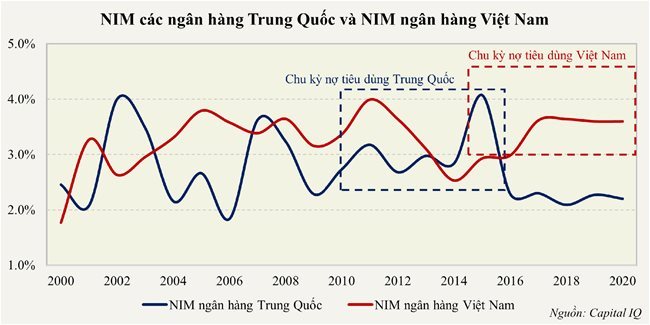
(KTSG) – Dịch Covid-19 đã tàn phá các nền kinh tế trong suốt hai năm qua, Việt Nam cũng không ngoại lệ, đặc biệt là khi biến chủng mới bùng phát mạnh những tháng gần đây. Doanh nghiệp các ngành nghề gặp rất nhiều khó khăn để duy trì việc kinh doanh. Tuy nhiên, trong cùng thời gian này thì những khoản lãi khổng lồ của ngân hàng thương mại được công bố đang khiến xã hội đặt nhiều dấu hỏi. Trong phạm vi bài viết này, tác giả sẽ cung cấp các giải mã về lợi nhuận của ngành ngân hàng.
Đã có nhiều chỉ trích của các nhà phê bình về việc ngân hàng đang “trục lợi” trên khó khăn của các doanh nghiệp và rồi cũng có những giải thích bảo vệ từ những người trong ngành. Tuy nhiên, tất cả dường như là chưa đủ để thể hiện sự thật đằng sau vấn đề.
TP HCM – Hàng trăm người cơ nhỡ, ăn ngủ ở vỉa hè tại các quận, huyện được đưa về nơi tập trung, trong đó nhiều trường hợp dương tính nCoV.
Chiều 24/8, gần chục bộ đội, Công an phường Võ Thị Sáu, quận 3 tuần tra nhiều tuyến đường TP HCM để tìm kiếm người tá túc ở vỉa hè trong ngày thứ hai thực hiện cao điểm tập trung người lang thang.
Người đàn ông 65 tuổi lang thang ở vỉa hè hơn 2 tháng được cảnh sát vận động xét nghiệm Covid-19 trước khi đưa về Trung tâm Hỗ trợ Xã hội. Ảnh: Đình Văn
Dưới cơn mưa nặng hạt, một người đàn ông da rám nắng, tóc bạc phơ ôm balô quần áo, co ro dưới mái hiên cửa hàng trên đường Cách Mạng 8 được cảnh sát tiếp cận. “Tôi thất nghiệp hơn hai tháng nay, không có tiền nên phải ra đường ngủ”, người đàn ông 65 tuổi rưng rưng nước mắt khi được cảnh sát hỏi.
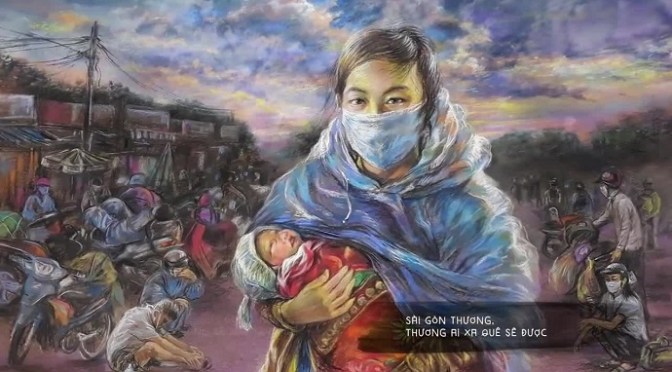
“Sài Gòn thương” là dự án âm nhạc của Kyo York và nhạc sĩ Khúc Đạo Minh – ca khúc viết về nỗi niềm yêu thương và trăn trở gửi đến Sài Gòn những tháng ngày khó khăn với niềm tin mãnh liệt vào ngày mai tươi sáng hơn.
“Sài Gòn thương” được Kyo York thể hiện trên nền những hình ảnh “Sài Gòn thời giãn cách qua tranh” của hoạ sĩ Lê Sa Long – hiện là giảng viên khoa đồ hoạ, trường Đại học Mở TpHCM. Continue reading Sài Gòn thương→
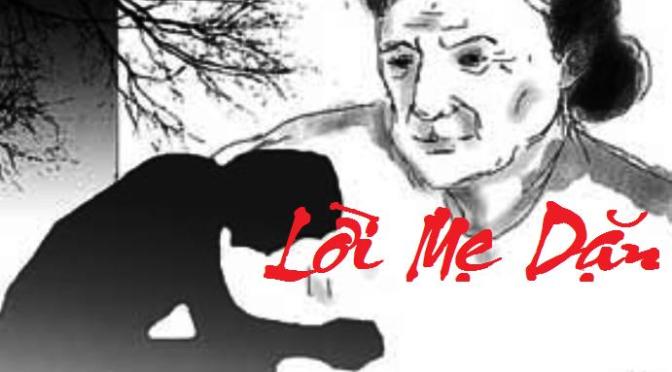
Mọi điều cần học cho một đời sống công chính, mọi chúng ta đều đã được dạy. Từ lúc còn tấm bé mẹ đã dạy chúng ta đừng nói dối, đừng tham lam, đừng trộm cắp, yêu thương anh em bạn bè, yêu người nghèo, yêu người khuyết tật… Những điều mẹ dạy, nếu ta thực hành, là đủ để chúng ta thành người công chính. Lớn lên ta học những con đường tồi tệ, quên lời mẹ dặn, và thành người xấu, dối trá, nhũng lạm, gian lận… Đó chẳng phải vì Trời đã chẳng dạy ta, mà vì ta đã bỏ điều Trời dạy ta qua mẹ. Continue reading Trời dạy qua mẹ→
Thank you for giving us this day our daily rice.
We are full,
so please help others,
who are more hungry and thirsty than us.
Please feed them and give them something to drink.
Please heal the heart of sufferers,
who pain from illness,
loss of loved ones,
and lack of food and drink…
Please heal the heart of all sufferer.
While it is always good for the younger generation to know about their country’s past, getting them hooked on history is invariably a challenge.
History classes are rarely what students look forward to, and visiting museums to see historical artefacts hardly gets their blood running either.
As an antidote to this, a self-taught artist in Thái Bình Province is sharing Việt Nam’s history in a way that appeals to everybody, including teenagers and young adults.
Going by the pseudonym Michael Angle, the Vietnamese graphic designer makes ball-jointed dolls and toy figures that resemble historical characters from different periods of history.
WONDER WOMAN: Michael Angle’s illustration of Bà Triệu, a Vietnamese warrior who led a resistance against the rule of the Chinese Eastern Wu Dynasty in 248 AD. Photo courtesy of the artist
Brazil is turning to stronger and more bitter robusta coffee beans, which are hardier in the heat than the delicate arabica, in a sign of how climate change is affecting global markets
Workers show recently harvested robusta coffee in Sao Gabriel da Palha, Espirito Santo state, Brazil May 2, 2018. Picture taken May 2, 2018. REUTERS/Jose Roberto Gomes
* Robusta coffee more heat tolerant than arabica
* It can be grown at lower altitudes than rival variety
* Top roasters ramping up use of Brazilian robusta
* Yields in Brazil now match top robusta grower Vietnam








 Workers show recently harvested robusta coffee in Sao Gabriel da Palha, Espirito Santo state, Brazil May 2, 2018. Picture taken May 2, 2018. REUTERS/Jose Roberto Gomes
 Đọt Chuối Non