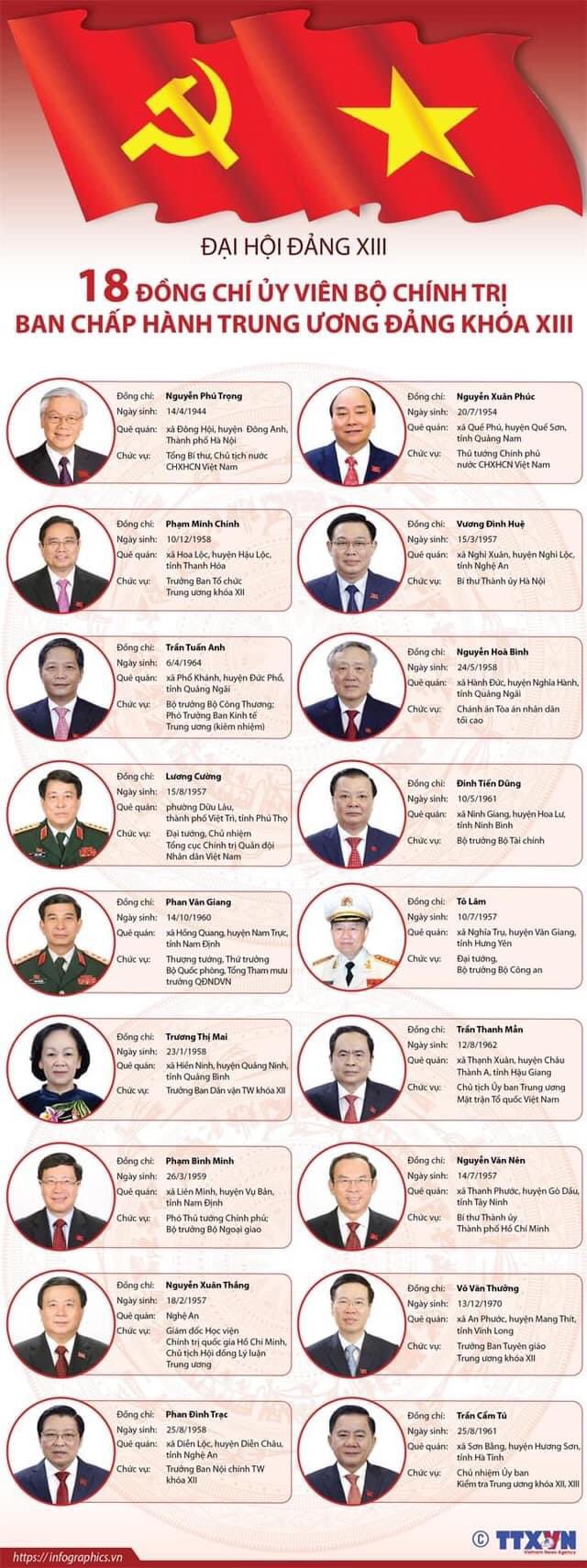
18 Ủy Viên Bộ Chính Trị

 January 26, 2021
 The Heritage Foundation is excited to announce the China Uncovered podcast available on Acast, Apple Podcasts, Spotify, or your favorite podcast app. In this podcast, Heritage Senior Policy Analyst Olivia Enos hosts representatives of world-class data projects to discuss how their projects are shining a spotlight on the Chinese Communist Party’s actions and emerging trends from their data. This is an ongoing effort of Heritage’s China Transparency Project.
On December 28th, we released our seventh and final episode of Season One: Asia Power Index featuring Hervé Lemahieu and Special Remarks from Speaker Newt Gingrich. Olivia sat down with Hervé Lemahieu, Director of the Power and Diplomacy Program at the Lowy Institute to discuss the 2020 Asia Power Index. To wrap up the season, the Honorable Newt Gingrich delivered his special remarks. Stay tuned for Season Two!
We now have a website for the China Transparency Project. Check it out to discover world-class data tracking projects from organizations across the globe.
Continue reading on CVD >>
The Heritage Foundation is excited to announce the China Uncovered podcast available on Acast, Apple Podcasts, Spotify, or your favorite podcast app. In this podcast, Heritage Senior Policy Analyst Olivia Enos hosts representatives of world-class data projects to discuss how their projects are shining a spotlight on the Chinese Communist Party’s actions and emerging trends from their data. This is an ongoing effort of Heritage’s China Transparency Project.
On December 28th, we released our seventh and final episode of Season One: Asia Power Index featuring Hervé Lemahieu and Special Remarks from Speaker Newt Gingrich. Olivia sat down with Hervé Lemahieu, Director of the Power and Diplomacy Program at the Lowy Institute to discuss the 2020 Asia Power Index. To wrap up the season, the Honorable Newt Gingrich delivered his special remarks. Stay tuned for Season Two!
We now have a website for the China Transparency Project. Check it out to discover world-class data tracking projects from organizations across the globe.
Continue reading on CVD >>
26 Jan 2021 01:46PM
Bookmark
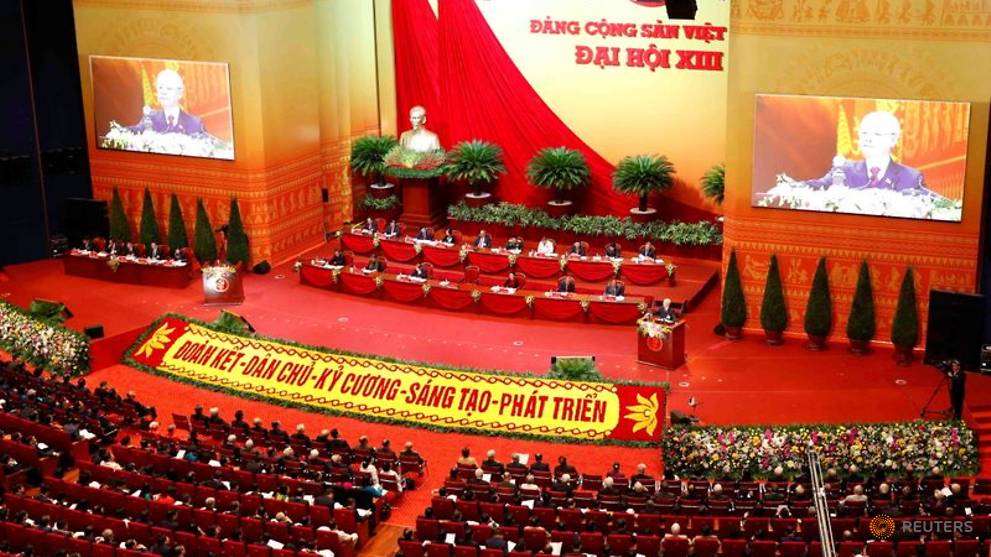
HANOI: Vietnam’s ruling Communist Party chief Nguyen Phu Trong hailed booming economic development and containment of the COVID-19 pandemic as major achievements on Tuesday (Jan 26) as he presided over the opening of a key party congress in Hanoi.
Over nine days of meetings, mostly behind closed doors, delegates will pick a new leadership team, aiming to bolster Vietnam’s ongoing economic success – and the legitimacy of the party’s rule. Party congresses take place once every five years.
By Khanh Vu, Phuong Nguyen, Reuters
6 MIN READ
HANOI (Reuters) – Vietnam’s ruling Communist Party gathers for a congress next week that will help shape the country’s global role for the next five years, selecting new leaders and setting policy as tensions bubble with Beijing and Joe Biden settles in at the White House.
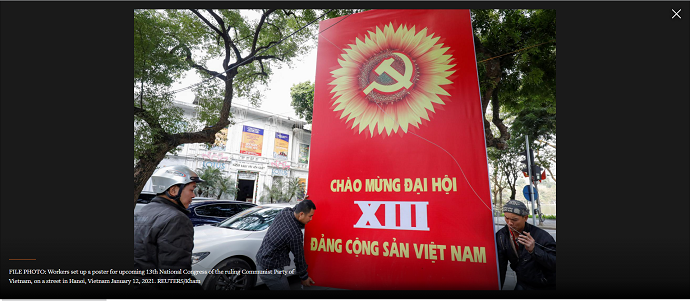
FILE PHOTO: Workers set up a poster for upcoming 13th National Congress of the ruling Communist Party of Vietnam, on a street in Hanoi, Vietnam January 12, 2021. REUTERS/Kham
The Communist Party’s 13th Congress, from Jan. 25 to Feb. 2, will cement leadership looking to leverage Vietnam’s economic success to bolster legitimacy. Key to that will be the challenge of balancing relations with China and the United States, for which Vietnam has become an important strategic partner, in a world economy that’s been dislodged from previous certainties.
Buoyed by the redirection of global trade in its favour because of a U.S.-China row, Vietnam is steadily growing into one of the world’s most important tech manufacturing hubs, as well as a centre for garment-making, in an economy on track to recover faster than most after the coronavirus pandemic.
“U.S.-China strategic competition will continue to destabilise the regional geo-strategic and economic environment over the next five years,” said Le Hong Hiep, of the ISEAS–Yusof Ishak Institute in Singapore.
“This is a major challenge for Vietnam given that the Vietnamese economy is very open and highly dependent on international trade and foreign investment,” he added.
Vietnam’s annual gross domestic product (GDP) growth averaged 6.0% over the past five years, and still expanded 2.9% in 2020 despite the pandemic that crushed economies elsewhere: Vietnam has been successful in containing the coronavirus so far with strict quarantine, testing and tracing measures.
ADVERTISEMENT
With just over 1,500 infections and 35 deaths in total, Vietnam – one of the last five Communist-ruled countries in the world besides China, Cuba, Laos and North Korea – has seen its economy outstrip much of Asia in the past year, and is already eyeing average GDP growth of 7.0% over the next five years.
“Vietnam’s leaders will have to learn how to minimise negative impacts and take advantage of the opportunities, especially the trade and investment diversion from China,” said Hiep.
The main candidates for the new positions to be determined at the congress are all widely known in Hanoi’s political circles, but were officially declared top secret in December to discourage potentially critical debate. The Communist Party retains tight control of media and tolerates little criticism.
Vietnam officially has four ‘pillars’ of leadership: the Party chief; the state president; the prime minister and the National Assembly Chair.
RELATED COVERAGEExplainer: Party people – What happens at Vietnam’s Communist congress?Factbox: Possible candidates for Vietnam’s leadership transition
While a 2016 power struggle and subsequent crackdown on corruption in government has deepened factional fault lines across Party ranks, most analysts expect continuity in Vietnam’s economic, domestic and foreign policy-making after the congress.
Bitter enemies during the U.S.-Vietnam War, Hanoi and Washington have enjoyed significantly warmer relations in recent years, but there have been trade tensions of late.
While the shift in global supply chains caused by former U.S. President Donald Trump’s trade war with China has benefited Vietnamese exporters, the incoming Party leadership must contend with likely increased scrutiny from the United States – and new leadership in the White House.
Its trade deficit with Vietnam widening significantly and rapidly, the United States under the Trump administration labelled Vietnam a currency manipulator late last year, raising the prospect of U.S. tariffs on Vietnamese goods. The trade gap widened to $63 billion in 2020 from $47 billion in 2019.
The U.S. Trade Representative said earlier this month Vietnam’s actions to push down the value of its currency were “unreasonable” and restricted U.S. commerce, but did not take immediate action to impose punitive tariffs – leaving the decision in the hands of Biden administration.
ADVERTISEMENT
“Vietnam will need to maintain dialogue with the U.S. for better understanding of the Biden administration, and review sincerely its trade and monetary policies and practices,” said Ha Hoang Hop, also of the ISEAS–Yusof Ishak Institute.
Domestically, Vietnamese leaders will also have to grapple with one of the most rapidly ageing societies in Asia and the reform of an outdated higher education system that has left local highly-skilled labour in short supply.
The other principal external challenge, observers say, will be finding ways to deal with China’s increasing aggressiveness in claiming vast, potentially energy-rich, swathes of the South China Sea which overlap with Vietnam’s exclusive economic zone.
“The outlook for the security of the South China Sea would be rather pessimistic this year,” said Ha Hoang Hop. “Vietnam will have to take more vigilance and prepare to respond to foreign hostile forces.”
However, fellow observer Hiep said, Vietnamese leaders are also acutely aware of China’s importance to Vietnam’s security and economic well-being, prompting Vietnam to “try to maintain its balance between the two great powers”.
Though Vietnam and China have for years been embroiled in a dispute over the South China Sea, China remains the largest source of materials and equipment for Vietnam’s thriving manufacturing industry.
Hop said other challenges for the next five-year leadership team include reforms needed to implement newly inked international free trade agreements and a more comprehensive and proactive foreign policy.
Strengthening Vietnam’s national defences is also on the agenda, as is tackling issues surrounding the development of the Mekong river – another increasingly tense battleground with Beijing – and keeping the guard up against COVID-19 by vaccinating the population.
Reporting by Khanh Vu and Phuong Nguyen; Writing by James Pearson; Editing by Kenneth Maxwell
Our Standards: The Thomson Reuters Trust Principles.
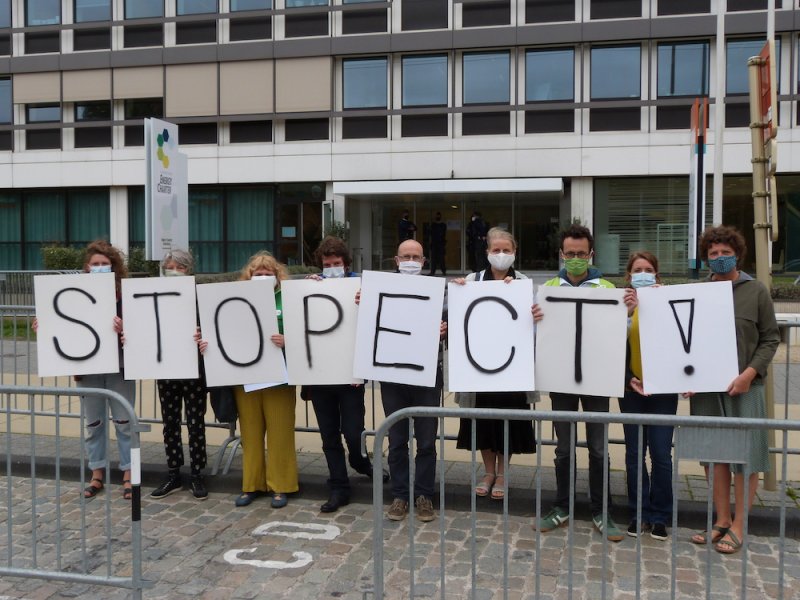
AFTINET | 17 September 2020
Reports on the Energy Charter Treaty process to ‘modernise’ continue to demonstrate entrenched opposition to efforts to make it support the Paris Climate Agreement to limit global warming to less than 2°C.
The European Union has proposed amendments that reinforce governments’ “right to regulate” on issues like public health and the environment. But any change requires unanimous agreement by the ECT’s 53 signatories.
As Facebook Inc. and Twitter Inc. banished users and groups supporting the violent mobs at the U.S. Capitol last week — including President Donald Trump himself — downloads surged for a less restrictive social media app called Parler. But in an effort to prevent further riot organizing, Google Inc. and Apple Inc. booted Parler from their app stores, and Amazon.com Inc. shut off its web services.
“We will not cave to pressure from anti-competitive actors!” John Matze, Parler Inc.’s chief executive officer, said on his site Friday. “We WON’T cave to politically motivated companies and those authoritarians who hate free speech!”

Statement from National Security Advisor Robert C. O’Brien
Issued on: January 12, 2021
Today, the White House is publishing the recently declassified United States Strategic Framework for the Indo-Pacific. For the last 3 years, this document has provided overarching strategic guidance for implementing the 2017 National Security Strategy within the world’s most populous and economically dynamic region. Approved in February 2018 for implementation across Executive Branch departments and agencies, the document is being released to communicate to the American people and to our allies and partners, the enduring commitment of the United States to keeping the Indo-Pacific region free and open long into the future.
You can read the full statement here.
You can read United States Strategic Framework for the Indo-Pacific here.
Monday, January 11, 2021, 14:36 GMT+7 tuoitre

Vietnam’s Prime Minister Nguyen Xuan Phuc attended the ground-breaking ceremony of the expansion project of Hoa Binh Hydropower Plant in northern Hoa Binh Province on Sunday morning.
The VND9.2 trillion (US$394.6 million) project involves the construction of two new turbines with a total capacity of 480MW and electricity output of about 488.3 million KWh per year.
SPECIAL TO THE JAPAN TIMES
Jan 12, 2021

The year 2020 was filled with geopolitical and geoeconomic changes that represented a major shift in world history, with the COVID-19 pandemic and the U.S. presidential election leading the way.
How effectively each nation can control the spread of infections within its own borders is likely to significantly affect the transformation of the global economy and power balance in the post-coronavirus era.
By Nguyen Dong January 11, 2021 | 01:27 pm GMT+7 vnexpress A staff stands inside the Hai Van Tunnel 2, January 10, 2021. Photo by VnExpress/Nguyen Dong.
Hai Van Tunnel 2 in central Vietnam has opened to traffic Monday after four years of construction.
Connecting Thua Thien-Hue Province with central hub Da Nang, the tunnel of 6.2 kilometers (3.85 miles) is the longest road tunnel in Southeast Asia and helps reduce traffic pressure on Hai Van Road Tunnel 1.
HOA KIM 5/1/2021 10:05 GMT+7
TTCT – Sự kiên nhẫn dành cho nhóm Big Tech, gồm năm công ty công nghệ Mỹ Amazon, Apple, Google, Facebook và Microsoft, rốt cuộc đã cạn.

Liên tiếp ở châu Âu và cả trên sân nhà, một loạt đơn kiện của chính quyền nhắm vào những gã khổng lồ công nghệ trong năm 2020 cho thấy những tượng đài này không hề “bất khả xâm phạm” như ta tưởng.
Sân nhà không là đất lành
Trung tuần tháng 12-2020, Facebook trở thành bị đơn của 48 tiểu bang và chính quyền liên bang, đối mặt với cáo buộc lạm dụng sự thống trị của mình trên thị trường kỹ thuật số để tham gia các hành vi phản cạnh tranh. Đặc biệt, Ủy ban Thương mại liên bang (FTC) đang theo đuổi một lệnh ngăn chặn vĩnh viễn từ tòa án liên bang, theo đó có thể buộc Facebook chia tay với hai nền tảng “đẻ trứng vàng” của hãng là Instagram và WhatsApp để phá thế độc quyền.
TIN LIÊN QUAN
Khó đàm phán
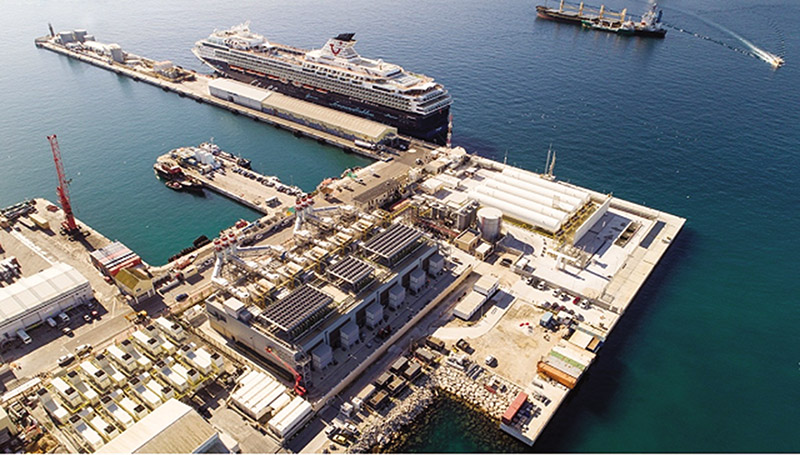
Trao đổi với phóng viên Báo Đầu tư mới đây, một quan chức của Cục Điện lực và Năng lượng tái tạo (Bộ Công thương) cho hay, Dự án Điện khí LNG Bạc Liêu đã không thể ký được PPA trong năm 2020. Như vậy, kỳ vọng về việc “đàm phán PPA ngay trong tháng 8/2020 và ký kết PPA vào cuối năm 2020” đã không thành hiện thực.
Welcome to our final newsletter of 2020. We would like to take this opportunity to thank you for your support and interest in our work over the year. We will return in early January and in the meantime wish you an enjoyable festive break and every success in 2021.
| New white paper: Digital trade in the Asia-Pacific |

The Indo-Pacific region is increasingly being viewed as a global centre of gravity, both for its economic and demographic potential, and the security challenges that could frustrate those possibilities. India—as a champion of the principle of ‘Free and Open Indo-Pacific’ or FOIP—has initiated engagements with its partners in the region, such as the Indo-Pacific Oceans Initiative (IPOI) that aims to ensure the security and stability of the region’s maritime domain. Even as the stakeholders have outlined a set of seven pillars for the initiative, there is still little clarity as to what can be expected from the IPOI. This paper offers recommendations for the IPOI to enable India play a more proactive and constructive role in the region.