
Some content on this page was disabled on October 22, 2025 as a result of a DMCA takedown notice from The Economist Newspaper Limited. You can learn more about the DMCA here:
Category Archives: Trang tiếng Anh
Joseph Stiglitz: The Trans-Pacific Partnership may turn out to be the worst trade agreement in decades
English & Vietnamese
The Guardian
Sunday 10 January 2016
In 2016, let’s hope for better trade agreements – and the death of TPP
Joseph Stiglitz
The Trans-Pacific Partnership may turn out to be the worst trade agreement in decades
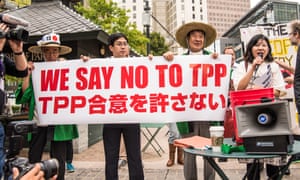
Last year was a memorable one for the global economy. Not only was overall performance disappointing, but profound changes – both for better and for worse – occurred in the global economic system.
Most notable was the Paris climate agreement reached last month. By itself, the agreement is far from enough to limit the increase in global warming to the target of 2ºC above the pre-industrial level. But it did put everyone on notice: the world is moving, inexorably, toward a green economy. One day not too far off, fossil fuels will be largely a thing of the past. So anyone who invests in coal now does so at his or her peril. With more green investments coming to the fore, those financing them will, we should hope, counterbalance powerful lobbying by the coal industry, which is willing to put the world at risk to advance its shortsighted interests.
Vietnam begins huge effort to identify war dead
World’s largest systematic identification project will use smart DNA-testing technology.
12 January 2016 Article tools

KHAM/Reuters/Corbis
Vietnam’s Viet-Laos cemetery contains the remains of thousands of people who died in the Vietnam War — but most are still unidentified.
Nature – Digging foundations for temples or schools, harvesting rice in paddy fields: these are some of the ways that the decaying remains of Vietnam War victims still turn up, 40 years after the conflict ended. Now an effort has begun that will use smart DNA technologies to identify the bones of the half a million or more Vietnamese soldiers and civilians who are thought still to be missing.
6 Shocking Reasons Why You Can Never Trust “Organic” from China
althealthworks.com
by | January 8, 2016

Polluted water is a growing problem in China, where it may be used to water crops.
Multiple recent reports exposed conventional foods manufactured in China as fake and even toxic: scams involving rice that contains plastic, fake eggs made from chemicals and many food items containing high levels of arsenic.Now that country-of-origin labeling has been removed by Congress (for meat), and companies are struggling to find new sources of food to meet the growing demand for organics in the United States, it’s becoming more likely that your organic food could come from China or other countries rather than U.S. farmers.
What’s really important about China’s stock market disaster, and what’s not

Washingtonpost – You can only defy financial gravity for so long. At some point, what went up for no reason must come down for a very good one, no matter what the government does to try to keep it aloft.
Which is to say that it was another disastrous day for Chinese stocks. On the plus side, though, it was a short one. Indeed, China’s market was only open for 14 minutes on Thursday before it fell the maximum 7 percent it’s allowed to in a single session. It’s the second time that’s happened this week, enough to erase almost all its gains since the summer.
Family planning in Vietnam Running deer
A draft population law looks ill-considered and discriminatory
economist – BRIGHTLY coloured plastic flowers greet patients at the reception desk of Nguyen To Hao’s abortion clinic. Yet the mood in her waiting room is grim. Ms Hao, an obstetrician and gynaecologist, says that many of her patients are teenagers who know shockingly little about sex or its consequences. Some young women with late-term pregnancies are sent to a nearby hospital for abortions; others carry their pregnancies to term and leave their newborn babies in the care of Buddhist monks.
Here’s How Chinese Stocks Short-Circuited
Beijing’s rules intended to stem market panic only made things worse. Blame human nature.

Migration and refugees
ODI – Development is migration: millions leave their countries each year in search of opportunities and better lives. People also leave their homes to escape conflict, repression or environmental disasters. Remittances – the money that people send home from abroad – accounts for nearly 600 billion dollars, dwarfing global aid budgets.
Our research and high-level debates on the crisis in the Mediterranean and, more recently, on the Syrian refugee crisis, examine how we can meet these global challenges – and the role of international development to better manage global migration.
Through research, events, media engagement and partnerships, ODI offers evidence to lay bare the political and economic realities of migration and to inform the public debate.
Specifically, we focus on three areas: refugees and displacement, European migration policy and human mobility.

Opening borders and barriers
- Nature 527, S80–S82 (12 November 2015) doi:10.1038/527S80a
- Published online
- 11 November 2015
Collaboration may result in higher impact science, but are government initiatives the best way to promote such international and interdisciplinary connections?

Kavli Institute
Tea time at Kavli Institute allows for an organized and informal exchange of collaborative ideas.
Nature – An American physicist, a Japanese mathematician and a German cosmologist walk into a lab; what do you get? Based on recent outcomes, you’ll get ground-breaking science. And lately, governments have begun paying heed to evidence1 that suggests international, multidisciplinary collaborations such as these will yield high-impact results.
Policymakers from diverse countries, including China, Japan, Australia, Chile and Germany, have sought to foster excellent science and technological innovation — and reap the associated economic benefits — by promoting collaboration across borders and disciplines, and setting up specialist centres with the necessary resources (see ‘Conduits to collaboration’).
Reinvigorating agricultural productivity in the Lower Mekong
November 27, 2015 1:00 pm JST
Aladdin D. Rillo and Mercedita A. Sombilla
asia.nikkei.com – The green revolution has done wonders for Asia. Yields for most crops, particularly the region’s main staple of rice, have doubled over recent decades. In the Lower Mekong Delta, considered to be Asia’s rice bowl, the new technologies and crop strains that the green revolution brought were a big success.

Cambodian farmers load vegetables onto a cart for transport to market, at a farm in Kandal Province, south of Phnom Penh, on Oct. 16, which was World Food Day. © AP
Rice production in the Lower Mekong countries of Cambodia, Laos, Myanmar and Vietnam soared 68% between 1980 and 1995. During the same period, average yields more than doubled from their levels in the 1960s to about 3.5 tons per hectare. Total land area planted with rice also increased by around 25% to 16.3 million hectares between 1996 and 2005.
How kids in Vietnam, other countries embark on extreme journeys to school (photos)
TUOI TRE NEWS – Updated : 09/07/2015 18:16 GMT + 7

As the world marks the 48th annual International Literacy Day on Tuesday, have a look at how children in Vietnam and several Asian countries go to school in this photo feature provided by World Vision Vietnam.
Millions of children across Asia returned to school this month, pursuing their right to education. The new school year in Vietnam officially kicked off on September 5.
While many have schools in their own communities, others have to go on long and difficult journeys to access their education, which is a major challenge in Asia and the Pacific.
In remote villages, schools are often far away and difficult to reach. The distance from home to school is one of the reasons why 26.3 million children are out of school in Asia and the Pacific, according to UNESCO.
Powering the Internet with renewable energy
December 3, 2015
Googleblog – Today we’re announcing the largest, and most diverse, purchase of renewable energy ever made by a non-utility company. Google has already committed to purchase more renewable energy than any other company. Now, through a series of new wind and solar projects around the world, we’re one step closer to our commitment to triple our purchases of renewable energy by 2025 and our goal of powering 100% of our operations with clean energy. 842 MW of renewable energy around the world Today’s agreements will add an additional 842 megawatts of renewable energy capacity to power our data centers. Across three countries, we’re nearly doubling the amount of renewable energy we’ve purchased to date. We’re now up to 2 gigawatts—the equivalent to taking nearly 1 million cars off the road. These additional 842 megawatts represent a range of locations and technologies, from a wind farm in Sweden to a solar plant in Chile.

Vietnam’s Divide: Slow Healing, Fewer Prospects for Children of U.S. Allies — Việt Nam vẫn còn chia cách: vết thương chậm hồi phục, ít có triển vọng cho con cái của đồng minh Mỹ
(English and Vietnamese — Song ngữ Anh Việt)
Families who were allied with U.S. barred from Communist Party
December 23, 2015

Photographer: Dita Alangkara/AP

Vu Tien, a university student in Ho Chi Minh City, holds photographs of his father who served in the military of the former Republic of Vietnam that governed the nation’s south from 1954 to 1975.
Source: Bloomberg News
As a graduate from one of Vietnam’s most prestigious schools, 22-year-old Cao would seem to have a bright future ahead of him — if only the past would get out of the way. He’s found his career prospects hemmed in by the lingering legacy of a war that ended nearly two decades before he was born.
What makes a good life? Lessons from the longest study on happiness
Chào các bạn,
Năm 1938, Đại học Harvard bắt đầu một nghiên cứu về những điều gì quan trọng nhất cho đời sống con người, kéo dài cho đến nay (77 năm) và vẫn tiếp tục. Đây là cuộc nghiên cứu về phát triển đời sống của người lớn dài nhất thế giới.
Nhóm người được nghiên cứu gồm 724 người, một nửa là sinh viên năm thứ 2 ở Harvard thời đó, tức là các đối tượng đến từ các gia đình quyền lực và thành công, và nửa kia là các thanh niên nghèo khổ ở Boston, gia đình thiếu ăn thiếu mặc. Khoảng 60 người trong số 724 người đó vẫn còn sống ngày nay.
Trong cuộc nói chuyện dưới đây, Robert Waldinger, giám đốc đời thứ 4 của cuộc nghiên cứu, cho biết sau hơn 75 năm nghiên cứu, nhóm nghiên cứu tìm thấy: Điều quan trọng nhất cho hạnh phúc của con người không phải là tiền bạc, quyền lực, hay mục tiêu nào cả, mà là quan hệ con người: Continue reading What makes a good life? Lessons from the longest study on happiness


