All posts by Đọt Chuối Non

Me? Me? Me?... Yeah yeah yeah amigo... What can me say about me-self?... me-self...me-self... Ole ole ole... me me me... I'm a young banana shoot... My dad is Banana Pa... My mom is Banana Ma... I am happy happy happy... I run around... oops... I can't run... I sing aloud... all day long... I sing in the rain... I sing in the shine... I sing day and night... I sing all the time... I watch the butterflies and the bees... and the cranes and the geese... Aha aha aha... here we go again... this little swallow circling on my head... the little swallow on my head... is about to poop on me... Hey, little fella, don't cha know where to unload ya poopa?... But, that's alright... I can swallow my pride to befriend a swallow... Yup yup yup... swallow my pride to befriend a swallow...

After crushing free media, Cambodia’s Hun Sen claims to ‘place high value’ on journalism

After crushing free media, Cambodia’s Hun Sen claims to ‘place high value’ on journalism

Voice of America – 8-5-2021

Marking the 28th annual World Press Freedom Day, Cambodian Prime Minister Hun Sen published a letter on May 3 calling on news media to be guided by ethics and professionalism.

“I sincerely appreciate and place high value on our journalists who have made great efforts to overcome obstacles and dangers in fulfilling their duties to actively broadcast and publish news on what is really happening in the country,” the Phnom Penh Post cites him as saying.

Hun Sen called on local and international media to follow the law and refrain from “spreading fake news” that damages reputations and fosters “social chaos.”

“It’s the way to fight against criminals who seek to gain personal interests by using media as a cover to commit offenses that affect people’s dignity and the prestige of the media and professional journalists. This cannot be tolerated,” Hun Sen said.

Hun Sen’s claim to place a high value on journalism is false. The evidence suggests that those in Cambodia who actively report on “what is really happening in the country” face intimidation, assault and imprisonment.

What is the French Colonial Tax?

afritechnews – by Angeline Mbogo

July 7, 2020

French Colonial Tax

The fact that several African countries have been under the influence of the French for about 75 years now is stunning. Unable to let its colonies go, France continues to exploit African countries with unfair obligations, one of which has raised a raging debate over the years.

Dubbed the colonial tax, the infamous obligation on CFA Franc Zone members requires them to “keep 50 percent of their foreign exchange reserves in an operations account held at the French Treasury.”

Continue reading What is the French Colonial Tax?

Nghèo đừng chơi sang

XÊ NHO 08/08/2022 16:41 GMT+7

TTCT Rất lạ – Mỹ tăng lãi suất để chống lạm phát là chuyện nước họ; thế mà nước nào cũng lo nền kinh tế của mình bị ảnh hưởng. Thậm chí tờ Washington Post, trong một podcast, đặt vấn đề theo hướng: Vì sao lãi suất ở Mỹ có thể kéo theo khủng hoảng đói kém toàn cầu?

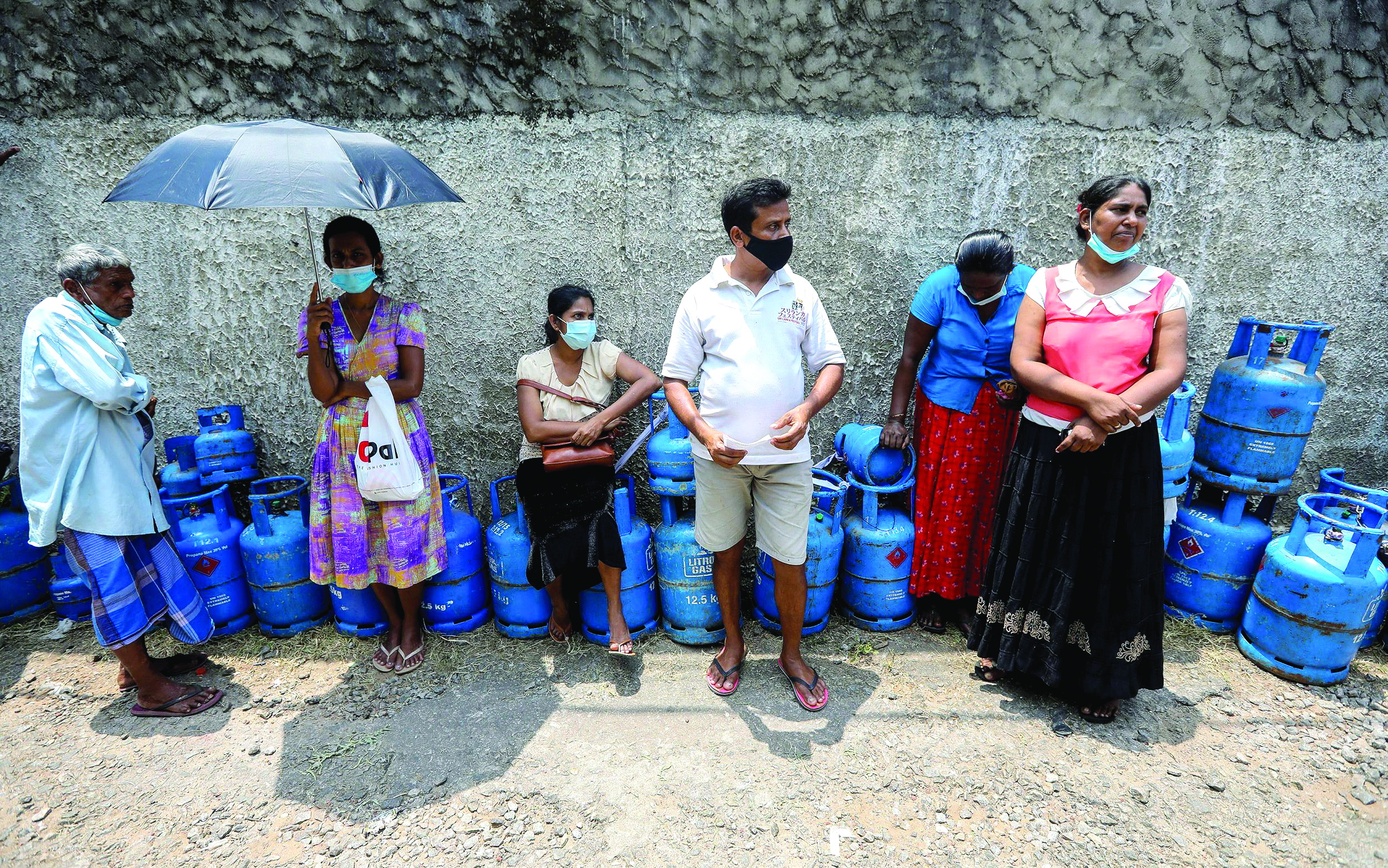
Nghèo đừng chơi sang - Ảnh 1.

Dân Sri Lanka xếp hàng đợi đổi bình gas nấu ăn. Nợ nần đã khiến ngân khố cạn kiệt. Ảnh: The Telegraph

Để độc giả dễ hình dung, tờ này ví von: Bạn mua nhà, trả góp 30 năm – hằng tháng phải đều đặn trả một khoản tiền. Giả dụ tiền mua nhà trả bằng đôla Mỹ, trong khi thu nhập của bạn tính bằng đồng peso, nên phải đổi từ peso sang đôla mới có tiền trả góp. 

Giả định mỗi năm bạn làm ra 100 peso và tiền trả góp mua nhà là 5 USD, nếu đồng đôla lên giá gấp đôi, bạn phải để ra số peso nhiều gấp đôi mới đủ trả nợ. Thế nên tiền đi chợ, tiền thuốc men… hụt đi, khả năng đói kém hiển hiện.

Continue reading Nghèo đừng chơi sang

China forgets who was the real aggressor in Korean War

China forgets who was the real aggressor in Korean War

Voice of America – 9-8-2022

July 27 marked the 69th anniversary of the signing the Korean War armistice between military commanders from the U.S.-led United Nations forces, North Korea and China.

During the 1950-1953 war on the peninsula, the People’s Republic of China backed North Korea with help from the Soviet Union, while U.S.-led U.N. forces defended South Korea. Continue reading China forgets who was the real aggressor in Korean War

US State Secretary Antony J. Blinken’s Remarks to the Nuclear Non-Proliferation Treaty Review Conference

US Department of Staate

REMARKS

ANTONY J. BLINKEN, SECRETARY OF STATE

UN HEADQUARTERS

NEW YORK, NEW YORK

AUGUST 1, 2022Play Video

[TĐH: Bold and Italic are added by me]

SECRETARY BLINKEN:  Good afternoon.  Secretary General Guterres, President Zlauvinen – thank you – Director General Grossi:  Thank you all for your longstanding leadership on nonproliferation.

I noted that Prime Minister Kishida of Japan is here as well this morning, which sends a very powerful message.  Earlier this year, he reaffirmed Japan’s commitment to nonproliferation in a joint statement with President Biden.

And a very special thanks to the foreign ministers, the deputy foreign ministers, the teams who have traveled to New York for these meetings and to get us off to a good start.

It’s great to be with you all here in person today, especially – especially – given the critical role the NPT has played in upholding the global nonproliferation regime.

More than five decades ago, at the height of the Cold War, representatives of 18 nations drafted the Treaty on the Non-Proliferation of Nuclear Weapons.

In the years that followed, nearly every country on Earth has joined the NPT.

Continue reading US State Secretary Antony J. Blinken’s Remarks to the Nuclear Non-Proliferation Treaty Review Conference

USD tăng giá và áp lực nợ công: Chớ đợi khát mới đào giếng

NAM MINH 10/08/2022 06:34 GMT+7

TTCT Áp lực nợ công được dự báo sẽ còn tăng mạnh với các nước đang phát triển. Việt Nam cần sẵn sàng cho những kịch bản xấu hơn hiện giờ.

USD tăng giá và áp lực nợ công: Chớ đợi khát mới đào giếng - Ảnh 1.

Ảnh: Reason Magazine

Trong khi nợ công của Việt Nam hiện được đánh giá chưa phải là nỗi lo quá lớn, thì những diễn biến bất ổn ở khu vực châu Á, cũng như tình trạng nợ của khối FDI, doanh nghiệp nhà nước và sự yếu kém của hệ thống ngân hàng nói chung sẽ gây ra những áp lực lên tài chính khu vực công. Sự cẩn trọng và tiên liệu là không bao giờ thừa, nhất là trong hoàn cảnh đầy bất trắc hiện tại.

Phải tung gói hỗ trợ y tế và kích thích kinh tế vì đại dịch, đối phó với khủng hoảng giá năng lượng, lạm phát, cộng thêm đồng USD lên giá, nhiều quốc gia đang phải đối mặt áp lực chi trả nợ công ngày một lớn.

Quỹ Tiền tệ quốc tế (IMF) cảnh báo nhiều nước đang phát triển ở châu Á có thể lún sâu vào nợ nần và đối mặt rủi ro từ các khoản nợ chồng chất. Sri Lanka không còn có khả năng trả nợ nước ngoài và lâm vào khủng hoảng kinh tế. Hay gần đây, các nhà đầu tư bắt đầu lo ngại Pakistan có thể gặp rắc rối khi đồng nội tệ giảm giá mạnh so với đồng USD.

Continue reading USD tăng giá và áp lực nợ công: Chớ đợi khát mới đào giếng

Vietnam’s Cooking School of Hope

Vietnam’s Cooking School of Hope | 101 East

Al Jazeera English – 14-5-2020

Vietnam is famous for its delicious food.

But at a cooking school in Hanoi, the focus is on more than filling stomachs.

For the teenagers who attend KOTO, an internationally recognised hospitality boarding school in the Vietnamese capital, the kitchen offers a path out of poverty – one dish at a time. Continue reading Vietnam’s Cooking School of Hope

Sứ mệnh mới của thủ phủ tơ tằm

MAI VINH 11/01/2018 22:01 GMT+7

TTCT – Cuộc trở mình của lụa Bảo Lộc đặt mục tiêu làm cho người tiêu dùng biết đến thương hiệu tơ lụa Bảo Lộc. Trong quá khứ, những chuyên gia của Nhật Bản từng xác định Bảo Lộc là xứ tốt nhất Việt Nam để làm tơ lụa.

Lụa Việt rất cần được hà hơi tiếp sức để có thể bay xa… Ảnh: Mai Vinh

Đến giữa năm 2017, tơ lụa Bảo Lộc đã có mặt ở thị trường Nhật Bản, Ấn Độ, Ý, Anh, Pháp và các nước khu vực Trung Đông.

Từ tơ tằm, các nhà dệt ở Bảo Lộc đã sản xuất lụa satin dùng may kimono cho người Nhật; lụa yozu dùng may khăn đội đầu ở các nước khối Ả Rập, Ấn Độ; vải lụa habuta, CDC dùng may âu phục cao cấp…

Continue reading Sứ mệnh mới của thủ phủ tơ tằm

The Indonesian Chinese still grappling with discrimination

The Indonesian Chinese still grappling with discrimination

South China Morning Post – 26-10-2018

Indonesian Chinese make up just three per cent of the country’s population, but they have played a prominent role in its history. A driving force behind Indonesia’s economic growth, they have also been the target of violent riots and xenophobic sentiment, with many leaving the country where their ancestors have lived for generations. Although they are allowed to express their ethnicity and culture openly again, a resurgence of nationalist sentiments have brought their place in Indonesian society back into question.

Hệ thống ngân hàng: Rủi ro tín dụng quá tập trung

Nam Minh 27/07/2022 05:26 GMT+7

TTCT Việc một số ngân hàng lớn đang tập trung tín dụng hay trái phiếu quá lớn chỉ vào một vài tập đoàn khổng lồ là một thực trạng đáng lo ngại với nền kinh tế.

Hệ thống ngân hàng: Rủi ro tín dụng quá tập trung - Ảnh 1.

Ảnh: Water Canada

So với thập niên trước đây, hệ thống ngân hàng Việt Nam đã trở nên lành mạnh hơn với tỉ lệ nợ xấu được kiểm soát và hệ số an toàn rủi ro cải thiện đáng kể. 

Nhưng một rủi ro khác đang lớn dần là xu thế tập trung tín dụng tại một số ngân hàng vào số ít tập đoàn tư nhân, thậm chí là các sân sau của ngân hàng mà phần lớn dính đến thị trường bất động sản.

Continue reading Hệ thống ngân hàng: Rủi ro tín dụng quá tập trung

Between two superpowers: Indonesia’s position in the US-China rivalry

Between two superpowers: Indonesia’s position in the US-China rivalry

South China Morning Post – 25-7-2022

Indonesia is the largest developing economy in Southeast Asia, with a gross domestic product of over US$1 trillion. The country’s size and location have made it Indonesia an attractive strategic partner for China and the United States to influence the Asean region. Indonesia has attempted to remain neutral in the China-U.S rivalry, but if tensions between the two continue to rise, will Indonesia be forced to take sides or adopt a foreign policy that doesn’t align with either superpower?

The history of China’s territorial disputes

Explained: the history of China’s territorial disputes

South China Morning Post – 29-8-2020

China shares over 22,000 kilometres (13,670 miles) of border with 14 countries, but Beijing has disputes with many of its neighbours over where some of these international lines are drawn. The various territorial claims, citing history, politics and geography, have resulted in clashes and occasionally, outright military confrontations. Land borders aside, China also says its territory includes nearly all of the South China Sea, despite competing claims to parts of those waters made by many Southeast Asian countries. As tensions rise between China and the United States, Beijing has adopted a more aggressive attitude, pledging to defend China’s “sovereignty and territorial integrity.”

Đầu tiên, họ giết một cây…

MAI VINH 29/11/2020 18:00 GMT+7

TTCTDùng muối mỏ, dầu hỏa, thuốc diệt cỏ, bao nilông, đốt lửa… là vài cách phổ biến nhất trong 1.001 cách “giết” một cái cây đang được nhiều website hướng dẫn công khai trên mạng. Tỉ mỉ đến cả quy trình giết cây, từ cây non tới cổ thụ, sao cho kín đáo và hiệu quả nhất, lại khó bị phát hiện. Ở Lâm Đồng, hàng ngàn cây thông đã bị giết theo cách ấy. Thoạt tiên là vài cây thông lẻ nhưng sau 10 năm, hơn 90 ngàn hecta rừng đã biến mất.

Rừng phòng hộ đầu nguồn Đa Nhim (huyện Lạc Dương, tỉnh Lâm Đồng) bị phá, thông nằm la liệt (Ảnh: Mai Vinh)

Tổng cục Lâm nghiệp (Bộ Nông nghiệp và phát triển nông thôn) đã tiến hành kiểm kê rừng trên địa bàn tỉnh Lâm Đồng và công bố kết quả vào các năm 2016, 2018. 

Continue reading Đầu tiên, họ giết một cây…

Chính sách đối ngoại giai đoạn 1976 – 1986 và những bài học kinh nghiệm

Chặng đường thiết lập quan hệ ngoại giao Việt Nam - Liên Xô ít người biết - 1

(Ảnh minh họa)

Thứ tư, 26 Tháng 9 2018 15:00

(LLCT) – Chính sách đối ngoại của Đảng giai đoạn 1976-1986 đã để lại những kinh nghiệm quý báu, đó là: cần phải đánh giá đúng sự vận động, biến đổi của bối cảnh quốc tế, khu vực; bám sát thực tiễn đất nước, kịp thời điều chỉnh chủ trương, chính sách đối ngoại, thường xuyên phòng, tránh nguy cơ mất độc lập, tự chủ về tư duy và đường lối đối ngoại; coi trọng công tác dự báo, tổng kết thực tiễn; chủ động khắc phục đường lối đối ngoại “nhất biên đảo”; tích cực thiết lập các mối quan hệ với các nước lớn và các nước láng giềng… Những kinh nghiệm này đã góp phần định hướng đường lối đối ngoại của Đảng trong thời kỳ đổi mới và hội nhập quốc tế; cần được vận dụng, phát huy có hiệu quả trong sự nghiệp xây dựng và bảo vệ Tổ quốc hiện nay.

Continue reading Chính sách đối ngoại giai đoạn 1976 – 1986 và những bài học kinh nghiệm