Category Archives: Thử thách Anh ngữ

Daily English Challenge–Thursday, May 28, 2009

englishchallenge
Hi everyone,

Thank you, chị Yến and chị Kitty, for being my heroines. You both are very good. Your writings are very smooth.

Especially chị Yến, I think you have proven that my theory is correct. There is a marked difference between this piece of writing and the English translation you did the last time (of chị Oanh’s article). That difference may come from 2 things:

1. My approach of asking you guys not to translate, but just to write the way you are comfortable with, and

2. Yen has the ability to learn at Appollo speed.

But I tend to rule out the number two. Yen has been good since a long time ago. We just need to find out the right approach to bring out that talent.

And that is what I’ve been telling you guys, but few have taken my words seriously. I know that you guys are good and can write English beautifully. Just do it and you will be surprised with what you can do.

But we, you and I together, have a more important goal in mind: To find out the most effective way to improve our national English-teaching methodology. (Need I remind you guys that our national level of English fluency is low, compared with other countries? And I have stressed this point for a long time, directly with anh Trần Hồng Quân many times, when he was the minister of education, and with all kinds of folks in Hanoi. And I am still talking today).

What we are doing is slowly experimenting the “total submersion” method: Having the students totally submerged in English—reading, writing, talking, listening and, most importantly, thinking in English. One hour of this method will have the equivalent effect of 10 hours of other methods.

Let’s keep this goal in mind, as we feel our way around, trying to figure out where is the strength , where is the weakness, what works, and what doesn’t.

OK, I will have Yen’s and Kitty’s writings below. I have dome some minor changes to each piece, here and there, just to smooth them out and make them sound more natural. There aren’t many errors to really correct. Just refining.

Chị Kiêm Yến’s writing:

Positive thinking.

The first time I visited Đọt chuối non, its slogan made a strong impression on me! It’s “Positive thinking everyday”!

I participated in a short course of positive thinking two years ago. Then I’ve read a few articles about it. Now, I recognize that I don’t totally understand positive thinking yet. So, what is positive thinking? How can ưe distinguish it from other kind of thinking? And, most importantly, why do we need it?

I suppose “thinking” means thoughts producing from a special area of brain. In other words, it’s the result of brain activities. After reading more and more articles in Đọt chuối non, I recognize that it’s really different from what I imagined before.

In fact, “thinking” has a wider sense. It means a living attitude, a vision of life and living. So, “positive thinking” is equivalent to “positive living” or “ positive attitude”.

“Positive” is not “negative”. It means:

1. While looking a thing, a person, or an action, we always find out its good, beautiful, nice side.

2. If we see something bad, we have abilities to change it into goodness, and

3. We always act to make things better.

For example: (1) Our fiend is a dynamic and friendly colleague, (2) but she only knows working and working. It’s good if we choose her as our team leader, and (3) we introduce Đọt chuối non to her, little by little, she will enjoy her life more.

The characters of positive thinking are:

1. To concentrate vision and thinking on the good side of things. If seeing something bad, we have to find out the good in the bad to concentrate thinking on.

2. To use goodness as a motivation for living and working, towards the final goal of making life better. Life means s our own life, and the lives of others in the world we’re living. In other words, goodness is a motivation to live and, concurrently, is an ultimate goal of living.

We can summarize positive thinking as loving ourselves, loving others, and loving this life! We always pick up the best in all things. It helps us enjoy life in the best way! And, that’s the reason we need positive thinking!

.

Chị Kitty’s writing:

What is positive thinking? What is the difference between positive thinking and other kinds of thinking? Why should we think positively?

We could immediately relate the word “Thinking” to an image of brain activities. Actually, “thinking” has a broader meaning. It is an attitude to life or a view about life. Positive thinking is positive living and positive attitude.

“Positive” means…non-negative, as below:

– We always see the nice side of any thing or any event around us,
– If we see some bad points, we would have ability to change them into good points, and
– We always act to make thing better.

For example, (1) My dear friend A. is very dynamic and kind, (2) she is just a litte too thrifty; but if she becomes our treasurer, she would do the job very well; and (3) if she continues to do charity works, gradually she would no longer be so thrifty with the poor.

Positive thinking have these characteristics:

(1) Concentrating thought and view on good elements of any thing/event. If you see some bad thing, try to find out some good elements in it to concentrate your mind on.
And

(2) Using goodness as the motivation for our life, our work, and making our life more wonderful. Life in this case means your own life, and your world where you are living in. In other words, the goodness is our motive, as well as the most important aim in our life.

.

Note: “Nice” is an overused overabused word. Don’t use it in writing, except in informal writing.
.

TODAY’S CHALLENGE

Today we have 2 challenges, to give more people more choices to work on.

1. Rewrite the following text in English. Rewrite it anyway you want. No translation is necessary.
.

Tất cả những hiện tượng bên ngoài, đều không có ý nghĩa gì tự chúng cả; các ý nghĩa đều từ tư duy của ta mà sinh ra. Mưa chỉ là mưa; nếu ta cho là mưa buồn thì mưa buồn, nếu ta cho là mưa vui thì mưa vui. Nắng chỉ là nắng; nếu ta cho là nắng đẹp thì nắng đẹp, nếu ta cho là nắng chói thì nắng chói.

Tất cả các tình cảm–vui, buồn, giận, ghét, yêu, thích–chỉ là phản ứng của ta đối với sự việc bên ngoài. Nếu chàng trễ hẹn mà ta cau có phàn nàn thì cũng phải, hoặc ta cười vui vì kẹt xe thế mà chàng cũng đến cho bằng được thì cũng phải. Trễ hẹn chỉ là trễ hẹn. Đó chẳng phải là chuyện vui hay buồn, tốt hay xấu. Vui buồn chỉ là phản ứng của ta đối với việc trễ hẹn thôi.

Nửa ly nước, nếu nói là đầy nửa ly thì cũng đúng, mà cạn nửa ly thì cũng đúng. Đằng nào cũng đúng. Tất cả chỉ tùy thuộc vào sự lựa chọn của chúng ta thôi. Ta muốn tư duy tích cực, yêu đời, mạnh mẽ? Hay là muốn làm kẻ phàn nàn, người thua cuộc?

.

2. Translate the following piece into Vietnamese.

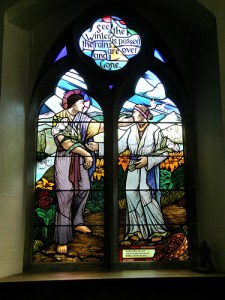
This piece contains excerpts from “Song of Songs”, which is a sensual and sexy poem 🙂 that King Solomon wrote for his lover, himself, and their love. It is from the Bible. I have it here to surprise you guys, if you have been thinking that the Bible is such a dry and boring book 🙂 This is within my purpose of familiarizing you guys with the most fundamental book of the western civilization, for your (future) diplomacy/PR works with Westerners.
brideandgroom

Lover (man, Solomon)

You have stolen my heart, my sister, my bride;
you have stolen my heart
with one glance of your eyes,
with one jewel of your necklace.

How delightful is your love, my sister, my bride!
How much more pleasing is your love than wine,
and the fragrance of your perfume than any spice!

Your lips drop sweetness as the honeycomb, my bride;
milk and honey are under your tongue.
The fragrance of your garments is like that of Lebanon.

You are a garden locked up, my sister, my bride;
you are a spring enclosed, a sealed fountain.

You are a garden fountain,
a well of flowing water
streaming down from Lebanon.

Beloved (woman)

Awake, north wind,
and come, south wind!
Blow on my garden,
that its fragrance may spread abroad.
Let my lover come into his garden
and taste its choice fruits.

Lover (Solomon)

I have come into my garden, my sister, my bride;
I have gathered my myrrh with my spice.
I have eaten my honeycomb and my honey;
I have drunk my wine and my milk.

Beloved (woman)

I slept but my heart was awake.
Listen! My lover is knocking:
“Open to me, my sister, my darling,
my dove, my flawless one.
My head is drenched with dew,
my hair with the dampness of the night.”

I have taken off my robe—
must I put it on again?
I have washed my feet—
must I soil them again?

My lover thrust his hand through the latch-opening;
my heart began to pound for him.

I arose to open for my lover,
and my hands dripped with myrrh,
my fingers with flowing myrrh,
on the handles of the lock.

.

OK, guys. Have fun.

Have a great day!

Hoanh
Daily English Challenge — Wednesday, May 27, 2009

englishchallenge
Hi everyone,

Thanks, chị Kiêm Yến and chi Kitty, for your work. Nothing to correct. I have here the original English version and chị Kiêm Yến’s version (with some words taken out), so that everyone may be familiar with the terminology in both languages.

English version

II. Causes of suffering: Craving causes suffering.

III. Extinction of Suffering: Because craving is the cause of suffering, to stop suffering we need “to stop, to denounce, to leave, to cut away craving.”

IV. The Path to Extinction of Suffering: This path has eight lanes and is called The Noble Eightfold Path.

1. Right view: The understanding of the Four Noble Truths, non-permanence, non-self, and nirvana.

2. Right thought: Thoughts about stopping craving, about no anger and no violence, about no harmful activities.

3. Right speech: No lying, no divisive speech, no abusive speech, no idle chatters.

4. Right action: No killing, no stealing, no wrongful sexual conduct.

5. Right livelihood: No engaging in trade or profession that, either directly or indirectly, results in harm to other living beings.

6. Right effort: Try to prevent wrongful thoughts and actions from arising; if they have already arisen, try to stop them. Try to bring up good thoughts and actions; if they have already come, try to continue them.

7. Right mindfulness: Observing our body, our feelings, our thoughts and dharmas (all things, all teachings) to conquer all cravings and distress.

8. Right concentration: This is about the practice of meditation.

.

Chị Kiêm Yến’s version (with the first 2 lines added)

Tứ diệu đế (bốn chân lý huyền diệu)

I. Khổ đế: Đời có khổ

II. Tập đế (Nguồn gốc đau khổ ): tham lam gây khổ.

III. Diệt đế (Sự chấm dứt khổ): vì tham lam là nguồn gốc đau khổ; chúng ta cần “ngưng, từ bỏ, lìa xa và cắt đứt tham lam” để ngừng đau khổ.

IV. Đạo đế (Con đường đưa đến việc chấm dứt khổ):

Đạo đế gồm 8 nhánh đường và được gọi là Bát Chánh Đạo.

1. Chánh kiến (nhìn đúng): thông hiểu về Tứ Diệu Đế, vô thường (không vĩnh hằng), vô ngã (không có cái tôi) và an lạc.

2. Chánh tư duy (suy nghĩ đúng): suy nghĩ về việc ngừng tham lam, không giận dữ và bạo động, không hãm hại người khác.

3. Chánh ngữ (nói lời đúng): không nói dối, không gây bất đồng, không lăng mạ, không nói xấu.

4. Chánh nghiệp (hành động đúng): không giết người, không trộm cắp, không tà dâm.

5. Chánh mạng (nghề đúng): không kinh doanh hoặc làm những nghề gây tổn hại đến sinh mạng của người khác, dù trực tiếp hay gián tiếp.

6. Chánh tinh tấn (nỗ lực đúng): cố gắng ngăn chặn khởi sinh suy nghĩ hay hành động sai lầm, nếu chúng đã khởi sinh rồi thì cố gắng chặn chúng lại. Cố gắng nuôi dưỡng suy nghĩ hay hành động tốt, nếu đã có chúng rồi thì cố gắng tiếp tục phát huy chúng.

7. Chánh niệm (quán sát đúng): Quán chiếu (quan sát) thân xác, cảm xúc, suy nghĩ và các Pháp (mọi điều, mọi thuyết) để chế ngự tham lam và phiền não.

8. Chánh định (tập trung đúng): là thực hành thiền định.

.

OK, for Kitty. The first path “Right View”. This is obviously the most important one, because if you have the wrong view (wrong vision) you will go to wrong places.

Right view here means to have a correct understanding of:

* The Four Noble Truths (Tứ diệu đế).

* “Impermanene” or “Non-permanence” (vô thường; không vĩnh cửu): Everything in life, everything in the universe (including us), is non-permanent, because they are born, grow and change, and disappear constantly. Nothing stays the same for long.

* “Non-self” (vô ngã) means our own self is non-permanent too. We are here only temporarily.

* “Nirvana” (Niết bàn) means the absolute tranquility of the mind, when you are in absolute peace and happiness. (Yến uses the term “an lạc”, which is very good).

Once we understand non-permanence and non-self, and live in accordance with that understanding (in The Noble Eight Fold Path–Bát chánh đạo), we will reach Nirvana, meaning, we will have inner peace and happiness.

The three concepts —non-permanence, non-self, Nirvana—are three “certifying” marks of Buddhist teachings (tam pháp ấn). If a teaching misses one of these three marks, it is not a Buddhist teaching.

To read more, please visit my writing A Brief Exposition on The Heart Sutra.
.

TODAY’S CHALLENGE

Below is some text in my article “Tư duy tích cực là gì ?”. Please REWRITE it in English.

Please note, “rewrite” means you just get the idea from the original writing, and rewrite it the way you want. You DON’T have to translate. (If you call it translation, then this is FREE translation. Write what you want.)

I just want you to feel comfortable writing whatever you want to write in English. I will NOT compare your writing with my original Vietnamese writing. My writing is here only to give you some idea on what to write.

Here it goes.
.

Tư duy tích cực là gì? Tư duy tích cực khác với một vài loại tư duy khác như thế nào? Tại sao ta lại cần tư duy tích cực?

“Tư duy” thường có nghĩa là suy nghĩ, và nói đến suy nghĩ là ta thường có ấn tượng rằng đó là một hoạt động của não bộ một lúc nào đó. Thực ra, từ “tư duy” ở đây rông rãi hơn, và có nghĩa là một thái độ sống, một cái nhìn về cuộc đời và sự sống, tương tự như tư duy trong cụm từ “thay đổi tư duy.” Tư duy tích cực chính là “sống tích cực” hay “thái độ tích cực.”

“Tích cực” có nghĩa là … không tiêu cực , là

(1) khi nhìn mọi sự, mọi vật, mọi vấn đề ta luôn luôn thấy cái hay, cái đẹp, cái tốt;

(2) nếu thấy cái xấu ta có khả năng biến cái xấu thành cái tốt; và

(3) luôn luôn hướng đến hành động để làm mọi sự tốt hơn.

Ví dụ: (1) Bạn A. của mình thật năng động và có lòng tốt với mọi người, (2) chỉ hơi keo kiệt một tí, nhưng như vậy thì, nếu bạn làm thủ quỹ cho nhóm mình, chắc chắn là quỹ chẳng bao giờ thiếu hụt, và (3) cứ làm từ thiện hoài thì chắc chắn là bạn sẽ từ từ biết cách “phung phí” tiền cho người nghèo khổ.

Đặc điểm của tư duy tích cực là

(1) tập trung cái nhìn và tư tưởng vào cái tốt, nếu thấy cái xấu cũng phải tìm cho ra cái tốt trong cái xấu để tập trung tư tưởng vào đó, và

(2) dùng cái tốt như là động lực thúc đẩy mình sống và làm việc, đi đến mục đích cuối cùng là làm cho cuộc đời tốt đẹp hơn. Cuộc đời đây là cuộc đời của chính mình, và là cuộc đời của thế giới mình sống. Tức là, cái tốt vừa là động lực thúc đẩy mình sống, vừa là mục tiêu tối hậu của cuộc sống.

.

All right. Have fun, everyone.

Have a great day!

Hoanh

Daily English Challenge — Tuesday, May 26, 2009

englishchallenge
Hi everyone,

Thanks for the good responses. All the translations are good. I will use Hoang Tuan Hung’s translation for demonstration purposes because it uses Vietnamese Buddhist terminology (which is good to familiarize yourselves with Buddhism). Yen’s translation is a little easier to follow, if you need to study. And, My Nga, I hope all your questions have been solved just by reading. If not, please ask me.

Here is Hung’s translation with boldfaced corrections:

Tứ diệu đế là bốn chân lý căn bản về cuộc đời: khổ, nguyên nhân đau khổ, giải thoát đau khổ và con đường đến sự giải thoát. Theo Kinh Chuyển Pháp Luân, Tứ diệu đế là kinh đầu tiên Đức Phật giảng [cho đệ tử của Ngài] sau khi Ngài ngộ đạo.

1: Khổ: Đời có khổ. Ta thông thường chia thành khổ về thể xác (thân khổ) và khổ tinh thần (tâm khổ) .(a) khổ về thể xác bao gồm: sinh, lão, bệnh, tử. (b) Khổ tinh thần có mất cái mình thích, phải chịu cái mình không muốn, và cầu không được. Tuy nhiên, có một điều khổ bao trùm lên tất thảy nỗi khổ khác: đó là “chấp ngã” (chấp vào “cái tôi”) như là một cái tôi vĩnh cửu. Tất cả chúng ta có thể thấy một người sống như thể người đó chẳng bao giờ chết thì sẽ đau khổ thế nào.

Rốt cuộc thì Khổ là một hiện tượng tinh thần. Ngay cả khi chịu tác động bên ngoài như là ta chịu một cái tát mạnh, ta khổ hay không chỉ là do tâm ta nghĩ thế nào. Nếu má ta rát bỏng nhưng tâm ta hoan hỉ thì ta đâu có khổ? Vậy Phật dạy ta thoát khổ bằng cách tu tâm, nghĩa là luôn giữ cho tâm tĩnh. Tâm là khởi nguồn và cũng là kết thúc.

.

“Life contains suffering” (Đời có khổ) is an intentional use of language. It should not be translated as “đời là bể khổ” (life is a sea of suffering).

“permanent everlasting self”: I’m not sure if anyone understands trường miên. Let’s use “vĩnh cửu”; most people understand this word.

For My Nga: When someone lives like he never dies, he lives in a very reckless way. And when you are reckless, eventually you will have all kinds of physical, mental and emotional problems.

The mind is the beginning and the end: Probably it would sound better if translated as “Tâm là đầu tiên và cuối cùng.”

Note: Four Noble Truths can be remembered in four words: Khổ tập diệt đạo.
.

TODAY’S CHALLENGE

For today, we will have 2 challenges. We will have an English writing subject. And we will continue to finish the Four Noble Truths.

First challenge: This is a message from your friend in the US: “I’ve heard that the lunar New Year day in Vietnam is a big celebration. Can you tell me about it?”

(This challenge is for everyone at every level. Write whatever way you feel comfortable with).
.

Second challenge: Please translate the following text into Vietnamese.

If you use Buddhist terminology, please put your explanation (in parentheses like this). Thanks a million.
.

2. Causes of suffering: Craving causes suffering.

3. Extinction of Suffering: Because craving is the cause of suffering, to stop suffering we need “to stop, to denounce, to leave, to cut away craving.”

4. The Path to Extinction of Suffering

This path has eight lanes and is called The Noble Eightfold Path.

1. Right view: The understanding of the Four Noble Truths, non-permanence, non-self, and nirvana.

2. Right thought: Thoughts about stopping craving, about no anger and no violence, about no harmful activities.

3. Right speech: No lying, no divisive speech, no abusive speech, no idle chatters.

4. Right action: No killing, no stealing, no wrongful sexual conduct.

5. Right livelihood: No engaging in trade or profession that, either directly or indirectly, results in harm to other living beings.

6. Right effort: Try to prevent wrongful thoughts and actions from arising; if they have already arisen, try to stop them. Try to bring up good thoughts and actions; if they have already come, try to continue them.

7. Right mindfulness: Observing our body, our feelings, our thoughts and dharmas (allthings, all teachings) to conquer all cravings and distress.

8. Right concentration: This is about the practice of meditation.

Have a wonderful day, everyone.

Hoanh

Daily English Challenge — Monday, May 25, 2009

englishchallenge

Hi everyone,

Welcome back! Hope everyone had a relaxing weekend.

Thanks Duc Minh for a very good translation, as always. Below, I will have the Vietnamese section that Minh has translated, and my edited version.

* Grammatically, I can’t remember any of Minh’s errors. Good writing. However, I have had changes in some places, to really express the spirit of this document.

* This is our Declaration of Independence in war time. It needs power, power, and power.

And when we hear that term “power” in writing–it means 3 things: Simplicity, repetition, rhythm.

Simplicity means (1) simple words–words of one or two syllables, (2) simple sentences–short and direct sentences, and (3) present tense, indicative mood.

* Because the first paragraph of the VN Declaration of Independence was taken from the US Declaration of Independence, I did not translate that paragraph, but simply copied it from the US Declaration, and did some minor changes for grammatical purposes.

* I have boldfaced only a couple of places that I would like to draw your special attention to.

OK, here they go.

Hỡi đồng bào cả nước,

Tất cả mọi người đều sinh ra có quyền bình đẳng. Tạo hóa cho họ những quyền không ai có thể xâm phạm được; trong những quyền ấy, có quyền được sống, quyền tự do và quyền mưu cầu hạnh phúc.
Lời bất hủ ấy ở trong bản Tuyên ngôn Độc lập năm 1776 của nước Mỹ. Suy rộng ra, câu ấy có ý nghĩa là: tất cả các dân tộc trên thế giới đều sinh ra bình đẳng, dân tộc nào cũng có quyền sống, quyền sung sướng và quyền tự do.

Bản Tuyên ngôn Nhân quyền và Dân quyền của Cách mạng Pháp năm 1791 cũng nói: Người ta sinh ra tự do và bình đẳng về quyền lợi; và phải luôn luôn được tự do và bình đẳng về quyền lợi.
Đó là những lẽ phải không ai chối cãi được.

Thế mà hơn 80 năm nay, bọn thực dân Pháp lợi dụng lá cờ tự do, bình đẳng, bác ái, đến cướp đất nước ta, áp bức đồng bào ta. Hành động của chúng trái hẳn với nhân đạo và chính nghĩa.
Về chính trị, chúng tuyệt đối không cho nhân dân ta một chút tự do dân chủ nào.

Chúng thi hành những luật pháp dã man. Chúng lập ba chế độ khác nhau ở Trung, Nam, Bắc để ngăn cản việc thống nhất nước nhà của ta, để ngăn cản dân tộc ta đoàn kết.

Chúng lập ra nhà tù nhiều hơn trường học. Chúng thẳng tay chém giết những người yêu nước thương nòi của ta. Chúng tắm các cuộc khởi nghĩa của ta trong những bể máu.

Chúng ràng buộc dư luận, thi hành chính sách ngu dân.

Chúng dùng thuốc phiện, rượu cồn để làm cho nòi giống ta suy nhược.

Về kinh tế, chúng bóc lột dân ta đến xương tủy, khiến cho dân ta nghèo nàn, thiếu thốn, nước ta xơ xác, tiêu điều. Chúng cướp không ruộng đất, hầm mỏ, nguyên liệu.

Chúng giữ độc quyền in giấy bạc, xuất cảng và nhập cảng.

Chúng đặt ra hàng trăm thứ thuế vô lý, làm cho dân ta, nhất là dân cày và dân buôn trở nên bần cùng.

.

Beloved compatriots,

All men are created equal. They are endowed by their Creator with certain unalienable rights, among these are life, liberty and the pursuit of happiness.

That immortal statement was in the Declaration of Independence of the United States of America in 1776. Broadly, it means all peoples of the world are born equal. Every people has the right to life, liberty and happiness.

The Declaration of Human Rights and Civil Rights of the French Revolution in 1791 also stated: All men are born free and equal, and should always have freedom and equal rights.

Those truths are undeniable.

But, for more than 80 years, the French colonists have used the pretext of liberty, equality and love to invade our country and oppress our people. Their actions are contrary to morality and justice.

[Please note the following shift to present tense, for strength]

Politically, they give us no liberty, no democratic rights.

They enforce savage laws on our country. They set three different political regimes in the Middle, the South and the North to prevent the union of our nation.

They build more prisons than schools. They brutally kill our patriots. They drown our uprisings in seas of blood.

They choke off public opinion and keep our people ignorance.

They weaken our race with opium and alcohol.

Economically, they exploit our people to the bones. They make our people poor and needy, our nation bare and desolate. The rob us of our farms, our mines, our natural resources.

They monopolize money printing, export, and import.

They impose on us hundreds of unjust taxes, pushing our people, especially our peasants and our traders, into extreme poverty.

.

GRAMMAR TOUCH-UP: Learn to use “Some” and Any”.

Click here to read: http://www.edufind.com/english/grammar/Determiners7c.cfm

Click here to do some exercise: http://www.autoenglish.org/gr.some.i.htm (But ignore the score. The score counter is all messed up).

Both these above links comes from this link: http://www.autoenglish.org/basicgrammar.htm
.

TODAY’S CHALLENGES

1. Please continue previous challenges if you are still working on them. If you post, I will comment on your response.

2. Fllowing is a short message of Buddhist teaching to be translated into Vietnamese.

Why do any have this message here? Because, (1) Buddhism has been with our people for almost 2 thousand years. We can’t call ourselves Vietnamese if we don’t know some Buddhist fundamentals. And (2) we should be able to tell foreigners about our culture.

I will give you some vocabulary here, to save you some time:

Four Noble Truths: Tứ Diệu Đế (bốn chân lý huyền diệu)
Suffering: Khổ
Enlightenment: giác ngộ
Dharma-Wheel Turning Sutra: Kinh (sutra) Chuyển (turning) Pháp Luân (Dharma Wheel, bánh xe giáo pháp)
Grasping onto the self: Chấp ngã, chấp vào cái ngã, chấp vào “cái tôi”.

Please translate the following text into Vietnamese

The Four Noble Truths are four basic truths about life: Suffering, causes of suffering, extinction of suffering, path to extinction of suffering. The Four Noble Truths is the first teaching by the Buddha after he reached Enlightenment, written in the Dharma-Wheel Turning Sutra.

1. Suffering: Life contains suffering. Generally we can classify suffering into physical suffering and mental sufering. (a) Physical suffering includes birth, old age, sickness, and death. (b) Mental suffering includes losing what we like, contacting what we don’t like, and unfulfilled desires. (c) However, there is also another kind of suffering that encompasses all other suffering—it is the suffering coming from “grasping onto the self” as a permanent everlasting self. We all can just see how a person who lives like he never dies will suffer.

Suffering, ultimately, is a mental phenomenon. Even if the stimulus is external, such as a hard slap on the face, it is still the mind that suffers or not—if your cheek is burning from the slap but your mind feels happy about it, then where is the suffering? Therefore, Buddhism teaches the extinction of suffering by teaching us to control our mind, i.e., to keep the mind tranquil at all time. The mind is the beginning and the end.

All right, everyone, have a wonderful time.

Hoanh

Daily English Challenge — Saturday, May 22, 2009

englishchallenge
Hi everyone,

For the weekend, I have this interesting thing for you to translate: Tuyên Ngôn Độc Lập.

OK, you guys, this is the most important document of the country. Could you please give it justice. It is long, but you don’t have to finish the whole document. Just stop wherever you’d like.

For previous challenges, if you are still working on them, feel free to post your response when you’re done.

Ok, team, march and shoot.

Have a wonderful weekend.

Hoanh

PS: This document has been translated into English many times before. Well, if you want to consult previous translations, it’s OK. Just try to use you own style of wording and maybe improve the older translations you consult.
_____________

Hỡi đồng bào cả nước,

Tất cả mọi người đều sinh ra có quyền bình đẳng. Tạo hóa cho họ những quyền không ai có thể xâm phạm được; trong những quyền ấy, có quyền được sống, quyền tự do và quyền mưu cầu hạnh phúc.

Lời bất hủ ấy ở trong bản Tuyên ngôn Độc lập năm 1776 của nước Mỹ. Suy rộng ra, câu ấy có ý nghĩa là: tất cả các dân tộc trên thế giới đều sinh ra bình đẳng, dân tộc nào cũng có quyền sống, quyền sung sướng và quyền tự do.

Bản Tuyên ngôn Nhân quyền và Dân quyền của Cách mạng Pháp năm 1791 cũng nói: Người ta sinh ra tự do và bình đẳng về quyền lợi; và phải luôn luôn được tự do và bình đẳng về quyền lợi.

Đó là những lẽ phải không ai chối cãi được.

Thế mà hơn 80 năm nay, bọn thực dân Pháp lợi dụng lá cờ tự do, bình đẳng, bác ái, đến cướp đất nước ta, áp bức đồng bào ta. Hành động của chúng trái hẳn với nhân đạo và chính nghĩa.

Về chính trị, chúng tuyệt đối không cho nhân dân ta một chút tự do dân chủ nào.

Chúng thi hành những luật pháp dã man. Chúng lập ba chế độ khác nhau ở Trung, Nam, Bắc để ngăn cản việc thống nhất nước nhà của ta, để ngăn cản dân tộc ta đoàn kết.

Chúng lập ra nhà tù nhiều hơn trường học. Chúng thẳng tay chém giết những người yêu nước thương nòi của ta. Chúng tắm các cuộc khởi nghĩa của ta trong những bể máu.

Chúng ràng buộc dư luận, thi hành chính sách ngu dân.

Chúng dùng thuốc phiện, rượu cồn để làm cho nòi giống ta suy nhược.

Về kinh tế, chúng bóc lột dân ta đến xương tủy, khiến cho dân ta nghèo nàn, thiếu thốn, nước ta xơ xác, tiêu điều. Chúng cướp không ruộng đất, hầm mỏ, nguyên liệu.

Chúng giữ độc quyền in giấy bạc, xuất cảng và nhập cảng.

Chúng đặt ra hàng trăm thứ thuế vô lý, làm cho dân ta, nhất là dân cày và dân buôn trở nên bần cùng.

Chúng không cho các nhà tư sản ta ngóc đầu lên. Chúng bóc lột công nhân ta một cách vô cùng tàn nhẫn.

Mùa thu năm 1940, phát xít Nhật đến xâm lăng Đông Dương để mở thêm căn cứ đánh Đồng Minh, thì bọn thực dân Pháp quỳ gối đầu hàng, mở cửa nước ta rước Nhật. Từ đó dân ta chịu hai tầng xiềng xích: Pháp và Nhật. Từ đó dân ta càng cực khổ, nghèo nàn. Kết quả là cuối năm ngoái sang đầu năm nay, từ Quảng Trị đến Bắc kỳ, hơn hai triệu đồng bào ta bị chết đói.

Ngày 9 tháng 3 năm nay, Nhật tước khí giới của quân đội Pháp. Bọn thực dân Pháp hoặc là bỏ chạy, hoặc là đầu hàng. Thế là chẳng những chúng không “bảo hộ” được ta, trái lại, trong 5 năm, chúng đã bán nước ta hai lần cho Nhật.

Trước ngày 9 tháng 3, biết bao lần Việt Minh đã kêu gọi người Pháp liên minh để chống Nhật. Bọn thực dân Pháp đã không đáp ứng lại thẳng tay khủng bố Việt Minh hơn nữa. Thậm chí đến khi thua chạy, chúng còn nhẫn tâm giết nốt số đông tù chính trị ở Yên Bái và Cao Bằng.

Tuy vậy, đối với người Pháp, đồng bào ta vẫn giữ một thái độ khoan hồng và nhân đạo. Sau cuộc biến động ngày 9 tháng 3, Việt Minh đã giúp cho nhiều người Pháp chạy qua biên thùy, lại cứu cho nhiều người Pháp ra khỏi nhà giam Nhật và bảo vệ tính mạng và tài sản cho họ.

Sự thật là từ mùa thu năm 1940, nước ta đã thành thuộc địa của Nhật, chứ không phải thuộc địa của Pháp nữa. Khi Nhật hàng Đồng minh thì nhân dân cả nước ta đã nổi dậy giành chính quyền, lập nên nước Việt Nam Dân chủ Cộng hòa.

Sự thật là dân ta lấy lại nước Việt Nam từ tay Nhật, chứ không phải từ tay Pháp.

Pháp chạy, Nhật hàng, vua Bảo Đại thoái vị. Dân ta đã đánh đổ các xiềng xích thực dân gần 100 năm nay để gây dựng nên nước Việt Nam độc lập. Dân ta lại đánh đổ chế độ quân chủ mấy mươi thế kỷ mà lập nên chế độ Dân chủ Cộng hòa.

Bởi thế cho nên, chúng tôi, lâm thời Chính phủ của nước Việt Nam mới, đại biểu cho toàn dân Việt Nam, tuyên bố thoát ly hẳn quan hệ với Pháp, xóa bỏ hết những hiệp ước mà Pháp đã ký về nước Việt Nam, xóa bỏ tất cả mọi đặc quyền của Pháp trên đất nước Việt Nam.

Toàn dân Việt Nam, trên dưới một lòng kiên quyết chống lại âm mưu của bọn thực dân Pháp.

Chúng tôi tin rằng các nước Đồng minh đã công nhận những nguyên tắc dân tộc bình đẳng ở các Hội nghị Têhêrăng và Cựu Kim Sơn, quyết không thể không công nhận quyền độc lập của dân Việt Nam.

Một dân tộc đã gan góc chống ách nô lệ của Pháp hơn 80 năm nay, một dân tộc đã gan góc đứng về phe Đồng Minh chống phát xít mấy năm nay, dân tộc đó phải được tự do! Dân tộc đó phải được độc lập!

Vì những lẽ trên, chúng tôi, chính phủ lâm thời của nước Việt Nam Dân chủ Cộng hòa, trịnh trọng tuyên bố với thế giới rằng:

Nước Việt Nam có quyền hưởng tự do và độc lập, và sự thật đã thành một nước tự do độc lập. Toàn thể dân tộc Việt Nam quyết đem tất cả tinh thần và lực lượng, tính mạng và của cải để giữ vững quyền tự do, độc lập ấy.

Daily English Challenge — Friday, May 22, 2009

englishchallenge
Hi everyone,

Thank you for your responses. Good that today we have two responses. That makes the explanation richer and more meaningful.

Before going to the correction and explanation, let me address an English issue.

Brother Phan Anh Tai , an admin of VNBIZ, has just posted on VNBIZ a recent news article (below) about Intel’s job tests in Vietnam last year. Basically, Intel had 2,000 candidates, “the best and brightest from five of Vietnam’s top universities.” And only 40 made the final cut in English.

40 out of 2,000 of the best and the brightest! We have a national problem, brothers and sisters.

Now, you know why I spend time so much time on English on Dot Chuoi Non. With this Daily English Challenge program, I am working my way slowly to identify the weaknesses in our English education and performance, and find ways to strengthen them.

So, when you work on these daily challenges here, you not only refine your own English but also work with me in figuring out problems in, and solutions for, our current English-teaching system and methodology. Thanks a million for walking with me on this road, guys and gals.

Here is the first part of the Intel news article:

Vietnam: Foreign companies struggle to find skilled professionals
May 17, 2009

By John Ruwitch

Hanoi – About a year ago, 2 000 of the best and brightest from five of Vietnam’s top universities were invited to take a lengthy multiple-choice exam for a shot at a job at Intel.

The giant computer chip maker had broken ground on its biggest factory in Vietnam’s commercial hub, Ho Chi Minh City, and the $1 billion (R8.5bn at current exchange rate) assembly and test facility, which expected to start operations this year, needed good engineers.

It was more than just another big project. The Intel investment would put Vietnam on the global technology map and help a rising star in the manufacturing world advance up the value chain.

But the results from Intel’s test cast a spotlight on one of Vietnam’s biggest barriers to achieving that dream: its inadequate and inflexible higher education system.

A fraction of the students passed the written exam, covering physics, electrical engineering, maths and other topics. Then they were given an English test, and just 40 made the final cut.

.

Now, let’s go to Loan’s writing.

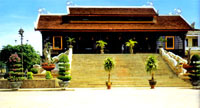
Khải Đoan Pagoda
Khải Đoan Pagoda

Coming to DakLak province , BMT city. We have many to visit, there are beauiful and famous waterfall such as: Draysap,Trinh nu, Gia long, Thuy Tien,..
There are many old pagoda,emple, and communal house…
And now, let we go to visit khai doan pagoda first.
Khai Doan pagoda(Khai Doan tu) is in the heart of BMT city an area of 3500 square meters
The name of the pagoda was formed by both the first two words of Emperor Khai Dinh name’s and Doan Huy sultana’s
It was built in 1951 and the sanctum was built 1953, the lady whose great merit of developing the pagoda was Doan Huy sultana.
It was built by clever constructors of Hue ancient capital, so its achitecture consisted of Hue garden house style.
The main gate is on Quang Trung street, especially, there cupris statue of Shikia Mouni in the heart and the cupris bell is put on the left of the sanctum.
Khai Doan pagoda is an attracted tourist place along side a historical , cultural vestige of Dak Lak province generally and BMT particularly.
I hope that, this place will be interesting and ideal destination of yours.
Looking forwards to seeing your soon!

.

Here is my edited version.

Welcome to Daklak Province, Buon Ma Thuot City. We have many places to visit. There are famous beautiful waterfalls, such as Draysap, Trinh Nu, and Thuy Tien. There are many old pagoda, temples and communal houses.

Anh now, let’s go to visit Khai Doan Pagoda first. Khai Doan Pagoda (Khải Đoan Tự) is in the heart of BMT, in an area of 3,500 square meters. The name of the pagoda was formed by the first two words in the names of Emperor Khai Dinh and his wife, Queen Doan Huy. It was built in 1951 and the sanctum was built in 1953. The lady whose great service brought the pagoda to life was Queen Doan Huy. Skillful artisans from the ancient capital of Hue did the construction, so its architecture has the Hue garden house style.

The main gate is on Quang Trung street. In the sanctum, the black-copper statue of Sakya Muni stands in the middle and a black-copper bell is on the left.

Khai Doan Pagoda is a great tourist attraction, among other historical and cultural landmarks of Daklak generally and BMT particularly.

I hope that this place would be an interesting and ideal destination for you.

Looking forward to seeing you soon.

.

Let’s cover a number of points.

1. Be careful with your commas and periods. Each independent clause should be ended with a period (to become a full sentence itself). Do not connect two independent clauses by a comma. If you want to connect two (or more) independent clauses use “and” or similar words.

2. There is too much use of passive voice here. Try to stay away from passive voice as much as you can.

3. “Sultana” is a female member of a sultan family. A sultan is a Muslim leader. The wife of a king is a queen (even if in Vietnamese we say Hoang Thai Hau Doan Huy).

4. Daklak Province, Buon Ma Thuot City, Khai Doan Pagoda: Province, City and Pagoda must be capitalized, because they are part of the names when written this way. And we don’t put the word “the” before a name.

But, we write: the province of Daklak, the city of Buon Ma Thuot, the padoga of Khai Doan.

5. No one in the world, except perhaps a handful of metallurgists, knows what “cupric” is. Just use “black copper.”

6. “Sakya Muni” (or Shakya Muni) is the current word for Thích Ca Mâu Ni.

.

Now, let’s go to Đức Minh’s writing. My first impression is that this is a very good piece of writing–clear and easy to understand. Superb! It has too few errors to talk about. Only a couple of very minor mistakes. No fun to talk about a good piece of writing. 😦

Here is my edited version. The corrected parts are in boldface and there are only a couple of little ones, so it is hard to see!
.
Nhà_thờ_Đức_Bà

Now, we’re on Nguyen Thi Minh Khai – one of the main streets of the downtown area. It’s long and covered with many trees.

Look! Do you see the place on the right which has a lot of big trees? It’s Tao Dan Park. My friends and I sometimes go for a walk around this park to enjoy the nature. Tao Dan Park is a good shelter for many kinds of birds and insects. In the morning, many people often come here to do exercises. But in the evening, it becomes an interesting and romantic place for loving couples.

Well, going ahead, you will see the small and quiet street on the right. It’s called Huyen Tran Cong Chua. Huyen Tran is the name of a princess who lived during the Tran dynasty in the history of Vietnam. As you see, there are many sports shops along this road. Those shops sell many kinds of sports clothes and sports equipment.

Now, we’re at the crossroads. And I am making a right turn onto Nam Ky Khoi Nghia. Going ahead on this street, you will see an icon of Vietnamese independence. Guess what?

It’s over there, on the right, the big building with many Vietnamese flags. Vietnamese people call it “Dinh Thong Nhat”. In English, it’s called Reunification Palace. Dinh Thong Nhat is formerly known as Dinh Doc Lap or Independence Palace. It was designed by architect Ngo Viet Thu as the home and workplace of the President of South Vietnam during the Vietnam War. Many historical events happened here, and the biggest one happened on April 30th, 1975. That was the moment when North Vietnamese Army entered Dinh Doc Lap, which ended victoriously Ho Chi Minh City’s campaign and the campaign for full liberation of the whole South Vietnam. Nowadays, Vietnamese people see it as a historical place.

In front of Dinh Doc Lap is Le Duan Street. On this street, you will also see Han Thuyen Park, Duc Ba Church, Diamond Plaza, Sai Gon Tower, some beautiful hotels and many interesting places. I think this area is the heart of the downtown.

But, first of all, would you like to enjoy some delicious coffee at Han Thuyen Park? Then, we will discover many interesting places that I have just told you. How’s that idea?

.

All right, let’s talk about a couple of words.

* “The street is long and covered with many trees”: Nothing is wrong with this, grammatically. However, people may have the image of a street covered with broken trees after a storm. It may be better written as: “The street is long and has tall trees on both sides,” or “The street is long and covered with a canopy of green foliage from the two rows of huge trees on both sides.” (But I don’t think we have this on Nguyen Thi Minh Khai though) 🙂

* “Terminate” may mean “to kill off”, like “I will terminate you if you don’t stop saying that” 🙂 Have you watched the movie “Terminator” by Arnold Schwarzenegger? It is better to use “end” here.
.

GRAMMAR HINT

* Generally, a countable noun must have THE, A, AN, or a NUMBER in front of it, or an S if it is plural,

Examples:

Let’s go into this furniture store and pick up a table. Ok, how about two tables instead?

People are crazy at times!

I like these chairs but don’t like the table.

• Generally, an uncountable noun goes by itself, or sometimes has THE in front.
Examples”

Life is wonderful.

The life of a teacher is tough. (Note: Now “life” goes with “a teacher” and it becomes definite, so we need the definite article THE).

You are as sweet as sugar. (If you keep saying this to a girl, you have a great chance of winning her heart, even if she is sư tử Hà Đông) :-).
.

TODAY’S CHALLENGE

You have a pen pal in Australia. His name is Nick. And he has just sent you this email: “Dear XXX, this Vietnamese friend of mine has just given me the statue of a little boy on the running horse, and he told me the name of the little boy is THU DONG THIN VUONG or something like that. Who is he? Looks like a three-year old kid riding a war horse. Can you tell me about him?”

OK, guys. Have fun!

And have a great day!

Hoanh

Daily English Challenge — Thursday, May 20, 2009

englishchallenge
Hi everyone,

Thanks, Loan, for the good piece. Your writing is very good, as you can see the minor corrections when comparing it with my version below.

I will have Loan’s writing here. And then my version, basically just correcting Loan’s mistakes, which are minor in general.

Loan’s version

Hi everyone !

I’m very glad when I tell you about my on Sunday

On Sunday, I often get up late, at 7 o’clock. I brush my teeths, wash my face .
After I have breakfast with my family.my mother is very good cooker. Following, I help my mother do the homeworks,go to the market and repair to have lunch.
After have lunch with my family, I take a nap about 1h.
In the afternoon, I usually go out in order to shopping, eating and drink with my friends.
At 5 o’clock, I go for a walk around in the park.
After have dinner. I usually go to the cinema with my sister and brother. Sometime, I go out with my family.at that time , I feel comfortable .the film is finished, I return at home.i go to bed at half past ten.
Have a wonderful Sunday!

.

My version

Hi everyone,

I’m glad to tell you about my Sundays.

On Sundays, I often get up late, at 7 o’clock. I brush my teeth and wash my face. After that, I have breakfast with my family. My mother is a very good cook. Then, I help my mother do chores, go to the market with her, and then help her prepare the lunch.

After having lunch with my family, I take a nap for about an hour.

In the afternoon, I usually go out shopping, eating, and having some soft drinks with my friends. At 5 o’clock, I go for a walk around in the park.

After dinner, I usually go to the cinema with my sister and brother. Sometimes, I go out with my family. I feel very comfortable going out with the entire family. When the film is finished, I return home. I go to bed at half past ten.

Have a wonderful Sunday!

OK, let me explain some words.

• Please look at the commas and periods carefully.

• Paragraphs: Breaking the writing out into paragraphs will make it easier to read.

• “A cooker” is a cooking machine, like an electric rice cooker. A cook is a person who does the cooking. A chef is a cook.

* “Homework” is for what you have to do at home for school. Works around the house are “house chores,” or “household chores,” or simply “chores.”

• “I usually go out to shop, eat, and drink” can be written as “I usually go out shopping, eating, and drinking.”

• But “drink” or “drinking” usually means drinking alcohol to Westerners. So it is better just to say “I go out to shop and eat,” or “I go out shopping, eating, and having some soft drinks.”

• If we say “I help mother go to the market” it will sound like the mother can’t walk.

• “After I have dinner” can be lightened as “After having dinner” or simply “After dinner.”

TODAY’S CHALLENGE

If you have not had this experience already, you may soon—a foreign tourist you have just met becomes your friend, and you want to show him the town.

So you take him on your motorcycle (or both of you take a taxi), going through several main streets of the town, to show him interesting places.

Of course, you have to explain to him a little about each place.

So, can you write down what you tell him as a tour guide?

Example:

“I am making a right turn onto Tran Hung Dao. This is the main street of downtown. This old building here, on our left, used to be a cinema, but it has been empty for several years. I heard that some investor is going to turn it into a hotel soon.

And that Buddhist temple over there, it is called Chua Buu Hoang and is the oldest temple in our city. It was built in the 17 century and has beautiful old statues inside.

And this bridge is called Uyen Nhu brige. It is the name of the daughter of the man who built the bridge in the 17th century. He was a very high ranking government official.”

All right, everyone. That is an example of you playing tour guide.

Could you do that? Just imagine you have a visiting foreign friend. What will you tell him on a tour of the city?

Have a great day!

Hoanh

Daily English Challenge — Wednesday, May 20, 2009

englishchallenge
Hi everyone,

Thanks, nucuoithienthan, for the response. You’re my hero, little brother. I couldn’t do that when I was at your age. You are doing very well.

I have edited nucuoithienthan’s writing as below, just correcting the mistakes and making it sound right. No fancy work. If you compare the two pieces, the answer will be clear to you. No need for any explanation. However, if anyone has a question, please feel free to ask.

There are five people in my family–my father, my mother, my brother, my little sister and me. One of us is most pampered by my parents. It is my little sister Ngoc Han, because she is the only girl in my family. Now she is six years old. I am eight years older. she is really a very beautiful girl with ocean blue eyes, a straight nose, and long shimmering black hair. My mother likes to fondle her hair.

Ngoc Han always smiles. Everyone loves her. She likes to read and listen to fairy tales, such as Snow White and the Seven Dwarfs, and Prince Frog. My mother often tells her a fairy tale before she sleeps.

Ngoc Han likes to eat sweets, so she has only one upper incisor left. She has a passion for piano. She began playing piano when she was 3 years old. Now she can play more than 100 pieces of music. She also likes singing and sings very well. My father said that when Ngoc Han reaches 15, he would send her to a music college to learn. He always hopes his little and tender Ngoc Han will be a famous singer. I do too. Everyone in my family does.

GRAMMAR HINT: How do know you which noun is countable and which is uncountable?

Answer: Look it up in the dictionary 🙂

Ex: Look up the word “time” at http://www.merriam-webster.com/dictionary/time.

“Time” has many different meanings; each meaning is a “different word” (for our current purposes). Generally, the meaning starts with “a” or “one” in the dictionary is a countable noun; the meaning starts with “the” is an uncountable noun.

So, depending on what meaning you want to use for the word “time”, it can be either countable or uncountable.

TODAY’S CHALLENGE

OK, you guys. What do you usually do on Sundays? Sleeping until 5pm? Swimming? Visiting with friends? Going to the coffee shop? Working with the computer? On what?

Please tell us what you usually do on Sundays.

Come on, guys! Shoot!

Have a great day, everyone. 🙂

Hoanh

Daily English Challenge — Tuesday, May 19, 2009

englishchallenge
Hi everyone,

Thank you for participating very well in yesterday’s translation. Everyone is very good. It was hard for me to pick one over the others. It hurts my heart. I may have a heart attack eventually if I keep doing this.

At the end I decided to pick two–chị Kiêm Yến’s and Đức Minh’s writings. Viên Hy’s is very good, good enough for posting, but I don’t want to annoy the readers by posting too many. And JEa’s is also right there. JEa should be a little tighter in language when translating, though.

I did only a couple of very minor changes in Kiêm Yến’s and Đức Minh’s translations before posting. Hope you have already seen today. Thanks, Yến and Đức Minh. And, of course, Viên Hy and jEa too.

Nothing much to discuss on the translation exercise. You guys can just compare the original and the translations, and you will see all the points.

“Secondary performance”: I translate it as “Làm việc kiểu hạng hai.” Everyone misunderstood this term. But it probably is my fault. Had I written “second-class performance” or “second-rank performance”, it might have been clearer.

“At the individual level”: This is similar to what we hear often in economics–“at the micro level”–which means to look at things from the point of view of an average person, and not from the (higher) point of view of leader who looks at groups of people. Translating it as “góc độ cá nhân” in this context is good.

For Yen’s question: “Today we are in a much more exciting time.” “A time” here means “(một) thời đại” or “(một) thời kỳ.” In Vietnamese language, we don’t think about “một” here, but in English, the “a” is required–it is a countable noun in this meaning.

TODAY’s CHALLENGE

OK, every one, here it is, a couple of easy challenges for today for you to choose (or to do all, if you’d like to :-)). Write in whatever way you want, with you own words and your own level of writing. Make it easy on yourself.

1. Tell me about your most favorite female singer.

or

2. Do you have a niece, nephew, little brother or little sister? If yes, please write about him/her. I would love to hear.

That’s it. It seems you guys tend to shy away from writing English. But, that is the KEY. And it is much easier than you think. After several exercises, you will find it easy. Just do it. See the guy below?

Have a great day!

Hoanh 🙂

NO FEAR
NO FEAR

Daily English Challenge, Monday, May 18, 2009

englishchallenge

Hi everyone,

Wish everyone a good working week. We had some interesting talk over the weekend with Vien Hy, Be Rom, Loan, Quang on the subject of English challenge. Great discussion!

But…

You guys did not have an answer for the easy Saturday challenge! Come on, guys! Don’t let me down. I know you can do better than that. I probably know about your ability more than you do. Have faith in yourself. And, shoot!

Anyway, I have an interesting challenge today. Yesterday I ran into an article I had written three years ago in English, entitled “The Task of this Generation.” I was planning to translate it into Vietnamese to use as a Trà Đàm article for Đọt Chuối Non, but then I thought: “Why translate it? Why not use it as an English challenge (so I don’t have to do the translation myself)?” 🙂

So, here it is, the challenge for today. Below is my (long) English article to be translated into Vietnamese. I will select the best translation among your responses, edit it a little if necessary, and then post it to ĐCN as a Trà Đàm article (as I have done that with danh ngon translations by Wasabi and Vallikie and chị Kiêm Yến).

Because this is a long article, you can do that in more than one day. Each day, just post the part you finish.

This article may be harder than the previous articles to translate. You may have to work harder.

But, whoever finds this article hard to translate, please keep in mind that you should still work on any of last week’s challenges. Keep working and post them when you’re done. Don’t slow down. Don’t stop.

Practice makes perfect! Go! Go! Go!

Have a great day!

Hoanh
_______________

The Task of this Generation

Some months ago, sister Huyen mentioned in this forum something like “Our father’s generation was so exciting. They walked Truong Son to fight for the country. Today is so boring. We wish we could have a time like our father’s time.” Then many months later, I read Dang Thuy Tran Diaries. As my heart was put on fire by Dang Thuy Tram’s words, I remembered Huyen’s message. Following a generation that lived with death everyday probably makes us feel overshadowed. Tough! And it is even tougher when we look at the individual level. Hard for us to feel motivated if we can’t find great meaning in our life.

But let me tell you this. If we look carefully, today we are in a much more exciting time than our father’s generation, and our task is equall, if not more important and more difficult than the task of our fathers. Today, the first time in our history we have peace, advanced technology, advanced knowledge, and global connection to move our country toward greatness. This has never before happened in our history.

For thousands of years, we were just a little country in a little unknown corner of the world with China (and later France) as the center of our world. Today, we have independence, we have peace, we have the ability to sit in any corner of the land and gather information and knowledge from anywhere in the world. And we have a network of Vietnamese spreading all over the world to move things at the global level.

Our nation has never had that chance. This is the chance for us to get out of our own shadow of a poor and heroic nation to become a powerful and prominent nation. In other words, we are in a war against poverty and backwardness and a race toward greatness. How exciting would that be!

Today, we don’t have to look at China or France as the center of the world. We look at ourselves as the potential center of the world. Why? Because in the old days the world was too big for us to fathom. Today, we are in the little global village and it is not such a big ambition for any villager to dream of becoming a village chief some day.

We live in an era abound with great opportunities. Great opportunities bring with them great challenges. And the greatest challenge of all is our Self. Peaceful life brings with it inertia and the false sense of security. It is much easier to be on guard when we have to sleep with death each night. But when things seem to be so peaceful, that is when our inertia creeps in and lulls us into a long sleep.

In war, we can’t be corrupted, because that would mean death. In peace, corruption may become a part of our life if we don’t guard against it. In war, secondary performance means death. In peace, both the best and the worst survive. In war, we know our mistake the minute or the next day. In peace, today’s mistake may show its consequences 10 years later. So today we are easily blindsided by the false sense of security and by mistake’s slow speed of presenting its own consequences.

If we see all this–the first time in our history we have great opportunities and great challenges to become a great nation in the community of nations–then we will realize that we are in a very exciting time, with a struggle that is equally if not more important than our fathers’ fighting for independence.

That is the task of this generation. Are we up to it? Are we keeping the flame of idealism burning in our heart? Are we looking forward with great vision? Are we keeping ourselves clean from corruption? Are we standing up straight to defend the truth and justice? Are we opening our mind to the most difficult issues of the nation? Are we doing our small part to bring our nation to greatness? As our fathers have told themselves “We fight to victory or to death,” are we telling ourselves, “We fight to victory until dead”?

I am thankful that I am allowed to live during this most exciting time of our nation. I hope that we of this generation will be faithful to ourselves to take on the great task of completing our father’s job–Keeping ourselves clean and patriotic, and turning our country into a great nation of the world.

Are we up to the task?

Have a great day!

Hoanh

5/14/2006

Daily English Challenge, Saturday, May 16, 2009

englishchallenge

Hi everyone,

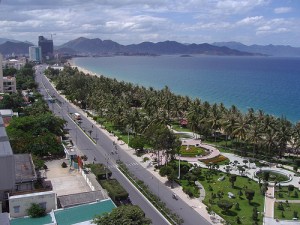
Thanks, Chế Lan Hương, for the posting. You melt my heart. I lived in Nha Trang as a child and, of all cities of Vietnam, Nha Trang still captures my fondest memories.

My family was in Thành, right outside Cửa Tây. If you go through Thành, from Nha Trang, into Cửa Đông, out of Cửa Tây, the fírst home you see on the right side of the road was the first home we lived when our family moved from Pleiku to Khánh Hòa.

I attended primary school in Hà Dừa, then 6th and 7th grades in what is now L‎ý Tự Trọng High School in Nha Trang. It was called Võ Tánh then. While at Võ Tánh, I stayed with a friend of my parents, on the ground of Department of Health, facing Tân Quang Theater. Wonder if the theater is still there. I can tell you about truckloads of memories I have of that town. Oh, nostalgia!

Trần Phú Ave. running along Nha trang's main beach
Trần Phú Ave. running along Nha Trang's main beach

Anyway, Lan Hương’s writing is superb. What can I say! Just one or two minor typos. You guys are so amazing. I am glad I have run into all of you. It is a great pleasure to discover so many talented friends.

Well, let me just be picky and pick some very small points in Lan Huong’s writing to discuss:

“Nha Trang is a center of politics, economy, culture, science and technology, and tourism of Khanh Hoa Province.” We say “a center” when we mean that it is only one center among many other similar centers. But Nha Trang is not just a center of Khanh Hoa. It is THE center of Khanh Hoa—the biggest, the best. So, we should say, “Nha Trang is the center of politics…”

“The difficult beaches differentiates…” Obviously, this is a typo. Should be “differentiate.”

“It is an ideal place for organizing a lot of major national and international events such as Sea festival, Miss Viet Nam, Miss Universe, Miss World, etc.”

. No need for “a lot of”.
. “Hold” sounds much better than “organize”. Why? Because “hold” has only one syllable and people use it everyday.

So, let’s change it to: “It is an ideal place to hold major national and international events, such as Sea Festival, Miss Vietnam, Miss Universe, Miss World, etc.”

Please note:
The comma after “events” and before “such as”.
“Sea Festival”: Probably both words should be capitalized as the proper name of the festival.

Let’s hope that other friends will chip in and share more about other cities. I would love to hear about YOUR cities. This is more than English practice. I’d like to know more about you, how you feel about yourselves and people and things around you. We want to know each other more. Please share. Don’t be so shy.

TODAY’s CHALLENGE

For today’s challenge, please write about ONE THING in your city that you like most.

I know it’s hard to pick one when you like so many. 🙂 But let’s stay with one, to have some focus.

You can incorporate this new challenge into yesterday’s challenge about your city.

Have fun. And, have a wonderful weekend. 🙂

Hoanh

Daily English Challenge — Friday, May 15th, 2009

englishchallenge

Hi everyone,

Thank you for being so enthusiastic! You are the best! You guys are much better than I expected. I was nowhere close to where you are now when I was at your age. You guys have just given me a tremendous boost.

Let’s get more friends involved in this English challenge program. We will do our country a big favor by promoting English.

In addition to the challenges that I have in this Daily English challenge section, don’t forget other things, such as the wonderful lyrics of the songs that chị Huỳnh Huệ posts. They can be used as translation exercises. Or other ĐCN postings that you would like to translate. Be free. We don’t really have rules here, other than the rule against offensive postings.

Today I have just placed 3 links below the “Thử thách Anh ngữ” link (in the right column of our homepage). They are for Webster Dictionary and Thesaurus, Tự Điển Ngoại Ngữ tiếng Việt, and Grammar exercises. These are to aid you in your study.

For yesterday exercise, I will pick out just some points to discuss.

“There are many trees and grasses there.” Grass is a non-countable noun. Change to something like “There are trees and there is grass.” Very simple, but rhythmic.

“My friend living in Đà Nẵng.” Not wrong grammatically, but unclear. It can be changed to something like “My friend from Da Nang who has arrived here three days ago on a visit.”

“My grand mother was fell down” should be changed to “my grandmother fell down.”

“Fortunately , the doctor said that she had been fine , but she must have been rest in bed for one months” should be changed to “Fortunately, the doctor said [that] she would be fine but she must be on bed rest for a month.”

“Not problem” should be changed to “No problem.”

“Not importance” should be changed to “not important.”

“My life looks like monotonous”:

To look + adjective: to describe the look. Ex: She looks so gorgeous with that ao dai. Or, the house looks much bigger in the sunset. Or, you look great today. Or, my life looks monotonous. But in the context here, “My life may look monotonous” sounds better.

To look like + noun : to compare. Ex: He looks like a monkey. She looks like a difficult princess.

That’s it. Let’s use these challenges to get to know each other more and more.

Now, here is the happy challenge for today:

Please tell me about the city where you live. I would like to know more about your city.

You tell me about your city and I will tell you about my city (Washington DC). Oh, if you have a couple of interesting pictures of your city, you can send them to me and I will place them in your post. I am at tdhoanh@gmail.com.

Have a great day!

Hoanh

Daily English Challenge — 14.5.2009

englishchallenge

Chào các bạn,

Trong tiến trình làm việc trong mục thử thách Anh ngữ này, mình vẫn trong giai đoạn khám phá và nghiên cứu vấn đề, để từ từ tìm ra các phương cách giúp các bạn phát triển Anh ngữ một cách hiệu quả nhất.

Vấn đề Anh ngữ to lớn hơn là vấn đề cá nhân và ý thích. Từ bây giờ cho đến vài thập niện nữa, đất nước chúng ta tiến nhanh đến đâu là do “dân Việt”, như là một toàn thể, phát triển Anh ngữ đến đâu. Các chính sách phát triển kinh tế khác đều được hỗ trợ hoặc kéo ngược lại do vận tốc phát triển của Anh ngữ. Các bạn nhìn Singapore, South Korea, India, Japan thì sẽ thấy. Càng khá Anh ngữ chúng ta càng khá trong “khu chợ quốc tế.”

Vì vậy, chúng ta cần biết rất rõ là một trong những cách giúp mình, giúp gia đình, và giúp tổ quốc hiệu quả nhất là khá Anh ngữ. Trust me. Mình đã nói chuyện với nhiều lãnh đạo kinh tế chính trị tại nhiều quốc gia.

Vòng lại chuyện của chúng ta, mình đã nhận thấy rằng cách học Anh ngữ của chúng ta quá khó khăn vì chúng ta học Anh ngữ như người Việt học tiếng Anh, thay vì như người Mỹ/Anh học tiếng Anh. Tức là ta học tiếng Anh qua tiếng Việt, chứ không như trẻ em học tiếng mẹ đẻ, học trực tiếp chứ không qua một ngôn ngữ nào. Học trực tiếp, không thông qua ngôn ngữ nào, làm việc học dễ dàng hơn, thấm nhanh hơn, và thấm được “luận lý nội tại” (inner logic) của ngôn ngữ mình học.

Vì vậy bắt đầu từ hôm nay chúng ta sẽ chuyển hướng từ từ, nghiên cứu cách học trực tiếp tiếng Anh, ít thông qua tíếng Việt. Mình nói là “ít” vì biết mỗi bạn đã thủ sẵn it nhất là một quyển tự điển rồi. 🙂 Chúng ta sẽ cùng nghiên cứu cách học với nhau. Các bạn cứ cho mình ý kiến về cách học khi thấy có điều gì đó cần suy nghĩ. Và chị Huệ, các ĐCN admins, và các bạn đọc cao minh khác, như anh Minh Đoan, đang đọc mục này, xin cứ tự nhiên góp ý với mình. Càng nhiều đầu óc tụ lại, ta càng khá. Đây là vấn đề lớn của đất nước.

Dĩ nhiên là mình sẽ nghiên cứu cách nào làm cho việc nghiên cứu của chúng ta vừa vui vừa dễ và vừa đủ khó một tí để thành thử thách. Từ từ chúng ta sẽ khám phá ra nhiều phương cách hay.

Vài điểm kỹ thuật cho WordPress system: Post “Thử thách Anh Ngữ hàng ngày” sẽ đổi tên thành Daily English Challenge. “Chuyên mục” (Category) thì vẫn giữ là “Thử thách Anh Ngữ”, và tag (thẻ) thì sẽ đổi từ “Nghiên cứu Anh ngữ” thành “English challenge.”

Sau đây là challenge rất dễ và vui ngày hôm nay:

Today is a beautiful day, even if you have cried a little for some reason 🙂 Would you like to share your day with all our brothers and sisters? We would love to hear from you.

Please write a short piece to tell everyone what you have done and/or what you plan to do today.

It depends on the time you write the response. Say, if you write at 12 pm, then write about what you have done since early morning till noon, and what you plan to do from noon till the time you go to bed.

Write whatever you want to write, how long or short as you like, in whatever style you like.

The best way to write is to do it in short and simple sentences, like this message that I am writing.

We just want to hear about your day. Life is beautiful when we can share our day with other brothers and sisters.

Have a great day!

Hoanh

Thử thách Anh Ngữ hàng ngày — 13.5.2009

englishchallenge
Chào các bạn,

Thử thách Anh ngữ hôm này là phần II của bài Wise Word mà chi Huệ đã gửi phần đầu hôm thứ hai.

Phần này cách hành văn khác với phần trước. Phần trước, có nhiều chuỗi từ, mỗi chuỗi là nhiều từ nối vói nhau bằng đấu phẩy, tạo ra nhịp điệu rất hay.

Phần này chuyển sang lối viết lý luận, với những chuổi lý luận bắt đầu với “if”. Và nhiều câu hỏi hùng biện (rhetorical questions), tức là loại câu hỏi được dùng để nhấn mạnh một điểm, chứ không phải là hỏi để tìm câu trả lời.

Bài này là một bài viết rất hay, của chuyên gia chuyên về viết lách, cho nên các bạn nên đọc tới đọc lui để thấm ngôn ngữ.

Về bài viết cover letter, thì các bạn nên cố làm nhé. Vì nó ảnh hưởng nhiều đến sự nghiệp mình sau nầy. Nếu khó một tí thì cứ cố lên. No pain, no gain.

Chúc các bạn một ngày vui.

Mến,

Hoành
__________________

Mời các bạn dịch tiếp phần II của bài Wise Word với độ dài độ 230 từ như hôm trước

Do you realize how much power your words have to make a difference in the lives of others? Let’s think about this for a moment. Suppose you encouraged two people today, motivating each of them to encourage two others tomorrow. If the process continues everyday, 128 people will have benefited by the end of the week. If it continues for two weeks, there will be 16,384 beneficiaries. What if it lasted for three weeks? There would be more than TWO MILLION people benefiting from kind acts that you initiated! But let’s be conservative and assume that at the end of three weeks “only” one-half of one percent of that number would benefit. If so, there would “merely” be 10,000 people better off because of your two acts of kindness. Imagine if you were kind to two different people every day! Can you begin to appreciate the enormous power you have to do good?

Of course, the reverse is also true. That is, each of our unkind acts spreads and multiplies just as quickly. Is there any wonder there is so much suffering? Isn’t it obvious the world is in desperate need of our acts of kindness? Can we afford to let a single day pass without a kind word? Let’s begin to make a difference today. Although we can improve the world in many ways with the gift of speech, for clarity’s sake, let’s focus on one issue: ENCOURAGEMENT.

Thử thách Anh ngữ hàng ngày — 12.5.2009

englishchallenge

Chào các bạn,

Hôm nay chúng ta sẽ làm một bài tập quan trọng đến công ăn việc làm của các bạn. Hôm nay các bạn sẽ viết một cover letter, đến một công ty nước ngoài tại Việt Nam để tìm việc. Cover letter là lá thơ bạn gửi để chuyển resume (hay CV) đến công ty. (Và đừng nói: “Vậy hả? Từ trước đến nay em chỉ gởi CV, chớ có biết cover letter là cái gì đâu. 🙂 ).

Cover letter rất quan trọng, vì nó là bước đầu tiên quyết định bạn có việc làm hay không. Và nó phải ngắn, không bao giờ quá một trang (kể cả ngày tháng, địa chỉ người nhận, everything, không quá một trang giấy). Cho nên không có nhiều chữ để viết. Nhưng làm thế nào để lá thơ của mình đứng trội lên, trong số 500 lá thơ Giám Đốc Nhân Viên của công ty nhận được, đó mới là vấn đề, và nó đòi hỏi suy nghĩ và sáng tạo.

Hồi trước, mình phải tuyển luật sư cho chính phủ, vì có nhiều thư tìm việc quá, việc đầu tiên của toán tuyển người là đọc rất nhanh các cover letters. Cái nào không hay thì dẹp qua, cái nào hay mới để đó, rồi sẽ đọc tiếp resume (CV). Mình có thể nói, trong vòng loại đầu, cover letter quyết định 50%, résumé quyết định 50%.

Từ từ chúng ta sẽ nghiên cứu thêm về cover letter cũng như cách viết một lá thơ business. Nhiều chuyện để nói, dài ngày. Hôm nay ta chỉ chú trọng đến việc viết chữ cho hay thôi.

Sau đây là một quảng cáo của một công ty nước ngoài tại Việt Nam tên là “World Travel” trên Vietnam Economic Times.

“World Travel is an international company with 80 offices in 30 countries around the world. Our Vietnam office is looking for an entry-level accountant. Applicant should have a bachelor degree in accounting, good academic grades, high people skills, good work ethics, good computer skills. English fluency is a must. Prior experience may be helpful but not required. We will train you. If you want a supportive environment to utilize all your talents to take on the world, we are the right place for you. We will help you grow with us. Please send your resume to Ms. Jane Cassini, Personnel Director, 500 Le Duan, HCMC. World Travel is an equal opportunity employer.”

Bây giờ bạn sẽ đóng vai một sinh viên mới ra trường, hoặc sắp sửa ra trường, với bằng cử nhân kế toán. Bạn viết một cover letter đến Jane Cassini để chuyển resume. (Bài tập này không có resume, chỉ cover letter thôi). Và ta cũng chưa cần các mục hình thức về tên họ địa chỉ. Bắt đầu bằng dòng chữ “Dear ….”

Nếu bạn chưa biết cover letter viết thế nào, Google “cover letter” là bạn sẽ có khối thông tin. Mình khuyên là các bạn đều nên viết bài này, dù bạn có post bài hay không. Đây là kỹ năng sẽ giúp ta cả đời. Đừng copy lá thơ khác dùng lại, kể cả lá thơ cũ của bạn. Mỗi công ty, mỗi công việc, cần một lá thơ. Đọc quảng cáo của công ty kỹ càng, nghiên cứu về công ty (cứ tưởng tượng ra cho bài tập này), và viết một lá thơ mà người đọc mới đọc được một hàng là muốn đọc hết, và đọc hết rồi là muốn gặp người viết (cả trước khi kịp đọc resume).

Cố gắng nhé !!

Chúc các bạn một ngày vui.

Mến,

Hoành