All posts by Đọt Chuối Non

Me? Me? Me?... Yeah yeah yeah amigo... What can me say about me-self?... me-self...me-self... Ole ole ole... me me me... I'm a young banana shoot... My dad is Banana Pa... My mom is Banana Ma... I am happy happy happy... I run around... oops... I can't run... I sing aloud... all day long... I sing in the rain... I sing in the shine... I sing day and night... I sing all the time... I watch the butterflies and the bees... and the cranes and the geese... Aha aha aha... here we go again... this little swallow circling on my head... the little swallow on my head... is about to poop on me... Hey, little fella, don't cha know where to unload ya poopa?... But, that's alright... I can swallow my pride to befriend a swallow... Yup yup yup... swallow my pride to befriend a swallow...

The Greater Mekong Subregion: Rural no more

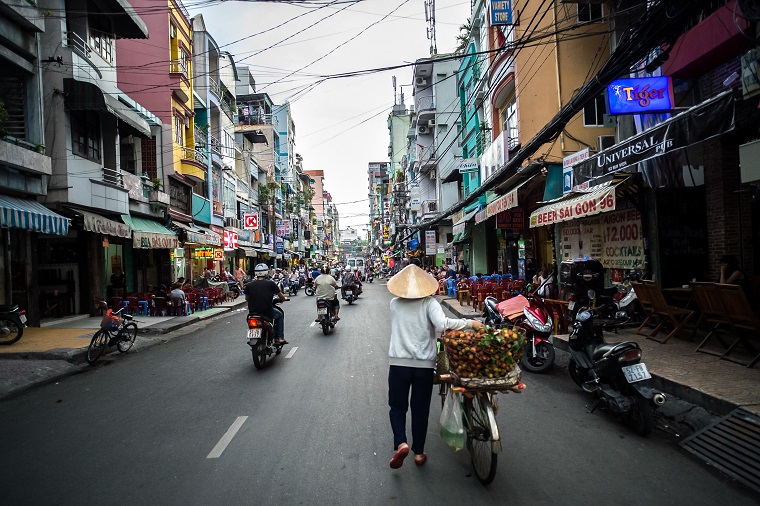
By 2030, more than 40% of the population in the Greater Mekong Subregion will be living in cities. Photo: ADB.By 2030, more than 40% of the population in the Greater Mekong Subregion will be living in cities. Photo: ADB.

greatermekong – The subregion is one of the least urbanized areas in the world, but its cities are growing and their economic impact is being felt. 

Urbanization levels in the Greater Mekong Subregion are low, ranging from 19.5% in Cambodia to 44.2% in Thailand. However, in all GMS countries, urban areas account for a much larger percentage of the gross domestic product (GDP)—at least half in most countries and about 75% in Thailand—than the share of its national populations.

Continue reading on CVD >>

Western strikes in Syria – five key questions

IISS Date: 12 April 2018

Syrian army in Douma April 2018. Credit: STRINGER/AFP/Getty ImagesBy Emile Hokayem, IISS Senior Fellow for Middle East Security.

What are the West’s military options – and what might the targets be?

Western countries have to decide whether military action in Syria is about punishment and deterrence for the use of chemical weapons, or whether they want to be more ambitious and go after the military infrastructure of the Assad regime, which has enabled his war machine to make very significant advances recently.

Continue reading on CVD >>

Đại Học Tự Trị – University Autonomy

Kết quả hình ảnh cho đại học tự chủ

– Magna Charta Universtatum
(VN không có đại học nào là thành viên của Magna Charta)
– www.Magna-Charta.org
– University Autonomy in Europe
– University Autonomy (The Nation, 2017)
– Tự Chủ Đại Học: Kinh nghiệm Đài Loan (Tia Sáng, 1917)
– Các trường chịu trách nhiệm trước nhà nước về tự trị đại học – Giáo Dục VN (2017)
– Đại Học Tự Trị – Huy Đức
– Trường đại học đang trở thành “con sen” của xã hội hậu hiện đại (Dân Trí, 2016)
– Tự chủ đại học: Từ bỏ nỗi “sợ” để nâng cao chất lượng (Dân Trí, 2016)

Đọc tiếp trên CVD >>

Deputy PM leads Hai Phong customs bribe probe

Last update 16:46 | 10/04/2018  vietnamnet

Deputy Prime Minister Truong Hoa Binh will oversee an urgent investigation into bribes to speed up customs clearance procedures at ports in the northern city of Hai Phong.

Deputy PM leads Haiphong customs bribe probe, social news, vietnamnet bridge, english news, Vietnam news, news Vietnam, vietnamnet news, Vietnam net news, Vietnam latest news, vn news, Vietnam breaking news

Customs officers in Haiphong found to have taken bribes

The request was made following an article published on Lao Dong Newspaper on April 9.

A group of Lao Dong Newspaper reporters played the role of being apprentices at a company in Hai Phong which specializes on rapid customs clearance.

Continue reading on CVD >>

Four things to know about gender-based violence in Asia

asiafoundation.org March 14, 2018

By Barbara RodriguezSofia Shakil and Adrian Morel

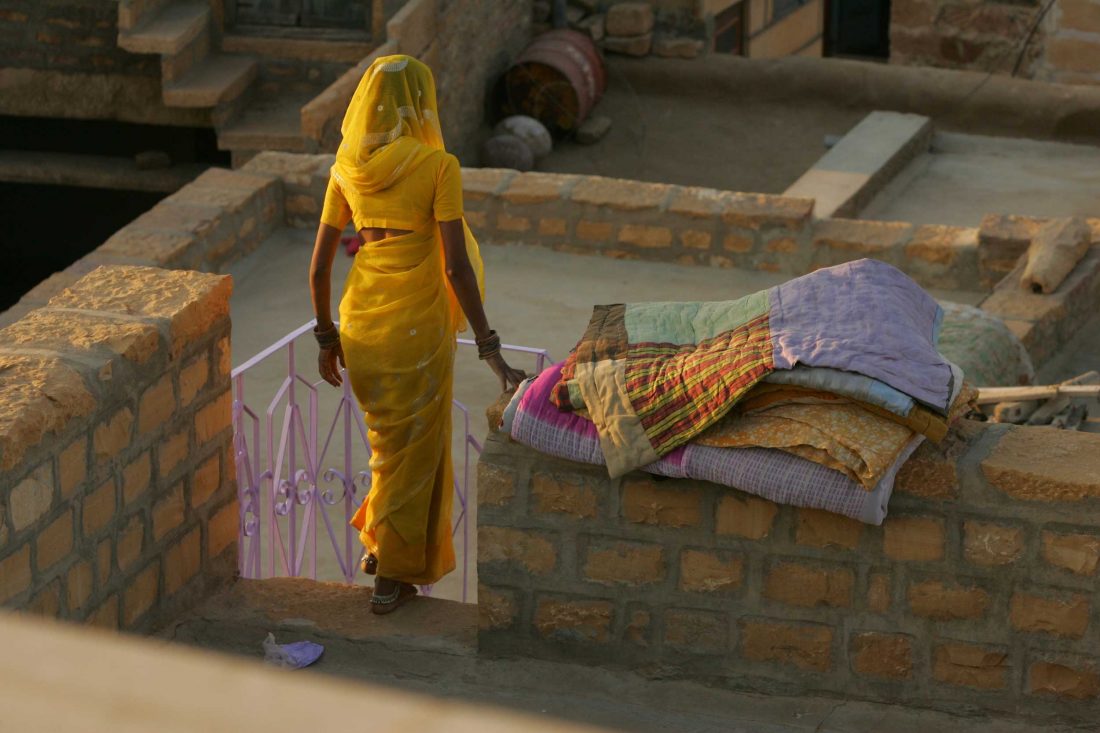
woman in India

Globally, one in three women have experienced physical and/or sexual violence in their lifetime. On March 6, The Asia Foundation in Washington, D.C., hosted a panel discussion on why gender-based violence remains so prevalent in Asia and the legal frameworks that exist (or don’t, but should) to protect women and girls. Here are four key takeaways from our presentations and the ensuing discussion.

Continue reading on CVD >>

Nhà văn Nguyên Ngọc: Báo động ở Hội An

NĐT  07:15 | Thứ bảy, 07/04/2018

LTS: “Ký ức Hội An” là một chương trình “nghệ thuật thực cảnh” vừa ra mắt tại sân khấu mới được dựng lên ở cồn nổi trên dòng sông Hoài. Ngoài những phản ứng của dư luận về vở diễn thì dự án xây dựng – nơi đặt sân khấu lại gây bức xúc và lo ngại khác- một cồn nổi đẹp của Hội An, Quảng Nam thành những khối bêtông xám xịt. Bài viết dưới đây của nhà văn Nguyên Ngọc, lên tiếng cảnh báo về một thảm họa văn hóa cho thành phố này, và chắc chắn không chỉ dừng lại ở văn hóa.

Toàn cảnh không gian diễn ra“ Ký ức Hội An” tại Công viên văn hóa Ấn tượng Hội An (Ảnh cắt từ trailer).

Tôi bắt chước anh Nguyễn Sự – nguyên Bí thư Thành ủy Hội An. Anh Sự được mời đi dự ra mắt chương trình hoành tráng “Ký ức Hội An’’, anh từ chối.

Đọc tiếp trên CVD >>

Đập Sê Kông 1 đe dọa Đồng bằng Sông Cửu Long

NCĐT – GREGORY A. THOMAS – JAKE BRUNNER (*) Thứ Sáu | 06/04/2018 16:21

Đập Sê Kông 1 có khả năng làm giảm lượng trầm tích bồi đắp cho Đồng bằng Sông Cửu Long và giảm đáng kể sản lượng đánh bắt cá tại Campuchia.

Sông Sê Kông bắt nguồn từ Thừa Thiên-Huế, Việt Nam chảy qua Lào, và đổ vào Campuchia. Đây là dòng nhánh lớn cuối cùng của sông Mê Kông chưa bị cản trở bởi các đập thủy điện và có tầm quan trọng đặc biệt, không thể thay thế được đối với an ninh lương thực của khu vực và với sức sản xuất của vùng Châu thổ Sông Mê Kông. Hai sông nhánh lớn khác, cùng với Sê Kông tạo thành các lưu vực 3S, là Srepôk và Se San đã bị chặn ngay trước nơi chúng nhập với dòng chính sông Mê Công bởi đập Hạ Sesan 2 được hoàn thành vào cuối năm 2017.

Đọc tiếp trên CVD >>

Why are minerals companies trying to make batteries?

greentechmedia – Lithium Australia is the latest in a series of firms looking downstream.

An Australian lithium mine.

An Australian lithium mine.

Lithium Australia last month became the latest in a growing list of mineral extraction firms to branch out into battery manufacturing.

The Perth, Western Australia-based lithium company announced acceptance of an offer for 99.7 percent of the Very Small Particle Company (VSPC), an Australian firm that develops and produces nanoscale metal oxides for lithium-iron-phosphate electric vehicle batteries.

Continue reading on CVD >>

Using artificial intelligence to investigate illegal wildlife trade on social media

Sciencedaily.com

Date:March 12, 2018 Source:University of Helsinki

FULL STORY

These are Southern white rhinoceros (Ceratotherium simum simum) in an undisclosed protected area in South Africa.

Credit: Enrico Di Minin

Illegal wildlife trade is one of the biggest threats to biodiversity conservation and is currently expanding to social media. This is a worrisome trend, given the ease of access and popularity of social media. Efficient monitoring of illegal wildlife trade on social media is therefore crucial for conserving biodiversity.

In a new article published in the journal Conservation Biology, scientists from the University of Helsinki, Digital Geography Lab, argue that methods from artificial intelligence can be used to help monitor the illegal wildlife trade on social media.

Continue reading on CVD >>

Some info and statistics on Vietnam education – Một số thông tin và thống kê về giáo dục ở VN

Kết quả hình ảnh cho Vietnam education

1. Viet Nam National Education for All 2015 review
– At UNESCO
– At CVD
Báo cáo Quốc gia – Giáo dục cho mọi người 2015 của Việt Nam
– At UNESCO
– At CVD

2. Chiến lược Phát triển Giáo Dục Việt Nam 2009-2020 (at UNESCO)

3. Những con số biết nói về giáo dục đại học Việt Nam – Vietnamnet (Aug. 11, 2017)

Bức tranh toàn cảnh về nền giáo dục Việt Nam những năm qua – giaoduc.net.vn (Aug. 13, 2017)

Đọc tiếp trên CVD >>

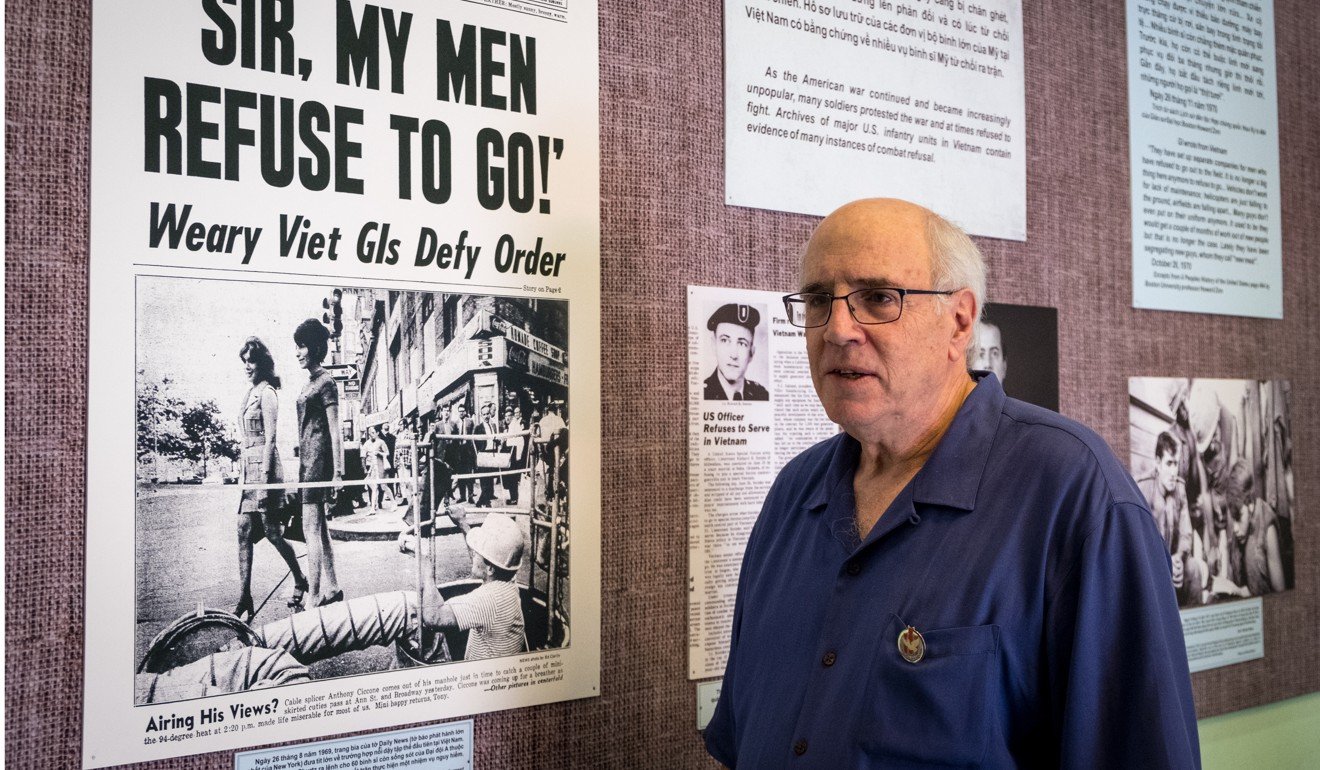
Why American soldiers were on front lines of anti-Vietnam-war movement

scmp – Ho Chi Minh City exhibition recalls how American GIs organised protests, published underground newspapers and served jail time in their efforts to bring peace to Southeast Asia

By Gary Jones – 

The stereotypical image of the Vietnam war veteran, returning to the United States after an arduous tour of duty, only to be spat upon and cursed as a murderer by sneering, long-haired peace protesters, is seared into the American psyche like a scar from a white-hot burst of napalm. The accepted belief is that weary veterans trudged home to be condemned, cold-shouldered, even physically assaulted – simply for doing their duty to their country.

Ron Carver, curator of the “Waging Peace” exhibition, at the War Remnants Museum, in Ho Chi Minh City. Picture: Gary Jones

Continue reading on CVD >>

9 million Vietnamese people still living in extreme poverty: report

vnexpress.net By Dat Nguyen   April 7, 2018 | 05:00 am GMT+7

9 million Vietnamese people still living in extreme poverty: report

A homeless woman rides a bicycle in Hanoi on December 18, 2017. Photo by VnExpress/Giang Huy

The poor faces a widening gap in terms of access to upper secondary education and improved water and sanitation.

Nine million Vietnamese people are still living in extreme poverty, according to a World Bank report released on Thursday which calls for more alleviation efforts despite the success so far.

Continue reading on CVD >>

At this rate, it’s going to take nearly 400 years to transform the energy system

technologyreview – Here are the real reasons we’re not building clean energy anywhere near fast enough.

Fifteen years ago, Ken Caldeira, a senior scientist at the Carnegie Institution, calculated that the world would need to add about a nuclear power plant’s worth of clean-energy capacity every day between 2000 and 2050 to avoid catastrophic climate change. Recently, he did a quick calculation to see how we’re doing.

Not well. Instead of the roughly 1,100 megawatts of carbon-free energy per day likely needed to prevent temperatures from rising more than 2 ˚C, as the 2003 Science paper by Caldeira and his colleagues found, we are adding around 151 megawatts. That’s only enough to power roughly 125,000 homes.

Continue reading on CVD >>

Fire season in Southeast Asia

earthobservatory NASA – acquired February 3, 2018

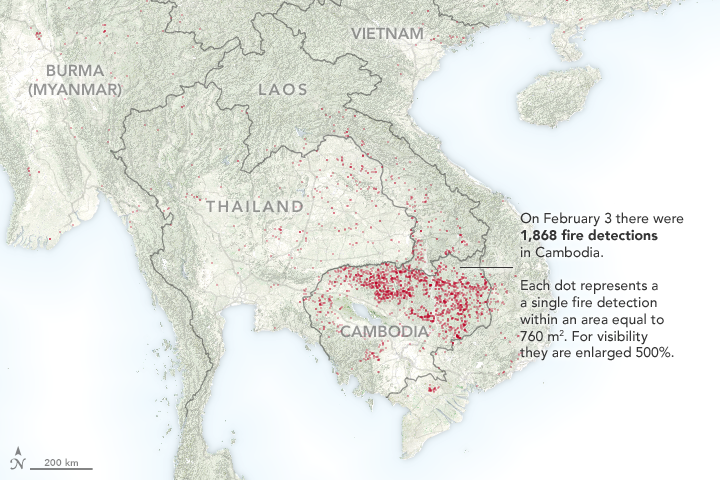
It’s Fire Season in Southeast Asia

Every January through March, vast numbers of small fires spring up across the countryside in Southeast Asia. Those months usually bring cool, dry weather—perfect conditions for burning.

The Visible Infrared Imaging Radiometer Suite (VIIRS) on the Suomi NPP satellite captured data (above) showing the locations of hundreds of fires burning in Cambodia, Vietnam, Thailand, Laos, and Myanmar (Burma) on February 3, 2018. Each red dot on the map depicts one fire detection from the VIIRS 750-meter active fire data product. (Note that there is also a 375-meter active fire data product that detects more fires, but the 750-meter product is the basis for this useful mapping tool.)

Continue reading on CVD >>