How’s it going? Do you have any memories with traffic lights?
I remember, when I was a teen, my friends and I talked about traffic lights. We asked one another why Sapa didn’t have any. Some friends answered, “Sapa is just a small town. Only big cities have traffic lights”, while others replied, “Perhaps it would be hard to install traffic lights on the sloping roads in Sapa.” At that time, we all were curious to know where people would put traffic lights.
We, the Leaders of the G7, met today in Brussels at the invitation of the German G7 Presidency, to further strengthen our cooperation in light of Russia’s unjustifiable, unprovoked and illegal aggression and President Putin’s war of choice against independent and sovereign Ukraine. We will stand with the government and people of Ukraine.
We are united in our resolve to restore peace and stability and uphold international law. Following the United Nations General Assembly resolution on March 2022, we will continue to stand with the overwhelming majority of the international community, in condemning Russia’s military aggression and the suffering and loss of life it continues to cause.
We remain appalled by and condemn the devastating attacks on the Ukrainian population and civilian infrastructure, including hospitals and schools. We welcome the investigations of international mechanisms, including by the Prosecutor of the International Criminal Court. We will work together to support the gathering of evidence of war crimes. The siege of Mariupol and other Ukrainian cities, and the denial of humanitarian access by Russian military forces are unacceptable. Russian forces must immediately provide for safe pathways to other parts of Ukraine, as well as humanitarian aid to be delivered to Mariupol and other besieged cities.
The Russian leadership is obligated to immediately comply with the order of the International Court of Justice to suspend the military operations that it commenced on 24 February 2022 in the territory of Ukraine, without any further delay. We also urge Russia to withdraw its military forces and equipment from the entire territory of Ukraine.
We further call upon the Belarusian authorities to avoid further escalation and to refrain from using their military forces against Ukraine. Moreover, we urge all countries not to give military or other assistance to Russia to help continue its aggression in Ukraine. We will be vigilant regarding any such assistance.
We will spare no efforts to hold President Putin and the architects and supporters of this aggression, including the Lukashenko regime in Belarus, accountable for their actions. To this end, we will continue to work together, along with our allies and partners around the world.
We underline our resolve to impose severe consequences on Russia, including by fully implementing the economic and financial measures we already imposed. We will continue to cooperate closely, including by engaging other governments on adopting similar restrictive measures to those already imposed by G7 members and on refraining from evasion, circumvention and backfilling that seek to undercut or mitigate the effects of our sanctions. We task the relevant Ministers in a focused initiative to monitor the full implementation of sanctions and to coordinate responses related to evasive measures, including regarding gold transactions by the Central Bank of Russia. We stand ready to apply additional measures as required, continuing to act in unity as we do so. We commend those partners who have aligned with us in these efforts.
Russia’s attack has already risked the safety and security of nuclear sites in Ukraine. Russian military activities are creating extreme risks for the population and the environment, with the potential for catastrophic result. Russia must comply with its international obligations and refrain from any activity that imperils nuclear sites, allowing unhindered control by the Ukrainian authorities, as well as full access by and cooperation with the International Atomic Energy Agency.
We warn against any threat of the use of chemical, biological and nuclear weapons or related materials. We recall Russia’s obligations under the international treaties to which it is a signatory, and which protect us all. In this regard, we categorically denounce Russia’s malicious and completely unfounded disinformation campaign against Ukraine, a state in full compliance with international non-proliferation agreements. We express concern about other countries and actors that have amplified Russia’s disinformation campaign.
We are resolved in our support to the Ukrainian people in their heroic resistance to Russia’s unjustifiable and illegal aggression. We will step up our support to Ukraine and neighbouring countries. We thank all those who are already providing humanitarian aid to Ukraine and ask others to join. We will furthermore collaborate in our efforts to bolster democratic resilience and defend human rights in Ukraine and neighbouring countries.
We will continue efforts to support Ukraine in defending its networks against cyber incidents. In preparation for any Russian malicious cyber response to the actions we have taken, we are taking steps to increase the resilience of the infrastructure in our respective nations by strengthening our coordinated cyber defences and improving our shared awareness of cyber threats. We will also work to hold accountable those actors that engage in destructive, disruptive, or destabilising activities in cyberspace.
We further commend neighbouring states for their solidarity and humanity in welcoming Ukrainian refugees and third country nationals from Ukraine. We highlight the need to further increase international assistance to countries neighbouring Ukraine, and, as a concrete contribution to this end, underline our commitment to receiving, protecting, and supporting refugees and displaced persons as a consequence of the conflict. We thus all stand ready to welcome them on our territories. We will take further steps to broaden our support to Ukraine and neighbouring countries.
We are concerned by the escalating and reinforced repression against the Russian people and the increasingly hostile rhetoric of the Russian leadership, including against ordinary citizens. We deplore the Russian leadership’s attempt to deprive Russian citizens of access to unbiased information through censorship, and denounce its malicious disinformation campaigns, which we will not leave unaddressed. We express our support to those Russian and Belarusian citizens standing up against the unjustified war of aggression against their close neighbour Ukraine. The world sees them.
The people of Russia must know that we hold no grievances against them. It is President Putin, his government and supporters, including the Lukashenko regime in Belarus, who are imposing this war and its consequences on Russians and it is their decision that besmirches the history of the Russian people.
We are taking further steps to reduce our reliance on Russian energy, and will work together to this end. At the same time, we will ensure secure alternative and sustainable supplies, and act in solidarity and close coordination in the case of possible supply disruptions. We commit to actively support countries willing to phase out their dependency on Russian gas, oil and coal imports. We call on oil and gas producing countries to act in a responsible manner and to increase deliveries to international markets, noting that OPEC has a key role to play. We will work with them and all partners to ensure stable and sustainable global energy supplies. This crisis reinforces our determination to meet the goals of the Paris agreement and of the Glasgow climate pact and limit the rise in global temperatures to 1.5°C, by accelerating reduction of our reliance on fossil fuels and our transition to clean energy.
We stand in solidarity with our partners who have to bear the rising price of President Putin’s unilateral choice to wage war in Europe. His decision is putting the global economic recovery at risk, undermines the resilience of global value chains and will have severe impacts on the most fragile countries. We call on the international community to take action by fully recognising Russia’s responsibility and protecting the most vulnerable countries, with the support of international and regional institutions.
More immediately, President Putin’s war places global food security under increased pressure. We recall that the implementation of our sanctions against Russia takes into account the need to avoid impact on global agricultural trade. We remain determined to monitor the situation closely and do what is necessary to prevent and respond to the evolving global food security crisis. We will make coherent use of all instruments and funding mechanisms to address food security, and build resilience in the agriculture sector in line with climate and environment goals. We will address potential agricultural production and trade disruptions, in particular in vulnerable countries. We commit to provide a sustainable food supply in Ukraine and support continued Ukrainian production efforts.
We will work with and step up our collective contribution to relevant international institutions including the World Food Programme (WFP), in parallel with Multilateral Development Banks and International Financial Institutions, to provide support to countries with acute food insecurity. We call for an extraordinary session of the Council of the Food and Agriculture Organization (FAO) to address the consequences on world food security and agriculture arising from the Russian aggression against Ukraine. We call on all participants of the Agriculture Markets Information System (AMIS) to continue to share information and explore options to keep prices under control, including making stocks available, in particular to the WFP. We will avoid export bans and other trade-restrictive measures, maintain open and transparent markets, and call on others to do likewise, consistent with World Trade Organization (WTO) rules, including WTO notification requirements.
International organisations and multilateral fora should no longer conduct their activities with Russia in a business as usual manner. We will work closely with our partners to act as appropriate, based on shared interests, as well as rules and regulations of respective institutions.
The General Motors facility in Silao, Mexico. Photo Credit: Luis Antonio Rojas for The New York Times.
Unions make life better for workers. That is the idea. But what if the unions are corrupt? What if union leadership works for the benefit of employers? That is the reality for labor in Mexico.
Mexico has big factories. It is a rich country in Latin America. Yet its workers still earn low wages compared to other countries in the region.
There is a surge in the number of Asian residents across New York City. Photo Credit: Janice Chung for The New York Times.
It looked like the number of people living in New York City was shrinking. The 2020 census data would tell us how much.
Surprise! The city’s population actually grew by almost eight percent. Most of the population increase was Asian people. Today, people who call themselves Asian are sixteen percent of all the residents of New York City.
Bài hát “All is love” được Karen O và Nick Zinner – hai thành viên trong nhóm Yeah Yeah Yeahs sáng tác để làm nhạc cho bộ phim “Where the wild things are”. Ca sĩ Karen O và các bạn thiếu nhi đã thể hiện ca khúc này.
Phim “Where the wild things are” diễn tả tâm lý của trẻ ở tuổi vị thành niên khi có những cảm xúc tiêu cực như cô đơn và tức giận. Nhân vật chính trong phim là cậu bé Max. Max rất cô đơn vì mẹ và chị luôn có việc riêng và không quan tâm đến cậu.
Băn khoăn lo lắng có lẽ là bệnh rộng lớn nhất của loài người. Mình chẳng biết bà con đặt băn khoăn lo lắng ở đâu trong tham sân si, nhưng rất có thể là trong cả ba – tham thì lo lắng không có được cái mình tham, sân thì cũng lo lắng vì nổi giận muốn giết hắn nhưng lo giết không được lại bị hắn giết, si thì ngu và ngu thì lo lắng với đủ mọi thứ trên đời kể cả những thứ chẳng nên lo như là chiếc máy bay nào sẽ rớt xuống trên đầu mình bây giờ. Continue reading Băn khoăn lo lắng gì?→
At the Dasna Devi temple, a placard read: “This is a holy place for Hindus. Entry of Muslims is forbidden.” Photo Credit: Saumya Khandelwal for The New York Times.
People of different backgrounds live together. Unless, for some reason, they decide not to live together. They do seem to get along better in dictatorships. Tito ran Yugoslavia, Hussein ran Iraq and Khaddaffi ran Libya. Their people had no freedom of choice about with whom they lived. And so, for the most part, they got along.
Every week, Asia Stream tracks and analyzes the Indo-Pacific with a mix of expert interviews and original reporting by our correspondents from across the globe.
John Christopher Williams (born 24 April 1941) is an Australian virtuosic classical guitarist renowned for his ensemble playing as well as his interpretation and promotion of the modern classical guitar repertoire. In 1973, he shared a Grammy Award in the Best Chamber Music Performance category with fellow guitarist Julian Bream for Together (released in the US as Julian and John (Works by Lawes, Carulli, Albéniz, Granados)).Guitar historian Graham Wade has said that “John is perhaps the most technically accomplished guitarist the world has seen.”
The Concierto de Aranjuez is a classical guitarconcerto by the Spanish composer Joaquín Rodrigo. Written in 1939, it is by far Rodrigo’s best-known work, and its success established his reputation as one of the most significant Spanish composers of the 20th century.
Các bạn đã xem bóng đá nhiều và bóng đá VN cũng thuộc vào hàng kha khá. Thế thì các bạn đã hiểu điều gì tạo ra sức mạnh của một team, như là một đội bóng.
Người ta thường tập trung nhiều vào người huấn luyện viên (thầy) dẫn dắt team. Và có lẽ là điều đó đúng, người thầy rất quan trọng cho một team. Hơn nữa thắng thua, nhất là khi thua, thiên hạ cần một người để xỉ vả. Người đó thường là người thầy, vì đó là một người. Xỉ vả cả team thì chẳng ăn thua gì, vì cả team là chẳng ai cả. Continue reading Tư duy teamwork→
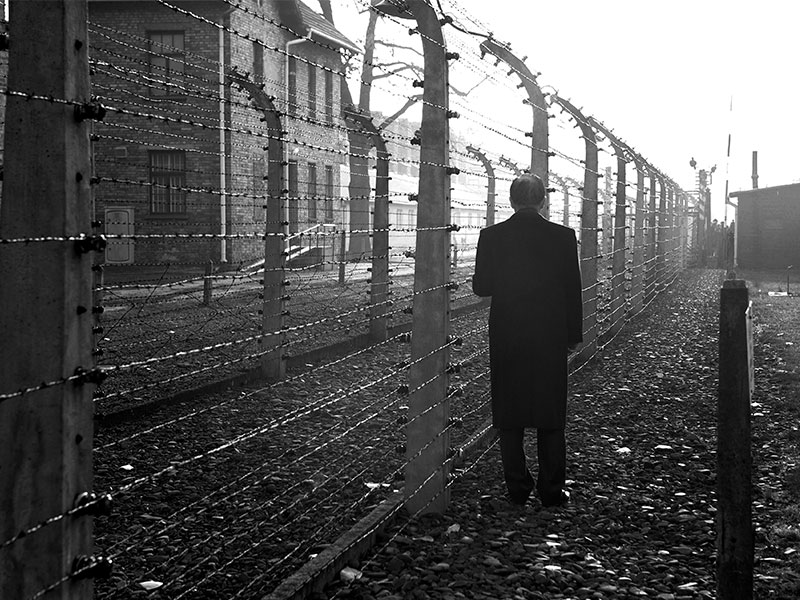
Secretary-General visits Auschwitz-Birkenau, Poland. UN Photo/Evan Schneider
The word “genocide” was first coined by Polish lawyer Raphäel Lemkin in 1944 in his book Axis Rule in Occupied Europe. It consists of the Greek prefix genos, meaning race or tribe, and the Latin suffix cide, meaning killing. Lemkin developed the term partly in response to the Nazi policies of systematic murder of Jewish people during the Holocaust, but also in response to previous instances in history of targeted actions aimed at the destruction of particular groups of people. Later on, Raphäel Lemkin led the campaign to have genocide recognised and codified as an international crime.
Genocide was first recognised as a crime under international law in 1946 by the United Nations General Assembly (A/RES/96-I). It was codified as an independent crime in the 1948 Convention on the Prevention and Punishment of the Crime of Genocide (the Genocide Convention). The Convention has been ratified by 149 States (as of January 2018). The International Court of Justice (ICJ) has repeatedly stated that the Convention embodies principles that are part of general customary international law. This means that whether or not States have ratified the Genocide Convention, they are all bound as a matter of law by the principle that genocide is a crime prohibited under international law. The ICJ has also stated that the prohibition of genocide is a peremptory norm of international law (or ius cogens) and consequently, no derogation from it is allowed. Continue reading Genocide, Crimes against Humanity, War Crimes, Ethnic Cleansing→
nytime.com – Articles, maps, photos, videos, podcasts and more, as well as suggestions for using them in your classroom.
Residents salvage their belongings from their homes on March 14 after the shelling of a residential building in Kyiv, Ukraine. Related ArticleCredit…Lynsey Addario for The New York Times
Young people all over are avidly following what some have called “the first TikTok war.” In late February, we created a place on our site for teenagers to react to the invasion, and within a week, over 900 had. This comment from Winn Godier, a high school student in North Carolina, echoes what we have heard from many teenagers:
June Carter viết bài hát này khi chị lái xe loanh quanh vô định trong đêm, lo nghĩ về những cá tính hoang dã của anh Johnny Cash và nhận ra chị không thể nhịn được anh. “Chẳng có cách nào tồn tại được trong kiểu địa ngục đó, chẳng có cách nào dập tắt được một ngọn lửa đang cháy, cháy, cháy,” chị viết.
Không lâu sau khi nghe Anita – chị gái của June – đã nhận ca khúc này, Cash mơ anh đang hát bài này với các kèn mariachi. Phiên bản của Cash đã trở thành một trong những hit lớn nhất của anh (đã truyền cảm hứng cho các bản cover của tất cả mọi người từ Frank Zappa đến Adam Lambert), và cuộc hôn nhân của anh với June bốn năm sau đó đã cứu sống đời anh. Continue reading Vành đai lửa→
Nếu các bạn để ý, các bạn sẽ thấy mọi sự trên thế giới, đặc biệt là chiến tranh, chuyển động rất nhanh so với ngày trước. Nhìn vào cuộc chiến Nga-Ukraine các bạn thấy ngay. Nga vừa chuyển động là cả thế giới có phản ứng – của các chính phủ thì đã đành, nhưng dân chúng khắp nơi biểu tình chống chiến tranh. Và nếu bạn theo dõi tình hình thì cũng thấy được mọi sự xảy ra, hay có thể xảy ra, đều được thông tin ra cho cả thế giới biết tức thì.
Đồng bằng sông Cửu Long thiếu nước phục vụ sinh hoạt và sản xuất trầm trọng. Ảnh từ www.moitruongvadothi.vn.
1. Bối cảnh
Đồng bằng sông Cửu Long (ĐBSCL) của Việt Nam là đồng bằng lớn thứ ba trên Trái Đất, là nơi sinh sống của gần 18 triệu người với sinh kế chủ yếu là sản xuất nông nghiệp và nuôi trồng thủy sản. Được coi là “Vựa lúa” của Việt Nam, ĐBSCL đóng góp hơn một nửa tổng sản lượng gạo của cả nước và 95% sản lượng gạo xuất khẩu, góp phần đưa Việt Nam trở thành quốc gia xuất khẩu gạo lớn thứ ba thế giới. Khu vực này cũng đóng góp 70% sản lượng trái cây và hơn 60% sản lượng thủy sản xuất khẩu của cả nước.1





 Đọt Chuối Non