Tag Archives: trà đàm

John 14

Series on John:
(0)(1)(2)(3)(4)(5)(6)(7)(8)(9)(10), (11),
 (12)(13)(14),(15)(16)(17)(18), (19), (20), (21), (final)

Jesus Comforts His Disciples

14 “Do not let your hearts be troubled. You believe in God[a]; believe also in me. My Father’s house has many rooms; if that were not so, would I have told you that I am going there to prepare a place for you? And if I go and prepare a place for you, I will come back and take you to be with me that you also may be where I am. You know the way to the place where I am going.”

Continue reading John 14

John 13

Series on John:
(0)(1)(2)(3)(4)(5)(6)(7)(8)(9)(10), (11),
 (12)(13)(14),(15)(16)(17)(18), (19), (20), (21), (final)

Jesus Washes His Disciples’ Feet

13 It was just before the Passover Festival. Jesus knew that the hour had come for him to leave this world and go to the Father. Having loved his own who were in the world, he loved them to the end.

The evening meal was in progress, and the devil had already prompted Judas, the son of Simon Iscariot, to betray Jesus. 

Continue reading John 13

John 12

Series on John:
(0)(1)(2)(3)(4)(5)(6)(7)(8)(9)(10), (11),
 (12)(13)(14),(15)(16)(17)(18), (19), (20), (21), (final)

Jesus Anointed at Bethany

12 Six days before the Passover, Jesus came to Bethany, where Lazarus lived, whom Jesus had raised from the dead. Here a dinner was given in Jesus’ honor. Martha served, while Lazarus was among those reclining at the table with him. Then Mary took about a pint[a] of pure nard, an expensive perfume; she poured it on Jesus’ feet and wiped his feet with her hair. And the house was filled with the fragrance of the perfume.

Continue reading John 12

John 11

Series on John:
(0)(1)(2)(3)(4)(5)(6)(7)(8)(9)(10), (11),
 (12)(13)(14),(15)(16)(17)(18), (19), (20), (21), (final)

The Death of Lazarus

11 Now a man named Lazarus was sick. He was from Bethany, the village of Mary and her sister Martha. (This Mary, whose brother Lazarus now lay sick, was the same one who poured perfume on the Lord and wiped his feet with her hair.) So the sisters sent word to Jesus, “Lord, the one you love is sick.”

When he heard this, Jesus said, “This sickness will not end in death. No, it is for God’s glory so that God’s Son may be glorified through it.” Now Jesus loved Martha and her sister and Lazarus. So when he heard that Lazarus was sick, he stayed where he was two more days, and then he said to his disciples, “Let us go back to Judea.”

Continue reading John 11

John 10

Series on John:
(0)(1)(2)(3)(4)(5)(6)(7)(8)(9)(10), (11),
 (12)(13)(14),(15)(16)(17)(18), (19), (20), (21), (final)

The Good Shepherd and His Sheep

10 “Very truly I tell you Pharisees, anyone who does not enter the sheep pen by the gate, but climbs in by some other way, is a thief and a robber. The one who enters by the gate is the shepherd of the sheep. The gatekeeper opens the gate for him, and the sheep listen to his voice. He calls his own sheep by name and leads them out. When he has brought out all his own, he goes on ahead of them, and his sheep follow him because they know his voice. But they will never follow a stranger; in fact, they will run away from him because they do not recognize a stranger’s voice.” Jesus used this figure of speech, but the Pharisees did not understand what he was telling them.

Continue reading John 10

John 9

Series on John:
(0)(1)(2)(3)(4)(5)(6)(7)(8)(9)(10), (11),
 (12)(13)(14),(15)(16)(17)(18), (19), (20), (21), (final)

Jesus Heals a Man Born Blind

As he went along, he saw a man blind from birth. His disciples asked him, “Rabbi, who sinned, this man or his parents, that he was born blind?”

“Neither this man nor his parents sinned,” said Jesus, “but this happened so that the works of God might be displayed in him. As long as it is day, we must do the works of him who sent me. Night is coming, when no one can work. While I am in the world, I am the light of the world.”

After saying this, he spit on the ground, made some mud with the saliva, and put it on the man’s eyes. “Go,” he told him, “wash in the Pool of Siloam” (this word means “Sent”). So the man went and washed, and came home seeing.

Continue reading John 9

John 8

Series on John:
(0)(1)(2)(3)(4)(5)(6)(7)(8)(9)(10), (11),
 (12)(13)(14),(15)(16)(17)(18), (19), (20), (21), (final)

but Jesus went to the Mount of Olives.

At dawn he appeared again in the temple courts, where all the people gathered around him, and he sat down to teach them. The teachers of the law and the Pharisees brought in a woman caught in adultery. They made her stand before the group and said to Jesus, “Teacher, this woman was caught in the act of adultery. In the Law Moses commanded us to stone such women. Now what do you say?” They were using this question as a trap, in order to have a basis for accusing him.

Continue reading John 8

John 7

Series on John:
(0)(1)(2)(3)(4)(5)(6)(7)(8)(9)(10), (11),
 (12)(13)(14),(15)(16)(17)(18), (19), (20), (21), (final)

Jesus Goes to the Festival of Tabernacles

After this, Jesus went around in Galilee. He did not want[a] to go about in Judea because the Jewish leaders there were looking for a way to kill him. But when the Jewish Festival of Tabernacles was near, Jesus’ brothers said to him, “Leave Galilee and go to Judea, so that your disciples there may see the works you do. No one who wants to become a public figure acts in secret. Since you are doing these things, show yourself to the world.” For even his own brothers did not believe in him.

Continue reading John 7

John 6

Jesus Feeds the Five Thousand

Series on John:
(0)(1)(2)(3)(4)(5)(6)(7)(8)(9)(10), (11),
 (12)(13)(14),(15)(16)(17)(18), (19), (20), (21), (final)

Some time after this, Jesus crossed to the far shore of the Sea of Galilee (that is, the Sea of Tiberias), and a great crowd of people followed him because they saw the signs he had performed by healing the sick. Then Jesus went up on a mountainside and sat down with his disciples. The Jewish Passover Festival was near.

When Jesus looked up and saw a great crowd coming toward him, he said to Philip, “Where shall we buy bread for these people to eat?” He asked this only to test him, for he already had in mind what he was going to do.

Continue reading John 6

John 4

Series on John:
(0)(1)(2)(3)(4)(5)(6)(7)(8)(9)(10), (11),
 (12)(13)(14),(15)(16)(17)(18), (19), (20), (21), (final)

Jesus Talks With a Samaritan Woman

Now Jesus learned that the Pharisees had heard that he was gaining and baptizing more disciples than John— although in fact it was not Jesus who baptized, but his disciples. So he left Judea and went back once more to Galilee.

Now he had to go through Samaria. So he came to a town in Samaria called Sychar, near the plot of ground Jacob had given to his son Joseph. Jacob’s well was there, and Jesus, tired as he was from the journey, sat down by the well. It was about noon.

Continue reading John 4

John 3

Series on John:
(0)(1)(2)(3)(4)(5)(6)(7)(8)(9)(10), (11),
 (12)(13)(14),(15)(16)(17)(18), (19), (20), (21), (final)

Jesus Teaches Nicodemus

Now there was a Pharisee, a man named Nicodemus who was a member of the Jewish ruling council. He came to Jesus at night and said, “Rabbi, we know that you are a teacher who has come from God. For no one could perform the signs you are doing if God were not with him.”

Jesus replied, “Very truly I tell you, no one can see the kingdom of God unless they are born again.[a]

Continue reading John 3

John 2

Series on John:
(0)(1)(2)(3)(4)(5)(6)(7)(8)(9)(10), (11),
 (12)(13)(14),(15)(16)(17)(18), (19), (20), (21), (final)

Jesus Changes Water Into Wine

On the third day a wedding took place at Cana in Galilee. Jesus’ mother was there, and Jesus and his disciples had also been invited to the wedding. When the wine was gone, Jesus’ mother said to him, “They have no more wine.”

“Woman,[a] why do you involve me?” Jesus replied. “My hour has not yet come.”

His mother said to the servants, “Do whatever he tells you.”

Continue reading John 2

John

Series on John:
(0)(1)(2)(3)(4)(5)(6)(7)(8)(9)(10), (11),
 (12)(13)(14),(15)(16)(17)(18), (19), (20), (21), (final)

Chào anh chị em,

Mình đã viết rẩt nhiều về Phật pháp trong các bài trà đàm, và sẽ tiếp tục như thế. Minh là luật sư tranh tụng, tập trung vào lý luận trước tòa để thắng, và Phật pháp có trình độ lý luận siêu việt, nên mình thích nói về Phật pháp.

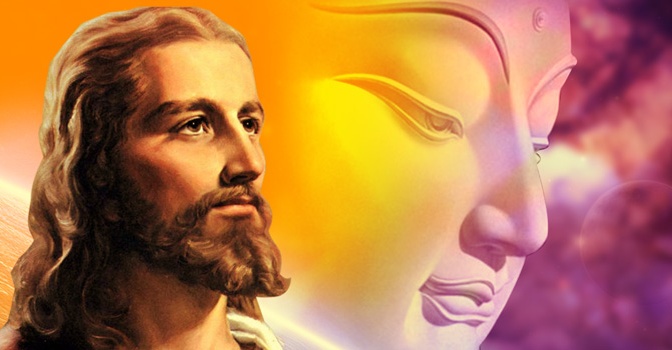
Tuy nhiên mình cũng muốn công bình và phong phú cho các bạn, nên mình muốn viết và gửi đến các bạn một chút về Thánh kinh Kitô giáo (Công giáo, Chính thống giáo và các nhánh Tin lành) với Do thái giáo là gốc rễ đầu tiên. Do thái giáo là một nửa đầu của Thánh kinh Kitô giáo, gọi là Cựu Ước, lời hứa hẹn cũ của Chúa – Thượng đế, Yahweh, YHWH, Adonai, Elohim – với Abraham là sẽ đưa con cháu của Abraham về vùng Đất Hứa. Tân Ước là nửa sau của Thánh kinh Kitô giáo là lời hứa hẹn của Chúa Giêsu (Jesus) cứu rỗi loài người.

Continue reading John

Tiểu luận về Bát Nhã Tâm Kinh – A brief exposition on the Heart Sutra (14)

Bài cùng chuỗi Tiểu luận về BNTK:
(1)(2)(3)(4)(5)(6), (7), (8), (9), (10), (11), (12), (13), (14). Done.

IV.  Năng lực của Bát Nhã đem đến Giác ngộ 

Trong câu mở đầu, chúng ta có Bồ tát Quán Tự Tại vượt qua mọi khổ ách nhờ thực hành Bát Nhã. Bây giờ trong phần kết thúc, chúng ta trở lại với năng lực của Bát Nhã đem đến giác ngộ. 

Dĩ vô sở đắc cố, Bồ-đề tát-đỏa y Bát-nhã-ba-la mật-đa cố tâm vô quái-ngại; vô quái-ngại cố vô hữu khủng-bố; viễn ly điên-đảo mộng tưởng; cứu cánh Niết-bàn. 

(Bởi chẳng có gì để đạt, Bồ tát nương tựa Bát nhã ba la mật đa, nên tâm không vướng mắc; vì không vướng mắc nên không sợ hãi, xa lìa mộng tưởng điên đảo, rốt ráo niết bàn).

Continue reading Tiểu luận về Bát Nhã Tâm Kinh – A brief exposition on the Heart Sutra (14)

Tiểu luận về Bát Nhã Tâm Kinh – A brief exposition on the Heart Sutra (13)

Bài cùng chuỗi Tiểu luận về BNTK:
(1)(2)(3)(4)(5)(6), (7), (8), (9), (10), (11), (12), (13), (14). Done.

Nhưng tại sao phủ nhận tất cả mọi giáo lý? Sự phủ nhận này có ý nghĩa gì?

Chúng ta cần nhớ rằng, trong Bát Nhã, phủ định và khẳng định là một—sắc tức thị không, không tức thị sắc; phủ định là khẳng định, khẳng định là phủ định. Và như ta đã thấy Bát Nhã khẳng định tất cả mọi thứ như chính nó là (Bát Nhã affirms every thing as it is).

Continue reading Tiểu luận về Bát Nhã Tâm Kinh – A brief exposition on the Heart Sutra (13)