Tag Archives: Thế giới

Dealing with Increased Chinese Aggressiveness (2 parts)

Download Document

Written By

MEDIA QUERIES

Georgette Almeida
Executive Assistant

 (808) 521-6745

PacNet #7 – Dealing with Increased Chinese Aggressiveness – PART ONE

The following are some of the key findings and recommendations from the August 2022 US-Taiwan Deterrence and Defense Dialogue. PacNet 7 provides a summary of the dialogue. The full report, with expanded key findings and recommendations can be found here.

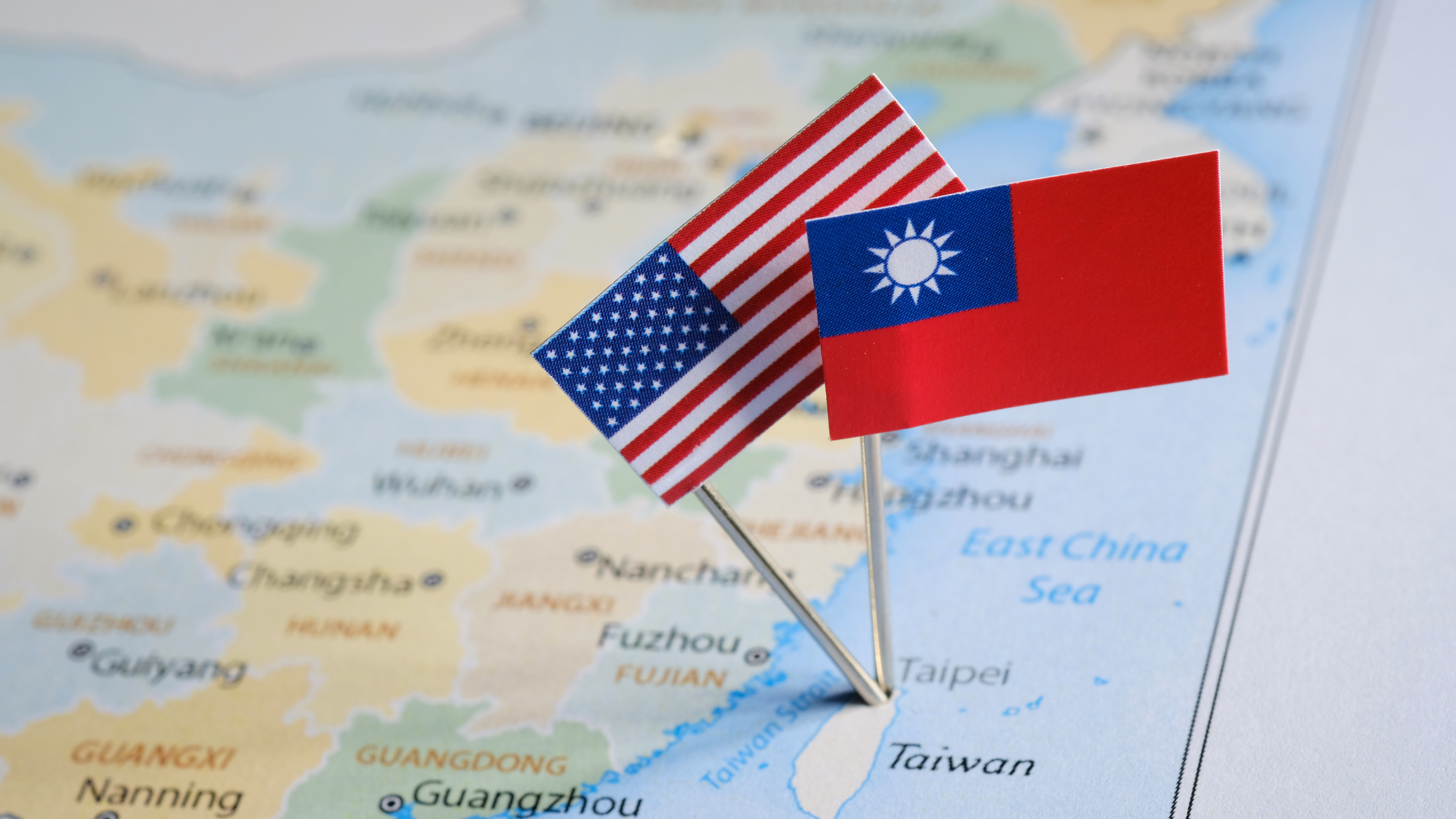
Taiwan is under attack by the People’s Republic of China (PRC) politically, economically, psychologically, and militarily—the latter through more aggressive Chinese People’s Liberation Army (PLA) gray zone military operations short of actual direct conflict. This multidimensional threat requires a multidimensional response in ways that complement and enhance military deterrence. PRC behavior represents a global—and not just a Taiwan or US—problem which demands a global response.

Continue reading Dealing with Increased Chinese Aggressiveness (2 parts)

Economics: Market failure – Stopping sludge

February 9, 2023
By David Leonhardt, Good Morning, The New York Times, Feb. 9, 2023
Good morning. We explain why the Biden administration is trying to crack down on those sneaky fees charged by hotels, rental cars, internet providers and more.
Ticketmaster is especially aggressive about imposing fees.Paul Sakuma/Associated Press

A market failure
Sneaky fees have become a big part of America’s consumer economy.
Hertz charges almost $6 a day simply for using a toll transponder in a rental car. Marriott and Hilton add nightly “resort fees” to the bill even at hotels that nobody would consider to be resorts. American, Delta and United list one airfare when you first search for a seat — and then add charges for basic features like the ability to sit next to your spouse.
Continue reading Economics: Market failure – Stopping sludge

Syria longs for international aid amid earthquake devastation – How much is politics hampering delivery of aid to Syria?

1. Syria longs for international aid amid earthquake devastation

Al Jazeera English – 8 thg 2, 2023

The scale of the destruction in the aftermath of the earthquake that hit swaths of Turkey and Syria on Monday has been unprecedented, even for residents of the war-torn country.

On the Syrian side, the area affected by the 7.8-magnitude quake and its aftershocks is divided between government-controlled territory and the country’s last opposition-held pocket of land, encircled by Russian-backed government forces.

The UN says damaged roads, a lack of equipment and tough winter conditions are hampering efforts to find survivors in Syria.

Rescue and relief efforts are being criticised as inadequate and hundreds of buildings have collapsed. Continue reading Syria longs for international aid amid earthquake devastation – How much is politics hampering delivery of aid to Syria?

CFR – Daily news brief Feb. 7, 2023

Daily News BriefFebruary 7, 2023
Top of the Agenda

WHO Predicts Death Toll in Syria, Turkey Quake Could Rise by ‘Thousands’

Syrian and Turkish officials said at least five thousand people were killed (NYT) by yesterday’s consecutive earthquakes at the Syria-Turkey border and their aftershocks, making the quakes one of the deadliest natural disasters to occur this century. As rescue efforts continue, an official from the Eastern Mediterranean office of the World Health Organization (WHO) has said the death toll could rise by thousands and that there is a “substantial” risk of another aftershock.
Aid teams from more than sixty-five countries have arrived in southern Turkey to support relief efforts, Hürriyet reported, and Turkish President Recep Tayyip Erdoğan has declared a three-month state of emergency in ten provinces. Meanwhile, the Syrian government is unable to receive direct aid from many countries because of sanctions on Bashar al-Assad’s government. Additionally, a border crossing used to deliver humanitarian aid to rebel-held northern Syria was damaged in the disaster. 
Continue reading CFR – Daily news brief Feb. 7, 2023

Putin and Xi are as close as ever, and that’s a problem for the US 

CNN Simone McCarthy, CNN ----------
When Antony Blinken makes an expected trip to Beijing in the coming days for what would be the first visit to China by a US secretary of state since 2018, he will be cutting a stark contrast to the scene in the Chinese capital one year earlier.  Then, Chinese leader Xi Jinping welcomed Russian President Vladimir Putin for the opening of the Beijing Olympics – meeting for talks and dinner in Putin’s honor, and declaring a “no limits” partnership between the two neighbors. Weeks later, as Russian tanks rolled across the border into Ukraine starting an invasion that would devastate the country and cause a humanitarian crisis, Chinese leaders did not shrink from that declaration.  Though Beijing claimed impartiality in the conflict and no advance knowledge of Russia’s intent, it also refused to condemn Moscow. Instead, it parroted Kremlin lines blaming NATO for provoking the conflict – further fracturing relationships with both Europe and the US.  Continue reading Putin and Xi are as close as ever, and that’s a problem for the US 

Europe’s New Moral Crusade: A campaign against progressive values

Al Jazeera English – 24-12-2022

Encouraged by the reversal of pro-abortion rights in the United States, a loose coalition of evangelical Christians, far-right politicians and Russian oligarchs are now engaged in a fierce campaign against progressive, liberal values in Europe.

But what is driving this so-called moral crusade? And who is funding it?

For People & Power, filmmakers Sarah Spiller, Mark Williams and Callum Macrae went in search of answers.

Europe’s New Moral Crusade: A campaign against progressive values | People and Power

The World’s Stake in American Democracy

America’s democratic difficulties will have major implications for the world.

Article by Richard Haass, PF

Originally published at Project Syndicate

January 24, 2023 12:28 pm (EST)

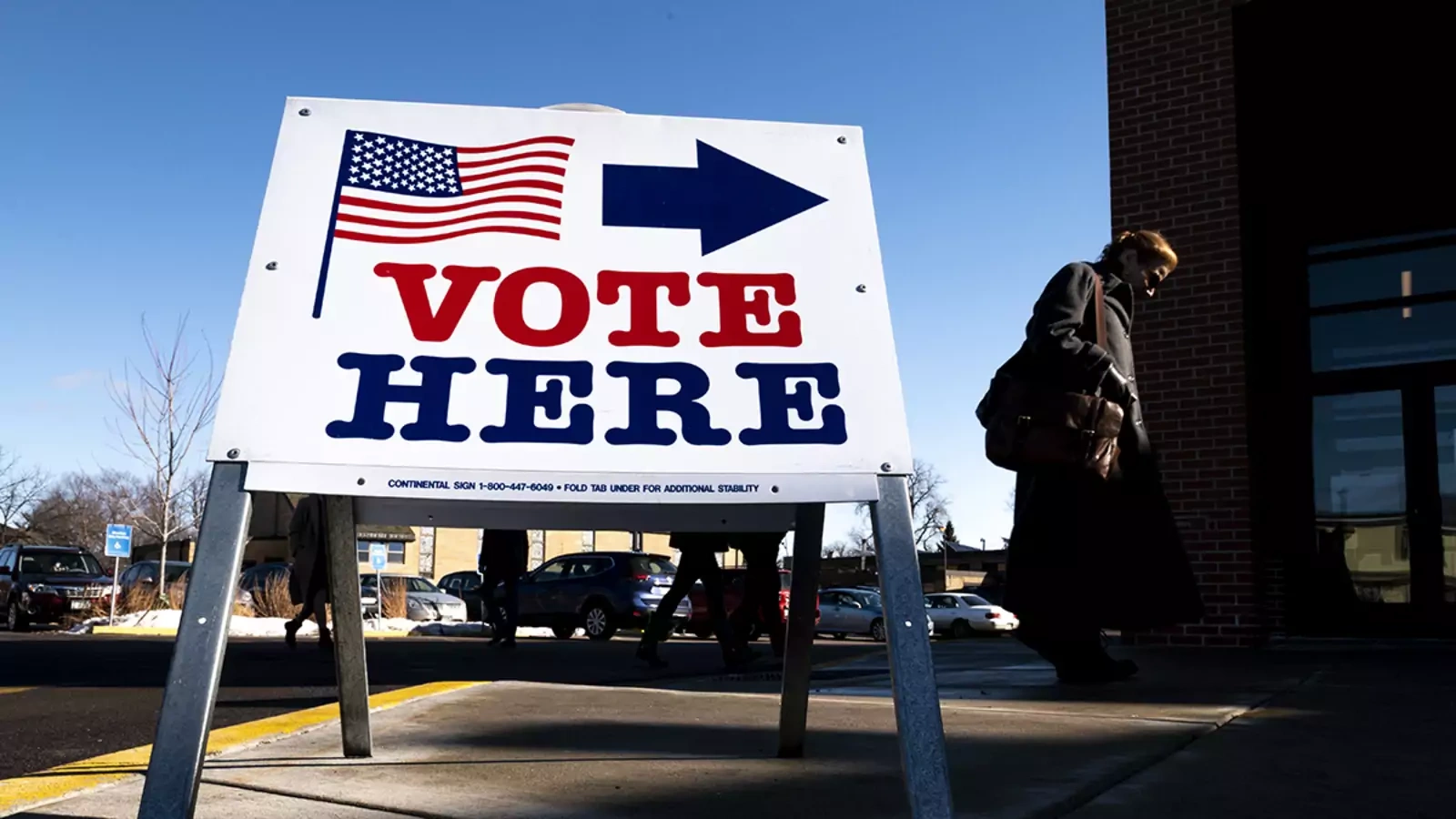
A voter arrives at a polling place on March 3, 2020 in Minneapolis, Minnesota.
A voter arrives at a polling place on March 3, 2020 in Minneapolis, Minnesota. Stephen Maturen/Getty Images

For more than three-quarters of a century, the United States has played an outsized, constructive role in the world. To be sure, there have been major errors, including the Vietnam War and the 2003 Iraq War, but the US got it right far more often than not.

Continue reading The World’s Stake in American Democracy

11 crises to watch in 2023

UNOCHA

As the war in Ukraine dominates the international headlines, dozens of other humanitarian crises need our urgent attention. Most of them are driven by conflict and climate shocks, compounded by pre-existing vulnerability and inadequate access to services. This year sets a new record, with UN agencies and humanitarian partners requiring US$51.5 billion to help 230 million people who need emergency assistance in 68 countries.

In addition to Ukraine, here are 11 crises on our radar.

Esha Mohammed, a herder and mother in Eli Dar, in Ethiopia's Afar Region, July 2022. Credit: UNOCHA/Liz Loh-Taylor

Esha Mohammed, a herder and mother in Eli Dar, in Ethiopia’s Afar Region, July 2022. Credit: UNOCHA/Liz Loh-Taylor

The Horn of Africa

When it comes to the deadly impact of the climate crisis, the Horn of Africa is now in unprecedented territory. It has endured five consecutive failed rains, and a sixth is now predicted in March.

Continued drought will bring prolonged catastrophe to people in Ethiopia, Kenya and Somalia, with at least 36.4 million people needing emergency assistance to survive, up to 26 million of them acutely food insecure. Famine risk will remain for people in two districts of Somalia. More than 9.5 million livestock have already died, and more deaths are anticipated, destroying herders’ and farmers’ livelihoods.

Continue reading 11 crises to watch in 2023

CFR – Daily news brief Jan. 13, 2023

Editor’s note: There will be no Daily Brief on Monday, January 16, for Martin Luther King Jr. Day.
Top of the Agenda

Japan’s Kishida Visits White House Amid Historic Military Buildup at Home

Japanese Prime Minister Kishida Fumio and U.S. President Joe Biden will meet today (WaPo) in Washington, with Biden expected to praise Japan’s plans to dramatically boost its defense spending. Their meeting is expected to focus on the war in Ukraine, Chinese military aggression, the North Korean nuclear threat, and boosting security cooperation. Ahead of the visit, U.S. National Security Council spokesperson John Kirby told Nikkei that Washington is willing to help Tokyo gain the ability to launch missile attacks on enemy territory.
The two leaders are also expected to discuss U.S. export controls (Reuters) targeting China’s semiconductor sector. Tokyo supports the controls but has not matched them. Kishida’s visit caps off a weeklong tour of Western partner countries ahead of the Group of Seven (G7) summit that Japan will host in May.
Continue reading CFR – Daily news brief Jan. 13, 2023

Japan Bets Big on Bringing Semiconductor Manufacturing Home

An ambitious state-backed industrial plan targets both growth and China.

By William Sposato, a Tokyo-based journalist.

A semiconductor manufacturing plant is seen in Japan.

foreignpolicy.com

JANUARY 9, 2023, 12:28 PM

TOKYO—To get back some of the high-tech mojo that made it an economic powerhouse, Japan is launching an ambitious program to bring back cutting-edge semiconductor manufacturing, a field it ceded to Taiwan, South Korea, and China nearly 20 years ago. But will this new campaign at state-backed industrial policy succeed, and more importantly, is it even the right goal?

Continue reading Japan Bets Big on Bringing Semiconductor Manufacturing Home

Council on Foreign Relations – Daily news brief Jan. 10, 2023

Top of the Agenda

Leaders of U.S., Canada, Mexico Meet 

U.S. President Joe Biden, Canadian Prime Minister Justin Trudeau, and Mexican President Andrés Manuel López Obrador are meeting in Mexico City (AP) for the North American Leaders’ Summit. Their discussions are expected to produce agreements (Reuters) on migration, semiconductors, climate change, and antidrug cooperation.
In a meeting between López Obrador and Biden yesterday, the two presidents pledged to step up cooperation (Reuters) on curbing fentanyl trafficking to the United States. Meanwhile, U.S. business leaders have voiced concern over López Obrador’s policies favoring state control in the economy. U.S.-Mexico trade increased by 19 percent (WaPo) in the first eleven months of 2022 as U.S. companies moved business away from China.
Continue reading Council on Foreign Relations – Daily news brief Jan. 10, 2023

Counci on Foreign Relations – Daily news brief Jan. 9, 2023

Daily News BriefJanuary 9, 2023
Top of the Agenda

Bolsonaro Supporters Attack Government Buildings in Brazil

Brazilian police arrested at least three hundred people after thousands of supporters of former President Jair Bolsonaro stormed and vandalized (AP) Brazil’s Congress, Supreme Court, and presidential palace yesterday in scenes reminiscent of the January 6, 2021, attack on the U.S. Capitol. The rioters protested the results of last year’s presidential election, which Bolsonaro lost to left-wing former President Luiz Inácio Lula da Silva. Bolsonaro has for years pushed false claims about the credibility of Brazil’s election system, and many of his supporters say the 2022 election was stolen from him.
Multiple world leaders condemned the events (NYT) and voiced support for Lula, who said there was “incompetence or bad faith” on behalf of police who allowed the events to unfold. Bolsonaro, believed to be in Florida, tweeted a condemnation (NYT) of the attack several hours after it began.
Continue reading Counci on Foreign Relations – Daily news brief Jan. 9, 2023

Taking the US-India relationship to the next level

By David Santoro and Akhil Ramesh

David Santoro (david@pacforum.org) is President and CEO of the Pacific Forum. Follow him on Twitter @DavidSantoro1
Akhil Ramesh (akhil@pacforum.org) is Senior Resident Fellow at Pacific Forum.

The relationship with India is “the most important for the United States in the 21st century,” said Kurt Campbell, the Biden administration’s National Security Council Coordinator for the Indo-Pacific, last month. President Biden made similar comments earlier in 2022, and the recently published US strategic reviews also talk about the importance of India. The US National Security Strategy, for instance, states that, “As India is the world’s largest democracy and a Major Defense Partner, the United States and India will work together, bilaterally and multilaterally, to support our shared vision for a free and open Indo-Pacific.”
 
Numerous reasons explain this enthusiasm for US-India rapprochement. Even though differences between the two countries are many (notably development level), similarities also abound. Both are big countries with a large and diverse population, both are democracies and both have vibrant civil societies and incredibly innovative communities, especially in technology.
  Continue reading Taking the US-India relationship to the next level

The Consequences of Divided Government for U.S. Foreign Policy

The Water’s Edge January 4, 2023, Council on Foreign Relations

by James M. Lindsay


President Joe Biden delivers his first State of the Union address to a joint session of Congress in March 2022.
Chip Somodevilla/REUTERS


Council on Foreign Relations
58 East 68th Street – New York, NY 10065  |  |  |  |  Forward This Email Manage Your Email Preferences

Divided government is back! After two years of Democratic control of the presidency and both houses of Congress—just barely in the case of the Senate—the 118th Congress that opened yesterday puts Republicans in charge of the U.S. House of Representatives. A single party has controlled the White House and Congress only three times in the last three decades.

So what will divided government mean for U.S. foreign policy? Here are three things to watch. Continue reading The Consequences of Divided Government for U.S. Foreign Policy

10 Conflicts to Watch in 2023

Russia’s invasion of Ukraine is still reverberating around the world—and setting the stage for more large-scale violence to come.

JANUARY 1, 2023, 7:00 AM Foreign Policy

Ukrainian soldiers fire toward Russian positions in the Donbas region of eastern Ukraine.

By Comfort Ero, the president and CEO of the International Crisis Group, and Richard Atwood, executive vice president of the International Crisis Group.

Will he, or won’t he? This time last year, that was the question. Russian President Vladimir Putin had massed almost two hundred thousand troops on Ukraine’s borders. U.S. intelligence warned that Russia was preparing for all-out war. All the signs pointed to an assault, bar one: It seemed unthinkable.

True, Russia had attacked Ukraine in 2014, and in the spring of 2021 had staged a dress rehearsal for an invasion, building up forces on the frontier before sending them home. Putin seemed ever angrier at Kyiv’s refusal to bow to his will. He openly derided Ukrainian national identity and sovereignty. Still, it was shocking, when Russian forces did roll in, that a nuclear-armed power in 2022 would seek to conquer a neighbor in an act of unprovoked aggression.

Continue reading 10 Conflicts to Watch in 2023