

Chào các bạn,
Trong cuối tuần, mình sẽ từ từ phân tích thử thách hôm qua và các câu trả lời của các bạn. Cám ơn các bạn đã hăng hái vui vẻ tham dự trò chơi không tốn tiền này 🙂
Vì cuối tuần nhiều người có thể có thời gian hơn một tí, cho nên mình có 3 mục hôm nay để các bạn giải quyết từ từ.
1. Sáu câu tục ngữ Việt để dịch sang tiếng Anh.
2. Sáu câu danh ngôn Anh để dịch sang tiếng Việt.
3. Một bài viết của bình lụân gia Fareed Zakaria trên Newseek về cuộc chiến chống khủng bố ở Pakistan. Fareed Zakaria là bình luận gia có uy tín lớn trên thế giới. Bài này hơi dài, các bạn không cần phải dịch hết. Mình post cả bài ở đây để bạn nào thích đọc cả bài thì đọc, vì đây là một bình luận thời sự hay.
Chúc các bạn cuối tuần vui vẻ. Và nhiều hứng thú tấn công các thử thách này.
Mến,
Hoành
_________
Sáu câu tục ngữ Việt để dịch sang Anh ngữ
1. Lười biếng chẳng ai thiết,
Siêng việc ai cũng chào mời.
2. Quý kẻ xốc vác,
Chuộng kẻ ham làm.
3. Kết gạo hết mọi thứ;
Có lúa, có mọi đường.
4. Ngồi dưng ăn hoang,
Mỏ vàng cũng cạn;
Học thầy học bạn,
Vô vạn phong lưu
5. Bạc đeo đầy mình,
Không bằng thông minh sáng suốt.
6. Bố mẹ dạy không bằng thầy dạy;
Thầy dạy không bằng biết suy.
(Vũ ngọc Phan: Tục ngữ, Ca dao, Dân ca Việt Nam)
.
Sáu câu danh ngôn Anh ngữ để dich sang Việt ngữ
1. “There is one quality that one must possess to win, and that is definiteness of purpose, the knowledge of what one wants, and a burning desire to possess it.”
– Napoleon Hill
2. “Your circumstances may be uncongenial, but they shall not remain so if you only perceive an ideal and strive to reach it. You cannot travel within and stand still without.”
– James Allen
3. “Begin doing what you want to do now. We are not living in eternity. We have only this moment, sparkling like a star in our hand-and melting like a snowflake…”
– Marie Beyon Ray
4. “Somehow I can’t believe that there are any heights that can’t be scaled by a man who knows the secrets of making dreams come true. This special secret – curiosity, confidence, courage, and constancy, and the greatest of all is confidence. When you believe in a thing, believe in it all the way, implicitly and unquestionable.”
– Walt Disney
5. The art of acceptance is the art of making someone who has just done you a small favor wish that he might have done you a greater one.
-Russell Lynes
6. “Man often becomes what he believes himself to be. If I keep on saying to myself that I cannot do a certain thing, it is possible that I may end by really becoming incapable of doing it. On the contrary, if I have the belief that I can do it, I shall surely acquire the capacity to do it even if I may not have it at the beginning.”
– Mahatma Gandhi
.
Change We Can’t Believe In
Pakistan’s military has lost every conventional war. It’s far better at guerrilla wars.
By: Fareed Zakaria

Finally, we are told, the Pakistani military has gotten serious about the threat that militants pose to its country. The Army is now fighting back for real, sending troops to dislodge the jihadists who had spread out of the Swat Valley. We hear this from Pakistani commanders, of course, but also from civilian leaders as well as from U.S. officials, including the secretary of defense, Robert Gates. In an interview with me for CNN, Gates said, “I think the movement of the Taliban so close to Islamabad was a real wake-up call for them.”
Maybe. It was only a few years ago that Husain Haqqani, a former Pakistani diplomat who recently became ambassador to Washington, wrote a brilliant book arguing that the Pakistani government—despite public and private claims to the contrary—continued “to make a distinction between ‘terrorists’ … and ‘freedom fighters’ (the officially preferred label … for Kashmiri militants).” He added: “The Musharraf government also remains tolerant of remnants of Afghanistan’s Taliban regime, hoping to use them in resuscitating Pakistan’s influence in Afghanistan.” The Pakistani military’s world view—that it is surrounded by dangers and needs to be active in destabilizing its neighbors— remains central to Pakistan’s basic strategy.
While President Musharraf broke with the overt and large-scale support that the military provides to the militant groups, and there have continued to be some moves against some jihadists, there is no evidence of a campaign to rid Pakistan of these groups. The leaders of the Afghan Taliban, headed up by Mullah Mohammed Omar, still work actively out of Quetta. The Army has never launched serious campaigns against the main Taliban-allied groups led by Gulbuddin Hekmatyar or Jalaluddin Haqqani, both of whose networks are active in Pakistan. The group responsible for the Mumbai attacks, Lashkar-e-Taiba, has evaded any punishment, morphing in name and form but still operating in plain sight in Lahore. Even now, after allowing the Taliban to get within 60 miles of the capital, the Pakistani military has deployed only a few thousand troops to confront them, leaving the bulk of its million-man Army in the east, presumably in case India suddenly invades. And when the Army does attack the Taliban, as it did a couple of years ago in the same Swat Valley, it bombs, declares victory and withdraws—and the jihadists return.
The rise of Islamic militants in Pakistan is not, Ambassador Haqqani writes, “the inadvertent outcome of some governments.” It is “rooted in history and [is] a consistent policy of the Pakistani state.” The author describes how, from its early years, the Pakistani military developed “a strategic commitment to jihadi ideology.” It used Islam to mobilize the country and Army in every conflict with India. A textbook case was the 1965 war, when Pakistan’s state-controlled media “generated a frenzy of jihad,” complete with stories of heroic suicide missions, martyrdom and divine help.
Pakistan was created as an Islamic state, with a population that shared little geographically, ethnically and linguistically. The country’s rulers have maintained power using religion as an ideology. And then the region’s geopolitics—the tensions with India and the battle against the Soviet Union in Afghanistan—helped create deep links between the Pakistani military and Islamic militant groups. The Pakistani military has lost the wars it has fought via traditional means. But running guerrilla operations—against the Soviets, the Indians and the Afghans—has proved an extremely cost-effective way to keep its neighbors off balance.
Has this all changed? The ambassador’s book, “Pakistan: Between Mosque and Military,” marshals strong evidence that, at least until recently, the Pakistani military made the pretense of arresting militants in order to get funds from Washington. But it never shut down the networks. “From the point of view of Pakistan’s Islamists and their backers in the ISI [Pakistan’s military intelligence],” Haqqani writes, “jihad is on hold but not yet over. Pakistan still has an unfinished agenda in Afghanistan and Kashmir.”
The book concludes by telling how Pakistan’s military has used the threat from these militant groups to maintain power, delegitimize the civilian government and—most crucial of all—keep aid flowing from the United States. And the book’s author has now joined in this great game. Last week Ambassador Haqqani wrote an op-ed claiming that Pakistan was fighting these militant groups vigorously. The only problem, he explained, was that Washington was reluctant to provide the weapons, training and funds Pakistan needs. He has become a character out of the pages of his own book.
In truth, Haqqani is a smart and honorable man with an impossible job. In its first months, Pakistan’s democratic government has been overruled by the generals every time it has asserted its authority. If Washington hopes to change Pakistan’s world view, it will have to take a much tougher line with the military while supporting the country’s civilian leaders, whose vision of Pakistan’s national interests is broader and less paranoid, and envisions more cooperation with its neighbors. The $15 billion Biden-Lugar bill, designed to help develop Pakistan’s civil society, is a big step in that direction.
Perhaps, as Haqqani’s op-ed implies, the strategy of the past six decades has suddenly changed. But I recall what Warren Buffett once called the four most dangerous words in investing: “This time it’s different.”
© 2009









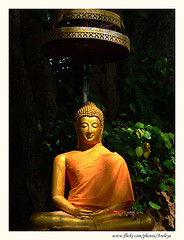


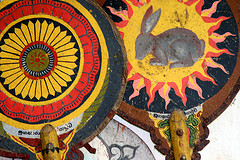


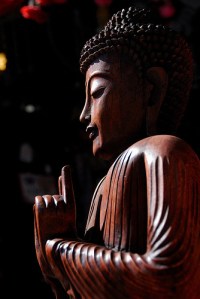


 Dano – Lễ hội Đoan Ngọ còn được coi là “Ngày của thần linh” là ngày 5 tháng 5 âm lịch hàng năm. Con số 5 là biểu tượng cho sức sống và thông thái, đồng thời ngày 5/5 với con số 5 được lặp lại 2 lần được coi là một điềm may. Tại những cộng đồng nông nghiệp, Dano là một ngày lễ hội, một ngày để nghỉ ngơi sau một mùa thu hoạch lúa mạch và gạo. Đây cũng là một lễ hội cầu một vụ mùa bội thu.
 Trong khi Dano, một lễ hội theo mùa vốn bắt nguồn từ Trung Quốc và sau đó được lan truyền tới các quốc gia trong khu vực Đông Bắc Á vào thời trung cổ, những thế hệ kế tiếp đã đã biến Danoje – lễ hội Đoan ngọ khu vực Gangneung thành một lễ hội tổng hợp hết sức độc đáo của bán đảo Triều Tiên. Nói một cách khác, Danoje tại Gangneung, tỉnh Gangwon, là một lễ hội địa phương nhằm khơi dậy tinh thần cộng đồng của người dân sinh sống tại khu vực phía Đông của rặng Daegwallyeong tại Yeong-dong. Trong suốt lễ hội này, người dân bày tỏ sự kính trọng đến 3 vị thần giám hộ: Tướng Kim Yusin thời Silla – người có công đóng góp vào lần đầu tiên thống nhất bán đảo; Tăng lữ Beomil – tăng lữ xuất thân tại Gangneung, nhà lãnh đạo về mặt tinh thần của những vị tổ tiên sáng lập ra triều đại Goryeo; một nữ nhân trong lịch sử hiện thân cho sự đau khổ do thiên tai và những gian khổ trong cuộc đời.
 phản ánh lịch sử và cuộc sống của tầng lớp thường dân. Đặc biệt, nền tảng về tinh thần của lễ hội này là sự pha trộn các tôn giáo truyền thống của dân tộc Hàn như Nho giáo, Đạo Shaman, Đạo Phật và Đạo Lão, đồng thời diễn ra với rất nhiều các lễ hội và chương trình biểu diễn đa dạng. Âm nhạc, các điệu múa, các tác phẩm văn học, kịch và các tác phẩm thủ công được đưa vào lễ hội này đều mang giá trị nghệ thuật cao.
 Ngày Phật đản sinh thứ 2553 lại về với tinh thần từ bi và giải thoát đau khổ cho chúng sinh, trong tình thương yêu bao la của Đức Phật. Những giá trị nhân bản cao đẹp của Phật giáo, những lời dạy của Đức Phật về những hạnh lành, việc thiện đã và đang được giới tăng ni Phật tử chung sức chung lòng thực hiện với ước mong giúp cho cuộc sống của mọi người luôn tươi đẹp, hạnh phúc. Tinh thần Phật đản thực sự là hướng thiện và nhân ái, và không chỉ tĩnh tâm cầu nguyện, người Phật tử phải tích cực trong cuộc sống, biết yêu thương giúp đỡ những mảnh đời khốn khó và bất hạnh.






 Đọt Chuối Non