I am an attorney in the Washington DC area, with a Doctor of Law in the US, attended the master program at the National School of Administration of Việt Nam, and graduated from Sài Gòn University Law School. I aso studied philosophy at the School of Letters in Sài Gòn.
.
I have worked as an anti-trust attorney for Federal Trade Commission and a litigator for a fortune-100 telecom company in Washington DC.
I have taught law courses for legal professionals in Việt Nam and still counsel VN government agencies on legal matters.
I have founded and managed businesses for me and my family, both law and non-law.
I have published many articles on national newspapers and radio stations in Việt Nam.
In 1989 I was one of the founding members of US-VN Trade Council, working to re-establish US-VN relationship.
Since the early 90's, I have established and managed VNFORUM and VNBIZ forum on VN-related matters; these forums are the subject of a PhD thesis by Dr. Caroline Valverde at UC-Berkeley and her book Transnationalizing Viet Nam.
I translate poetry and my translation of "A Request at Đồng Lộc Cemetery" is now engraved on a stone memorial at Đồng Lộc National Shrine in VN.
I study and teach the Bible and Buddhism. In 2009 I founded and still manage dotchuoinon.com on positive thinking and two other blogs on Buddhism.
In 2015 a group of friends and I founded website CVD - Conversations on Vietnam Development (cvdvn.net).
I study the art of leadership with many friends who are religious, business and government leaders from many countries.
I have written these books, published by Phu Nu Publishing House in Hanoi:
"Positive Thinking to Change Your Life", in Vietnamese (TƯ DUY TÍCH CỰC Thay Đổi Cuộc Sống) (Oct. 2011)
"10 Core Values for Success" (10 Giá trị cốt lõi của thành công) (Dec. 2013)
"Live a Life Worth Living" (Sống Một Cuộc Đời Đáng Sống) (Oct. 2023)
I practice Jiu Jitsu and Tai Chi for health, and play guitar as a hobby, usually accompanying my wife Trần Lê Túy Phượng, aka singer Linh Phượng.
In 416 BC, the city-state of Athens was in a prolonged conflict with Sparta, its archrival. For years, Athens had enjoyed comparative advantage over Sparta, particularly alliances and mutual defense pacts with smaller city-states known as the Delian League. By 416 BC, the Delian League had been in place for nearly 70 years, roughly the same as NATO, the modern equivalent of a prolonged and successful mutual defense alliance.
That was also the year that Athens came to view the Mediterranean island of Melos as vital for its strategic position. Melos had no military of its own, but it sat geographically at the intersection of maritime routes that helped both protect and project Athenian power. The island had long claimed neutrality, but for Athens, that would no longer suffice.
When an Athenian delegation demanded that Melos become a part of Athens, the Melians refused and appealed to Athenian traditions of logic and justice to work out a compromise. The Athenians responded with a famous line about power: “You know as well as we do that right, as the world goes, is only a question between equals in power — while the strong do what they can, and the weak suffer what they must.”
Anh có thể thức chỉ để nghe em thở
Ngắm em cười trong giấc ngủ
Xa xôi và mơ màng
Anh có thể dùng cả đời anh trong tận hiến ngọt ngào này
Anh có thể lạc trong giây phút này vĩnh viễn
Ôi, mỗi phút sống bên em
Là một quý báu anh gìn giữ
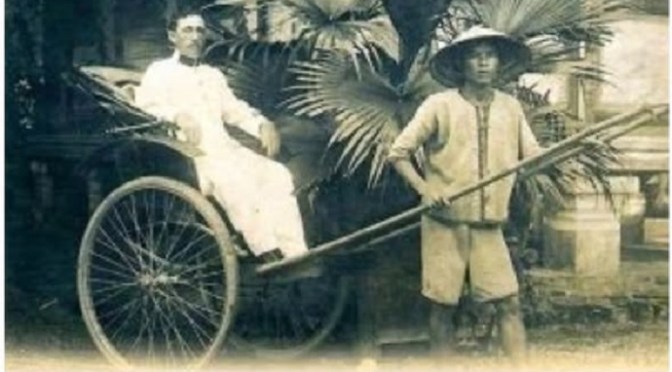
I walk alone in the old-city quarter
French-styled villas with plumeria flowers
White and pink and aromatic
Imagining me as a coolie two hundred years ago
Pulling a ricksaw carrying a French officer.
And I feel sad. Continue reading Reflection on the old days→
Mình có một ít sữa bột nguyên kem thỉnh thoảng dùng để pha cà phê. Nhưng mình đã không uống cà phê gần một năm rồi. Hôm nay pha một tách cà phê và lấy hộp sữa bột ra. Woa! Sữa bột đã đông lại thành một khối cứng như bánh mì khô. Mình cố gắng lôi nó ra khỏi hộp nhựa, định vứt đi và giữ lại hộp để dùng vào việc khác.
Nhưng mình cảm thấy áy náy vì đã lãng phí thức ăn mà Chúa ban cho. Và mình bắt đầu nghĩ: “Sữa đông cứng, khô, có lẽ không bị hỏng; có thể nó đã biến thành một loại phô mai khô nào đó.” Vì vậy, mình cắn một miếng nhỏ xíu để xem cảm giác thế nào. Woa, woa, woa! Một bất ngờ lớn khác của cả năm – nó rất ngon, vị béo đậm đà và hương thơm của sữa trên đầu lưỡi, ngon hơn bất kỳ loại bánh nào mình từng ăn. Continue reading Không có gì bị lãng phí – Nothing goes to waste→
God told Adam and Eve not to eat from the Tree of Knowledge.
Sure enough, they ate from that Tree.
Reverse psychology.
You forbid your children from eating potato
They will find ways to eat potato
Just for the heck of it. Continue reading Lost Paradise→
Question: Do the Vietnamese think their country is in Northeast Asia (East Asia) and not Southeast Asia?
Answer: The majority of the Vietnamese know their country has frequently joined the Southeast Asian game “Seagame”. Recently, Vietnam become a host of the 31st Seagame in Hanoi City.
Chúng ta làm nhiều thứ trong ngày, có thứ làm ta vui, có thứ làm ta stressed. Vui thường là thể thao, đi bộ trong công viên, nghe nhạc, khiêu vũ, chạy, đạp xe đạp, yoga, uống cà phê ngắm thiên nhiên và mọi người, ăn uống, đọc tin tức tích cực, nói chuyện với bạn thân, nói chuyện với con nhỏ, ăn tối với gia đình, hỏi thăm bố mẹ, đọc sách, nấu ăn, tưới cây cảnh, việc làm trong ngày…
Tập trung vào những điều làm bạn vui, hưởng thụ mỗi phút vui với chánh niệm (mindfulness), nghĩa là vui thì tập trung 100% vào niềm vui mình đang có, như ăn thì tập trung 100% vào ăn, nhai chậm rãi, enjoy từng miếng ăn, thưởng thức từng vị nhỏ trong miệng. Đó là Thiền ăn. Continue reading Bạn đang làm gì để bạn vui? – What are you doing to be happy?→
Geographically yes it is in Southeast Asia but culturally not Southeast Asians. Why? It’s not like other southeast Asian who have strong Indian influences. Vietnamese culture is close to Chinese and other East Asians furthermore they have just ruled their southeast asia’s territory in the past 200 years after defeated Cham. Meanwhile others (Southeast Asians) have been settled for thousands year and create distinct culture in this region apart from South Asia and East Asia.
Burmese (Myanmar), Indonesians, Malaysians, Bruneians, Thais, Cambodians, Laotians are Indianized countries who shared similarities. Take a look on their traditional clothes and lets compare to this Vietnamese
Hầu như mọi triết lý của loài người đều nói đến cái khổ, cái bất toàn, cái vô thường, cái rối rắm của cuộc đời. Chẳng hạn, Phật triết đặt nền tảng trên “Khổ”, Diệu Đế đầu tiên trong Tứ Diệu Đế (Khổ, Tập, Diệt, Đạo). Các tôn giáo dòng Abraham thì có triết lý thủy tổ loài người Adam và Eve không nghe lời Chúa Trời, ăn trái cấm của Cây Kiến Thức (The Tree of Knowledge), nên bị đuổi ra khỏi Địa Đàng (Garden of Eden), cho nên ngày nay loài người rất khổ. Continue reading Đời thật đẹp – Life is good→
The average Vietnamese believes that China is Vietnam’s enemy, while the high-level intellectual class tends to believe that China is the ancient Rome of East Asia, which has shaped them.
Vietnam has been ruled by China three times in history, which is generally called the Northern period. During these times, in their view, China’s rule was somewhat similar to the role of the Romans in Europe. China conquered Vietnam by force, and then immigrated and imported Chinese culture to carry out cultural conquest. In ancient times, China was the cultural core of East Asia and regarded itself as Huaxia, while Vietnam was a barbarian land.
Muốn chiến thắng luôn luôn thì trước hết ta phải biết định nghĩa chiến thắng là gì.
Tưởng tượng hai võ sĩ đấu võ đài, có rất nhiều cách chiến thắng: Đấm cho đối thủ rớt xuống sàn không gượng dậy được; đấm cho đối thủ tối tăm mày mặt chỉ đứng đó ăn đòn và trọng tài chấm dứt cuộc đấu – xử thắng/thua tức thì; thắng vì bên kia chịu đầu hàng bằng cách ném khăn trắng vào sàn đấu; thắng bằng quyết định đồng nhất của toàn ban giám khảo; thắng nhờ điểm cao hơn điểm đối thủ; mình tưởng mình yếu hơn đối thù và sẽ thua, nhưng ban giám khảo chấm điểm hai bên bằng nhau, đó là hòa, nhưng đối với riêng mình thì hòa là thắng (vì không thua).
Việc gì ở đời cùng có nhiều cách thắng khác nhau như thế. Nếu bạn là chiến binh giỏi thì hầu như luôn luôn thắng, không cách này thì cách kia. Nhưng bạn phải dự tính trước mỗi cuộc chiến bạn có thắng cách nào. Continue reading Luôn chiến thắng – Always winning→