Me? Me? Me?... Yeah yeah yeah amigo... What can me say about me-self?... me-self...me-self... Ole ole ole... me me me... I'm a young banana shoot... My dad is Banana Pa... My mom is Banana Ma... I am happy happy happy... I run around... oops... I can't run... I sing aloud... all day long... I sing in the rain... I sing in the shine... I sing day and night... I sing all the time...
I watch the butterflies and the bees... and the cranes and the geese...
Aha aha aha... here we go again... this little swallow circling on my head... the little swallow on my head... is about to poop on me... Hey, little fella, don't cha know where to unload ya poopa?... But, that's alright... I can swallow my pride to befriend a swallow... Yup yup yup... swallow my pride to befriend a swallow...
At the 56th ASEAN Ministerial Meeting and its related meetings in Jakarta in July, it was announced that negotiations for the Code of Conduct of Parties in the South China Sea (COC) had achieved progress on two fronts. First, the second reading of the Single Draft COC Negotiating Text was completed. Second, a set of Guidelines for Accelerating the Early Conclusion of an Effective and Substantive Code of Conduct in the South China Sea was adopted at the Post Ministerial Conference 10+1 Meeting with China. As a matter of fact, these developments are rather more procedural (and perhaps political) than substantive.
World map showing country classifications per the IMF[1] and the UN[2] (last updated April 2023). The countries in light blue form the “Global North”, the rest are mostly categorized as belonging to the “Global South”, with few exceptions under some listings.
The concept of Global North and Global South (or North–South divide in a global context) is used to describe a grouping of countries along the lines of socio-economic and political characteristics. The Global South is a term that broadly comprises countries in the regions of Africa, Latin America and the Caribbean, Asia (without Israel, Japan, and South Korea), and Oceania (without Australia and New Zealand), according to the United Nations Conference on Trade and Development (UNCTAD).[3][4][a] Most of the countries in the Global South are characterized by low income, dense population, poor infrastructure, and often political or cultural marginalization.[5] The Global South forms one side of the divide; on the other is the Global North (broadly comprising Northern America and Europe, Israel, Japan and South Korea, as well as Australia and New Zealand, according to the UNCTAD).[3][4][a] As such, the terms Global North and Global South do not refer to the cardinal directions of north and south as many of the Global South countries are geographically located in the Northern Hemisphere.
The UN and the multilateral system are in crisis – what the Global South must do
Monica Herz Full Professor, Institute of International Relations (PUC-Rio), Associate Dean for Research of the Social Science Center (PUC-Rio), Senior Researcher, BRICS Policy Center, Pontifícia Universidade Católica do Rio de Janeiro (PUC-Rio)
Giancarlo Summa Co-fundador com Mônica Herz do projeto MUDRAL (Multilateralismo e Direita Radical na América Latina), Pesquisador no Centre d’Études Sociologiques et Politiques Raymond Aron (CESPRA), École des Hautes Études en Sciences Sociales (EHESS)
Ngày 13/9, phát biểu tại phiên họp thứ 54 của Hội đồng Nhân quyền của Liên Hiệp Quốc, Đức Tổng Giám Mục Ettore Balestrero, Quan sát viên Thường trực của Tòa Thánh tại trụ sở Liên Hiệp Quốc ở Genève, Thụy Sĩ, nhắc lại rằng phá thai không phải là một quyền của con người chỉ bởi vì đa số quốc gia khẳng định, bởi vì nhân quyền bắt nguồn từ phẩm giá con người.
Vatican News
Sau khi nhắc lại trong năm 2023, cộng đồng quốc tế và Hội đồng sẽ kỷ niệm 75 năm Tuyên ngôn Quốc tế được thông qua, Đức Tổng Giám Mục Balestrero nhấn mạnh rằng nhân quyền không chỉ đơn giản là một đặc quyền được trao cho các cá nhân bởi sự đồng thuận của cộng đồng quốc tế. Đúng hơn,nhân quyền là biểu hiện của những giá trị khách quan và không tuỳ thuộc thời gian cần thiết cho sự phát triển con người. Continue reading Vatican: Nhân quyền bắt nguồn từ phẩm giá con người→
Every country should have the ability to tell its story to the world. However, a nation’s narrative should be based on facts and rise and fall on its own merits. The PRC employs a variety of deceptive and coercive methods as it attempts to influence the international information environment. Beijing’s information manipulation spans the use of propaganda, disinformation, and censorship. Unchecked, the PRC’s efforts will reshape the global information landscape, creating biases and gaps that could even lead nations to make decisions that subordinate their economic and security interests to Beijing’s.
PRC Information Manipulation
The PRC spends billions of dollars annually on foreign information manipulation efforts.2 Beijing uses false or biased information to promote positive views of the PRC and the Chinese Communist Party (CCP). At the same time, the PRC suppresses critical information that contradicts its desired narratives on issues such as Taiwan, its human rights practices, the South China Sea, its domestic economy, and international economic engagement. More broadly, the PRC seeks to cultivate and uphold a global incentive structure that encourages foreign governments, elites, journalists, and civil society to accept its preferred narratives and avoid criticizing its conduct.
The PRC’s approach to information manipulation includes leveraging propaganda and censorship, promoting digital authoritarianism, exploiting international organizations and bilateral partnerships, pairing cooptation and pressure, and exercising control of Chinese-language media. Collectively, these five elements could enable Beijing to reshape the global information environment along multiple axes:
Overt and covert influence over content and platforms. Beijing seeks to maximize the reach of biased or false pro-PRC content. It has acquired stakes in foreign media through public and non-public means and sponsored online influencers. Beijing has also secured sometimes restrictive content sharing agreements with local outlets that can result in trusted mastheads providing legitimacy to unlabeled or obscured PRC content. In addition, Beijing has also worked to coopt prominent voices in the international information environment such as foreign political elites and journalists. Beyond focusing on content producers, the PRC has targeted platforms for global information dissemination, for example, investing in digital television services in Africa and satellite networks.
Constraints on global freedom of expression. On issues it deems sensitive, the PRC has employed online and real-world intimidation to silence dissent and encourage self-censorship. The PRC has also taken measures against corporations in situations where they are perceived to have challenged its desired narratives on issues like Xinjiang. Within democratic countries, Beijing has taken advantage of open societies to take legal action to suppress critical voices. On WeChat, an application used by many Chinese-speaking communities outside the PRC, Beijing has exercised technical censorship and harassed individual content producers. Notably, data
harvested by PRC corporations operating overseas have enabled Beijing to fine-tune global censorship by targeting specific individuals and organizations.
An emerging community of digital authoritarians. The PRC promotes digital authoritarianism, which involves the use of digital infrastructure to repress freedom of expression, censor independent news, promote disinformation, and deny other human rights.3 Through disseminating technologies for surveillance and censorship, often through capabilities bundled under the umbrella of “smart” or “safe cities,” the PRC has exported aspects of its domestic information environment globally. Beijing has also propagated information control tactics, with a particular focus on Africa, Asia, and Latin America. In parallel, the PRC has promoted authoritarian digital norms that other countries have adopted at a rapid pace. As other countries emulate the PRC, their information ecosystems have become more receptive to Beijing’s propaganda, disinformation, and censorship requests.
Future Impact
The PRC’s global information manipulation is not simply a matter of public diplomacy – but a challenge to the integrity of the global information space. Unchecked, Beijing’s efforts could result in a future in which technology exported by the PRC, coopted local governments, and fear of Beijing’s direct retaliation produce a sharp contraction of global freedom of expression. Beijing would play a significant – and often hidden – role in determining the print and digital content that audiences in developing countries consume. Multilateral fora and select bilateral relationships would amplify Beijing’s preferred narratives on issues such as Taiwan and the international economy. Access to global data combined with the latest developments in artificial intelligence technology would enable the PRC to surgically target foreign audiences and thereby perhaps influence economic and security decisions in its favor. Lastly, Beijing’s global censorship efforts would result in a highly curated international information environment characterized by gaps and inherent pro-PRC biases.
The Vietnamese People’s Air Force currently maintains a fleet of ten Su-27 Flanker combat aircraft, complemented by 35 Su-30s and 34 Su-22s. In a surprising twist, there’s speculation of a possible addition of American aircraft to Vietnam’s arsenal soon.
The first indication of this evolution came in 2021, as Vietnam placed an order for at least three T-6 Texan II trainers from American manufacturer Beechcraft. The delivery of these aircraft is still pending. This apparent shift is concurrent with the thawing of relations between Vietnam and the United States, a development largely driven by shared concerns regarding China. Continue reading F-16 Viper could fly alongside Su-30 in Vietnam People’s Air Force→
The most important fact in world politics is that 19 months after Vladimir Putin challenged the so-called rules-based international order head-on by invading Ukraine, the defense of that order is not going well. The world is less stable today than in February 2022, the enemies of the order hammer away, the institutional foundations of the order look increasingly shaky, and Western leaders don’t yet seem to grasp the immensity of the task before them.
Across much of the world, the ideas of a democratic liberal political order, of multilateral international collaboration, and of liberal free-market capitalism are now in retreat.
The world is in turmoil. Only thirty years after the fall of the USSR and the collapse of its proxy network in Eastern Europe, a land war is being fought in Europe between a democracy and a dictatorship.
When the Cold War ended, we could have scarcely imagined that in just three decades we would be where we are now. We know now that the collapse of the USSR in 1991 did not bring about “the end of history” as prophesied. Instead, it bred complacency among the leaders of the Western democracies, great complacency which has sowed the seeds for the current global anti-democratic reckoning.
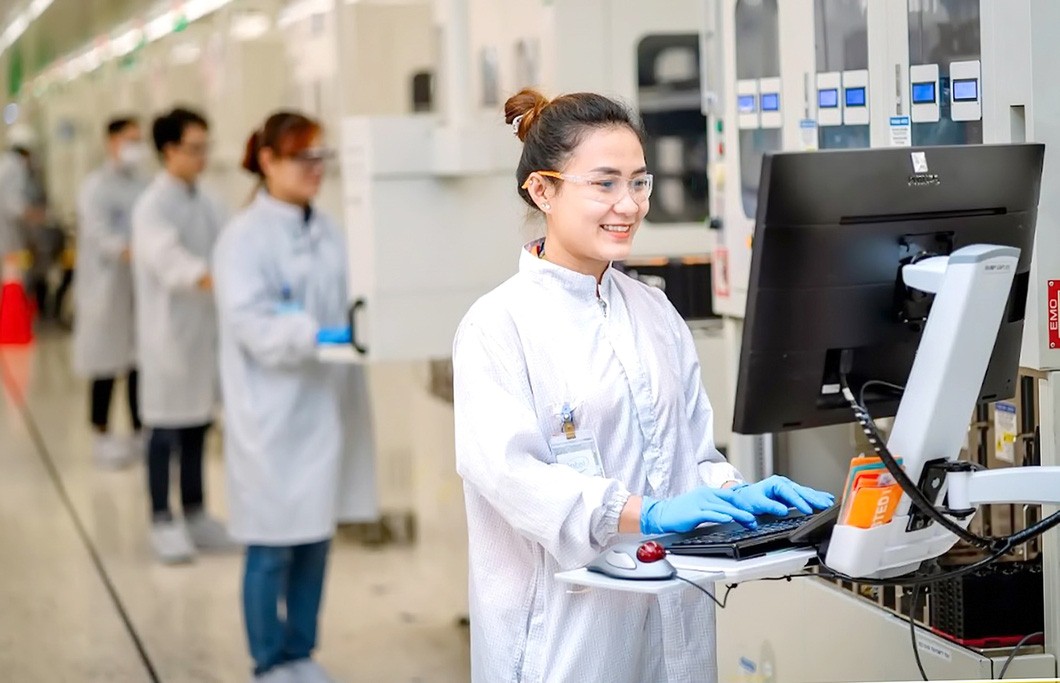
Workers at a factory operated by Intel in Vietnam. Photo: Supplied by Intel
Vietnam and the U.S. have announced their intention to bolster cooperation in the fields of science, technology, digital innovation, semiconductor manufacturing, and chip production, creating ample opportunities for Vietnamese tech firms to establish a strong presence in global supply chains.
This cooperation is poised to present significant opportunities for the development of Vietnam’s domestic semiconductor sector, Vo Xuan Hoai, deputy director of the Vietnam National Innovation Center (NIC), said in an interview with Tuoi Tre (Youth) newspaper.
Cuộc đời trôi tựa kiếp sông hồ Sau những thăng trầm vẫn mộng mơ Bốn biển đệ huynh liền hải đạo Ba miền bút mực kết dư đồ Nổi chìm may kẻ thông bè mảng Ngụp lặn thương ai lật chuyến đò Thế kỷ tràng giang chiều cõi thế Sa bồi lặng lẽ hạt buông cho.
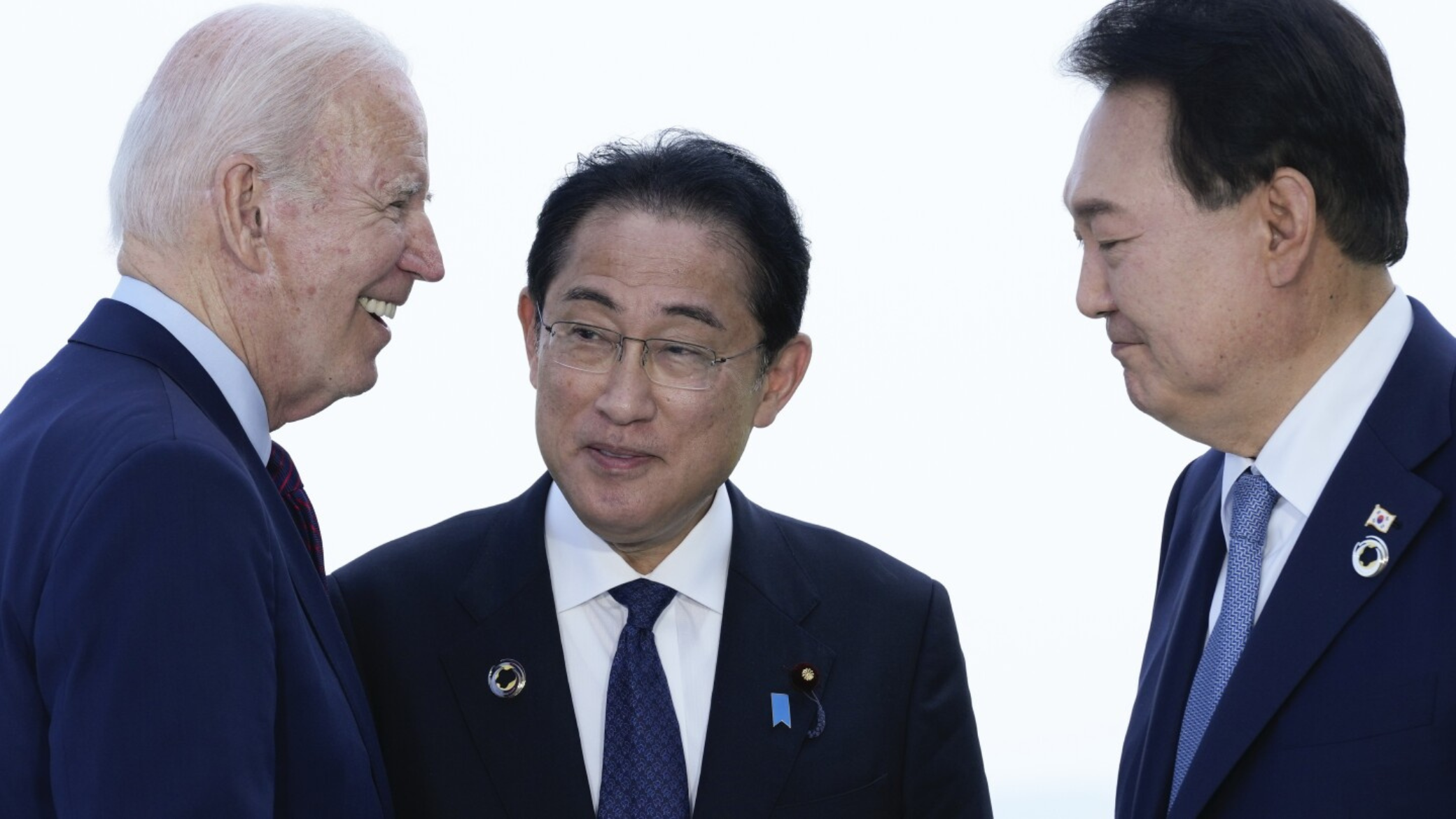
This PacNet was developed as a part of the United States-Japan-Republic of Korea Trilateral Next-Generation Leaders Dialogue to encourage creative thinking about how this vital partnership can be fostered. For the previous entries please click here, here, and here.
In April 2022, the United States launched its “Declaration for the Future of the Internet.” It asserts that human rights and democratic values must remain central to future technological development, innovation, and investment. Along with Japan, South Korea, and 58 other signatories, the United States argued that universal values should be embedded and enhanced at every stage of technological design, implementation, and diffusion. It’s time for the United States and its allies to match words with actions and ensure that developing countries have access to the resources they need to make that future a global reality.
This PacNet was developed as a part of the United States-Japan-Republic of Korea Trilateral Next-Generation Leaders Dialogue to encourage creative thinking about how this vital partnership can be fostered. For previous entries please click here and here.
The AUKUS security agreement, cemented between Australia, the United States, and the United Kingdom in September 2021, enhances regional partnership in the Indo-Pacific by facilitating technology sharing, strengthened supply chains, and the acquisition of nuclear powered, conventionally armed submarines for Australia. The pact also creates a pathway to establish engagements focused on renewing, strengthening, and expanding military cooperation between AUKUS, South Korea, and Japan.
This post explains how the AIS vessel tracking system works and how bad actors abuse the system.
Miao Shou, Gaute Friis | AUGUST 21, 2023
Miao Shou
Analyst
Gaute Friis
Analyst
Tracking vessels’ Automatic Information System (AIS) signals is a core means SeaLight and other open-source intelligence collectors use to monitor maritime activity. AIS is a broadcast system that maritime authorities use to identify a vessel’s unique identification number, type, position, course, speed and navigation status.
The International Maritime Organization (IMO) mandates the use of AIS to ensure maritime safety and direct marine traffic more efficiently. According to the International Maritime Organization’s International Convention for the Safety of Life at Sea (SOLAS) Regulation V/19.2.4, all vessels over 300 gross tons (or 500 tons for those not on international voyages) and passenger ships of any size are required to “carry automatic identification systems capable of providing information about the ship to other ships and to coastal authorities.”
“Going dark” refers to the gray zone tactic of strategically turning off a vessel’s Automatic Information System (AIS) transponder to avoid detection.
Miao Shou | AUGUST 17, 2023
Vessels operating without AIS inside a country’s Exclusive Economic Zone (EEZ). (Credits: Unseenlabs)
Miao Shou
Analyst
“Going dark” refers to the gray zone tactic of turning off a vessel’s Automatic Information System (AIS) transponder to avoid detection. AIS is a signaling system used to identify a vessel’s type, position, course, speed and other navigation safety information, and is required by the International Maritime Organization for larger non-military ships operating in international waters. Read our primer on the AIS system here.
Going Dark in the Recent Water Cannon Incident
In a recent incident that involved the blockade and water-cannoning of a small Philippine resupply vessel and its escorts, six of the blockading ships were from the China Coast Guard. Of these, only one ship (CCG 5402) remained AIS-visible during the entire engagement, while two other ships (CCG 4203 and CCG 3302) broadcast AIS only intermittently.