How much reliance should be placed on the major international human rights NGOs? Can they be trusted to work without bias? How are they governed?
These are subjects I discussed recently in a short paper done for the Council on Foreign Relations’ Diamonstein-Spielvogel Project on the Future of Democracy. It is entitled Human Rights NGOs: “Quis custodiet ipsos custodes?” and can be foundhere. Continue reading Human Rights NGOs: “Quis custodiet ipsos custodes?”→
Vấn đề điện hạt nhân tiếp tục được đề cập tại kỳ họp Quốc hội vừa qua. Theo Ủy ban Kinh tế, với lộ trình giảm phát thải tiến tới đạt mức phát thải ròng bằng 0 vào năm 2050, đây là lĩnh vực cần được nghiên cứu, xem xét trong quá trình phát triển giai đoạn tiếp theo.
Quốc hội nước ta đã phê duyệt chủ trương xây dựng nhà máy điện hạt nhân Ninh Thuận năm 2009 và Thủ tướng đã phê duyệt quy hoạch 8 địa điểm xây dựng các nhà máy. Năm 2016 vì các lý do khách quan, Quốc hội ban hành nghị quyết dừng thực hiện dự án này. 8 địa điểm đã được quy hoạch trong quyết định của Thủ tướng, trong đó có 2 địa điểm ưu tiên tại Ninh Thuận (Phước Dinh và Vĩnh Hải) được sử dụng cho nhà máy điện hạt nhân đầu tiên, đến nay về nguyên tắc đang được bảo lưu, chờ quyết định mới của Thủ tướng.
Tại nghị trường vừa qua, một đại biểu đề nghị xóa bỏ quy hoạch các địa điểm này, số khác muốn duy trì để sử dụng khi tái khởi động dự án điện hạt nhân Ninh Thuận trong tương lai. Bộ trưởng Bộ Công Thương thì khẳng định việc dừng thực hiện chủ trương đầu tư dự án điện hạt nhân Ninh Thuận không có nghĩa là “hủy bỏ”. Như vậy đây là vấn đề còn bỏ ngỏ, chờ quyết định cuối cùng của cấp có thẩm quyền.
Chuyến tàu phù phiếm là bản nhạc bị giữ kín sau khi kết thúc album Tiếng gọi London của ban nhạc Clash và không được ghi danh hay ghi nhãn. Bản nhạc thậm chí còn không có tên thích hợp; những người hâm mộ cho rằng ban đầu bài hát được gọi là Stand by me vì đoạn điệp khúc. Nhưng bài hát lại trở nên thành công bất ngờ ở Mỹ, nhờ vào tiếng trống thô cứng và giọng ca rã rời của tay ghita Jones, người đã viết bản tình ca đau khổ này trong căn hộ của bà ngoại anh. Continue reading Chuyến tàu phù phiếm→
Mọi người học Bát Nhã Tâm Kinh thường hiểu rằng nếu ta “vô ngã” (chiếu kiến ngũ uẩn giai không) thì ta có ánh sáng giác ngộ (độ nhất thiết khổ ách). Nhưng mọi người hình như chẳng bao giờ thấy điều ngược lại, là nếu ta không vô ngã, nghĩa là ta vẫn cứ bám vào “tôi” như trước nay, thì ta tiếp tục không có ánh sáng (vô minh), nghĩa là tiếp tục sống trong bóng tối si mê. Continue reading Thành thật với chính mình→
By Tran Đinh Hoanh Tran Đinh Hoanh is an international litigator and writer in Washington DC.
[TĐH: I’ve tried to make this piece ultra-short, simple, and easy
to remember, with sufficient citations for those who’d like to dig
deeper into UNCLOS]
During China Foreign Ministry Spokesperson Wang Wenbin’s Regular Press Conference on June 13, he responded to a Bloomberg question concerning the legal status of the Taiwan Strait. Asked about Chinese military officials’ contention that the Taiwan Strait does not constitute “international waters,” he said that Taiwan is “an inalienable part of China’s territory. …According to UNCLOS and Chinese laws, the waters of the Taiwan Strait, extending from both shores toward the middle of the Strait, are divided into several zones including internal waters, territorial sea, contiguous zone, and the Exclusive Economic Zone. China has sovereignty, sovereign rights and jurisdiction over the Taiwan Strait.”
He went on to say that calling the strait international waters is “a false claim” by “certain countries” searching for a pretext for “threatening China’s sovereignty and security.”
The Quadrilateral grouping of Australia, India, Japan, and the United States (the Quad) has come a long way from its origins, establishing itself as a crucial pillar of the Indo-Pacific regional architecture and significantly shifting in tone and focus from its early iterations. Since its revival in 2017, the Quad has been elevated to a leader-level dialogue, it has begun issuing joint statements, and it has developed a new working-group structure to facilitate cooperation. It has also significantly broadened and deepened its agenda to include vaccines, climate change, critical and emerging technologies, infrastructure, cyber, and space.
These recent changes to the Quad raise several questions about its future trajectory. What are the drivers of engagement, the domestic support, and the bureaucratic capacity in the four countries to continue investing in the Quad? How well does the Quad’s new working-group structure function, and will the working groups be able to deliver tangible results? How has the Quad’s agenda evolved, and will it return to its initial focus on security challenges? Are the Quad countries open to cooperation with additional countries and, if so, what form will this take?
This paper analyzes these questions drawing on recent publications, official statements, and interviews with key experts and policymakers in the four countries. In doing so, it offers five key takeaways into the Quad as an evolving part of the Indo-Pacific architecture, as well as a vehicle for achieving the goals of its four member countries.
Since its revival in 2017, the Quad has been elevated to a leader-level dialogue, it has begun issuing joint statements, and it has developed a new working-group structure to facilitate cooperation
First, in terms of institutionalization and internal goals, there is little interest among the member countries in further institutionalizing the Quad by establishing a secretariat or adopting a charter. All four consider the flexible nature of the grouping to be an asset. At the same time, the Quad partners have increased their alignment on strategic issues and aim to continue doing so in the near future by solidifying ties within the grouping.
Trong những ngày liên tục có các lãnh đạo, nhân viên ngành y bị bắt, tôi nhận được nhiều lời động viên, an ủi và cả câu hỏi rằng, chỗ chúng tôi “có xao động gì không”.
Tôi không xao động, không bối rối vì những sự việc ấy xảy ra dễ hiểu. Nhiều nguyên nhân dẫn đến hành vi phạm pháp trong ngành đã được nói đến từ lâu. Có thể kể đến: Mức đãi ngộ thấp dẫn tới tham nhũng vặt để “tự cứu lấy mình”; Bổ nhiệm lãnh đạo không đủ rõ ràng, thậm chí không căn cứ vào chuyên môn, mở đường cho “yếu tố” đồng tiền xuất hiện; Những kẽ hở của pháp luật như mời chào người ta phạm luật, không khác gì cái bẫy.
Giá thuốc là một cái bẫy, một nguyên nhân dẫn đến tham nhũng trong ngành y, điều mà những người lăn lộn trong ngành sẽ thấy rõ.
Bài hát chính trị nhất của Stones xuất hiện sau khi Jagger đến cuộc mít-ting chống chiến tranh Việt Nam vào tháng 3 năm 1968 tại đại sứ quán Mỹ ở London, dù cảnh sát tấn công dữ dội vào đám đông 25.000 người. Tiếng o o bị bóp méo là được dựa vào các cây ghita acoustic được bơm thông qua máy ghi âm cát-xét.
Ca khúc được Mick Jagger và Keith Richards sáng tác; Rolling Stones trình diễn; Jimmy Miller sản xuất; phát hành vào tháng 8/1968.
Vì sao có người càng lớn càng thông thái, có người thì tù mù cả đời, dù là hai người khởi hành từ cùng hai điểm khởi hành rất giống nhau về thông minh, giáo dục và kinh tế gia đình? Mình quan sát điều này nhiều năm và kết luận là tùy theo một người quan tâm đến gì trong đời sống họ, mức thông thái của họ sẽ phát triển thế nào.
Những người lúc nào cũng chỉ nghĩ đến lo cho mình – tiền bạc, địa vị, danh tiếng, chức vụ – thường là đầu óc rất tù mù và nhỏ hẹp. Dù họ học hành đến đâu, bằng cấp cao thế nào, thì tư duy của họ gói trọn trong “cho tôi, do tôi, vì tôi, phục vụ tôi” , họ chẳng thấy gì trên đời ngoại trừ chính họ và những quyền lợi của họ và những điều họ ham muốn. Tư duy rất stupid và nhỏ như hạt đậu xanh. Continue reading Mở mang trí tuệ→
Nhân Hội nghị Những người viết văn trẻ toàn quốc lần X diễn ra tại Đà Nẵng, và hai cuộc Hội thảo văn xuôi và thơ: “Vì sao chúng ta viết”.
Mai An Nguyễn Anh Tuấn
I. Mấy câu hỏi, đúng hơn là những ý tưởng như bâng quơ, có gì hơi cổ lỗ, song vốn nằm sâu trong tiềm thức và có khả năng đánh thức sự lười biếng của tư duy giữa bao lo toan bề bộn đời thường lắm khi thấm máu và nước mắt: “Vì sao tôi viết“, “Văn học có ích gì cho xã hội?”, “Ngày hôm nay, văn học có cần thiết lắm không? Cần cho ai?”, “Văn học với thực tại xã hội?”, “Điện ảnh cần gì ở văn học”, v.v.
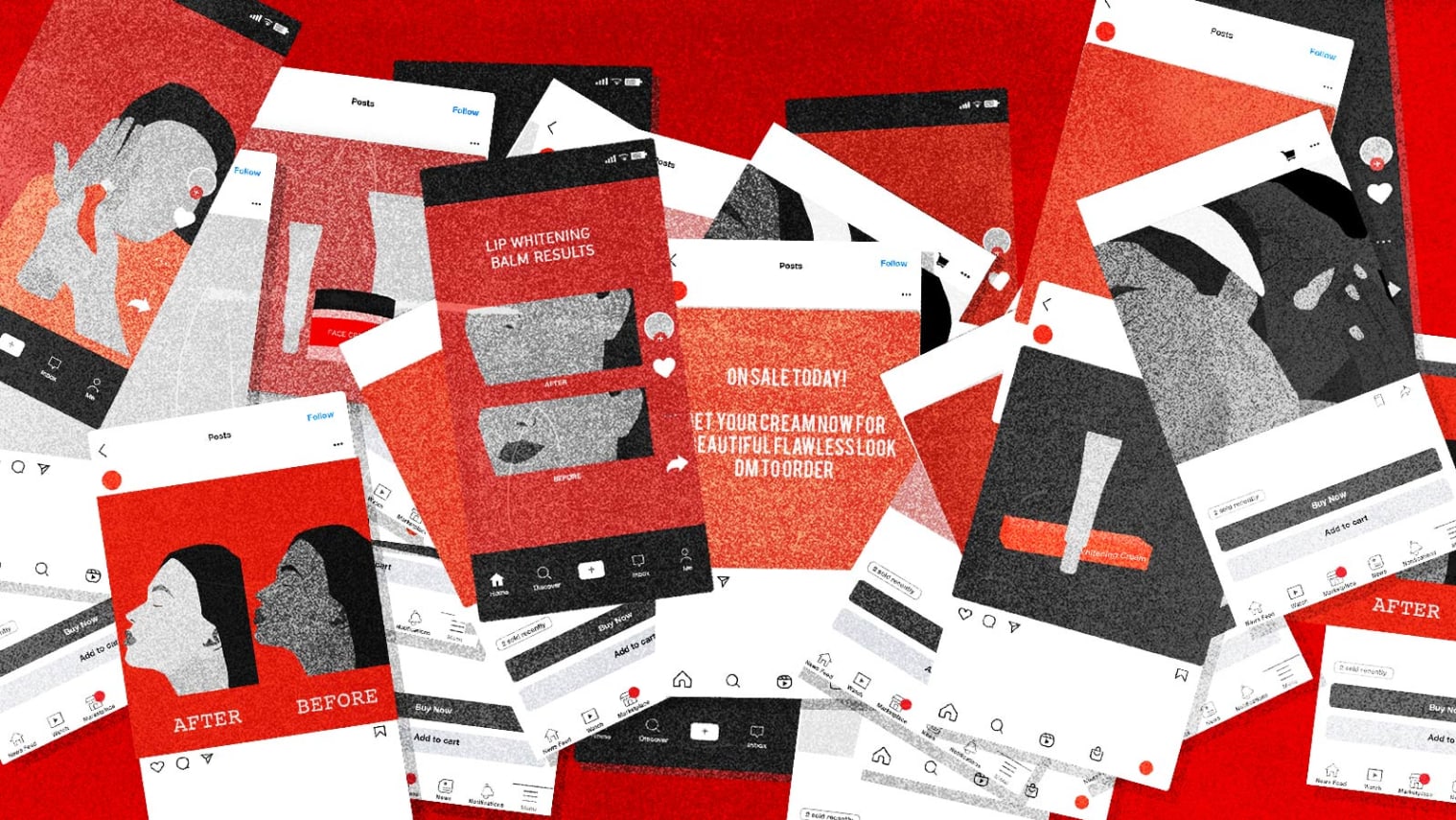
Skin-lightening products have exploded in their availability on major social media platforms where there are few rules about how they are promoted or sold. With some products containing potentially toxic ingredients, consumers could be at risk.
Written by:Jacqui Palumbo, CNN Editors: Meera Senthilingam, Eliza Anyangwe; Illustrations: Kathy Kim; Data journalist: Carlotta Dotta; Researchers: Elizabeth Yee, Jacqui Palumbo
Updated 20th June 2022
Editor’s note: This story is part of ‘White lies‘, a series by CNN’s As Equals investigating skin whitening practices worldwide to expose the underlying drivers of colorism, the industry that profits from it and the cost to individuals and communities. For information about how CNN As Equals is funded and more, check out our FAQs.
Once primarily sold in markets and beauty stores, skin-lightening products have exploded in their availability online and today, they are pervasive on every major social media platform.
On Facebook and Instagram, vendors hawk creams and serums that promise lighter skin yet offer scant information about the products themselves, while on YouTube and TikTok you can find thousands of tutorials by people promoting potent products or home remedies without qualifications that support their claims. On TikTok alone, the hashtag #skinwhitening has over 254 million views, while #skinlightening has another 62 million.
“Social media has become the most powerful tool right now for the sale of skin-lightening products,” says Dr. Anita Benson, Nigeria-based dermatologist and founder of the Embrace Melanin Initiative to combat colorism and harmful skin-lightening practices in Africa.
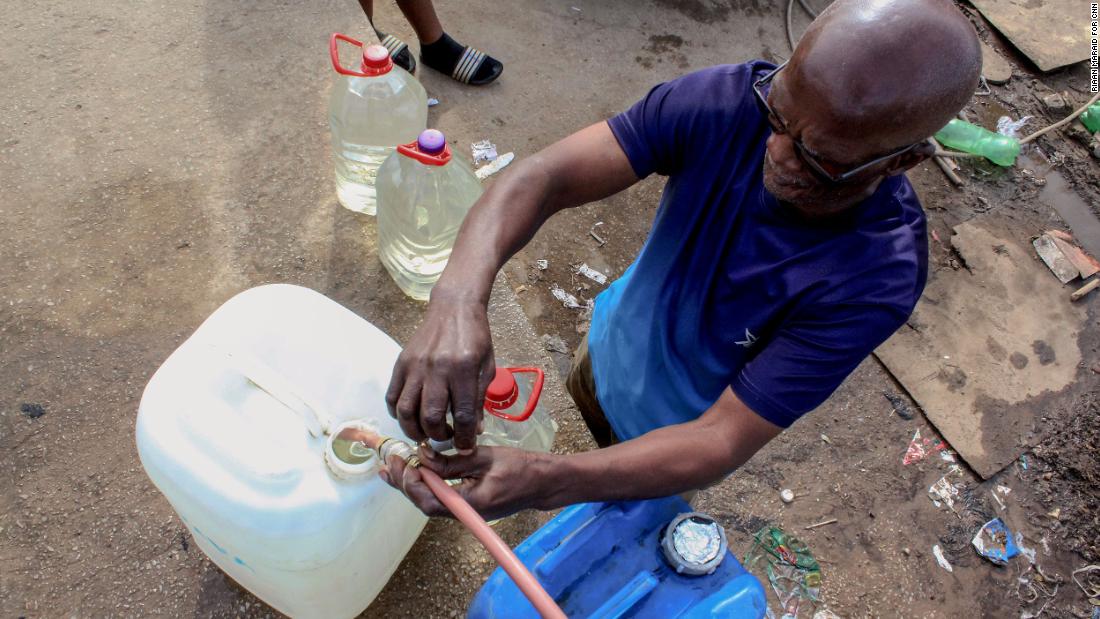
Leonard Matana. 69, filling up a plastic container with water at a communal tap in the township of Kwanobuhle in South Africa.
By Riaan Marais for CNN and Derek Van Dam, CNN Photographs by Samantha Reinders and Riaan Marais for CNN
Updated 0055 GMT (0855 HKT) June 21, 2022
(CNN)Every day, Morris Malambile loads his wheelbarrow full of empty plastic containers and pushes it from his home to the nearest running tap. It’s much further than the usual walk to the kitchen sink — just a little under a mile away — but it’s not the distance that bothers him.
It’s the bumpy road — which runs between tightly packed shanty dwellings and beige public-funded houses — that makes balancing containers filled with 70 liters of water on his return a pain.
“Home feels far when you are pushing 70 kilograms of water in a wheelbarrow,” said the 49-year-old resident from the impoverished South African township of Kwanobuhle.
Greenbaum nói: “Tôi chính là nhạc sĩ Do Thái thực sự đào mộ nhạc phúc âm. Tôi quyết định phải có thị trường phúc âm Chúa Jesus lớn hơn thị trường phúc âm Thiên Chúa Jehovah.” Tiếng ghita thô ráp xuất hiện khi một người bạn gắn hộp tơ nhỏ vào ngay thân đàn ghita Fender Telecaster của Greenbaum.
Ca khúc được Norman Greenbaum sáng tác và trình diễn; Erik Jacobsen sản xuất; phát hành vào tháng 2/1970.
Các bạn thấy chữ stress thường xuyên, Việt hóa là xì trét, dịch sang một chữ Việt khác thì mình có cảm tưởng chữ “căng” là chữ gần nhất.
Stress ban đầu có nghĩa vật lý là sức ép. Như là thời tiết tạo sức ép lên một căn nhà, sức ép của các chấn động mạnh lên một chiếc xe đang chạy… Tâm lý học mượn từ stress đó để nói về các sức ép tâm lý trên tâm trí con người.
Đương nhiên là mọi chúng ta đều biết stress và có kinh nghiệm với stress mỗi ngày. Chúng ta stress vì chuyện con cái bị bệnh, vợ chồng giận nhau, tranh chấp với đồng nghiệp, cãi nhau với khách hàng, lái xe bị giành đường, gặp mưa ngập lụt trên đường về, đang trễ giờ hẹn, mới bị phê phán… Kể ra thì phải có cả nghìn thứ để ta stress mỗi ngày. Và mình chẳng cần nói thêm gì về stress vì mỗi chúng ta đều là thầy stress cả rồi, chẳng có gì phải nói thêm với nhau. Continue reading Stress→
Challenging the regime’s legitimacy at home and abroad, Myanmar’s shadow National Unity Government (NUG) foreign minister Daw Zin Mar Aung, 45, has engaged with foreign governments and parliaments, international aid agencies and Myanmar’s many armed groups.
However, the elected lawmaker from the ousted National League for Democracy and winner of the 2012 International Women of Courage Award said international assistance is largely limited to moral support.
She exclusively tells The Irrawaddy about the importance of international support, including funding and arms, Myanmar’s friends and foes and how it receives different treatment from Ukraine.









 Đọt Chuối Non