Genocide was first recognised as a crime under international law in 1946 by the United Nations General Assembly (A/RES/96-I). It was codified as an independent crime in the 1948 Convention on the Prevention and Punishment of the Crime of Genocide (the Genocide Convention). The Convention has been ratified by 149 States (as of January 2018). The International Court of Justice (ICJ) has repeatedly stated that the Convention embodies principles that are part of general customary international law. This means that whether or not States have ratified the Genocide Convention, they are all bound as a matter of law by the principle that genocide is a crime prohibited under international law. The ICJ has also stated that the prohibition of genocide is a peremptory norm of international law (or ius cogens) and consequently, no derogation from it is allowed.
The definition of the crime of genocide as contained in Article II of the Genocide Convention was the result of a negotiating process and reflects the compromise reached among United Nations Member States in 1948 at the time of drafting the Convention. Genocide is defined in the same terms as in the Genocide Convention in the Rome Statute of the International Criminal Court (Article 6), as well as in the statutes of other international and hybrid jurisdictions. Many States have also criminalized genocide in their domestic law; others have yet to do so.
(Note: The Rome Statute of the International Criminal Court (ICC) is the law that established the ICC)
In the present Convention, genocide means any of the following acts committed with intent to destroy, in whole or in part, a national, ethnical, racial or religious group, as such:
Killing members of the group;
Causing serious bodily or mental harm to members of the group;
Deliberately inflicting on the group conditions of life calculated to bring about its physical destruction in whole or in part;
Imposing measures intended to prevent births within the group;
Forcibly transferring children of the group to another group.
Elements of the crime
The Genocide Convention establishes in Article I that the crime of genocide may take place in the context of an armed conflict, international or non-international, but also in the context of a peaceful situation. The latter is less common but still possible. The same article establishes the obligation of the contracting parties to prevent and to punish the crime of genocide.
The popular understanding of what constitutes genocide tends to be broader than the content of the norm under international law. Article II of the Genocide Convention contains a narrow definition of the crime of genocide, which includes two main elements:
A mental element: the “intent to destroy, in whole or in part, a national, ethnical, racial or religious group, as such”; and
A physical element, which includes the following five acts, enumerated exhaustively:
Killing members of the group;
Causing serious bodily or mental harm to members of the group;
Deliberately inflicting on the group conditions of life calculated to bring about its physical destruction in whole or in part;
Imposing measures intended to prevent births within the group;
Forcibly transferring children of the group to another group.
The intent is the most difficult element to determine. To constitute genocide, there must be a proven intent on the part of perpetrators to physically destroy a national, ethnical, racial or religious group. Cultural destruction does not suffice, nor does an intention to simply disperse a group. It is this special intent, or dolus specialis, that makes the crime of genocide so unique. In addition, case law has associated intent with the existence of a State or organizational plan or policy, even if the definition of genocide in international law does not include that element.
Importantly, the victims of genocide are deliberately targeted – not randomly – because of their real or perceived membership of one of the four groups protected under the Convention (which excludes political groups, for example). This means that the target of destruction must be the group, as such, and not its members as individuals. Genocide can also be committed against only a part of the group, as long as that part is identifiable (including within a geographically limited area) and “substantial.”
Diệt chủng được Đại hội đồng Liên hợp quốc công nhận lần đầu tiên là hình tội theo luật quốc tế vào năm 1946 (A/RES/96-I). Diệt chủng được đưa vào hệ thống luật như hình tội độc lập trong Công ước Ngăn ngừa và Trừng phạt Tội Diệt chủng (Công ước Diệt chủng) năm 1948. Công ước được 149 Quốc gia phê chuẩn (tính đến tháng 1 năm 2018). Tòa Công lý Quốc tế (ICJ) đã nhiều lần tuyên bố Công ước là hiện thân của các nguyên tắc đã là một phần của luật tục quốc tế chung. Điều này nghĩa là dù các Quốc gia có phê chuẩn Công ước Diệt chủng hay không, thì tất cả các Quốc gia đều bị ràng buộc về mặt pháp lý bởi nguyên tắc diệt chủng là hình tội bị cấm theo luật quốc tế truyền thống. Tòa Công lý Quốc tế cũng tuyên bố cấm diệt chủng là quy tắc bắt buộc của luật pháp quốc tế (gọi là jus cogens) và do đó, không được phép làm yếu tội diệt chủng.
Định nghĩa tội diệt chủng được nêu trong Điều II của Công ước Diệt chủng là kết quả của quá trình thương lượng và phản ánh sự thỏa hiệp đã đạt được giữa các Quốc gia Thành viên Liên hợp quốc vào năm 1948 tại thời điểm soạn thảo Công ước. Diệt chủng cũng được định nghĩa trong Đạo luật Rome về Tòa Hình sự Quốc tế (ở Điều 6) với từ ngữ tương tự như định nghĩa trong Công ước Diệt chủng, cũng như trong các đạo luật của các thẩm quyền quốc tế và thẩm quyền hỗn hợp khác. Nhiều Quốc gia cũng hình sự hóa diệt chủng trong luật trong nước của họ; một số Quốc gia khác thì chưa làm như vậy.
(Chú thích: Đạo luật Rome về Tòa Hình sự Quốc tế (ICC) là đạo luật thiết lập Tòa Hình sự Quốc tế)
Định nghĩa
Công ước về Ngăn ngừa và Trừng phạt Tội diệt chủng
Điều II
Trong Công ước này, diệt chủng nghĩa là bất kỳ hành vi nào sau đây được thực hiện với chủ ý tiêu diệt, toàn bộ hoặc một phần, của một nhóm quốc gia, dân tộc, chủng tộc hoặc tôn giáo, như:
Giết các thành viên trong nhóm;
Gây hại nghiêm trọng về thể xác hoặc tinh thần cho các thành viên trong nhóm;
Cố ý gây ra cho nhóm các điều kiện sống được tính toán để dẫn đến hủy diệt toàn bộ hoặc một phần thể chất của nhóm;
Áp đặt các biện pháp có chủ ý ngăn cản sinh đẻ trong nhóm;
Ép chuyển trẻ em thuộc nhóm này sang nhóm khác.
Các yếu tố cấu thành tội diệt chủng
Công ước Diệt chủng quy định tại Điều I rằng tội diệt chủng có thể diễn ra trong bối cảnh xung đột vũ trang, ở trong nước hoặc ở các nước với nhau, nhưng cũng có thể diễn ra trong bối cảnh hòa bình. Bối cảnh hòa bình ít phổ biến hơn nhưng vẫn có thể xảy ra. Điều I này cũng thiết lập nghĩa vụ ngăn ngừa và trừng phạt tội diệt chủng của các nước ký Công ước.
Cách hiểu phổ thông về những gì cấu thành tội diệt chủng có khuynh hướng rộng hơn điều khoản luật theo luật quốc tế. Điều II của Công ước Diệt chủng có định nghĩa tội diệt chủng hẹp hơn, gồm hai yếu tố chính:
Yếu tố ý định: “chủ ý tiêu diệt, toàn bộ hoặc một phần, của một nhóm quốc gia, dân tộc, chủng tộc hoặc tôn giáo”; và
Yếu tố thể chất, gồm 5 hành vi sau đây, được liệt kê đầy đủ:
Giết các thành viên trong nhóm;
Gây hại nghiêm trọng về thể xác hoặc tinh thần cho các thành viên trong nhóm;
Cố ý gây ra cho nhóm các điều kiện sống được tính toán để dẫn đến hủy diệt toàn bộ hoặc một phần thể chất của nhóm;
Áp đặt các biện pháp có chủ ý ngăn cản sinh đẻ trong nhóm;
Ép chuyển trẻ em thuộc nhóm này sang nhóm khác.
Chủ ý là yếu tố khó xác định nhất. Để cấu thành tội diệt chủng, phải chứng minh người thủ phạm có chủ ý tiêu diệt thân thể một nhóm quốc gia, dân tộc, chủng tộc hoặc tôn giáo. Hủy diệt văn hóa thì không đủ để cấu thành tội diệt chủng. Chủ ý chỉ phân tán nhóm (không cho nhóm sống tập trung với nhau) cũng không đủ để cấu thành tội diệt chủng. Đây là chủ ý đặc biệt, tiếng Latinh là dolus specialis, và chủ ý đặc biệt này làm cho tội diệt chủng trở thành khác thường. Thêm vào đó, án lệ thường xem những kế hoạch hoặc chính sách diệt chủng của Nhà nước hoặc của một tổ chức là bằng chứng chủ ý diệt chủng, dù rằng định nghĩa diệt chủng trong luật quốc tế không nói đến kế hoạch và chính sách.
Điều quan trọng là, các nạn nhân diệt chủng bị cố ý nhắm vào – không phải là vô tình – vì họ là thành viên thực sự hay bị hiểu nhầm là thành viên của một trong bốn nhóm được bảo vệ theo Công ước (các nhóm khác, ví dụ nhóm chính trị, thì không được bảo vệ). Điều này có nghĩa là mục tiêu bị hủy diệt phải là một nhóm, chứ không phải là các thành viên với tư cách cá nhân. Diệt chủng cũng có thể nhắm vào chỉ một phần của nhóm, không hẳn là toàn bộ nhóm, miễn là phần đó có thể nhận dạng (kể cả phần đó nằm trong khu vực địa lý giới hạn) và diệt chủng “với số lượng người đáng kể”, không phải là làm hại vài người lẻ tẻ.
Mar 23, 2022
In an exclusive interview for Eurovision News in Kyiv, Ukrainian President Volodymyr Zelenskyy has told TV reporters that he is ready to discuss a commitment from his country not to seek NATO membership in exchange for a cease-fire, Russian troop withdrawal and guarantee of Ukraine’s security.
In an exclusive interview for Eurovision News in Kyiv, Ukrainian President Volodymyr Zelenskyy has told TV reporters that he is ready to discuss a commitment from his country not to seek NATO membership in exchange for a cease-fire, Russian troop withdrawal and guarantee of Ukraine’s security.
Growing up in Essex, my summers in Iran felt like magical interludes from reality – but it was a spell that always had to be broken. By Arianne Shahvisi
Cột quất roi là bài hát được ban nhạc rock Mỹ Allman Brothers thể hiện, Gregg Allman sáng tác, phát hành vào tháng 11-1969.
Bài hát được Allman viết trên bàn ủi trong phòng ngủ tối tăm ở Florida. Được chấm phá bởi những vết cắt như dao trên guitar của Duane Allman, bài hát được đánh giá cao nhất trong 23 phút hóa thân trong album At Fillmore East.
Báo nhạc Rolling Stone xếp ca khúc này hạng thứ 393 trong danh sách 500 bài hát hay nhất mọi thời đại. Continue reading Cột quất roi→
Mọi người đều quan tâm đến đất nước – người ta bực mình với những điều không tốt và phàn nàn, hay người ta xỉ vả nhà nước (từ ngàn xưa đến nay, từ thời Tàu, thời Tây, thời Mỹ, thời Ta, nhà nước Tây Tàu Mỹ Ta luôn là một ông có mặt đó một cách rất tiện lợi để mọi người chỉ ngón tay vào phàn nàn hay chửi bới), hay người ta phàn nàn Dân Trí (mình chẳng chắc ông Dân Trí là ông nào), hay người ta chỉ ngón tay vào định mệnh (dân ta sinh ra vào nơi này, vùng đất chiến lược của thế giới, nên luôn bị các ông lớn xâm chiếm), hay người ta thở dài đổ thừa số phận… Đủ kiểu phản ứng. Ngoại trừ mình chưa hề thấy ông nào bà nào cô nào cậu nào chỉ ngón tay vào chính mình và nói: “Tôi là một phần vấn đề của đất nước này (hay, thế giới này).” Continue reading Hoàn chỉnh chính mình để hoàn chỉnh thế giới→
THE PRESIDENT: Thank you, thank you, thank you. Please, if you have a seat, be seated. (Laughter.) If you don’t, come up on stage.
Thank you very much. It’s a great honor to be here. Mr. President, they tell me you’re over there somewhere. There you are. Thank you, Mr. President.
“Be not afraid.” They were the first words at the first public address of the first Polish Pope after his election on October of 1978. They were words that would come to define Pope John Paul II. Words that would change the world.
John Paul brought the message here to Warsaw in his first trip back home as Pope in June of 1979. It was a message about the power — the power of faith, the power of resilience, and the power of the people.
In the face of a cruel and brutal system of government, it was a message that helped end the Soviet repression in the Central land and Eastern Europe 30 years ago. It was a message that will overcome the cruelty and brutality of this unjust war.
When Pope John Paul brought that message in 1979, the Soviet Union ruled with an iron fist behind an Iron Curtain.
Then a year later, the Solidarity movement took hold in Poland. And while I know he couldn’t be here tonight, we’re all grateful in America and around the world for Lech Wałęsa. (Applause.)
It reminds me of that phrase of philosopher Kierkegaard: “[F]aith sees best in the dark.” And there were dark moments.
Ten years later, the Soviet Union collapsed, and Poland and Central and Eastern Europe would soon be free. Nothing about that battle for freedom was simple or easy. It was a long, painful slog fought over not days and months, but years and decades.
But we emerged anew in the great battle for freedom: a battle between democracy and autocracy, between liberty and repression, between a rules-based order and one governed by brute force.
In this battle, we need to be clear-eyed. This battle will not be won in days or months either. We need to steel ourselves for the long fight ahead.
Mr. President, Mr. Prime Minister, Mr. Mayor, members of the Parliament, distinguished guests, and the people of Poland, and I suspect some people of Ukraine that are here: We’re — (applause) — we are gathered here at the Royal Castle in this city that holds a sacred place in the history of not only of Europe, but humankind’s unending search for freedom.
For generations, Warsaw has stood where liberty has been challenged and liberty has prevailed.
In fact, it was here in Warsaw when a young refugee, who fled her home country from Czechoslovakia was under Soviet domination, came back to speak and stand in solidarity with dissidents.
Her name was Madeleine Korbel Albright. She became — (applause) — one of the most ardent supporters of democracy in the world. She was a friend with whom I served. America’s first woman Secretary of State. She passed away three days ago.
She fought her whole life for essential democratic principles. And now, in the perennial struggle for democracy and freedom, Ukraine and its people are on the frontlines fighting to save their nation.
And their brave resistance is part of a larger fight for an essential democratic principles that unite all free people: the rule of law; free and fair elections; the freedom to speak, to write, and to assemble; the freedom to worship as one chooses; freedom of the press.
These principles are essential in a free society. (Applause.) But they have always — they have always been under siege. They’ve always been embattled. Every generation has had to defeat democracy’s mortal foes. That’s the way of the world — for the world is imperfect, as we know. Where the appetites and ambitions of a few forever seek to dominate the lives and liberties of many.
My message to the people of Ukraine is the message I delivered today to Ukraine’s Foreign Minister and Defense Minister, who I believe are here tonight: We stand with you. Period. (Applause.)
Today’s fighting in Kyiv and Mariupol and Kharkiv are the latest battle in a long struggle: Hungary, 1956; Poland, 1956 then again 1981; Czechoslovakia, 1968.
Soviet tanks crushed democratic uprisings, but the resistance continued until finally, in 1989, the Berlin Wall and all of the walls of Soviet domination — they fell. They fell. And the people prevailed. (Applause.)
But the battle for democracy could not conclude and did not conclude with the end of the Cold War.
Over the last 30 years, the forces of autocracy have revived all across the globe. Its hallmarks are familiar ones: contempt for the rule of law, contempt for democratic freedom, contempt for the truth itself.
Today, Russia has strangled democracy — has sought to do so elsewhere, not only in its homeland. Under false claims of ethnic solidarity, it has invalidated [invaded] neighboring nations.
Putin has the gall to say he’s “de-Nazifying” Ukraine. It’s a lie. It’s just cynical. He knows that. And it’s also obscene.
President Zelenskyy was democratically elected. He’s Jewish. His father’s family was wiped out in the Nazi Holocaust. And Putin has the audacity, like all autocrats before him, to believe that might will make right.
In my own country, a former president named Abraham Lincoln voiced the opposing spirit to save our Union in the midst of a civil war. He said, “Let us have faith that right makes might.” “Right makes might.” (Applause.)
Today, let us now have that faith again. Let us resolve to put the strength of democracies into action to thwart the denigns [sic] of our — the designs of autocracy. Let us remember that the test of this moment is the test of all time.
The Kremlin wants to portray NATO enlargement as an imperial project aimed at destabilizing Russia. Nothing is further from the truth. NATO is a defensive alliance. It has never sought the demise of Russia.
In the lead-up to the current crisis, the United States and NATO worked for months to engage Russia to avert a war. I met with him in person and talked to him many times on the phone.
Time and again, we offered real diplomacy and concrete proposals to strengthen European security, enhance transparency, and build confidence on all sides.
But Putin and Russia met each of the proposals with disinterest in any negotiation, with lies and ultimatums. Russia was bent on violence from the start.
I know not all of you believed me and us when we kept saying, “They are going to cross the border. They are going to attack.”
Repeatedly, he asserted, “We have no interest in war.” Guaranteed he would not move.
Repeatedly saying he would not invade Ukraine.
Repeatedly saying Russian troops along the border were there for “training” — all 180,000 of them.
There is simply no justification or provocation for Russia’s choice of war. It’s an example of one of the oldest of human impulses: using brute force and disinformation to satisfy a craving for absolute power and control.
It’s nothing less than a direct challenge to the rule-based international order established since the end of World War Two.
And it threatens to return to decades of war that ravaged Europe before the international rule-based order was put in place. We cannot go back to that. We cannot.
The gravity of the threat is why the response of the West has been so swift and so powerful and so unified, unprecedented, and overwhelming.
Swift and punishing costs are the only things that are going to get Russia to change its course.
Within days of its invasion, the West had moved jointly with sanctions to damage Russia’s economy.
Russia’s Central Bank is now blocked from the global financial systems, denying Kremlin’s access to the war fund it stashed around the globe.
We’ve aimed at the heart of Russia’s economy by stopping the imports of Russian energy to the United States.
To date, the United States has sanctioned 140 Russian oligarchs and their family members, seizing their ill-begotten gains: their yachts, their luxury apartments, their mansions.
We’ve sanctioned more than 400 Russian government officials, including key architects of this war.
These officials and oligarchs have reaped enormous benefit from the corruption connected to the Kremlin, and now they have to share in the pain.
The private sector is acting as well. Over 400 private multinational companies have pulled out of doing business in Russia — left Russia completely — from oil companies to McDonald’s.
As a result of these unprecedented sanctions, the ruble almost is immediately reduced to rubble. The Russian economy — (applause) — that’s true, by the way. It takes about 200 rubles to equal one dollar.
The economy is on track to be cut in half in the coming years. It was ranked — Russia’s economy was ranked the 11th biggest economy in the world before this evasion [sic] — invasion. It will soon not even rank among the top 20 in the world. (Applause.)
Taken together, these economic sanctions are a new kind of economic statecraft with the power to inflict damage that rivals military might.
These international sanctions are sapping Russian strength, its ability to replenish its military, and its ability — its ability to project power. And it is Putin — it is Vladimir Putin who is to blame, period.
At the same time, alongside these economic sanctions, the Western world has come together to provide for the people of Ukraine with incredible levels of military, economic, and humanitarian assistance.
In the years before the invasion, we, America, had sent over $650 million, before they crossed the border, in weapons to Ukraine, including anti-air and anti-armor equipment.
Since the invasion, America has committed another $1.35 billion in weapons and ammunition.
And thanks to the courage and bravery of the Ukrainian people — (applause) — the equipment we’ve sent and our colleagues have sent have been used to devastating effect to defend Ukrainian land and airspace. Our Allies and partners have stepped up as well.
But as I’ve made clear: American forces are in Europe — not in Europe to engage in conflict with Russian forces. American forces are here to defend NATO Allies.
Yesterday, I met with the troops that are serving alongside our Polish allies to bolster NATO’s frontline defenses. The reason we wanted to make clear is their movement on Ukraine: Don’t even think about moving on one single inch of NATO territory.
We have a sacred obligation — (applause) — we have a sacred obligation under Article 5 to defend each and every inch of NATO territory with the full force of our collective power.
And earlier today, I visited your National Stadium, where thousands of Ukrainian refugees are now trying to answer the toughest questions a human can ask: “My God, what’s going to happen to me? What’s going to happen to my family?”
I saw tears in many of the mothers’ eyes as I embraced them; their young children — their young children not sure whether to smile or cry. One little girl said, “Mr. President” — she spoke a little English — “is my brother and my daddy — are they going to be okay? Will I see them again?” Without their husbands, their fathers, in many cases, their brothers or sisters who stayed back to fight for their country.
I didn’t have to speak the language or understand the language to feel the emotion in their eyes, the way they gripped my hand, and little kids hung on to my leg, praying with a desperate hope that all this is temporary; apprehension that they may be perhaps forever away from their homes, almost with debilitating sadness that this is happening all over again.
But I was also struck by the generosity of the people of Warsaw — for that matter, all the Polish people — for the depths of their compassion, their willingness to reach out — (applause) — opening their hearts.
I was saying to the Mayor they’re preparing to open their hearts and their homes simply to help. I also want to thank my friend, the great American chef, José Andrés, and his team who helped feeling [sic] those — (applause) — feeding those who are yearning to be free.
But helping these refugees is not something Poland or any other nation should carry alone. All the world democracies have a responsibility to help. All of them. And the people of Ukraine can count on the United States to meet its responsibility.
I’ve announced, two days ago, we will welcome 100,000 Ukrainian refugees. We already have 8,000 a week coming to the United States of other nat- — nationalities.
We’ll provide nearly $300 million of humanitarian assistance, providing tens of thousands of tons of food, water, medicine, and other basic supplies.
In Brussels, I announced the United States is prepared to provide more than $1 billion, in addition, in humanitarian aid.
The World Food Programme told us that despite significant obstacles, at least some relief is getting to major cities in Ukraine, but not Metropol [sic] — no, excuse me, Mar- — not Mariupol, because Russian forces are blocking relief supplies.
But we’ll not cease our efforts to get humanitarian relief wherever it is needed in Ukraine and for the people who’ve made it out of Ukraine.
Notwithstanding the brutality of Vladimir Putin, let there be no doubt that this war has already been a strategic failure for Russia already. (Applause.) Having lost children myself — I know that’s no solace to the people who’ve lost family.
But he, Putin, thought Ukrainians would roll over and not fight. Not much of a student of history. Instead, Russian forces have met their match with brave and stiff Ukrainian resistance.
Rather than breaking Ukrainian resolve, Russia’s brutal tactics have strengthened the resolve. (Applause.)
Rather than driving NATO apart, the West is now stronger and more united than it has ever been. (Applause.)
Russia wanted less of a NATO presence on its border, but now he has [we have] a stronger presence, a larger presence, with over a hundred thousand American troops here, along with all the other members of NATO.
In fact — (applause) — Russia has managed to cause something I’m sure he never intended: The democracies of the world are revitalized with purpose and unity found in months that we’d once taken years to accomplish.
It’s not only Russia’s actions in Ukraine that are reminding us of democracy’s blessing. It’s our own country — his own country, the Kremlin, is jailing protestors. Two hundred thousand people have allegedly already left. There’s a brain drain — leaving Russia. Shutting down independent news. State media is all propaganda, blocking the image of civilian targets, mass graves, starvation tactics of the Russian forces in Ukraine.
Is it any wonder, as I said, that 200,000 Russians have all left their country in one month? A remarkable brain drain in such a short period of time, which brings me to my message to the Russian people:
I’ve worked with Russian leaders for decades. I sat across the negotiating table going all the way back to Soviet Premier Alexei Kosygin to talk arms control at the height of the Cold War.
I’ve always spoken directly and honestly to you, the Russian people.
Let me say this, if you’re able to listen: You, the Russian people, are not our enemy.
I refuse to believe that you welcome the killing of innocent children and grandparents or that you accept hospitals, schools, maternity wards that, for God’s sake, are being pummeled with Russian missiles and bombs; or cities being surrounded so that civilians cannot flee; supplies cut off and attempting to starve Ukrainians into submission.
Millions of families are being driven from their homes, including half of all Ukraine’s children. These are not the actions of a great nation.
Of all people, you, the Russian people, as well as all people across Europe, still have the memory of being in a similar situation in the late thirties and forties — the situation of World War Two — still fresh in the minds of many grandparents in the region.
What — whatever your generation experienced — whether it experienced the Siege of Leningrad or heard about it from your parents and grandparents — train stations overflowing with terrified families fleeing their homes; nights sheltering in basements and cellars; mornings sitting through the rubble in your homes — these are not memories of the past. Not anymore. Because it’s exactly what the Russian army is doing in Ukraine right now.
March 26, 2022. Just days before — we’re at the twenty-fir- — you were a 21st century nation with hopes and dreams that people all over the world have for themselves and their family.
Now, Vladimir Putin’s aggression have cut you, the Russian people, off from the rest of the world, and it’s taking Russia back to the 19th century.
This is not who you are. This is not the future reserve — you deserve for your families and your children. I’m telling you the truth: This war is not worthy of you, the Russian people.
Putin can and must end this war. The American people stand with you and the brave citizens of Ukraine who want peace.
And my message to the rest of Europe: This new battle for freedom has already made a few things crystal clear.
First, Europe must end its dependence on Russian fossil fuels. And we, the United States, will help. (Applause.) That’s why just yesterday, in Brussels, I announced a plan with the President of the European Commission to get Europe through the immediate energy crisis.
Over the long term, as a matter of economic security and national security and for the survivability of the planet, we all need to move as quickly as possible to clean, renewable energy. And we’ll work together to help get that done so that the days of any nation being subject to the whims of a tyrant for its energy needs are over. They must end. They must end.
And second, we have to fight the corruption coming from the Kremlin to give the Russian people a fair chance.
And finally, and most urgently, we maintain absolute unity — we must — among the world’s democracies.
It’s not enough to speak with rhetorical flourish, of ennobling words of democracy, of freedom, equality, and liberty. All of us, including here in Poland, must do the hard work of democracy each and every day. My country as well.
That’s why — (applause) — that’s why I came to Europe again this week with a clear and determined message for NATO, for the G7, for the European Union, for all freedom-loving nations: We must commit now to be in this fight for the long haul. We must remain unified today and tomorrow and the day after and for the years and decades to come. (Applause.)
It will not be easy. There will be costs. But it’s a price we have to pay. Because the darkness that drives autocracy is ultimately no match for the flame of liberty that lights the souls of free people everywhere.
Time and again, history shows that it’s from the darkest moments that the greatest progress follows. And history shows this is the task of our time, the task of this generation.
Let’s remember: The hammer blow that brought down the Berlin Wall, the might that lifted the Iron Curtain were not the words of a single leader; it was the people of Europe who, for decades, fought to free themselves.
Their sheer bravery opened the border between Austria and Hungary for the Pan-European Picnic. They joined hands for the Baltic Way. They stood for Solidarity here in Poland. And together, it was an unmistakable and undeniable force of the people that the Soviet Union could not withstand.
And we’re seeing it once again today with the brave Ukrainian people, showing that their power of many is greater than the will of any one dictator. (Applause.)
So, in this hour, let the words of Pope John Paul burn as brightly today: “Never, ever give up hope, never doubt, never tire, never become discouraged. Be not afraid.” (Applause.)
A dictator bent on rebuilding an empire will never erase a people’s love for liberty. Brutality will never grind down their will to be free. Ukraine will never be a victory for Russia — for free people refuse to live in a world of hopelessness and darkness.
We will have a different future — a brighter future rooted in democracy and principle, hope and light, of decency and dignity, of freedom and possibilities.
For God’s sake, this man cannot remain in power.
God bless you all. And may God defend our freedom. (Applause.) And may God protect our troops. Thank you for your patience. Thank you. (Applause.) Thank you. Thank you.
Since launching his unprovoked and unjust war of choice, Russian President Vladimir Putin has unleashed unrelenting violence that has caused death and destruction across Ukraine. We’ve seen numerous credible reports of indiscriminate attacks and attacks deliberately targeting civilians, as well as other atrocities. Russia’s forces have destroyed apartment buildings, schools, hospitals, critical infrastructure, civilian vehicles, shopping centers, and ambulances, leaving thousands of innocent civilians killed or wounded. Many of the sites Russia’s forces have hit have been clearly identifiable as in-use by civilians. This includes the Mariupol maternity hospital, as the UN Office of the High Commissioner for Human Rights expressly noted in a March 11 report. It also includes a strike that hit a Mariupol theater, clearly marked with the word “дети” — Russian for “children” — in huge letters visible from the sky. Putin’s forces used these same tactics in Grozny, Chechnya, and Aleppo, Syria, where they intensified their bombardment of cities to break the will of the people. Their attempt to do so in Ukraine has again shocked the world and, as President Zelenskyy has soberly attested, “bathed the people of Ukraine in blood and tears.”
Every day that Russia’s forces continue their brutal attacks, the number of innocent civilians killed and wounded, including women and children, climbs. As of March 22, officials in besieged Mariupol said that more than 2,400 civilians had been killed in that city alone. Not including the Mariupol devastation, the United Nations has officially confirmed more than 2,500 civilian casualties, including dead and wounded, and emphasizes the actual toll is likely higher.
Chinese President Xi Jinping at the Great Hall of the People in Beijing Photo Credit: Aly Song/Reuters.
China is challenging the West. What is the West? It is not only nations in Europe or North America. It is countries that practice democracy.
India, Japan, South Korea, and Australia are Western nations that surround China. They worry about China’s size and ambitions. They view China with suspicion. Also, in the West, the United States and most of Europe see China as an adversary.
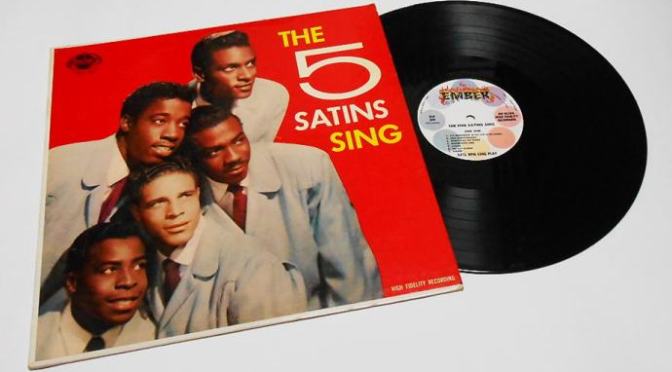
Fred Parris – ca sĩ của nhóm Five Satins – đã viết Trong tĩnh mịch đêm khuya trong khi làm nhiệm vụ bảo vệ trong Quân đội, và cả nhóm đã ghi âm ca khúc này ở tầng hầm nhà thờ tại quê nhà Parris ở New Haven, tiểu bang Connecticut, Mỹ vào tháng Chín năm 1956.
Độ thô của bản nhạc cho thấy: trống và piano bị nghẹt, tiếng kèn xacxô antô vỡ tiếng khi diễn đơn và giọng bè lạc điệu. Nhưng âm thanh nguyên thủy – và sự thật chỉ có bốn người trong nhóm Five Satins có mặt trong buổi diễn – vẫn khiến bài hát trở thành một tác phẩm tuyệt vời, một mảnh cuối cùng của nhạc doo-wop.
Trong vấn đề giáo dục, mình cảm thấy điều khó nhất cho một người thầy là cố dạy một người học trò chưa muốn học. Khi người học trò chưa sẵn sàng để học, bạn chẳng thể nào dạy được.
Chưa sẵn sàng học có thể có nhiều lý do: quá nhỏ tuổi, trình độ hiểu biết chưa tới, mức độ thông minh chưa tới, trong lòng chẳng muốn học… Lý do thì vô cùng, nhưng lý do thì chẳng quan trọng. Điều quan trọng là khi người học trò chưa sẵn sàng, thầy chẳng thể dạy được. Continue reading Dạy và học→
At a summer camp for kids from conflict zones, I met my brave, funny friend Aseel. He was Palestinian. I was Israeli. When he was killed by police, my hope for our future died with him
theguardian.com – by Roy Cohen – Thu 13 Jan 2022 06.00 GMT
Warren Buffett shares two stories about women who started from nothing and sold their businesses to the legendary investor. This is one of the greatest speeches Mr. Buffett has ever delivered and he also gives really good advice to all entrepreneurs in the audience.
Warren E. Buffett is an American long-term investor, philanthropist, business tycoon, and the chairman & CEO of Berkshire Hathaway. He is considered one of the most successful investors in the world and has a net worth of over 100 billion dollars. Buffett was born in Omaha, Nebraska. He developed an interest in business and investing in his youth and made truly incredible stock market returns over his career.
TTCT – Bên cạnh các khoản thưởng tiền tỉ, những lời tán dương không dứt, các cô gái của bóng đá Việt Nam còn nhận một phần quà đặc biệt ý nghĩa sau thành tích giành vé dự World Cup: suất học bổng đại học.
Đội trưởng tuyển nữ Việt Nam Huỳnh Như. Ảnh: Nguyên Khôi
Với riêng các nữ tuyển thủ ở TP.HCM, có ít nhất hai trường đại học trao tặng học bổng cho họ, là Đại học Hoa Sen và Đại học Công nghệ thông tin.
Stjepan Hauser performing Adagio by Tomaso Albinoni with the Zagreb Philharmonic Orchestra at his classical solo concert at the Lisinski Concert Hall in Zagreb, Croatia, October 2017.
Elisabeth Fuchs, conductor. Pavao Mašić, organ. Arrangement by Hauser and Filip Sljivac
Cuộc đời rất ngắn. Một lúc nào đó mỗi chúng ta đều sẽ về với ông bà. Mình không thích nói gì về điều gì xảy ra sau đó, vì mình chẳng biết gì về điều đó, nhưng mình thường nghĩ đến câu hỏi cuối cùng mà có lẽ ai cũng sẽ hỏi chính họ trước khi họ nhắm mắt, nếu họ có cơ hội để hỏi: Mình đã sử dụng đời mình như thế nào?
Đây là một câu hỏi rõ ràng, cụ thể, và ai cũng biết câu trả lời. Chỉ là tóm tắt lại đời mình trong một hai chữ. Continue reading Câu hỏi cuối đời→






 Đọt Chuối Non