All posts by Trần Đình Hoành

I am an attorney in the Washington DC area, with a Doctor of Law in the US, attended the master program at the National School of Administration of Việt Nam, and graduated from Sài Gòn University Law School. I aso studied philosophy at the School of Letters in Sài Gòn. . I have worked as an anti-trust attorney for Federal Trade Commission and a litigator for a fortune-100 telecom company in Washington DC. I have taught law courses for legal professionals in Việt Nam and still counsel VN government agencies on legal matters. I have founded and managed businesses for me and my family, both law and non-law. I have published many articles on national newspapers and radio stations in Việt Nam. In 1989 I was one of the founding members of US-VN Trade Council, working to re-establish US-VN relationship. Since the early 90's, I have established and managed VNFORUM and VNBIZ forum on VN-related matters; these forums are the subject of a PhD thesis by Dr. Caroline Valverde at UC-Berkeley and her book Transnationalizing Viet Nam. I translate poetry and my translation of "A Request at Đồng Lộc Cemetery" is now engraved on a stone memorial at Đồng Lộc National Shrine in VN. I study and teach the Bible and Buddhism. In 2009 I founded and still manage dotchuoinon.com on positive thinking and two other blogs on Buddhism. In 2015 a group of friends and I founded website CVD - Conversations on Vietnam Development (cvdvn.net). I study the art of leadership with many friends who are religious, business and government leaders from many countries. I have written these books, published by Phu Nu Publishing House in Hanoi: "Positive Thinking to Change Your Life", in Vietnamese (TƯ DUY TÍCH CỰC Thay Đổi Cuộc Sống) (Oct. 2011) "10 Core Values for Success" (10 Giá trị cốt lõi của thành công) (Dec. 2013) "Live a Life Worth Living" (Sống Một Cuộc Đời Đáng Sống) (Oct. 2023) I practice Jiu Jitsu and Tai Chi for health, and play guitar as a hobby, usually accompanying my wife Trần Lê Túy Phượng, aka singer Linh Phượng.

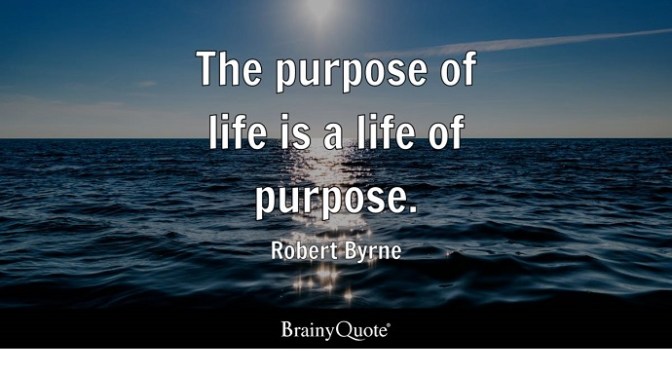
Have a purpose for your life

Dear Brothers and Sisters,

Many generations before us served the country well with their courage, blood and life, fighting for our country’s survival and independence. Of course, the entire nations were in those struggles, but the main force was always the young, 18 and up, going to battles.

What are you guys in the young generation doing to serve your country today? Continue reading Have a purpose for your life

Một thời cho mỗi thứ

Chào các bạn,

Thánh kinh có một cuốn sách tên là Ecclesiastes, công giáo dịch là Giảng Viên, đọc rất giống Phật pháp, cho đến nỗi người ta có giả thuyết tác giả nó là ai đó đã từng sang Viễn Đông (Far East) học và trở về vùng Do thái (Trung Đông, Middle East). Sau đây là một đoạn để chúng ta chiêm nghiệm (bản tiếng Việt là bản công giáo, mình chỉ thay đổi đầu đề cho hợp bản tiếng Anh).

Lời thánh kinh này đã được ban The Byrds viết thành bản nhạc “Turn! Turn! Turn!” trong thập niên 1960s. Mình có 3 clips của The Byrds, của Judy Collins, và của Bruce Springsteen với The E Street Band ở đây cho các bạn, sau đoạn thánh kinh. Continue reading Một thời cho mỗi thứ

Understand your root solution for life problems

Dear Brothers and Sisters,

Each of us has many wants and wishes along with many problems associated with them. We chase after our wants and our wishes and fight against the whole army of their associated problems constantly, every day, all our life. You can see that living such a life is very tiring and unproductive, because we spend all our energy and time to struggle constantly, fighting against many things forever besieging us, without rest and without a chance to win them all.

There must be a strategy to handle life more wisely and effectively. Continue reading Understand your root solution for life problems

Encountering what you dislike

Dear Brothers and Sisters,

We encounter things we dislike very often every day – crazy drivers, dumb roads, flooding rain, liar, nasty neighbor, being tricked into buying unclean food, unethical sellers, jealous coworker, hated ex-boyfriend… You name it.

Meeting what we hate is one branch of suffering in Buddhist philosophy called “Suffering meeting what we hate” (oán tằng hội khổ, khổ vì ghét mà gặp).

(This English phrase “Suffering meeting what we hate” is my translation. Other versions are “Suffering being together with the despised ones” or “Association with the unbeloved is duḥkha.” The problem with these and many other versions is that they talk only about people and miss the entire world of things, animals, events, situations… that you hate).

Anyway, we all have experienced meeting what we hate, every day. Probably we call them “suffering” only in heavy circumstances – like, working with a person we hate in the same office or the house is on fire – but the truth is that every inconvenience big or small can give us stress regularly and the accumulation of constant stress can be a killer.

How do we deal with this constantly stressful problem?

Of course, Zen masters wouldn’t need a solution, because when they have practiced Zen to the degree of calmness that nothing can bother them,  inconvenient things or inconvenient people are not a problem to them at all.

But how do we have a quicker solution instead of doing 10 years of Zen exercises?

I still encourage you to do 10 years of Zen exercises, because Zen can wipe out all problems in your mind, not just several types of problems. But, in the meantime, we need some quick fix.

We need to work on our attitude toward inconveniency.

Let’s talk about inconvenient things first, because they are easier to deal with. Inconvenient things are a natural part of life. Life is a river with many different parts of different characters – quiet waters, stormy waters, clear waters, murky waters, rocky rapids, falls, lakes, bends… Peaceful waters pose no problem, but rocky rapids are lots of problems.

Howewer, if you are a river traveller, you enjoy a river’s different characters. In deed, different characters are the main reason for your travelling – if the river has only quiet water throughout, probably you wouldn’t want river travel.

Life has different things, some convenient and some inconvenient. That is the nature of life and of things. It makes life everchanging and interesting. Convenience and inconvenience go together and make life interesting for you. You don’t hate one and like only the other.

Switching to dealing with humans. Humans are diferent from rivers & mountains, animals,  events and circumstances in one point: Humans may intentionally act, nicely or badly, to each other, while the rest of  creation rarely do anything intentionally to humans (except that family pets will intentionally do nice things to you). So, many inconveniences you face may be intentionally done to you by other people.

So, the real issue is the intention of the actor. If someone unintentionally does something unpleasant to you, by accident, for example, then probably you will not be upset and will readily understand that person’s position and reasons.

However, when someone intentionally does somethings inconvenient or maybe harmful to you, that is when the real problem appears.

When someone badmouths you, lies to you, stabs you on the back, cheats you, hurts you in some way… What do you think about him? Probably, Stupid! Uneducated! Low class!

Do you know what? Every derogatory word you give to the bad guys is probably correct. They are really low-class. Hence, you don’t want to lower yourself to be in the same class with them. That means, you ignore them. You really don’t want to pay attention to or be bothered by the people you consider uneducated. Some stupid guy on the street points right at you and say: “You’re stupid”, what would you do? Of course, you would ignore him and continue going about your business. That is the way you react to bad stuff from stupid people.

And I say “ignore” means you ignore the bag stuff they do to you, but you don’t ignore them (the persons). Say, you’re used to be nice to a guy, but after he badmouths about you, you walk past him and you ignore him like you don’t even see him. That means, you are not ignoring his badmouthing – his badmouthing is actually controlling your behavior. Instead, you should ignore his badmouthing and still smile and say “Good morning” to him, like nothing has happened. That means “ignoring his badmouthing” – it has no effect on you.

You still act friendly and noble to the guy, and do not allow his badmouthing to pull you down to the low class that you think he belongs.

Ignore the bad stuff people do to you, and don’t be pulled down to their lower level of behavior.

People who do bad stuff to you, but see you act like you are not affected in any way -you seem to not knowing a thing – will stop the bad stuff, because they play game only with themselves and that is very boring game.

The Buddhists say “we all are ignorant.” “Ignorant” is a polite term for “stupid”. So, you are correct that people do bad things to you because they are stupid. You are wiser, at a higher level of development. So, you feel sorry for them and ignore what they do – no reaction to their dumb games in any way.

And probably you may want to help them be wiser and better – by acting like you don’t see anything. They will learn from you to be good.

That is very much what Buddist teaching means by “Non-discriminating heart”, Upekha, also translated into Englsh as “Equanimity” – treating everyone the same, because all people are very much the same, with Buddhahood and ignorance inside.

Non-discriminating heart, Upekha, is how you deal with bad thing from other people. Treat all people, good or bad, the same.  Treat all bad things and good things the same. That is Upekha, non-discriminating heart.

Everything I said upthere about low class and high class actually disappears, because when you have Upekha, there is no class.

And you shall be happy and wise.

Wish all of us be non-discriminating.

With compassion,

Hoành

© copyright 2023
Trần Đình Hoành
Permitted for non-commercial use
www.dotchuoinon.com

Concentration

Dear Brothers and Sisters,

Probably the best living attitude is concentration – whatever you do, concentrate on the task you are doing.

The way to understand the importance of concentration is to watch people with no concentration – these people are called airheaded or scatterbrained. When they talk in a conversation, they are all over – they talk rapidly on one subject for three minutes, and switch suddenly to another subject without warning, and three minutes later they switch suddenly again to a new subject, and just like that, they go through 10 subjects in 30 minutes. You really can’t understand what they are talking about. Continue reading Concentration

Christmas is here

Dear Brothers and Sisters,

Christmas is here – the peak of the Holiday Season, which has started on the Thanksgiving Day (Nov. 23) and will end with the New Year’s Day. (In VN, probaby the Holiday Season will continue till after Lunar New Year’s Day, Feb. 11, 2024).

The Holiday Season is also called Christmas Season and generally is understood as the Season of Love – people try to be nice and sweet to each other and give each other gifts, party, sing, dance, and generally have a merry time together. Continue reading Christmas is here

Get a meaning for your life

Dear Brothers and Sisters,

Probably you have seen this scenario thousands and thousands of times, so familiar that you don’t even think about it ever: People are born, grow up, go to school, get a job, marry, have children, age, become weak and sick, and die. Many go through that life journey, without ever being conscious of the meaning of that journey. People live as a matter of reflex – I happen to be here, to live, so I live, until I die.

What is the purpose of our life journey – To where? For what? Continue reading Get a meaning for your life

Nhạc mùa Giáng Sinh – Thế giới Ả-rập và Byzantine Chant

Nhạc mùa Giáng Sinh – Gloria in excelsis Deo (Gregorian chant, Bach, Mozart, Vivaldi)
Nhạc mùa Giáng Sinh – Thế giới Ả-rập và Byzantine Chant
Nhạc mùa Giáng Sinh – Alleluia & Water Music – Handel
Nhạc mùa Giáng Sinh – Greensleeves
Nhạc mùa Giáng Sinh – Các thánh ca Giáng Sinh quốc tế phổ thông nhất
Nhạc mùa Giáng Sinh – Các bản dân ca Giáng Sinh phổ thông nhất thế giới
Nhạc mùa Giáng Sinh – Những bản tình ca Giáng Sinh quốc tế I
Nhạc mùa Giáng Sinh – Những bản tình ca Giáng Sinh quốc tế II
Nhạc mùa Giáng Sinh – Những bản tình ca Giáng Sinh quốc tế III
Nhạc mùa Giáng Sinh – Những bản tình ca Giáng Sinh quốc tế IV
Nhạc mùa Giáng Sinh – Những bản tình ca Giáng Sinh quốc tế V (Dolly Parton & Kenny Rogers)
Nhạc mùa Giáng Sinh – Những bản tình ca Giáng Sinh quốc tế VI (The Beach Boys)
Nhạc mùa Giáng Sinh – Những bản tình ca Giáng Sinh quốc tế VII
Nhạc mùa Giáng Sinh – Các bản nhạc Giáng Sinh nổi tiếng của các quốc gia
Nhạc mùa Giáng Sinh — Tiếng ca thiên thần của Celtic Woman
Nhạc mùa Giáng Sinh – Christmas rock với Trans-Siberian Orchestra
Merry Christmas 2011: Christmas History – World Christmas Trees
Những Bài Hát Noel Quốc Tế Không Bao Giờ Cũ
Những Bản Nhạc Noel Bất Tử
Nhạc mùa Giáng Sinh – Thánh ca Giáng Sinh Việt
Nhạc mùa Giáng Sinh – Tình ca Giáng Sinh Việt 1
Nhạc mùa Giáng Sinh – Tình ca Giáng Sinh Việt 2
Nhạc mùa Giáng Sinh – Tình ca Giáng Sinh Việt 3
Nhạc mùa Giáng Sinh – Hang Bê Lem và nhạc sư Hải Linh
Nhạc mùa Giáng Sinh – Cao Cung Lên & Linh mục nhạc sĩ Hoài Đức


Chào các bạn,


Hôm nay chúng ta nghe qua một chút về nhạc Giáng Sinh trong thế giới Ả rập. Thế giới Ả-rập là thế giới Hồi giáo. Dù rằng ngày xưa Ki tô giáo đã có mặt từ Phi châu và Trung đông từ thuở ban đầu, ngày nay Ki tô giáo vẫn là thiểu số, và thường là giáo hội bị áp bức, và đôi khi là giáo hội thầm lặng, trong thế giới Ả-rập. Continue reading Nhạc mùa Giáng Sinh – Thế giới Ả-rập và Byzantine Chant

Nhạc mùa Giáng Sinh – Gloria in excelsis Deo (Gregorian chant, Bach, Mozart, Vivaldi)


    Nhạc mùa Giáng Sinh – Gloria in excelsis Deo (Gregorian chant, Bach, Mozart, Vivaldi)
    Nhạc mùa Giáng Sinh – Thế giới Ả-rập và Byzantine Chant
    Nhạc mùa Giáng Sinh – Alleluia & Water Music – Handel
    Nhạc mùa Giáng Sinh – Greensleeves
    Nhạc mùa Giáng Sinh – Các thánh ca Giáng Sinh quốc tế phổ thông nhất
    Nhạc mùa Giáng Sinh – Các bản dân ca Giáng Sinh phổ thông nhất thế giới
    Nhạc mùa Giáng Sinh – Những bản tình ca Giáng Sinh quốc tế I
    Nhạc mùa Giáng Sinh – Những bản tình ca Giáng Sinh quốc tế II
    Nhạc mùa Giáng Sinh – Những bản tình ca Giáng Sinh quốc tế III
    Nhạc mùa Giáng Sinh – Những bản tình ca Giáng Sinh quốc tế IV
    Nhạc mùa Giáng Sinh – Những bản tình ca Giáng Sinh quốc tế V (Dolly Parton & Kenny Rogers)
    Nhạc mùa Giáng Sinh – Những bản tình ca Giáng Sinh quốc tế VI (The Beach Boys)
    Nhạc mùa Giáng Sinh – Những bản tình ca Giáng Sinh quốc tế VII
    Nhạc mùa Giáng Sinh – Các bản nhạc Giáng Sinh nổi tiếng của các quốc gia
    Nhạc mùa Giáng Sinh — Tiếng ca thiên thần của Celtic Woman
    Nhạc mùa Giáng Sinh – Christmas rock với Trans-Siberian Orchestra
    Merry Christmas 2011: Christmas History – World Christmas Trees
    Những Bài Hát Noel Quốc Tế Không Bao Giờ Cũ
    Những Bản Nhạc Noel Bất Tử
    Nhạc mùa Giáng Sinh – Thánh ca Giáng Sinh Việt
    Nhạc mùa Giáng Sinh – Tình ca Giáng Sinh Việt 1
    Nhạc mùa Giáng Sinh – Tình ca Giáng Sinh Việt 2
    Nhạc mùa Giáng Sinh – Tình ca Giáng Sinh Việt 3
    Nhạc mùa Giáng Sinh – Hang Bê Lem và nhạc sư Hải Linh
    Nhạc mùa Giáng Sinh – Cao Cung Lên & Linh mục nhạc sĩ Hoài Đức

Chào các bạn,

Gregoriant chant là cách hát lễ đơn giản, một giọng (không có nhiều bè hòa âm), trong truyền thống Công giáo. Gregory là tên của Giáo Hoàng Gregory 1, tổng giám mục địa phận Rome từ năm 590 đến năm 604, người đã ra lệnh sắp xếp và giản dị hóa nhạc lễ bằng một hệ thống ký âm, từ đó biến hóa thành hệ thống k‎ý âm trong âm nhạc ngày nay.

Gregorian chant được dạy và học qua “giọng sống” (viva voce), không qua nhạc cụ hoặc những cách khác, nên tốn rất nhiều năm trong các nhạc viện (Schola cantorum).

Gregorian chant bắt nguồn từ các tu viện Benedictine (Biển Đức), hát ca ngợi khen Chúa tám lần một ngày vào những thời điểm nhất định, theo luật thánh Benedict, người sáng lập Dòng Biển Đức. Gregorian chant nhắm vào tĩnh lặng cho tâm hồn, hơn là những cảm xúc mãnh liệt của trái tim trong những dòng nhạc khác, như chúng ta sẽ thấy dưới đây khi so sánh bản Gloria trong Gregorian chant với 3 bản Gloria nổi tiếng của 3 nhạc sĩ cổ điển nổi tiếng–Bach, Mozart và Vivaldi.

Continue reading Nhạc mùa Giáng Sinh – Gloria in excelsis Deo (Gregorian chant, Bach, Mozart, Vivaldi)