Tag Archives: trang tiếng Anh

Compassion Fatigue: Being an Ethical Social Worker

By: Tracy C. Wharton, M.Ed., MFT

Socialworker – When I was a young counselor just out of school, I took a job at an alternative school. I provided crisis intervention and behavioral therapy to children who were unable to succeed in normal educational environments. One of my clients was a six-year-old girl who had been repeatedly sexually abused and had been bounced around foster homes with her aggressive outbursts. After one particularly bad day of her active flashbacks, I found myself sitting in my clinical supervisor’s office in tears.

Clinical-Social-Worker.jpg (288×237)

“How do you do it?” I asked. “I can’t sleep without thinking about her, about all of them. How do you deal with it?” He turned around and slammed his briefcase shut. “Like that,” he said, latching the locks shut. “You just have to learn to walk away. If you can’t do it, maybe you’re in the wrong field.”    I hated him at that moment, and suddenly I felt as if all my teachers had betrayed me for not letting me in on this little secret. Why hadn’t anyone told me that this job would hurt so much sometimes?

Continue Reading on CVD

A triple amputee who overcame tragedy and built a new life

landmines.org.vn – Trieu Phong, Quang Tri Province, 10 September 2015 – On the road that leads to Ai Tu Village of Trieu Ai Commune, a man is hurrying home on his three-wheel bike.  He has finished tending his cows, and now he’s coming home to have lunch with his family.  He’s bringing fruit he just bought at the market.

As his wife prepares lunch, 44-year-old Hoang Than talks with his two children, 9-year-old son Hoang Anh and 6-year-old daughter Hoang Thi Dieu Anh, about their first day at school. The kids just started school after their summer break. The photo above is a picture of happiness, father and children together.

However, it was not always this way.  Than has overcome much tragedy in his life.

Continue Reading on CVD

Political science’s problem with research ethics

Ethicist Trisha Phillips discusses the fall-out from the Michael LaCour scandal.

Article tools – Rights & Permissions

Courtesy of Trisha Phillips

Research ethicist Trisha Phillips studies the factors that lead people into research misconduct.

Nature – Researchers are still debating what academia can learn from last month’s political science scandal: a now-retracted paper in Science reported that gay canvassers could sway voter opinions on same-sex marriage (Science http://doi.org/4zt; 2015).

Continue Reading on CVD

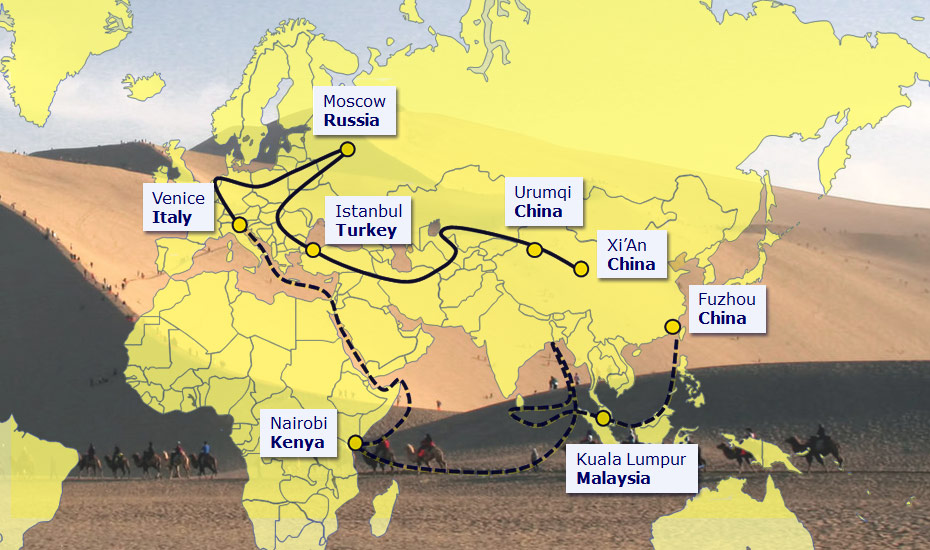
A brilliant plan One Belt, One Road

CLSA
Xi Jinping’s ambitious strategic initiative – an adaptation of the historical Silk Road – could sow the seeds for a new geopolitical era

Head of China-HK strategy Francis Cheung and Head of China Industrial Research Alexious Lee provide an indepth analysis on what to expect in their Obor Silk Belt and Sea Road reports, available exclusively to CLSA clients.

THIRTY YEARS OF UNPRECEDENTED GROWTH

In just 30 years, China has developed from a poor inward-looking agricultural country to a global manufacturing powerhouse. Its model of investing and producing at home and exporting to developed markets has elevated it to the world’s second-largest economy after the USA.

Now faced with a slowing economy at home, China’s leadership is looking for new channels to sustain its appetite for growth at a time when developing neighbours are experiencing rapidly rising demand.

Continue Reading on CVD

Opportunities and Challenges for Journalism in the Digital Age: Asian and European Perspectives

25 August 2015 Project: Asia Programme

Senior Research Fellow, Asia Programme

While the digital age poses a variety of serious challenges to the forms and finances of journalistic reporting, there is much potential for enhanced collaboration between Asian and European media organizations, writes Gareth Price.

People in metro, Tokyo. Photo: Rolf Georg Brenner / Contributor / Getty Images.People in metro, Tokyo. Photo: Getty Images.

SUMMARY

  • While the ‘death of newspapers’ has been long predicted, the internet and social media provide the industry with significant challenges; traditional models are rapidly being made redundant. In particular, newspapers are no longer ‘gatekeepers’ of access to news.
  • Although newspapers were among the first industries to recognize the internet’s importance, they have performed poorly at monetizing readership in the digital age. Instead, many revenue streams have been diverted from newspapers to IT companies and news aggregators.

Continue Reading on CVD

Food and job security: two challenges for Asia Pacific

Eco-business – Anna Simpson, curator of Forum for the Future’s Futures Centre discusses two mutually reinforcing pressure points that urge sustainable change in the Asia Pacific region.

The forest fires that raged across Chiang Mai in March may have dissipated, but the cancer risk for those who breathe in the dust particles year on year has not. Nor has the pressure on contract farmers to meet growing demand for animal feed and ethanol: a factor contributing to illegal slash-and-burn practices. According to one resident, an area more than six times that of Bangkok (which occupies 1,569 square kilometres) of dry corn stalks is set alight after the harvest to make way for the next crop.
Continue Reading on CVD

Vietnam​ searches for solutions to deal with domestic e-waste

Ensia – Much of the world’s electronic waste ends up in Vietnam — not only cell phones, computers, printers and TVs, but also items many people may not think of when they consider e-waste, such as washing machines, microwaves and fans. This waste is often burned or dumped in landfills where toxicants such as arsenic, mercury, lead and cadmium are released into the air or leach into the water. Perhaps most concerning, domestic e-waste is growing by about 25 percent each year in Vietnam, with up to 113,000 metric tons (124,500 tons) discarded this year.

Continue Reading on CVD

Nobel Prize goes to modest woman who beat malaria for China

Updated 5 October 2015
(originally published
9 November 2011)

The origins of our best drug against malaria have long been a mystery.
Meet Tu Youyou, who scoured ancient Chinese medical texts for the cure.

Tu Youyou, now 80, continues to study artemisinin at her lab in Beijing

Tu Youyou, now 80, continues to study Tu Youyou at her lab in BeijingSimon Griffiths

By Phil McKenna

Update: Tu Youyou has been awarded a share of the 2015 Nobel Prize for medicine or physiology for her discovery of artemisinin. She shared the prize with William C. Campbell and Satoshi Ōmura, whose work led to the development of ivermectin, an important treatment for roundworm parasite diseases.

FORTY years ago a secret military project in communist China yielded one of the greatest drug discoveries in modern medicine. Artemisinin remains the most effective treatment for malaria today and has saved millions of lives. Until recently, though, the drug’s origins were a mystery.

“I was at a meeting in Shanghai in 2005 with all of the Chinese malariologists and I asked who discovered artemisinin,” says Louis Miller, a malaria researcher at the US National Institutes of Health in Rockville, Maryland. “I was shocked that no one knew.”

Continue Reading on CVD

When the U.S. dropped barrel bombs in war

Washington Post
By Ishaan Tharoor February 16

People inspect damage at a site hit by what activists said were barrel bombs dropped by forces loyal to Syria’s President Bashar al-Assad in Aleppo’s district of al-Sukari on March 7, 2014. (Hosam Katan/Reuters)

“It’s a childish story that keeps repeating in the West,” smiled Syrian President Bashar al-Assad, in an interview with the BBC last week. He was dismissing allegations that his regime is attacking Syrian civilians with barrel bombs, crude devices packed with fuel and shrapnel that inflict brutal, indiscriminate damage.

Continue Reading on CVD

Social enterprise: constraints and opportunities – evidence from Vietnam and Kenya

March 2014 William Smith and Emily Darko

ODI – Social enterprise has been a broadly defined term, poorly understood at the level of country and sector context specific activity. This paper synthesises findings, based on case studies of social enterprises operating in the agriculture and health sectors in Kenya and Vietnam. Main conclusions are that the concept of social enterprise needs to be clearly defined if governments and donors want to give preferential support to such organisations and that defining social enterprise as a hybrid business model facilitates identification and analysis of enterprise models that are distinct from mainstream business.

social-enterprise.png (520×280)

Continue Reading on CVD

Sustainable cities: The changing role of businesses

Corporate Citizenship senior researcher Jayesh Shah explores some of the trends in the development of cities, focusing on how this changes the role of businesses.

songdo aerial view

Eco-business: Songdo, South Korea. Buildings here have automatic climate control and computerised access. Furthermore, roads, water, waste and electricity systems are built with electronic sensors to enable the city’s brain to track and respond to the movement of residents.Image: Panya K / Shutterstock.com

As we draw closer to September’s summit on the SDGs – the universal set of goals, targets and indicators that will frame the development agenda over the next 15 years – it could be argued that there will not be a sustainable world without sustainable cities.

Continue Reading on CVD

Sustainable Fishing in Vietnam

WWFTram Chim National Park is one of the most important remaining expanses of wetlands in Vietnam. While most fishing in the park is forbidden, some locals exercise traditional rights to fish for food and a living. WWF works in Tram Chim to restore natural water flows, fisheries and wildlife.

Climate Change and Energy in Vietnam – Is the door open for civil society?

Fes-sustainability – by Ha Thi Quynh Nga

solution-to-climate-change.jpg (486×257)

Over the last decades, the discourse on sustainable development has significantly contributed to the formation as well as the strengthening of the civil society in Vietnam. In the mid-1980s, the Government of Vietnam (GoV) introduced Doi Moi (reforms) which moved the economy from centrally-planned to a more market-based approach. This historical milestone has raised the country to a new level of development and transformed its social and economic structures. Foreign investments, bilateral and international trade have grown rapidly but at the same time created multiple development challenges to the country.

Continue Reading on CVD

Young woman, big responsibility

Young woman, big responsibility: She manages 160 deminers and support staff who clean up cluster bombs and other explosives in Quang Tri Province

Eight months ago Ms. Nguyen Thi Dieu Linh was promoted to Norwegian People’s Aid (NPA) Operations Manager at Project RENEW in Quang Tri Province. The 32-year-old is the first woman to be selected for this position in Vietnam. Linh now manages 160 technicians and support staff who make up 26 teams that are deployed every day. Team members map confirmed hazardous areas for clearance and provide EOD response to safely dispose of cluster munitions and unexploded ordnance throughout the province. Linh spoke with Ngo Xuan Hien and Chuck Searcy. 

Continue Reading on CVD

The Impact of Artificial Islands on Territorial Disputes Over The Sparatly Islands

by Zou Keyuan

Thursday, 21 July 2011 
Abstract: The issue of artificial islands in the South China Sea has little been detailed discussed in the context of territorial and maritime disputes. Even in international law, the term “artificial islands” remains controversial and there is no universally accepted definition of it, though several provisions of the 1982 United Nations Convention on the Law of the Sea mention “artificial islands”.

alt

With the development of science and technology and the increasing endeavors of nations States to creep over to occupy more space from the oceans, the issue of artificial islands becomes more salient. This paper attempts to discuss this issue in an international law perspective with special reference to the Spratly Islands and to provoke more discussions about it in future.

Continue Reading on CVD

Tư duy tích cực mỗi ngày