By Viet Anh April 7, 2020 | 09:00 pm GMT+7 VNExpressA Vietnamese soldier at the Spratly Islands. Photo courtesy of the World & Vietnam Report under Vietnam’s Ministry of Foreign Affairs.
Vietnam has rejected and protested China sending two diplomatic notes to the U.N., laying claim to Vietnamese territories in the East Sea.
One of the diplomatic notes was sent by China to the United Nations (U.N.) on March 23 in response to the Philippines. It claimed illegally that China has sovereignty over the Spratly Islands and adjacent waters, has sovereignty and jurisdiction rights over relevant sea areas, seabeds and subsoil. It also said that it has “historic rights” in the East Sea, internationally known as the South China Sea, based on “historical and legal evidences.”
Continue reading on CVD >>
FILE – In this April 12, 2018, file photo released by China’s Xinhua News Agency, the Liaoning aircraft carrier is accompanied by navy frigates and submarines conducting an exercises in the South China Sea. Despite the coronavirus outbreak, China is keeping up with military exercises around Taiwan at the northern edge of the South China Sea. (Li Gang/Xinhua via AP, File) (Associated Press)By Jim Gomez | AP Washington PostApril 8, 2020 at 5:53 p.m. GMT+7
MANILA, Philippines — The Philippines on Wednesday expressed solidarity with Vietnam after Hanoi protested what it said was the ramming and sinking of a Vietnamese fishing boat by a Chinese coast guard ship in the disputed South China Sea.
Continue reading on CVD >>
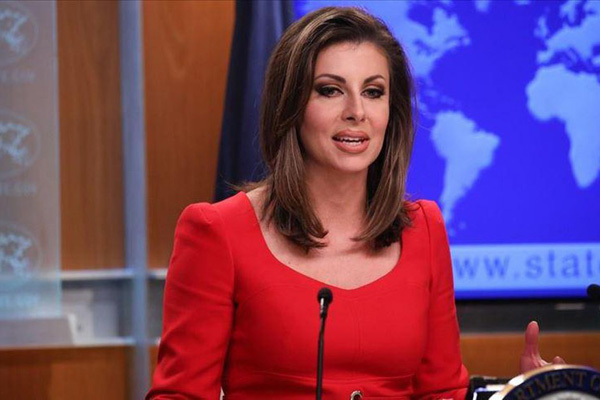
Người phát ngôn Bộ Ngoại giao Mỹ Morgan Ortagus nêu rõ: “Chúng tôi quan ngại sâu sắc trước thông tin về việc Trung Quốc đâm chìm 1 tàu cá của Việt Nam ở gần quần đảo Hoàng Sa”.
Bà Morgan Ortagus nhấn mạnh, đây là vụ việc mới nhất trong một loạt hành động của Trung Quốc nhằm khẳng định những tuyên bố hàng hải trái phép và gây thiệt hại cho các nước láng giềng Đông Nam Á ở Biển Đông.
(VTC News) – Bắc Kinh xây dựng phi pháp 2 trạm nghiên cứu trên quần đảo Trường Sa là hành vi “trộm cướp”, vi phạm trắng trợn chủ quyền hợp pháp của Việt Nam.
Trung Quốc vừa thông tin việc xây dựng 2 trạm nghiên cứu trên đá Subi và đá Chữ thập (thuộc quần đảo Trường Sa của Việt Nam), trong bối cảnh cả thế giới đang vật lộn chống Covid-19.
Trung Quốc vừa cho xây dựng phi pháp 2 trạm nghiên cứu trên đá Chữ Thập và Su Bi. (Ảnh: Getty Images)
HANOI – A new three-way dispute has broken into the open in the South China Sea, one that brings two Association of Southeast Asian Nation (ASEAN) members into conflict along with China over coveted energy resources.
Malaysia, Vietnam and China have for weeks been locked in a quiet naval standoff in a disputed southwestern area of the sea, marking a new source of acrimony in ASEAN and Beijing’s latest bid to block Southeast Asian claimants from tapping the maritime area’s rich bounty of oil and gas.
“A closer look at the significance of a development that has long been in the works.
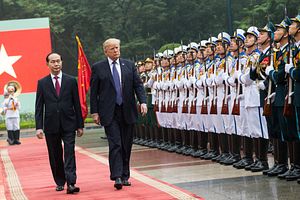
A previous photo of U.S. President Donald Trump in Vietnam. Credit: Flickr
This week, a U.S. aircraft carrier will make a port call in Vietnam’s coastal city of Da Nang – just the second visit of its kind since the end of the Vietnam War, following the first in early 2018. Though the move has long been in the works and is just a single engagement, it nonetheless bears noting given its significance for U.S.-Vietnam ties and Washington’s regional approach more generally.
Continue reading on CVD >>
For several weeks starting in late December, Indonesian media was dominated by reports of a flotilla of Chinese fishing and coast guard vessels operating without permission in the country’s exclusive economic zone (EEZ). The situation strained bilateral relations, presented President Joko “Jokowi” Widodo with the first foreign policy crisis of his second term, and forced Indonesia to confront the uncomfortable fact that it is a party to the South China Sea disputes even if it does not claim any contested islands or reefs. But the public reporting from Indonesian officials was also contradictory and incomplete, leaving the scale and timeline of the standoff unclear.
In addition to standard aircraft carrier and warship patrol operations in the open sea, naval action during the Vietnam War developed a character of its own. While the U.S. Navy maintained responsibility for more traditional functions, the interior waterways of Vietnam became an area of operations that required a different approach.
Since the early 20-century, the patrol workhorse of the U.S. Navy had been the destroyer, which rose to prominence during the two world wars. Destroyers provided perimeter security for formations of surface ships, anti-submarine and antiaircraft defenses, and search-and-rescue duties among others. These warships rendered invaluable service; however, during the Vietnam War the ocean-going vessels were unsuited for operations along the deltas, coastal areas, and rivers of the country.
In this file photo, US coastguard ship Bertholf manoeuvres during a joint exercise with their Philippine counterpart near Scarborough shoal in the South China Sea. (AFP Photo)
This year marks one of the most important years for ASEAN’s geopolitical landscape. During the plenary session of the 34th ASEAN Summit in June, all member states agreed to adopt the ASEAN Outlook on the Indo-Pacific. The brief five-page document emphasised the ASEAN led mechanism in dealing with strategic issues in the Indo-Pacific region. It could not be denied that one of the most important ongoing issues in the region is still the South China Sea dispute, so will the Outlook help to solve the ongoing dispute?
Five claimants occupy nearly 70 disputed reefs and islets spread across the South China Sea. They have built more than 90 outposts on these contested features, many of which have seen expansion in recent years. AMTI has gathered satellite imagery of each outpost, along with other relevant information, to document their current status and any changes they have undergone in recent years. Explore the database below.
Tuần này, truyền thông loan tin rằng Campuchia có thể đã bí mật ký thỏa thuận cho phép Trung Quốc sử dụng căn cứ hải quân Ream, đồng thời một dự án quy mô khác ở Dara Sakor cũng bị nghi ngờ là nhằm phục vụ mục đích quân sự.
South China Sea conflict: Will Australia be forced into war?
Pressure is mounting for Australia to get involved in the South China Sea conflict.
The battle for the South China Sea is heating up. Vietnam. Malaysia. The Philippines. All have drawn lines in the sandbars against China. But it may already be too late.
The Chinese survey vessel Haiyang Dizhi 8 along with its coast guard and paramilitary escorts left Vietnam’s exclusive economic zone on October 23, ending a standoff with Vietnamese ships that began more than four months earlier. The de-escalation seems to have been in response to the departure a day earlier of the drilling rig Hakuryu 5 from Vietnam’s oil and gas Block 06-01, which is operated by Russia’s Rosneft.
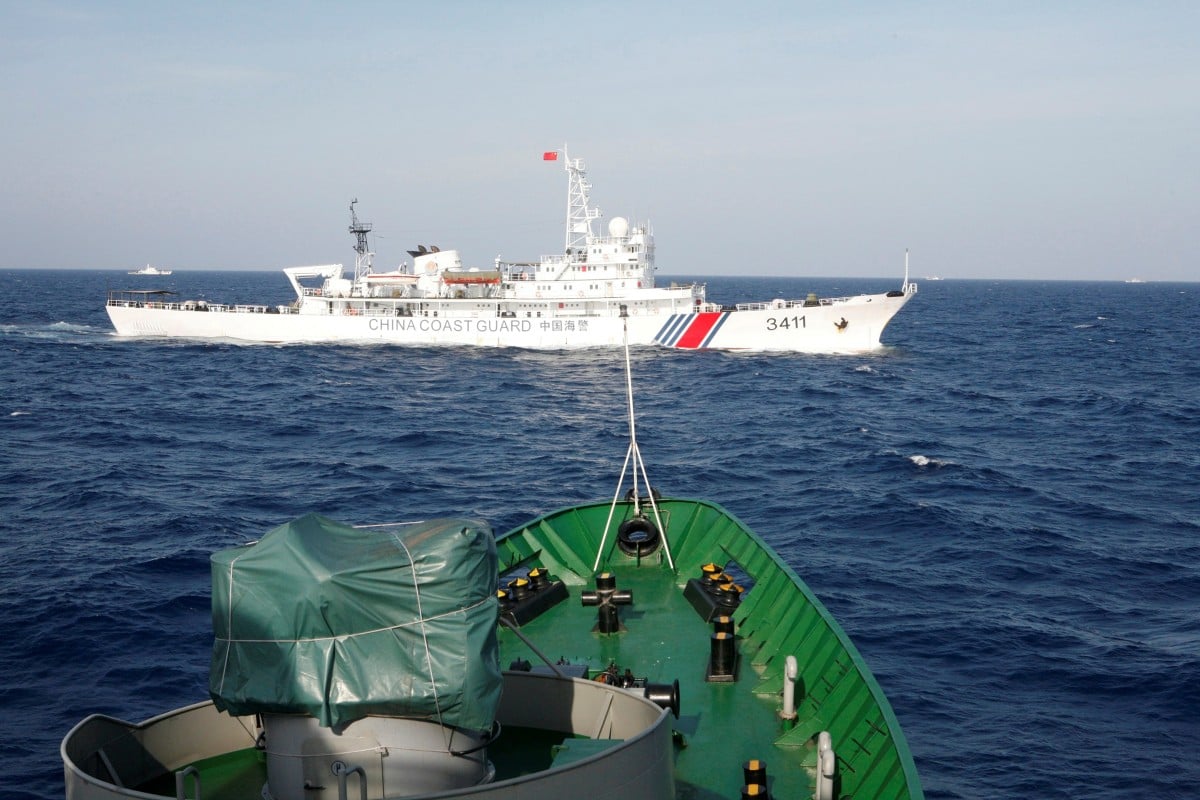
A Chinese coast guard ship photographed from a Vietnamese vessel in the South China Sea. Photo: Reuters
China and Vietnam said that they would continue to look for ways to peacefully resolve their conflict over the South China Sea at the end of a three-day meeting to discuss border issues.





 A previous photo of U.S. President Donald Trump in Vietnam. Credit:





 Đọt Chuối Non