Me? Me? Me?... Yeah yeah yeah amigo... What can me say about me-self?... me-self...me-self... Ole ole ole... me me me... I'm a young banana shoot... My dad is Banana Pa... My mom is Banana Ma... I am happy happy happy... I run around... oops... I can't run... I sing aloud... all day long... I sing in the rain... I sing in the shine... I sing day and night... I sing all the time...
I watch the butterflies and the bees... and the cranes and the geese...
Aha aha aha... here we go again... this little swallow circling on my head... the little swallow on my head... is about to poop on me... Hey, little fella, don't cha know where to unload ya poopa?... But, that's alright... I can swallow my pride to befriend a swallow... Yup yup yup... swallow my pride to befriend a swallow...
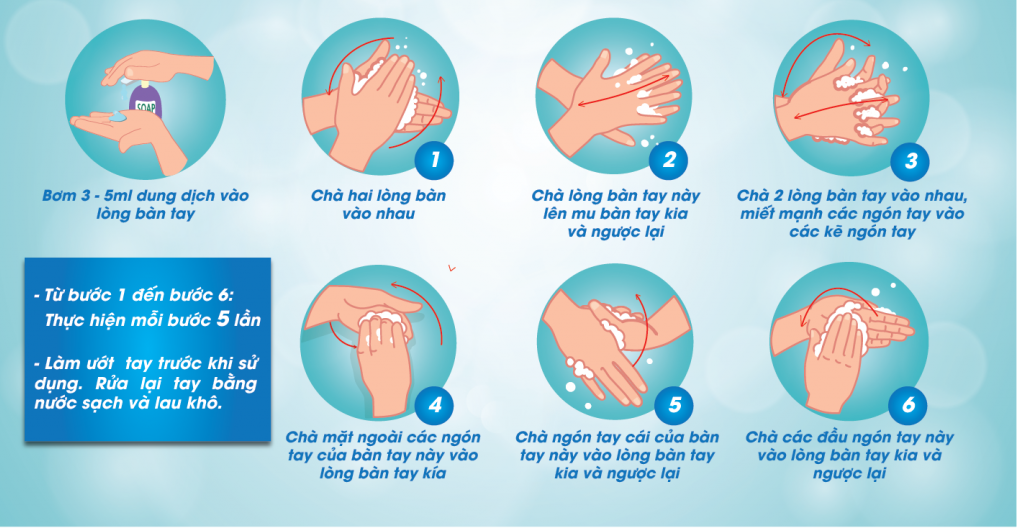
SKĐS – Theo Tổ chức Y tế Thế giới (WHO), chỉ một động tác rửa tay sạch đã làm giảm tới 35% khả năng lây truyền vi khuẩn. Trước tình hình đại dịch COVID-19, Bộ Y tế cũng khuyến cáo thường xuyên rửa tay với xà phòng/xà bông/dung dịch rửa tay nhanh và nước sạch hoặc dung dịch rửa tay có cồn là biện pháp phòng ngừa đơn giản nhưng hiệu quả giúp hạn chế khả năng lây lan dịch bệnh.
(PLVN) – Gần một nửa phụ nữ ở 57 nước đang phát triển không được quyền tự chủ thân thể – con số này được đưa ra trong Báo cáo Tình trạng dân số thế giới năm 2021 vừa được Bộ Nội vụ, Trung ương Đoàn và Quỹ Dân số Liên Hợp quốc (UNFPA) tại Việt Nam công bố. Việc không có quyền tự chủ thân thể không chỉ dừng lại ở những tổn hại sâu sắc tới từng cá nhân phụ nữ và trẻ em gái mà còn làm giảm năng suất kinh tế, suy giảm kỹ năng, gia tăng chi phí cho hệ thống y tế và tư pháp.
(đất việt) – Trung Quốc rót vốn vay khủng và cung cấp các nhà thầu xây dựng các đập thủy điện trên dòng Nile Xanh ở Ethiopia.
Những năm gần đây Nile Xanh trở thành tâm điểm tranh cãi gay gắt giữa ba nước Ai Cập, Sudan và Ethiopia bởi các đập thủy điện mà Trung Quốc rót vốn.
Đập thủy điện Renaissance. Ảnh: Middle East Online.
Dịch xuống hạ du của Nile Xanh chút ít, Sudan đón cả nước của Nile Trắng để hợp lưu tại Khartoum, từ đó tạo ra dòng Nile hợp nhất chảy xuôi nữa đến Ai Cập trước khi đổ ra Địa Trung Hải. Đây là những điều kiện lý tưởng để Ethiopia thực hiện cuộc cạnh tranh nguồn nước với những quốc gia khác ở châu Phi thông qua các dự án thủy điện.
TTO – Công ty công nghệ sinh học Đức CureVac NV ngày 16-6 cho biết vắc xin của họ chỉ có hiệu quả 47% trong thử nghiệm giai đoạn cuối, gây nghi ngờ về khả năng cung cấp hàng trăm triệu liều cho Liên minh châu Âu (EU).
Tình nguyện viên tiêm vắc xin của CureVac ở Brussels, Bỉ – Ảnh: REUTERS
Hiệu quả đáng thất vọng của vắc xin CVnCOV của CureVac dựa trên thử nghiệm với khoảng 40.000 tình nguyện viên ở châu Âu và Mỹ – Latin.
EU là khách hàng duy nhất của CureVac, đã đặt hàng 405 triệu liều vắc xin vào tháng 11-2020.
Theo Hãng tin Reuters, cổ phiếu giao dịch tại Mỹ của CureVac đã giảm 48% trong giao dịch sau giờ làm việc, xuống còn 49 USD.
Sáng 20.11, Bộ Y tế đã chính thức khai trương Cổng công khai y tế sau nhiều năm với phương châm người dân có quyền được biết và giám sát các dịch vụ do ngành y tế cung cấp.
Tại buổi lễ, Bộ trưởng Bộ Y tế Nguyễn Thanh Long cho biết: “Cổng Công khai Y tế là kênh chính thống của Bộ Y tế để người dân và doanh nghiệp tra cứu các thông tin về giá thuốc, giá trang thiết bị y tế, giá vật tư y tế, giá sinh phẩm chẩn đoán, giá khám chữa bệnh, giá niêm yết, giá đấu thầu, thông tin về các sản phẩm đang lưu hành hoặc đã được thu hồi, kết quả xử lý thủ tục hành chính, những vi phạm trong quảng cáo… Thông qua Cổng Công khai Y tế, người dân thực hiện quyền được biết và giám sát các dịch vụ mà ngành y tế cung cấp”.
Issues & Insights Vol. 21, SR 2 — Advancing a Rules-based Maritime Order in the Indo-Pacific
Overview
Authors of this volume participated in the Indo-Pacific Maritime Security Expert Working Group’s 2021 workshop that took place, virtually on March 23-24. The working group, composed of esteemed international security scholars and maritime experts from Japan, the United States, and other Indo-Pacific states, was formed to promote effective U.S.-Japan cooperation on maritime security issues in the region through rigorous research on various legal interpretations, national policies, and cooperative frameworks to understand what is driving regional maritime tensions and what can be done to reduce those tensions. The workshop’s goal is to help generate sound, pragmatic and actionable policy solutions for the United States, Japan, and the wider region, and to ensure that the rule of law and the spirit of cooperation prevail in maritime Indo- Pacific.
Are We Ready for the Quad? Two Contradictory Goals | Kyoko Hatakeyama, Professor of International Relations, Graduate School of International Studies and Regional Development, University of Niigata Prefecture
The Indo-Pacific Maritime Security Expert Working Group’s 2021 workshop and this volume were funded by a grant from the U.S. Embassy Tokyo, and implemented in collaboration with the Yokosuka Council on Asia Pacific Studies (YCAPS).
The statements made and views expressed are solely the responsibility of the authors and do not necessarily reflect the views of their respective organizations and affiliations. For questions, please email maritime@pacforum.org.
Photo: The aircraft carrier USS Ronald Reagan (CVN 76), center left, and the Japanese helicopter destroyer JS Hyuga (DDH 181), center right, sail in formation with other ships from the U.S. Navy and Japan Maritime Self-Defense Force (JMSDF) as aircraft from the U.S. Air Force and Japan Air Self-Defense Force fly overhead in formation during Keen Sword 2019 in the Philippine Sea. Keen Sword 2019 is a joint, bilateral field-training exercise involving U.S. military and JMSDF personnel, designed to increase combat readiness and interoperability of the U.S.-Japan alliance. Source: U.S. Navy photo by Mass Communication Specialist 2nd Class Kaila V. Peters/Public domain.
Bảo vệ đất nước trước những “biến chủng” ăn theo Covid-19
02/08/2021 05:00
QĐND – Tin giả (tin thất thiệt, tin “vịt”…) là một thuộc tính, mặt trái của môi trường thông tin. Tin giả xuất hiện và tồn tại do tâm lý tò mò, hiếu kỳ của một bộ phận công chúng. Nó là tác nhân gây hại đời sống văn hóa tinh thần, là phương tiện để kẻ xấu lợi dụng “đục nước béo cò”.
Trong bối cảnh cuộc chiến chống đại dịch Covid-19 diễn biến phức tạp, cam go, tin giả được các thế lực thù địch, phần tử phản động triệt để khai thác, lợi dụng như một chiêu bài để chống phá Đảng, phá hoại khối đại đoàn kết toàn dân. Nó phát triển theo những “biến chủng” mới, nguy hiểm cả về cấp độ và tính chất…
VNE – By Nguyen Quy August 1, 2021 | 12:16 pm GMT+7Ru Cha mangrove forest near Tam Giang Lagoon in Thua Thien-Hue Province. Photo by Yen Duong.
A mangrove restoration project that also builds resilience of a disaster-prone coastal community in Thua Thien-Hue Province has won the €100,000 ($118,000) 2021 Risk Award.
The project, “Strong roots, strong women: empowering women for community and coastal ecosystem resilience in central Vietnam,” is co-managed by the Center for Social Research and Development based in the central province and the University of Potsdam in Germany.
TTO – Đó là lời chia sẻ của chị Thùy Dung trên cộng đồng Go Volunteer về mẹ mình, hiện là tình nguyện viên cụm 4 tại quận Bình Thạnh. “Tình nguyện không giới hạn tuổi tác, chỉ cần cái tâm thôi phải không mọi người?”, chị viết.
Cô Đỗ Thị Hạnh (bìa phải) chụp ảnh cùng các tình nguyện viên trẻ – Ảnh: HOÀNG OANH
Những ngày này, trong số hàng chục ngàn tình nguyện viên thuộc đội phản ứng nhanh phòng chống dịch COVID-19, ngoài những người trẻ còn có nhiều thành viên vô cùng “đặc biệt”. Đó là những cô, chú lớn tuổi nhưng tràn đầy sự nhiệt huyết, tinh thần xông pha, dấn thân cho cộng đồng.
Trong vòng chưa đầy 2 năm, cuộc khủng hoảng COVID-19 đã làm thay đổi cơ bản cục diện địa chính trị, kinh tế xã hội và xung đột toàn cầu. Kết quả là, đại dịch đã có tác động sâu sắc đến các khuynh hướng của chủ nghĩa khủng bố quốc tế, những tác động dài hạn của nó chỉ mới bắt đầu trở nên rõ nét hơn.
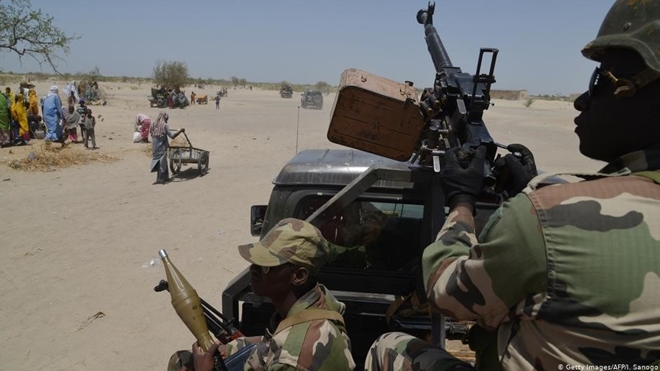
COVID-19 dường như đã làm trầm trọng thêm những xu hướng cực đoan của chủ nghĩa khủng bố ở Châu Phi cận Sahara.
Tình nguyện đi chống dịch ở TP.HCM suốt 60 ngày không về nhà, Trần Ngô Hồng Phước (27 tuổi) cho biết dù có từng bị những người đi lấy mẫu xét nghiệm chửi mắng hoặc ngất xỉu vì nắng vẫn không bỏ cuộc vì không muốn phí sức trẻ, góp sức giúp TP vượt qua dịch bệnh.
Tình nguyện viên nghỉ tạm sau ca trực điều phối tiêm vắc xin tại nhà thi đấu Phú ThọẢNH: D.MNgày 30.5, nhận thông tin quận đoàn Gò Vấp cần thêm tình nguyện viên để hỗ trợ lấy mẫu xét nghiệm và trực chốt kiểm soát, Trần Ngô Hồng Phước (27 tuổi, quê Long An) đăng ký và ngay lập tức bắt tay vào việc trong đêm.
Sợ nhưng không muốn phí sức trẻ
Đây là thời điểm ổ dịch liên quan nhóm truyền giáo diễn biến phức tạp, lần đầu tiên TP.HCM trong 1 ngày có nhiều ca nhiễm như vậy khiến anh lần đầu cảm thấy sợ khi đi tình nguyện.
“Mình sợ đến mức mắt kiếng thỉnh thoảng xệ xuống mũi nhưng không dám đưa tay lên đẩy vì sợ tay chạm mắt, nước đọng ở tấm kính che giọt bắn chảy thành dòng luôn cũng không dám lau. Đêm đó mình về đến nhà là 3 giờ sáng”, anh kể.
Đây là ấn bản tiếng Việt thứ năm của tiểu luận Nguồn Gốc Đàn Tranh Việt Nam. Nếu ấn bản thứ nhất (1987), thứ hai (1990) và thứ ba (1996) đặt tiền đề và cơ sở lý luận về nguồn gốc đàn tranh Việt dựa trên các yếu tố ngôn ngữ học và thiết kế nhạc khí thì ấn bản thứ tư (2020) và ấn bản này cung cấp nhiều tư liệu lịch sử và khảo cổ để làm rõ và cũng cố những giả thuyết và kết luận được nêu ra trong ba ấn bản trước đây. Mong rằng tiểu luận này sẽ giúp bạn đọc mở ra một cái nhìn mới về lịch sử đàn tranh Việt và nhạc Việt.
Người viết xin chân thành cảm ơn Gsts. Nguyễn Thuyết Phong đã gửi tặng 2 tấm ảnh đàn tre goong trong bộ ảnh điền dã cuả Gs tại Việt Nam để minh họa cho phần viết về đàn tre trong tiểu luận này.
Đại tá Thomas M.Stevenson, Tùy viên Quốc phòng Hoa Kỳ tại Việt Nam:
28/07/2021 23:06
QĐND – Nhân chuyến thăm chính thức Việt Nam từ ngày 28 đến 29-7 của Bộ trưởng Quốc phòng Hoa Kỳ Lloyd Austin, phóng viên Báo Quân đội nhân dân có cuộc phỏng vấn Đại tá Thomas M. Stevenson, Tùy viên Quốc phòng Hoa Kỳ về kết quả hợp tác giữa hai nước cũng như cơ hội tăng cường hợp tác trong tương lai.
Đại tá Thomas M.Stevenson.
Phóng viên (PV):Ông cho biết những kết quả nổi bật trong hợp tác quốc phòng giữa Việt Nam và Hoa Kỳ những năm gần đây?
WASHINGTON – The Office of the United States Trade Representative (USTR) today released its annual Special 301 Report on the adequacy and effectiveness of U.S. trading partners’ protection and enforcement of intellectual property rights.
“Intellectual property rights incentivize our creators, manufacturers, and innovators to invent new products and technologies,” said Ambassador Katherine Tai. “The laws, policies and practices that protect those rights must appropriately balance the interests of creators with those seeking to use their creations. Failing to adequately and effectively protect those rights in foreign markets hurts the U.S. economy, the dynamism of American innovators and the livelihoods of our workers.”
This annual report details USTR’s findings of more than 100 trading partners after significant research and enhanced engagement with stakeholders. Significant elements of the 2021 Special 301 Report include:
• The 2021 Special 301 review period has taken place during the COVID-19 pandemic, the largest global health crisis in more than a century. The top priority of the United States is saving lives and ending the pandemic in the United States and around the world. As affirmed in the Doha Declaration on the TRIPS Agreement and Public Health, the United States, while recognizing the role of intellectual property (IP) protection in the development of new medicines, respects a trading partner’s right to protect public health and, in particular, to promote access to medicines for all.
• The United States has been closely monitoring China’s progress in implementing its commitments under the United States-China Economic and Trade Agreement (Phase One Agreement). In 2020, China published several draft IP-related legal and regulatory measures and finalized over a dozen measures. Notably, China amended the Patent Law, Copyright Law, and Criminal Law in the past year. However, these steps toward reform require effective implementation and fall short of the full range of fundamental changes needed to improve the IP landscape in China.
• Border, criminal, and online enforcement against counterfeiting remains a global concern. This past year, countries reported significant quantities of COVID-19 testing kits, personal protective equipment (PPE) such as N-95 and equivalent masks, and sanitizers, detergents, and disinfectants from China that were determined to be counterfeit. Widespread counterfeiting in China’s e-commerce markets, the largest in the world, has also been exacerbated by the migration of infringing sales from physical to online markets, which accelerated during the COVID-19 pandemic.
• Concerns with the European Union’s aggressive promotion of its exclusionary geographical indications policies persist. The United States continues its intensive engagement in promoting and protecting access to foreign markets for U.S. exporters of products that are identified by common names or otherwise marketed under previously registered trademarks.
The report also highlights progress made by our trading partners to resolve and address IPR issues of concern to the United States:
• The United Arab Emirates (UAE) is removed from the Watch List this year due to the Ministry of Health and Prevention resolving concerns with IP protection of pharmaceutical products. The UAE also made progress on longstanding IP enforcement concerns, particularly through increased efforts by Dubai Customs, publication of IP enforcement procedures by multiple enforcement authorities, publication of annual IP enforcement statistics by Federal Customs, and efforts by the Ajman Department of Economic Development to significantly reduce the availability in counterfeit goods at the Ajman China Mall, a notorious market for the past several years.
• Algeria moves from the Priority Watch List to the Watch List due to steps the government has taken to engage and cooperate with stakeholders, improve enforcement efforts, and reduce IP-related market access barriers.
• Brazil’s law enforcement, with support from the Department of Justice’s (DOJ) International Computer Hacking and Intellectual Property (ICHIP) Advisor for Latin America & the Caribbean and Computer Crime & Intellectual Property Section (CCIPS), the U.S. Attorney’s Office for the Eastern District of Virginia, Homeland Security Investigations (HSI), as well as United Kingdom (UK) counterparts, launched “Operation 404.2,” which seized the domain names of multiple commercial websites engaged in the illegal reproduction and distribution of copyrighted works.
• In the most significant criminal case under Taiwan’s recently amended Trade Secrets Act, a court ruled that a Taiwan semiconductor company and three former employees were guilty of stealing trade secrets from a U.S. company to enable the development of semiconductor chips by a Chinese state-owned enterprise. The court imposed a $3.4 million fine on the Taiwan company and sentenced the former employees to 5-6 years in prison. The case involved substantial cooperation with U.S. investigators and prosecutors.
• Ukraine continued to take positive steps in 2020 toward a transparent, fair, and predictable system for the collective management of copyright royalties. In particular, pursuant to 2018 legislation that fundamentally reformed its collective management organization (CMO) system, Ukraine held open competitions and made progress toward completing accreditation of two additional CMOs in 2020. This follows the accreditation in 2019 of six other CMOs under the 2018 law. Some of the accredited CMOs have completed royalty negotiations and are paying royalties to right holders. For other CMOs selected under the 2018 law, accreditation and royalty negotiation progress continues.
BACKGROUND
The “Special 301” Report is an annual review of the global state of IP protection and enforcement. USTR conducts this review pursuant to Section 182 of the Trade Act of 1974, as amended by the Omnibus Trade and Competitiveness Act of 1988 and the Uruguay Round Agreements Act.
USTR reviewed more than one hundred (100) trading partners for this year’s Special 301 Report, and placed thirty-two (32) of them on the Priority Watch List or Watch List.
In this year’s Report, trading partners on the Priority Watch List present the most significant concerns this year regarding insufficient IP protection or enforcement or actions that otherwise limited market access for persons relying on intellectual property protection. Nine countries — Argentina, Chile, China, India, Indonesia, Russia, Saudi Arabia, Ukraine, and Venezuela — are on the Priority Watch List. These countries will be the subject of particularly intense bilateral engagement during the coming year.
Twenty-three trading partners are on the Watch List, and merit bilateral attention to address underlying IP problems: Algeria, Barbados, Bolivia, Brazil, Canada, Colombia, Dominican Republic, Ecuador, Egypt, Guatemala, Kuwait, Lebanon, Mexico, Pakistan, Paraguay, Peru, Romania, Thailand, Trinidad & Tobago, Turkey, Turkmenistan, Uzbekistan, and Vietnam.
PUBLIC ENGAGEMENT
USTR continued its enhanced approach to public engagement activities in this year’s Special 301 process. USTR requested written submissions from the public through a notice published in the Federal Register on December 15, 2020 (Federal Register notice). In addition, due to COVID-19, USTR fostered public participation via written submissions rather than an in-person hearing with the interagency Special 301 Subcommittee of the Trade Policy Staff Committee (TPSC) sending written questions about issues relevant to the review to those that submitted written comments, including to representatives of foreign governments, industry, and non-governmental organizations. USTR posted the written questions and the written responses online at >www.regulations.gov<, docket number USTR-2020-0041.
The Federal Register notice drew submissions from 50 non-government stakeholders and 22 foreign governments. The submissions filed in response to the Federal Register notice are available to the public online at http://www.regulations.gov , docket number USTR-2020-0041.
Vietnam remains on the Watch List in 2021. Although Vietnam took steps to improve intellectual property (IP) protection and enforcement, including by publishing draft amendments to its IP Law to comply with trade agreement commitments and by continuing public awareness campaigns and training activities, IP enforcement continues to be a challenge. The online sale of pirated and counterfeit goods remains a serious problem. Lack of coordination among ministries and agencies responsible for enforcement remains concerning, and capacity constraints related to enforcement persist, along with a lack of political will to prioritize IP enforcement. Vietnam continues to rely heavily on administrative enforcement actions, which have consistently failed to deter widespread counterfeiting and piracy. The United States is closely monitoring and engaging with Vietnam on the ongoing implementation of amendments to the 2015 Penal Code with respect to criminal enforcement of IP violations. Counterfeit goods remain widely available in physical markets. In addition, online piracy, including the use of piracy devices and applications to access unauthorized audiovisual content, remains a significant concern, along with the use of unlicensed software in both the public and private sectors. Furthermore, Vietnam’s system for protecting against the unfair commercial use, as well as the unauthorized disclosure, of undisclosed test or other data generated to obtain marketing approval for pharmaceutical products needs clarification. The United States is monitoring the implementation of IP provisions of the Comprehensive and Progressive Agreement for Trans-Pacific Partnership, which came into force in January 2019 for Vietnam; the European Union-Vietnam Free Trade Agreement (EVFTA), which came into force in August 2020; and the United Kingdom-Vietnam Free Trade Agreement, which came into force in January 2021. The EVFTA grandfathered prior users of certain cheese terms from the restrictions in the geographical indications provisions of the EVFTA, and it is important that Vietnam ensure market access for prior users of those terms who were in the Vietnamese market before the grandfathering date of January 1, 2017. Vietnam has also committed to accede to the World Intellectual Property Organization (WIPO) Internet Treaties by 2023. The United States urges Vietnam to engage on and address these issues and to provide interested stakeholders with meaningful opportunities for input as it proceeds with these reforms. The United States also encourages continued bilateral cooperation through the implementation of the Customs Mutual Assistance Agreement, which came into force in May 2020. The United States will continue to press on these and other IP issues with Vietnam through the United States-Vietnam Trade and Investment Framework Agreement and other bilateral engagement.
(HNMO) – Tính đến sáng 30-7, thành phố Hồ Chí Minh đang điều trị cho 36.378 bệnh nhân Covid-19; có 847 bệnh nhân nặng phải thở máy, 14 bệnh nhân phải can thiệp ECMO (tim phổi nhân tạo). Trong ngày 29-7, có thêm 3.131 bệnh nhân xuất viện. Cùng với việc tăng cường điều trị các ca nhiễm, thành phố Hồ Chí Minh còn tăng cường chăm sóc sức khỏe tinh thần cho người bệnh và đội ngũ nhân viên y tế đang ngày đêm căng sức chống dịch.
Các ca sĩ hát phục vụ bệnh nhân trong chiều mưa 29-7.

 Ảnh minh họa.




 Ru Cha mangrove forest near Tam Giang Lagoon in Thua Thien-Hue Province. Photo by Yen Duong.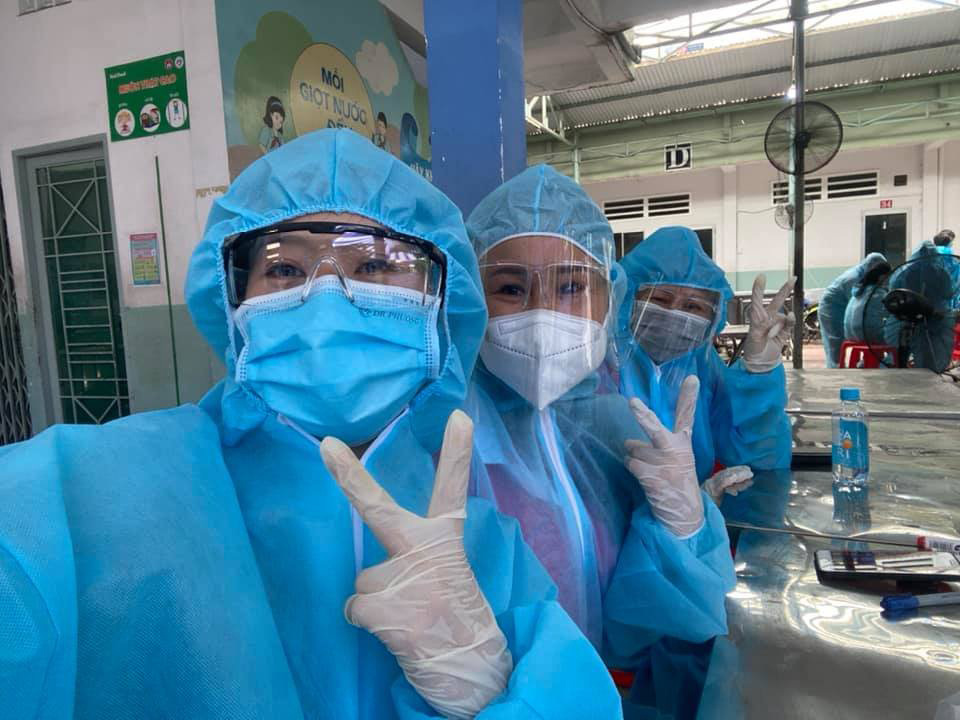




 Đọt Chuối Non