
World Economic and Financial Surveys
Regional Economic Outlook:
Asia and Pacific
Managing Spillovers and Advancing Economic Rebalancing
April 2012
©2012 International Monetary Fund
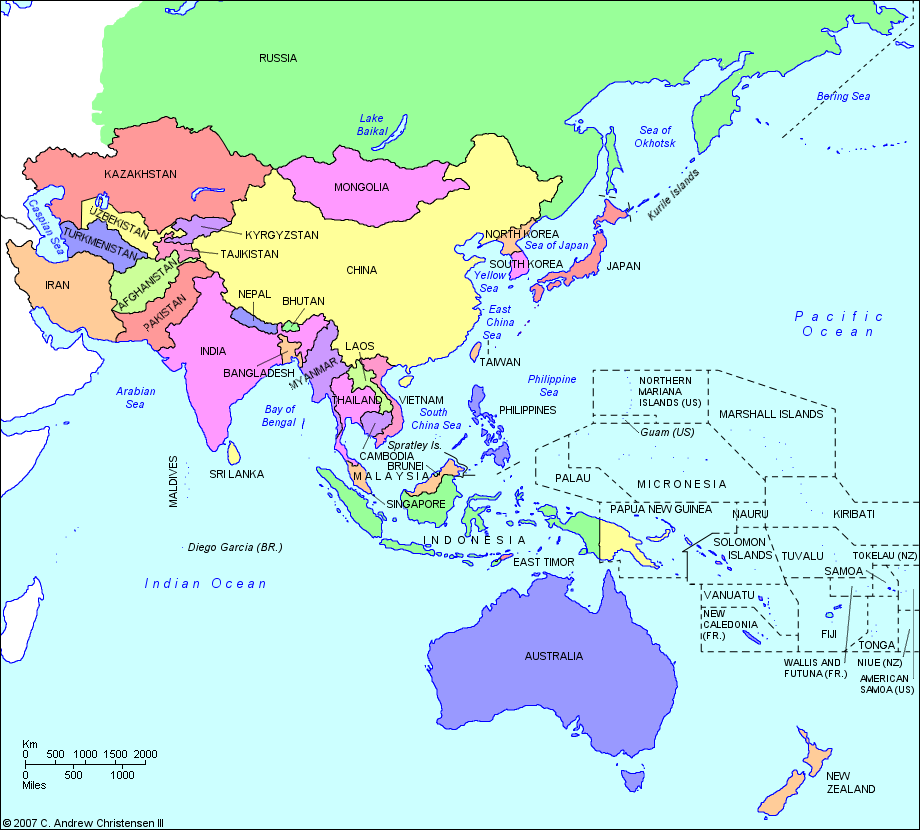
Barring the realization of downside risks to the global economy, growth in the Asia and the Pacific region is expected to gain momentum over the course of 2012, according to this report, and now projected at 6 percent in 2012, rising to about 6½ percent in 2013. Stronger economic and policy fundamentals have helped buffer the region’s economies against the global financial crisis, by limiting adverse financial market spillovers and ameliorating the impact of deleveraging by European banks, but a sharp fall in exports to advanced economies and a reversal of foreign capital flows would have a severe impact on the region. The region’s policymakers now face the difficult task of calibrating the amount of insurance needed to support stable, noninflationary growth. Some Asian and Pacific economies can afford to lengthen the pause in the normalization of their macroeconomic policies that was initiated when the global recovery stalled late in 2011; others may need a faster return to more neutral policy stances. Similarly, the pace of fiscal consolidation should be calibrated to country-specific circumstances. Additional chapters in the report discuss whether China is rebalancing and the particular challenges facing Asian low-income and small island economies.
| Contents | ||
| Executive Summary | ||
| I. Ensuring Stable Growth: Risks and Challenges | ||
| A. Signs of Stabilization during Global Uncertainty | ||
| B. A Turnaround in 2012 and a Stronger 2013 | ||
| C. What Are the Main Risks to the Outlook? | ||
| D. The Policy Challenge: How Much Insurance Is Still Needed? | ||
| E. Laying the Foundations for Sustainable Growth | ||
| II. The Evolution of Asian Financial Linkages: Key Determinants and the Role of Policy | ||
| A. How Sensitive Are Asian Financial Markets to Market Movements in Systemic Economies? | ||
| B. Can Macroeconomic Policies Reduce Financial Sensitivities in Asia? | ||
| III. The Likely Effect on Asia of a Sharp Deleveraging by European Banks | ||
| A. The Role of European Banks in Asia | ||
| B. What Happened during the Lehman Crisis? | ||
| C. What Are the Implications of a Future Shock? | ||
| IV. Is China Rebalancing? Implications for Asia | ||
| A. Is China Rebalancing? | ||
| B. What Are the Implications for Asia? | ||
| C. Conclusion | ||
| V. Asian Low-Income and Pacific Island Countries: Opportunities and Risks from Increased Regional Integration | ||
| A. Regional LICs Receive More Investment from within Asia | ||
| B. Pacific Island Countries: Links to Regional Economies Already Matter More | ||
| References | ||
| Boxes | |||
| 1.1 | Myanmar—Improved Outlook as Reform Momentum Picks Up | ||
| Chart | Data | 1.2 | What Explains the Recent Decline in Japan’s Current Account Surplus, and What Lies Ahead? |
| Chart | Data | 1.3 | Harnessing India’s Demographic Dividend |
| Chart | Data | 1.4 | Explaining the ASEAN-3 Investment Puzzle: A Tale of Two Sectors |
| Tables | |||
| 1.1 | Selected Asia: Real GDP | ||
| 2.1 | Determinants of Asian Financial Betas | ||
| 3.1 | The Impact of Changes in Foreign Claims on Changes in Domestic Credit Supply | ||
| 3.2 | Summary of Policy Actions Taken in Asia during the Global Financial Crisis | ||
| 3.3 | Selected Asia: Impact on Tier 1 Capital Adequacy Ratios (CARs) Following Deleveraging by European Banks | ||
| 4.1 | Determinants of Asian Exports to China 41 | ||
| Figures | |||
| Chart | Data | 1.1 | Real GDP Growth in the United States and the Euro Area |
| Chart | Data | 1.2 | Selected Asia: Changes in Real GDP at Market Prices in 2011 |
| Chart | Data | 1.3 | Selected Asia: Exports to the United States and the European Union |
| Chart | Data | 1.4 | Emerging Asia: Trade Balance |
| Chart | Data | 1.5 | Global Manufacturing PMIs and Its Correlation with Emerging Asia’s Industrial Production Growth |
| Chart | Data | 1.6 | Selected Asia: Labor Market Conditions |
| Chart | Data | 1.7 | Emerging Asia: Measure of Excess Credit Growth |
| Chart | Data | 1.8 | Selected Asia: Fiscal Impulse in 2011 |
| Chart | Data | 1.9 | Selected Asia: Core and Headline Inflation |
| Chart | Data | 1.10 | Selected Asia: Change in One-Year Ahead Inflation Expectations since the End of 2011 |
| Chart | Data | 1.11 | Nonresident Investment in Selected Asian Markets |
| Chart | Data | 1.12 | Selected Asia: Stock Markets |
| Chart | Data | 1.13 | Selected Asia: Exchange Rates against the U.S. Dollar |
| Chart | Data | 1.14 | Selected Asia: Share of Exports Linked to Demand from Europe, 2010 |
| Chart | Data | 1.15 | Selected Asia (excl. China and Japan): Exports to China, Europe, and the United States |
| Chart | Data | 1.16 | Emerging Asia: Response of Real Private Consumption Expenditure and Real Gross Fixed Investment to Non-FDI Inflows |
| Chart | Data | 1.17 | Selected Asia: Headline Consumer Price Inflation |
| Chart | Data | 1.18 | Selected Asia: Current Account Balances |
| Chart | 1.19 | Asia: Real GDP Growth | |
| Chart | Data | 1.20 | Consolidated Foreign Claims of European and U.S. Banks on Asia |
| Chart | Data | 1.21 | China: Potential Effects of Property Downturn |
| Chart | Data | 1.22 | Asia: Pass-Through from Global Energy Prices to Domestic Food and Energy Prices |
| Chart | Data | 1.23 | Selected Asia: Real Interest Rates |
| Chart | Data | 1.24 | Selected Asia: Nominal Policy Rates and Taylor Rule Implied Rates |
| Chart | Data | 1.25 | Asia: Real Effective Exchange Rates |
| Chart | Data | 1.26 | Emerging Asia and Latin America: Real Exchange Rates and Reserves |
| Chart | Data | 1.27 | Selected Asia: Cyclically Adjusted General Government Balances |
| Chart | Data | 1.28 | Selected Asia: Fiscal Impulse in 2012 |
| Chart | Data | 1.29 | Gross Public Debt, 2011 |
| Chart | Data | 1.30 | Share in Global Consumer Goods Import Demand, 2010 |
| Chart | Data | 2.1 | Equity Returns: Selected Systemic Economies and Asia |
| Chart | Data | 2.2 | Asian Financial Betas and Global Financial Shocks |
| Chart | Data | 2.3 | Financial Betas across Asian Economies |
| Chart | Data | 2.4 | Asia: Changes in Betas from 2002–07 to 2008–11 |
| Chart | Data | 3.1 | Consolidated Foreign Claims of European and U.S. Banks on Emerging Asia |
| Chart | Data | 3.2 | BIS Reporting Banks’ Consolidated Foreign Claims on Selected Asian Economies by Sector |
| Chart | Data | 3.3 | Asia: Export Credit Agency Backed Trade Finance |
| Chart | Data | 3.4 | Consolidated Foreign Claims on Asian Economies |
| Chart | Data | 3.5 | Differences in Policy Responses: Asia versus Non-Asia |
| Chart | Data | 3.6 | Debt-to-Equity Ratio in Financial Firms at End-2007 |
| Chart | Data | 3.7 | Selected Asia: Real Policy Rates |
| Chart | Data | 4.1 | China: Current Account Balance and Components |
| Chart | Data | 4.2 | China: Composition of Exports and Imports |
| Chart | Data | 4.3 | China: Export and Import Prices, and Terms of Trade |
| Chart | Data | 4.4 | China: Mineral Import Volumes |
| Chart | Data | 4.5 | China: Domestic Demand |
| Chart | Data | 4.6 | China: Import Quantum Index |
| Chart | Data | 4.7 | China: Number of Employees |
| Chart | Data | 4.8 | Global Shares in Photosensitive Semiconductor Devices Exports |
| Chart | Data | 4.9 | China: Loss-Making Enterprises |
| Chart | Data | 4.10 | Selected Asia: Value Added Linked to China’s Final Demand |
| Chart | Data | 4.11 | China: Distribution of FDI and Imported Value Added |
| Chart | Data | 4.12 | China: Share in Global Consumption versus Share in Global Consumer Goods Imports |
| Chart | 4.13 | Selected Asia: Share in Intermediate Goods Flows | |
| Chart | Data | 4.14 | Selected Asia: Correlation of Exports to China with China’s Exports |
| Chart | Data | 4.15 | U.S. Imports from Asia for Final Demand, 2010 |
| Chart | Data | 5.1 | Selected Emerging Asia: Share in Global Output and FDI |
| Chart | Data | 5.2 | Selected Emerging Asia: Share in Regional FDI |
| Chart | Data | 5.3 | China: Foreign Direct Investment |
| Chart | Data | 5.4 | Selected Emerging Asia: Growth in FDI Relative to Regional Average |
| Chart | Data | 5.5 | Selected Emerging Asia: Growth in FDI Relative to Regional Average |
| Chart | Data | 5.6 | Selected Emerging Asia: Trade Openness and FDI |
| Chart | Data | 5.7 | Selected Emerging Asia: Exports Exposure |
| Chart | Data | 5.8 | PICs: Official Development Aid by OECD Donors |
| Chart | Data | 5.9 | Selected PICs: Tourist Arrivals by Country of Residence |
| Chart | Data | 5.10 | PICs: FDI by Country of Origin |
 Đọt Chuối Non