Tag Archives: Biển Đông

The long arm of China’s new maritime law risks causing conflict in far-off waters

Analysis by Brad Lendon and Steve George, CNN

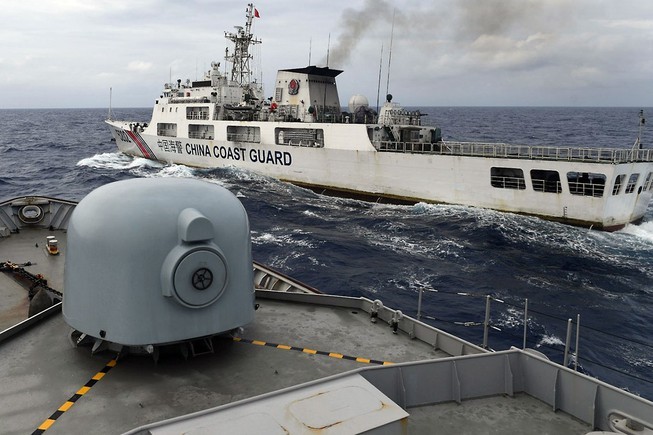
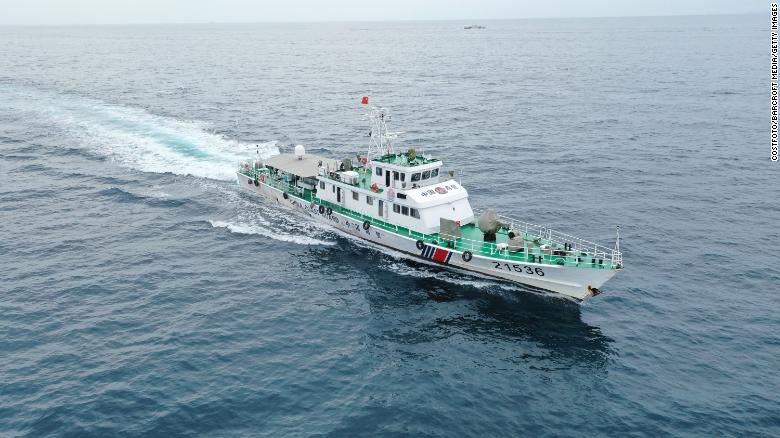
Updated 0843 GMT (1643 HKT) September 3, 2021A Chinese Coast Guard taskforce advances at full speed in Zhanjiang, Guangdong Province in China on August 13.A Chinese Coast Guard taskforce advances at full speed in Zhanjiang, Guangdong Province in China on August 13.
A version of this story appeared in CNN’s Meanwhile in China newsletter, a three-times-a-week update exploring what you need to know about the country’s rise and how it impacts the world. Sign up here.

Hong Kong (CNN)Beijing wants foreign vessels to give notice before entering “Chinese territorial waters,” providing maritime authorities with detailed information — including the ship’s name, call sign, current position, next port of call and estimated time of arrival.It may sound like a reasonable enough request, especially if the ship is carrying hazardous goods, that is until you consider what constitutes “Chinese territorial waters.”Beijing asserts sovereignty over vast swathes of the South China Sea, under its widely contested and far-reaching nine-dash line, as well as disputed islands in the East China Sea.

Continue reading The long arm of China’s new maritime law risks causing conflict in far-off waters

Trung Quốc giở trò cắt lát salami để độc chiếm Biển Đông

Thanh niên – Ngô Minh Trí – 01/09/2021 – 16:00

Phối hợp tàu cá dân binh, sức mạnh quân sự, lực lượng chấp pháp như hải cảnh, Trung Quốc tự đặt ra các quy định để dần dần thâu tóm Biển Đông.

Trung Quốc giở trò cắt lát salami để độc chiếm Biển Đông | Thế giới | Thanh  Niên
Các tàu hải cảnh Trung Quốc trong vụ uy hiếp tàu cá Việt Nam /ẢNH: NGƯ DÂN CUNG CẤP

Như Thanh Niên đã thông tin, từ hôm nay (1.9), chính quyền Trung Quốc áp dụng quy định mới về an toàn hàng hải. Theo đó, người điều khiển các loại tàu thuyền như tàu có thể lặn, tàu chạy bằng năng lượng hạt nhân, tàu chở vật liệu phóng xạ, tàu chở hóa chất, khí hóa lỏng… đều phải khai báo khi hoạt động ở “lãnh hải” mà Bắc Kinh tuyên bố chủ quyền.

Continue reading Trung Quốc giở trò cắt lát salami để độc chiếm Biển Đông

Indonesia Unprepared as Great Powers Clash in Indo-Pacific

Jakarta is Asia’s greatest geopolitical prize. But its foreign-policy reflexes are long outdated.

FP, By Evan A. Laksmana, a senior research fellow at the Centre on Asia and Globalisation at the National University of Singapore’s Lee Kuan Yew School of Public Policy.

Indonesia Unprepared as United States, China Clash in Indo-Pacific

AUGUST 26, 2021, 12:47 PM

Indonesia could tilt the strategic balance in the Indo-Pacific. It’s the largest archipelagic state in the world and sits at the heart of the Indian and Pacific Oceans. The country’s growing economic power, tradition of regional leadership, and control over critical sea lanes seem to predestine it to be a strategic fulcrum in the era of U.S.-Chinese great-power competition.

Getting Jakarta to align with either Beijing or Washington therefore seems like a logical step in the unfolding geopolitical drama. Indonesia’s every move—from military exercises to vaccine diplomacy—is scrutinized through this lens. Depending on who you ask in Beijing or Washington, Indonesia’s choice seems obvious. One offers growth and prosperity, despite bullying the region. The other has built a global network of enduring security relationships, though its commitments are often doubtful, inconsistent, or come with strings attached.

Continue reading Indonesia Unprepared as Great Powers Clash in Indo-Pacific

Biển Đông: “Coi giò coi cẳng” những gương mặt khác

SÁNG ÁNH 21/7/2020 19:07 GMT+7

TTCT Các quốc gia Đông Nam Á xung quanh khu vực Biển Đông đều đã chuẩn bị cho một tương lai mới, dự kiến sẽ bất trắc hơn.

Theo Công ty tài chính PricewaterhouseCoopers thì năm 2030, 5 cường quốc đứng đầu thế giới về kinh tế sẽ xếp hạng như sau: Trung Quốc, Hoa Kỳ, Ấn Độ và Nhật Bản là 4 nước đầu. Đây là chuyện dễ hiểu. Nước thứ 6 là Nga. Vậy nước thứ 5 là nước nào? Anh hay Đức? Pháp hay Brazil, Mexico? Hàn Quốc? Năm 2030, nếu mọi chuyện đúng dự đoán, cường quốc kinh tế hạng 5 thế giới sẽ là Indonesia.

Trong khi chờ đợi ngày vinh quang xa vời ấy, hiện tính GDP theo mãi lực tương đương (PPP) thì Indonesia mới đứng hàng thứ 7 (IMF 2019). Tính theo danh nghĩa thì Indonesia hàng 16 với GDP là 1.210 tỉ đôla, hơn 4 lần Việt Nam. 

Continue reading Biển Đông: “Coi giò coi cẳng” những gương mặt khác

Nhận diện thách thức an ninh biển với Đông Nam Á

NGHIÊN CỨU BIỂN ĐÔNG 28/08/2021 – 10:00

Theo các học giả khu vực, có bốn thách thức với Đông Nam Á về an ninh biển: (i) Trung Quốc là nhân tố gây bất ổn chính tại Biển Đông; (ii) Đông Nam Á còn nhiều hạn chế trong năng lực biển; (iii) Đông Nam Á không có chung nhận thức về vấn đề Biển Đông; và (iv) các nước Đông Nam Á chịu sức ép từ cạnh tranh nước lớn.

Trung Quốc gia tăng các hoạt động để độc chiếm Biển Đông - VietNamNet

Tác giả: Hoàng Đỗ, Thùy Anh & Lê Long, Viện Biển Đông, Học viện Ngoại giao.  

Cuối tháng 6 và đầu tháng 7/2021, một số tọa đàm về an ninh biển tại khu vực Ấn Độ Dương – Thái Bình Dương đã được tổ chức, trong đó có webinar “Biển Đông: Thách thức, cơ hội và triển vọng hợp tác” (của Viện Nghiên cứu quốc tế và chiến lược Malaysia (ISIS) và Đại sứ quán Mỹ tại Malaysia) và webinar “An ninh biển tại Đông Nam Á: Vấn đề, viễn cảnh và thách thức với hợp tác” (của Diễn đàn Thái Bình Dương).

Các tọa đàm quy tụ nhiều diễn giả nổi tiếng trong khu vực như Collin Koh, (Trường S. Rajaratnam, Singapore), Blake Herzinger (Diễn đàn Thái Bình Dương), Satu Limaye (Trung tâm Đông – Tây), Ivy Kwek Ai Wei (Viện Nghiên cứu phát triển xã hội Malaysia) và Shahriman Lockman (ISIS Malaysia). Nội dung nổi bật của các tọa đàm như sau:

Continue reading Nhận diện thách thức an ninh biển với Đông Nam Á

Nhiều tàu nghiên cứu/khảo sát biển Trung Quốc hoạt động trong vùng đặc quyền kinh tế Việt Nam

DSKBD Lê Đức Tâmnghiên cứu/khảo sát biển

Viết báo cáo: Lê Đức Tâm

Dự án Đại Sự Ký Biển Đông ngày 22/8/2021

———-

Lưu ý: Luật quốc tế không coi hai khái niệm “nghiên cứu khoa học biển” và “khảo sát” là như nhau và có những điều chỉnh riêng cho mỗi loại hình hoạt động. Vì chúng tôi cần có thời gian để hoàn thành tổng hợp thông tin về chức năng của từng loại tàu nghiên cứu/khảo sát của Trung Quốc, chúng tôi tạm thời sử dụng chung khái niệm “nghiên cứu/khảo sát” để có thể báo cáo sự kiện một cách kịp thời. Báo cáo này chỉ thuần tuý là một báo cáo về những diễn biến đang xảy ra trên thực địa, chưa có hàm ý về khía cạnh pháp lý. Một phân tích pháp lý sẽ được trình bày vào một thời điểm sau khi chúng tôi có đủ thông tin về chức năng và thông số kỹ thuật của từng tàu.

———-

Tàu khảo sát/nghiên cứu khoa học Trung Quốc hoạt động trong vùng đặc quyền kinh tế của Việt Nam, Philippines và Malaysia

Tàu nghiên cứu/khảo sát Hai Da Hao của Trung Quốc đã hoạt động trong vùng đặc quyền kinh tế của Philippines từ ngày 10 đến 12/8/2021 với khoảng cách gần nhất đến bờ biển nước này khoảng gần 60 hải lý. Tiếp đó, tàu đã chuyển vào hoạt động ở vùng đặc quyền kinh tế của Việt Nam từ ngày 14/8. Tại vùng biển Việt Nam, Hai Da Hao đã hoạt động tại vùng biển từ Phú Yên đến khu vực phía tây nam bãi Tư Chính với khoảng cách gần nhất đến bờ biển nước ta khoảng 60 hải lý vào ngày 16/8 tại vùng biển tỉnh Phú Yên.

Continue reading Nhiều tàu nghiên cứu/khảo sát biển Trung Quốc hoạt động trong vùng đặc quyền kinh tế Việt Nam

Issuing Presidential Statement, Security Council Underlines Importance of Maritime Safety, Safeguarding Oceans for Legitimate Use

9 AUGUST 2021

Biển Đông: Trung Quốc cần thay đổi hành vi vì lợi ích của chính mình -  VietNamNet

Maritime security is being undermined at an alarming pace by challenges around contested boundaries, the depletion of natural resources and armed attacks — from piracy to terrorism — senior United Nations officials told the Security Council today, as world leaders adopted a presidential statement outlining their concerns over the increasing frequency of such events.

In a presidential statement (document S/PRST/2021/15) presented by the Prime Minister of India, Council President for August, the 15-member organ noted the problem of transnational organized crimes committed at sea — including illicit trafficking in narcotic drugs, smuggling of migrants and illicit trafficking in firearms — as well as the “deplorable” loss of life and adverse impact on international trade stemming from such activities.

Continue reading Issuing Presidential Statement, Security Council Underlines Importance of Maritime Safety, Safeguarding Oceans for Legitimate Use

U.S., China trade barbs at U.N. over South China Sea

Michelle Nichols, Reuters

U.S. Secretary of State Antony Blinken leaves after speaking during a briefing at the State Department in Washington, U.S. August 2, 2021. Brendan Smialowski/Pool via REUTERS/File Photo
U.S. Secretary of State Antony Blinken speaks to the media prior a meeting with Ukrainian Foreign Minister Dmytro Kuleba at the State Department in Washington, DC, U.S. August 5, 2021. Saul Loeb/Pool via REUTERS

U.S. Secretary of State Antony Blinken speaks to the media prior a meeting with Ukrainian Foreign Minister Dmytro Kuleba at the State Department in Washington, DC, U.S. August 5, 2021. Saul Loeb/Pool via REUTERS

NEW YORK, Aug 9 (Reuters) – U.S. Secretary of State Antony Blinken called out bullying in the South China Sea on Monday and warned the U.N. Security Council that a conflict “would have serious global consequences for security and for commerce,” sparking a strong rebuke from China.

The South China Sea has become one of many flashpoints in the testy relationship between China and the United States, with Washington rejecting what it calls unlawful territorial claims by Beijing in the resource-rich waters.

Continue reading U.S., China trade barbs at U.N. over South China Sea

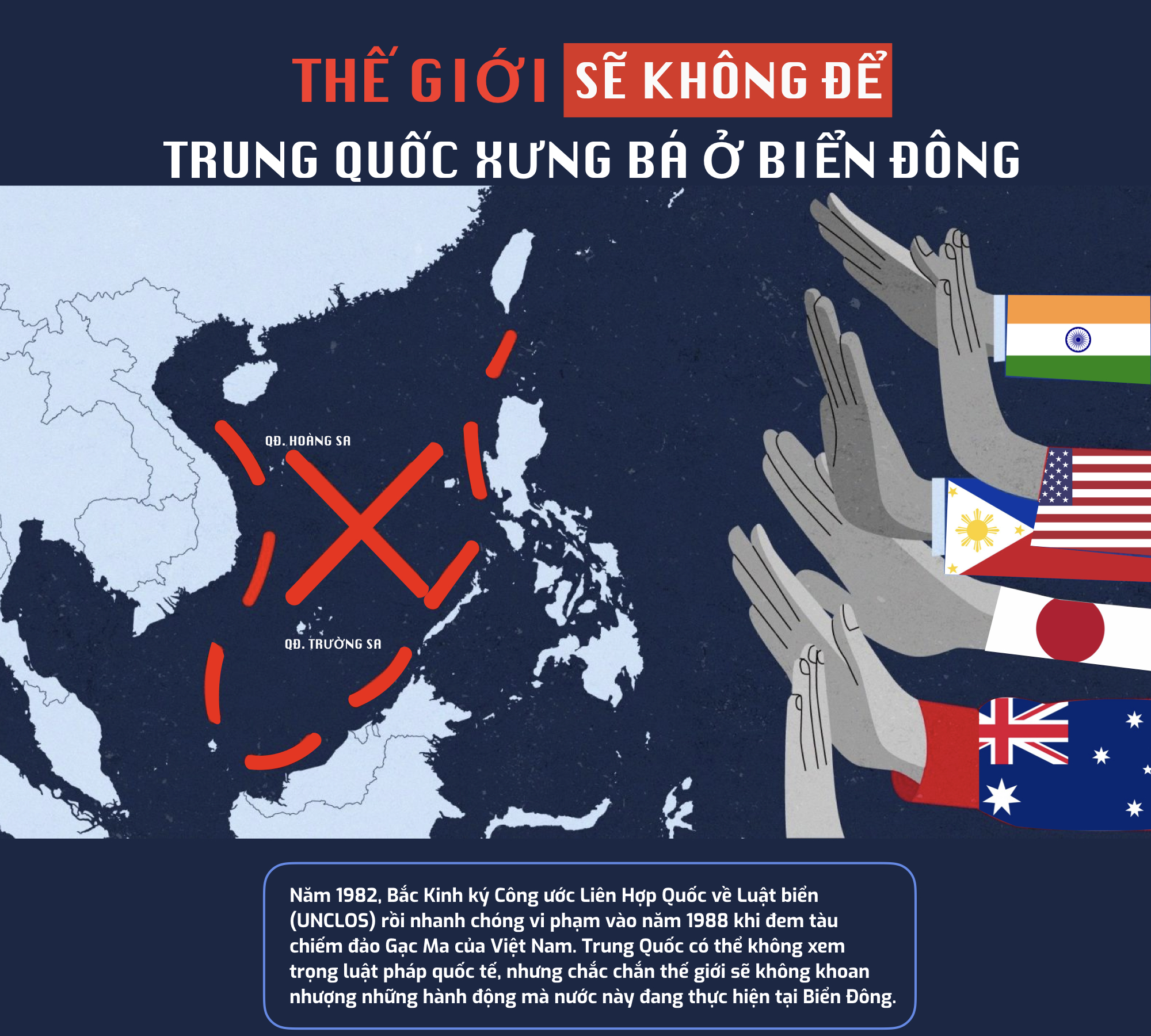
Thế giới sẽ không để Trung Quốc xưng bá ở Biển Đông

PN – Sự khao khát lãnh thổ của Bắc Kinh thể hiện rõ ràng trong lịch sử Biển Đông. Không lâu sau khi Nhật Bản bị đánh bại vào Thế chiến II, giới lãnh đạo Trung Quốc công bố bản đồ 9 đoạn vào năm 1947. Lúc ấy, dường như Trung Quốc đã nhìn thấy khoảng trống quyền lực trong vùng nước giàu có với kích thước xấp xỉ Ấn Độ và ấp ủ mưu đồ gom lấy tất cả.

Kể từ đó, Bắc Kinh sử dụng mọi cơ hội để mở rộng hoặc đánh dấu chủ quyền, bao gồm cả các trận chiến chống lại Việt Nam năm 1974 để chiếm Hoàng Sa, tiếp theo là cuộc tấn công vào đảo Gạc Ma.

Continue reading Thế giới sẽ không để Trung Quốc xưng bá ở Biển Đông

Biển Đông: Thế giới lập các ‘vành đai’ cô lập Trung Quốc

PLO – 06/08/2021 – 21:13

Tình hình Biển Đông hiện nay, tin tức Biển Đông mới nhất

Trong khi xem thường luật pháp quốc tế, Trung Quốc phải chấp nhận một sự thật rằng các quốc gia ngày càng xa rời, cô lập mình.

Giữa lúc Việt Nam đang đối mặt với đại dịch bùng phát, Trung Quốc (TQ) ngang ngược tiến hành tập trận phi pháp ở quần đảo Hoàng Sa (thuộc chủ quyền của Việt Nam). Không bất ngờ, Bắc Kinh luôn sành sỏi trong việc sử dụng sức mạnh cơ bắp để gây sức ép trước các nước ở khu vực, hòng lấn tới từng bước để biến Biển Đông thành “ao nhà”. Tuy nhiên, các động thái quấy rối và phi pháp của Bắc Kinh đang đẩy nước này lún sâu vào vòng vây cô lập của các nước.

Continue reading Biển Đông: Thế giới lập các ‘vành đai’ cô lập Trung Quốc

Advancing a Rules-based Maritime Order in the Indo-Pacific

Pacific Forum

Issues & Insights Vol. 21, SR 2 — Advancing a Rules-based Maritime Order in the Indo-Pacific

Overview

Authors of this volume participated in the Indo-Pacific Maritime Security Expert Working Group’s 2021 workshop that took place, virtually on March 23-24. The working group, composed of esteemed international security scholars and maritime experts from Japan, the United States, and other Indo-Pacific states, was formed to promote effective U.S.-Japan cooperation on maritime security issues in the region through rigorous research on various legal interpretations, national policies, and cooperative frameworks to understand what is driving regional maritime tensions and what can be done to reduce those tensions. The workshop’s goal is to help generate sound, pragmatic and actionable policy solutions for the United States, Japan, and the wider region, and to ensure that the rule of law and the spirit of cooperation prevail in maritime Indo- Pacific.

Table of Contents

  1. Introduction: Advancing a Rules-based Maritime Order in the Indo-Pacific | Jeffrey Ordaniel, Director, Maritime Programs, Pacific Forum
  2. Strengthening Maritime Crisis Prevention in Northeast Asia: A Focus on Subnational and Nonstate Actors | Shuxian Luo, Post-doctoral Research Fellow, Brookings Institution
  3. The Gaps in Japanese Maritime Security Law and the Senkaku Situation | Yurika Ishii, Associate Professor, Graduate School of Security Studies, National Defense Academy of Japan
  4. Maritime Security in the East China Sea: Japan’s Perspective | Atsuko Kanehara, Professor, Sophia University; President, Japanese Society of International Law
  5. Use of Force in International Law and the New China Coast Guard Law | Nguyen Thi Lan Huong, Research Fellow, East Sea Studies Institute, Diplomatic Academy of Vietnam
  6. Are We Ready for the Quad? Two Contradictory Goals | Kyoko Hatakeyama, Professor of International Relations, Graduate School of International Studies and Regional Development, University of Niigata Prefecture
  7. Modernizing U.S. Alliances for Maritime Security in the Indo-Pacific Virginia Bacay Watson, Professor, Daniel K. Inouye Asia-Pacific Center for Security Studies
  8. Maritime Governance Capacity Building: A U.S.-Japan Alliance Agenda for Rule of Law in the Indo-Pacific | John Bradford, Senior Fellow, Maritime Security Programme at the S. Rajaratnam School of International Studies (RSIS), Nanyang Technological University

Download the Full Volume >>


The Indo-Pacific Maritime Security Expert Working Group’s 2021 workshop and this volume were funded by a grant from the U.S. Embassy Tokyo, and implemented in collaboration with the Yokosuka Council on Asia Pacific Studies (YCAPS).

The statements made and views expressed are solely the responsibility of the authors and do not necessarily reflect the views of their respective organizations and affiliations. For questions, please email maritime@pacforum.org.


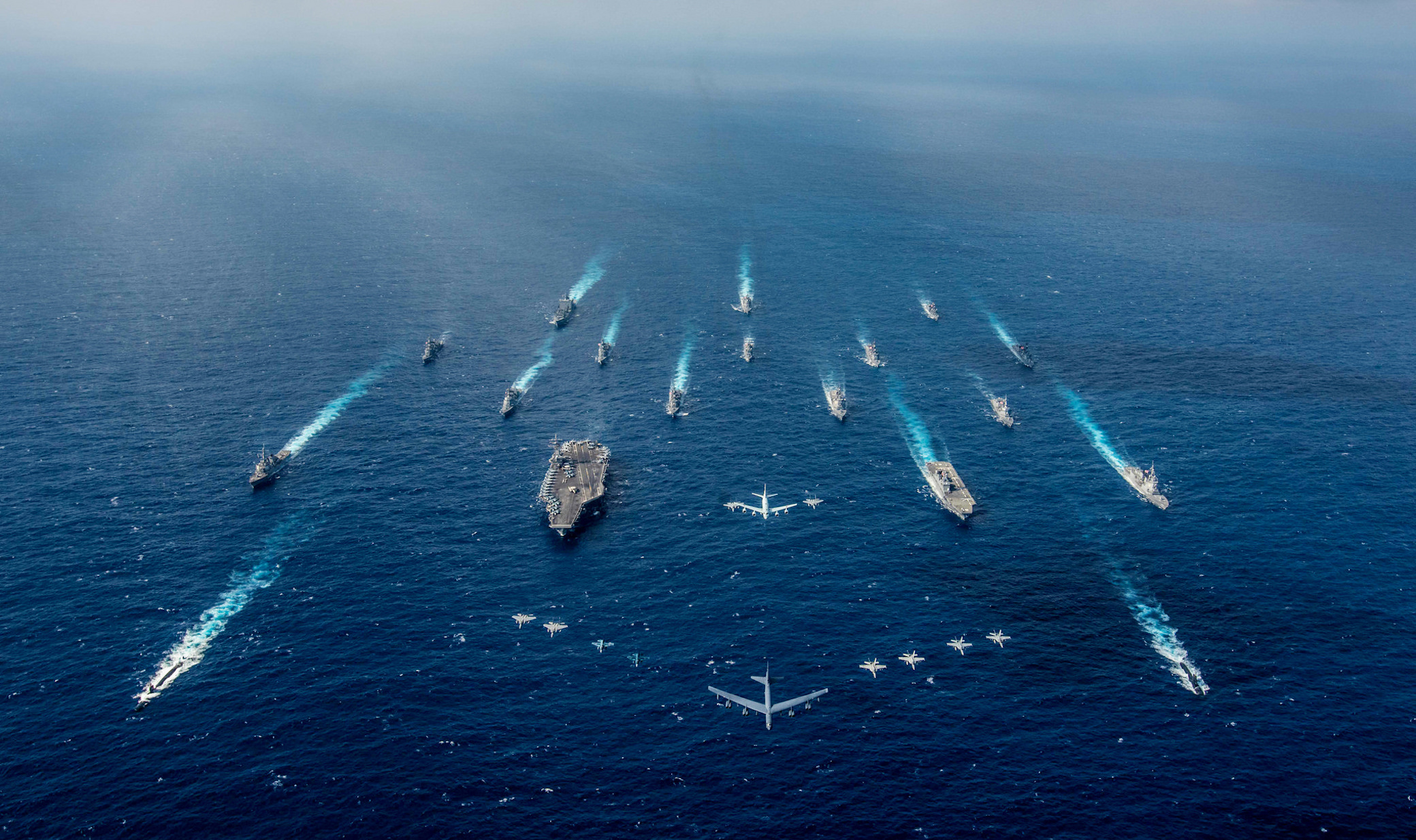
Photo: The aircraft  carrier  USS  Ronald  Reagan  (CVN  76),  center  left,  and the Japanese helicopter destroyer JS Hyuga (DDH 181), center right, sail  in  formation  with  other  ships  from  the  U.S.  Navy  and  Japan Maritime Self-Defense Force (JMSDF) as aircraft from the U.S. Air Force  and  Japan  Air  Self-Defense  Force  fly  overhead  in  formation during Keen Sword 2019 in the Philippine Sea. Keen Sword 2019 is a joint, bilateral field-training exercise involving U.S. military and JMSDF  personnel,  designed  to  increase  combat  readiness  and interoperability of the U.S.-Japan alliance. Source: U.S.  Navy  photo  by  Mass  Communication  Specialist  2nd  Class Kaila V. Peters/Public domain. 

From the Caribbean to South China: A Tale of Two Seas

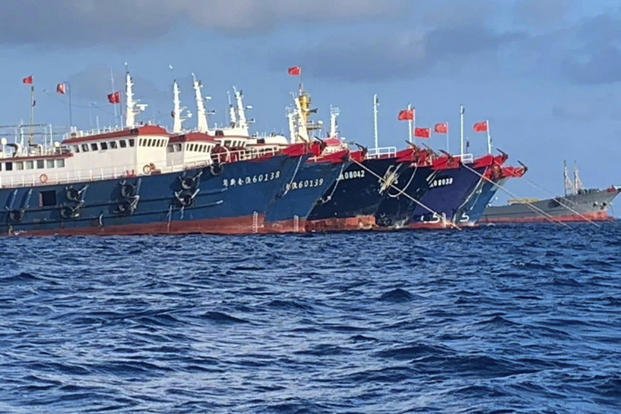
Chinese vessels are moored at Whitsun Reef, South China Sea
In this March 31, 2021, file photo provided by the National Task Force-West Philippine Sea, Chinese vessels are moored at Whitsun Reef, South China Sea. (National Task Force-West Philippine Sea via AP, File)

27 Jul 2021Military.com | By Joseph V. Micallef

Joseph V. Micallef is a best-selling military history and world affairs author, and keynote speaker. Follow him on Twitter @JosephVMicallef.

At first glance, the South and East China Seas, or China Seas, and the Caribbean Sea seem to have little in common.Advertisement

Situated on opposite ends of the Earth, they are what geographers describe as enclosed seas. To a naval strategist, that’s shorthand for an environment replete with numerous choke points from which maritime traffic can be interdicted.

Beyond this geostrategic similarity, however, these seas have another common element: the parallels and contrasts with how each region has handled the emergence of new military powers.

China in East Asia

For much of its history, China has been the predominant military power in East Asia. Historically, it was the largest country, had the largest population and the largest economy. All those factors are typically prerequisites for national power — a fact as true today as it was a millennium ago. The exceptions were periods when China was internally divided, beset by weak governments unable to assert their authority, or dominated by foreign powers.Advertisement

Continue reading From the Caribbean to South China: A Tale of Two Seas

Những điểm bất hợp lý trong Luật Hải cảnh mới của Trung Quốc – 2 kỳ

Kỳ 1: Mập mờ về các vùng biển

Kỳ cuối: Tạo tiền đề để hiện thực hóa mưu đồ độc chiếm biển Đông

Tàu Trung Quốc cố tình đâm một tàu kiểm ngư của Việt Nam, trong khi một tàu khác của Trung Quốc bắn vòi rồng. Vụ việc xảy ra hồi tháng 6-2014 trên vùng biển của Việt Nam.

***

Những điểm bất hợp lý trong Luật Hải cảnh mới của Trung Quốc (kỳ 1)

08:20 12/04/2021 – cand

Sau hơn 2 tháng chính thức có hiệu lực, Luật Hải cảnh mới của Trung Quốc tiếp tục thu hút sự chú ý của dư luận và gây nhiều tranh cãi, bất bình do có những điểm vi phạm Công ước quốc tế của Liên hợp quốc về Luật Biển năm 1982 (UNCLOS 1982).

Continue reading Những điểm bất hợp lý trong Luật Hải cảnh mới của Trung Quốc – 2 kỳ