“Bông hồng cuối cùng của mùa hè” là bài thơ của nhà thơ Ireland Thomas Moore.
Thomas Moore (28-5-1779 – 25-2-1852) là nhà văn, nhà thơ và nhà soạn lời người Ireland nổi tiếng với tác phẩm Giai điệu Ireland. Việc đặt lời thơ tiếng Anh vào các giai điệu cổ của Ireland đã đánh dấu sự chuyển đổi trong văn hóa đại chúng của Ireland từ tiếng Ireland sang tiếng Anh.
Thomas Moore sáng tác bài thơ này vào năm 1805, khi đang ở lâu đài Jenkinstown ở County Kilkenny, Ireland, nơi ông được cho là đã lấy cảm hứng từ mẫu hoa Rosa ‘Old Blush’ (hoa hồng Trung Quốc). Continue reading Bông hồng cuối cùng của mùa hè→
Đây là câu hỏi có lẽ có từ thuở đầu tiên của con người – Làm gì để đời mình có ý nghĩa? Mọi triết gia của con người đánh vật với câu hỏi này, mọi tôn giáo đều có câu trả lời cho câu này, và có lẽ mọi người chúng ta đều có những lúc băn khoăn với câu này.
Rafting is the tactic of tying ships at anchor together to establish a semi-persistent floating outpost that is hard to uproot.
Gaute Friis | JULY 16, 2023
Rows of PAFMM trawlers rafting near Whitsun Reef, March 25, 2021 (Source: Asia Maritime Transparency Initiative, Maxar Technologies)
Gaute Friis
Team Member
“Rafting” refers to the gray zone tactic of tying ships together at anchor to establish semi-persistent floating outposts that are difficult disperse due to their collective mass.
The ships are generally the component of China’s People’s Armed Forces Maritime Militia (PAFMM) known as Spratly Backbone Fishing Vessels (SBFV). According to the Asia Maritime Transparency Initiative’s detailed report on the PAFMM, these SBFVs receive generous government subsidies to remain at sea for most of the year, specifically to assert Beijing’s expansive maritime claims.
Sukiyaki là tên tiếng Anh của bài hát Nhật “Ue o Muite Arukō” (上を向いて歩こう- “I look up as I walk” – “Nhìn lên trong khi đi”). Bài hát do Rokusuke Ei viết lời và Hachidai Nakamura sáng tác nhạc, được phát hành lần đầu ở Nhật vào năm 1961 qua tiếng hát của ca sĩ Kyu Sakamoto (1941-1985).
Sukiyaki đứng đầu danh sách bán ra ở Mỹ năm 1963, và là ca khúc Nhật duy nhất đạt thứ hạng này trong lịch sử âm nhạc Mỹ.
Tên “sukiyaki” không liên hệ gì với lời nhạc cũng như ý nghĩa của bài hát. Lý do nó được dùng do tính ngắn gọn, dễ nhớ, có liên hệ với Nhật, và quen thuộc hơn với người dùng tiếng Anh. Sukiyaki còn là tên món lẩu của người Nhật Continue reading Sukiyaki→
Chúng ta học nhẫn nhục, chịu đựng, bỏ qua, xí xóa đối với mọi người quanh ta, vì Chúa, Phật, Ông Trời muốn chúng ta sống như vậy. Cách sống nhẫn nhục và yêu thương không phải là cách sống của người phàm tục. Đó là cách sống của thánh nhân, và mọi thánh nhân đều muốn tất cả mọi chúng ta cũng thành thánh như các vị đã thành thánh, cũng như ta đã xong cử nhân và muốn tất cả mọi người quanh ta cũng có cơ hội mở rộng đầu óc với bằng cử nhân như ta. Continue reading Trời trả không thiếu một xu→
This tactic describes maneuvering one’s ship dangerously across the bow of another, often forcing the other ship to take evasive action to avoid a collision.
Gaute Friis | JULY 18, 2023 Sealight 333
PLAN Destroyer Lanzhou, at right, is seen here sailing within 40 meters of the USS Decatur, to the left (Source: USN)
Gaute Friis
Team Member
Bow-crossing describes a harassment tactic in which a ship abruptly maneuvers to cross dangerously across the bow of another in violation of the 1972 International Regulations for Preventing Collisions at Sea (COLREG) and the 2014 Code for Unplanned Encounters at Sea (CUES).
This maneuver is intended to force the other ship to take evasive action to avoid a collision. It may be used to disrupt freedom of navigation operations (FONOPS) or other assertions of international law or national sovereignty.
A recent example was documented in June 2023, when a Peoples Liberation Army Navy (PLAN) vessel crossed dangerously in front of U.S. Navy destroyer USS Chung-Hoon during a joint Taiwan Strait passage with the Canadian frigate HMCS Montreal, forcing the U.S. ship to reduce speed to avoid a collision:
China’s ships use bow-crossing to protest the activities of other countries’ ships in waters over which it claims sovereignty or jurisdiction, and to send the message that Beijing is willing to escalate tensions in defense of its claims.
In nautical terms, it involves a closest point of approach (CPA) of less than 2 lengths of the ship being intercepted. They are usually referred to by the U.S. Navy as “unsafe and unprofessional maneuvers”.
Other examples:
On September 30, 2018, the PLAN Type 052C Luyang II-class destroyer Lanzhou intercepted the U.S. Arleigh Burke-class destroyer USS Decatur, which was conducting a FONOP with 12 nautical miles of Chinese-occupied artificial islands in the South China Sea. The picture at the top of this post shows how close the two ships came to colliding.
On June 21, 2014, CCG vessel Haijian 2168 approached Vietnam Coast Guard (VCG) ship CSB 4032 at high speed. The VCG ship had to change directions repeatedly to avoid a collision as the distance between the two ships came within 30 meters.
On December 5, 2013, a Chinese warship cut across the bow of the missile cruiser U.S.S. Cowpens at a distance of less than 200 yards in international waters.
In March 2009, five Chinese ships (a combination of PLAN, CCG and militia) harassed the U.S. surveillance ship USNS Impeccable in international waters in the South China Sea, forcing the American ship to make an emergency maneuver to avoid a collision.
Editor’s note: This post was originally published on 7 July under the title “Unsafe Maneuvers”, but was retracted when we decided to divide it into two separate categories. Apologies for any confusion.
Gaute Friis
Gaute is a Defense Innovation Scholar at Stanford’s Gordian Knot Center for National Sec
Thủy thủ Mặt trăng là bộ truyện tranh Nhật Bản của Takeuchi Naoko, xuất bản từ năm 1992 đến năm 1997. Truyện đã được chuyển thể thành phim hoạt hình anime, phim người đóng (live action) và game; được dịch ra nhiều thứ tiếng và nổi tiếng khắp thế giới.
Truyện xoay quanh hành trình tiêu diệt cái ác, bảo vệ Trái Đất, hệ Mặt Trời, thiên hà, và cả vũ trụ của nhóm chiến binh thủy thủ thái dương hệ.
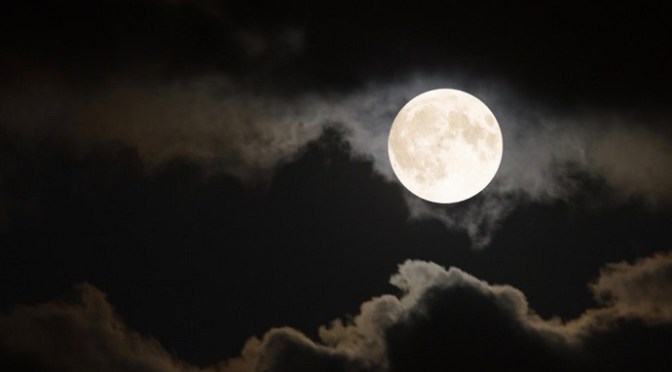
Bối cảnh chính của truyện là ở thành phố Tokyo, Nhật Bản thời hiện đại với nhân vật chính là Usagi Tsukino – một cô bé hậu đậu, học kém, làm việc gì cũng không nên thân, hay đi học muộn đã thế lại còn thường hay khóc nhè. Sau cuộc gặp gỡ định mệnh với mèo Luna, Usagi trở thành Thủy thủ Mặt Trăng (Sailor Moon) – chiến binh chính nghĩa tiêu diệt Thế Lực Bóng Đêm. Continue reading Bài hát chủ đề Thủy thủ Mặt trăng→
CCG 5201 blocks the path of BRP Malapascua, forcing it to abort its planned patrol of the Second Thomas Shoal after a 30 minute stand-off, April 26, 2023 (Source: BBC)
Gaute Friis
Team Member
Blocking is a form of bow-crossing meant to physically impede the passage of another ship to its destination. Blocking is typically used by Chinese ships to hinder other countries from resupplying or reinforcing their outposts in the South China Sea.
Distinct from other forms of bow-crossing, blocking is used for area denial rather than operations disruption and will often result in more protracted stand-offs. China uses this tactic to assert its claims of jurisdiction as well as to prevent certain activities–most notably the reinforcement of other claimants’ existing Spratly Island outposts.
One such blocking maneuver occurred on April 26th, 2023, when China Coast Guard (CCG) ship 5201 blocked the path of the Philippine Coast Guard (PCG) patrol vessel BRP Malapascua. This forced the much smaller PCG ship to abort its planned route to the entrance of Second Thomas (Ayungin) Shoal during a resupply mission to the Philippines’ outpost aboard BRP Sierra Madre:
China routinely prevents the entry of Philippine ships into the interior of Second Thomas Shoal as a cornerstone of its strategy to prevent the rusting outpost from being repaired or replaced until it breaks up or otherwise becomes uninhabitable. For nearly a decade it has allowed only small wooden boats carrying food and replacement troops to pass through its blockade.
Resupply boat brings food and replacement troops to the Philippine Navy’s outpost aboard BRP Sierra Madre, Second Thomas Shoal, 21 June 2022. Credit: Inquirer/ Marianne Bermudez
Other examples:
On September 19, 2019, also near Second Thomas Shoal, a CCG ship blocked Philippine civilian vessels while they were conducting a resupply mission to the BRP Sierra Madre.
On November 13, 2015, about 13 nautical miles from Subi Reef, CCG cutters 35115 and 2305 blocked the path of a Vietnamese replenishment ship heading towards the Vietnamese outpost on Southwest Cay, forcing the ship to find a different route to its destination. PLA Navy Type 072A landing ship 995 later blocked the ship’s path again, this time brandishing small arms and firing a warning shot.
Quyết định 843/QĐ-TTg năm 2023 về Chương trình hành động quốc gia hoàn thiện chính sách và pháp luật nhằm thúc đẩy thực hành kinh doanh có trách nhiệm tại Việt Nam giai đoạn 2023-2027 do Thủ tướng Chính phủ ban hành
Căn cứ Luật Tổ chức Chính phủ ngày 19 tháng 6 năm 2015; Luật sửa đổi, bổ sung một số điều của Luật Tổ chức Chính phủ và Luật Tổ chức chính quyền địa phương ngày 22 tháng 11 năm 2019;
Căn cứ Nghị quyết số 99/NQ-CP ngày 30 tháng 8 năm 2021 của Chính phủ ban hành Chương trình hành động của Chính phủ nhiệm kỳ 2021 – 2026 thực hiện Nghị quyết của Quốc hội về Kế hoạch phát triển kinh tế – xã hội 5 năm 2021 – 2025;
Căn cứ Nghị quyết số 01/NQ-CP ngày 06 tháng 01 năm 2023 của Chính phủ về nhiệm vụ, giải pháp chủ yếu thực hiện kế hoạch phát triển kinh tế – xã hội, dự toán ngân sách nhà nước và cải thiện môi trường kinh doanh, nâng cao năng lực cạnh tranh quốc gia năm 2023;
“Khi đê vỡ” là bài hát nhạc country blues được viết và thu âm lần đầu bởi Memphis Minnie và Kansas Joe McCoy vào năm 1929.
Lời bài hát phản ánh những trải nghiệm trong trận Lụt Lớn sông Mississippi (Mỹ) năm 1927 gây ra. Đây là trận lụt có sức tàn phá lớn nhất trong lịch sử Mỹ, khoảng 70.000 km2 bị ngập ở độ sâu lên đến 9 m trong suốt vài tháng vào đầu năm 1927. Nhiều người mất nhà cửa và người thân. Sau trận lụt, mọi người bàn nhau nên đi Chicago (phía bắc sông Mississippi) vì xuống phía nam thì chẳng có việc để làm.
Dưới đây là bản đồ sông Mississippi (màu xanh). Vùng bị ảnh hưởng nặng bởi trận lụt là vùng phía nam, gồm Arkansas, Mississippi và Louisiana. “Vùng đất hứa” mà mọi người muốn đến sau trận lụt là Chicago (phía bắc sông Mississippi và gần hồ Michigan). Continue reading Khi đê vỡ→
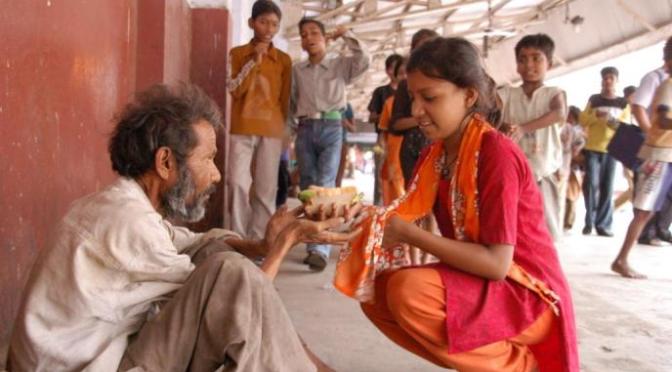
Từ “service” có thể dịch là “phục vụ” hay “dịch vụ” – tiếp viên nhà hàng phục vụ khách ăn, nhà hàng cung cấp dịch vụ ăn uống. Nhưng cả hai việc đều là service. Thường thì phục vụ hay dịch vụ xảy ra như một hành vi kinh tế tiền trao cháo múc – tôi phục vụ anh (hay cung cấp dịch vụ cho anh), và anh trả tiền cho tôi. Nhưng đôi khi service xảy ra nhưng không có đổi chác kinh tế – như là một tổ chức từ thiện khám bệnh miễn phí cho người nghèo, hay bạn dạy miễn phí cho các trẻ em đường phố. Continue reading Service without credits – Phục vụ không cần ghi công→
As much as 17 billion USD is needed to build two railway routes connecting to seaports, namely Lao Cai-Hanoi-Hai Phong and Bien Hoa-Vung Tau, according to the Ministry of Transport (MoT).
Monday, July 17, 2023 at 17:06
A pre-feasibility study is underway for the Bien Hoa-Vung Tau route with 1,435mm gauge tracks. It is 128km long with a total investment of 6.2 billion USD.
Meanwhile, the detailed planning of the 380km-long Lao Cai-Hanoi-Hai Phong project has been basically completed at a cost of about 11 billion USD.
According to the MoT, a large amount of the money for the two projects will come from the public investment fund.
Due to their big investment, the two projects have been included in the list of those that call for foreign investment in the 2021-2025 period, the ministry said, adding that it is preparing for capital mobilisation so that construction of the projects will start before 2030.









 Đọt Chuối Non