Category Archives: Thế giới

What’s the Harm in Talking to Russia? A Lot, Actually.

Diplomacy is neither intrinsically moral nor always strategically wise.

FP

By Raphael S. Cohen, the director of the Strategy and Doctrine Program at the Rand Corporation’s Project Air Force, and Gian Gentile, the deputy director of the Rand Corporation’s Army Research Division.

Russian President Vladimir Putin chairs a commission on military-technical cooperation with foreign states in 2017.

NOVEMBER 22, 2022, 1:36 PM

Give diplomacy a chance.” This phrase gets repeated in almost every conflict, and the war in Ukraine is no exception. A chorus of commentators, experts, and former policymakers have pushed for a negotiated peace at every turn on the battlefield: after the successful defense of Kyiv, once Russia withdrew to the east, during the summer of Russia’s plodding progress in the Donbas, after Russia’s rout in Kharkiv oblast, and now, in the aftermath of Russia’s retreat from Kherson. The better the Ukrainian military has done, the louder the calls for Ukraine to negotiate have become.

And today, it’s no longer just pundits pushing for a negotiated settlement. The U.S. House of Representatives’ progressive caucus penned a letter to President Joe Biden calling for a diplomatic solution, only to retract it a short time later. Republican House leader Kevin McCarthy has promised to scrutinize military aid to Ukraine and push for an end to the war. Even Joint Chiefs of Staff Chairman Mark Milley has reportedly pushed for Ukraine to negotiate, although he subsequently made clear that the decision should be Kyiv’s alone.

And why not negotiate? Isn’t a diplomatic solution the best—indeed, the only—option for any kind of long-term settlement between Russia and Ukraine? And if so, what could possibly be the harm in exploring those options? Quite a lot, actually: Despite the way it is commonly portrayed, diplomacy is not intrinsically and always good, nor is it cost-free. In the Ukraine conflict, the problems with a push for diplomacy are especially apparent. The likely benefits of negotiations are minimal, and the prospective costs could be significant.

First, the argument that most wars end with diplomacy and so, therefore, will the war in Ukraine is misleading at best. Some wars—such as the U.S. Civil War and World War II—were fought to the bitter end. Others—like the American Revolution, the Spanish-American War, World War I, or the First Gulf War—were won on the battlefield before the sides headed to the negotiating table. Still others—like the Korean War—ended in an armistice, but only after the sides had fought to a standstill. By contrast, attempts at a diplomatic settlement while the military situation remained fluid—as the United States tried during the Vietnam War and, more recently, in Afghanistan—have ended in disaster. Even if most wars ultimately end in diplomatic settlements, that’s not in lieu of victory.

60% off unrivaled insights.

SUBSCRIBE NOW

Pushing Ukraine to negotiate now sends a series of signals, none of them good.

At this particular moment, diplomacy cannot end the war in Ukraine, simply because Russian and Ukrainian interests do not yet overlap. The Ukrainians, understandably, want their country back. They want reparations for the damage Russia has done and accountability for Russian war crimes. Russia, by contrast, has made it clear that it still intends to bend Ukraine to its will. It has officially annexed several regions in eastern and southern Ukraine, so withdrawing would now be tantamount, for them, to ceding parts of Russia. Russia’s economy is in ruins, so it cannot pay reparations. And full accountability for Russian war crimes may lead to Russian President Vladimir Putin and other top officials getting led to the dock. As much as Western observers might wish otherwise, such contrasts offer no viable diplomatic way forward right now.

Nor is diplomacy likely to forestall future escalation. One of the more common refrains as to why the United States should give diplomacy a chance is to avert Russia making good on its threats to use nuclear weapons. But what is causing Russia to threaten nuclear use in the first place? Presumably, it is because Russia is losing on the battlefield and lacks other options. Assuming that “diplomatic solution” is not a euphemism for Ukrainian capitulation, as its proponents insist, Russia’s calculations about whether and how to escalate would not change. Russia would still be losing the war and looking for a way to reverse its fortunes.

Diplomacy can moderate human suffering, but only on the margins. Throughout the conflict, Ukraine and Russia have negotiated prisoner swaps and a deal to allow grain exports. This kind of tactical diplomacy on a narrow issue was certainly welcome news for the captured troops and those parts of the world that depend on Ukrainian food exports. But it’s not at all clear how to ramp up from these relatively small diplomatic victories. Russia, for example, won’t abandon its attacks on Ukrainian infrastructure heading into the winter as it attempts to freeze Ukraine into submission, because that’s one of the few tactics Russia has left.

At the same time, more expansive diplomacy comes at a cost. Pushing Ukraine to negotiate now sends a series of signals, none of them good: It signals to the Russians that they can simply wait out Ukraine’s Western supporters, thereby protracting the conflict; it signals to the Ukrainians—not to mention other allies and partners around the world—that the United States might put up a good fight for a while but will, in the end, abandon them; and it tells the U.S. public that its leaders are not invested in seeing this war through, which in turn could increase domestic impatience with it.

Starting negotiations prematurely carries other costs. As Biden remarked in June: “Every negotiation reflects the facts on the ground.” Biden is right. Ukraine now is in a stronger negotiating position because it fought rather than talked. The question today is whether Ukraine will ultimately regain control over Donbas and Crimea, not Kharkiv and Kherson. This would not have been the case had anyone listened to the “give diplomacy a chance” crowd back in the spring or summer.

READ MORE

Joe Biden and Vladimir Putin meet during the U.S.-Russia summit at Villa La Grange on June 16, 2021 in Geneva, Switzerland.

Talking With Russia Is Tempting—and Wrong

Why it’s still too soon for negotiations to end the war in Ukraine.

ARGUMENT JAMES TRAUB

Natalia Pevnevy celebrates atop her car in Liberty Square following Ukrainian President Volodymyr Zelenksky's surprise visit in Kherson, Ukraine.
Natalia Pevnevy celebrates atop her car in Liberty Square following Ukrainian President Volodymyr Zelenksky’s surprise visit in Kherson, Ukraine.

Ukrainians Are Holding Strong as Some in West Falter

Ukrainian identity has been fundamentally changed by invasion.

ARGUMENT THOMAS SHERLOCK

There are plenty of reasons to believe that Kyiv will be in an even stronger bargaining position as time passes. The Ukrainians are coming off a string of successes—most recently retaking Kherson—so they have operational momentum. While Ukraine has suffered losses, Western military aid continues to flow in. Despite Russia’s missile strikes on civilian infrastructure, Ukrainian morale remains strong. By contrast, Russia is on the back foot. Its military inventories have been decimated, and it is struggling to acquire alternative supplies. Its mobilization effort prompted as many Russian men to flee the country as were eventually mobilized to fight in Ukraine. Moreover, as the Institute for the Study of War has assessed, “Russian mobilized servicemen have shown themselves to be inadequately trained, poorly equipped, and very reluctant to fight.”

By contrast, a negotiated settlement—even if it successfully freezes a conflict—comes with a host of moral, operational, and strategic risks. It leaves millions of Ukrainians to suffer under Russian occupation. It gives the Russian military a chance to rebuild, retrain, and restart the war at a later date. Above all, a pause gives time for the diverse international coalition supporting Ukraine to fracture, either on its own accord or because of Russian efforts to drive a wedge into the coalition.

Eventually, there will come a time for negotiations. That will be when Russia admits it has lost and wants to end the war. Or it will come when Ukraine says that the restoration of its territory isn’t worth the continued pain of the Russian bombardment. So far, neither scenario has come to pass. Indeed, the only softening of Russia’s position was Putin’s statement last month seemingly ruling out nuclear use—at least for the time being. Apart from that, the Kremlin seems intent on doubling down, even as its military continues to be slowly pushed out of Ukraine. That’s hardly an invitation to negotiate.

Might these arguments against the reflexive call for negotiations mean that war continues for months and possibly even years? Perhaps. But it’s not yet clear that there is a viable diplomatic alternative. And even if there was, it should be Ukraine’s choice whether or not to pursue it. Ukraine and its people, after all, are paying the price in blood. If the United States and its allies are sending tens of billions of dollars in military and economic aid to Ukraine, this is only a tiny fraction of what Washington has recently spent on defense and other wars. Thanks to the Ukrainians’ excellent use of this aid, the military threat from the United States’ second-most important adversary has been dealt a serious blow. The cold, if cruel, reality is that the West’s return on its investment in Ukraine seems high.

The harshness of these realities, however, does not make current calls for a negotiated settlement intrinsically moral. If diplomacy means ramming through a settlement when the battlefield circumstances dictate otherwise, it is not necessarily the morally more justifiable or strategically wiser approach. Sometimes fighting—not talking—is indeed the better option.

“To everything there is a season,” Ecclesiastes says, including “a time of war, and a time of peace.” There will come a time for diplomacy in Ukraine. Hopefully, it will come soon. But it doesn’t seem to be today.

Raphael S. Cohen is the director of the Strategy and Doctrine Program at the Rand Corporation’s Project Air Force.

Gian Gentile is the deputy director of the Rand Corporation’s Army Research Division.

Join the Conversation

Commenting on this and other recent articles is just one benefit of a Foreign Policy subscription.

Already a subscriber? Log In.
SUBSCRIBE

Council on Foreign Relations – Daily news brief, Nov. 21, 2022

Top of the Agenda

COP27 Ends With Landmark Deal on Loss and Damage

The final deal of this year’s UN climate conference, COP27, included two historic firsts (Bloomberg): an agreement to establish a fund to help poor countries cope with climate damages, and a call for multilateral lenders such as the World Bank and International Monetary Fund to implement reforms ensuring that more of their funding addresses the climate crisis. The details of the loss and damage fund were left for future talks. Meanwhile, the communiqué left out proposed text on phasing down use of all fossil fuels, mentioning only coal. Negotiators were given an unusually short period of time to review the draft text on several major aspects of the communiqué, the Financial Times reported. After some delegates criticized the lack of transparency in negotiations, UN climate chief Simon Steill said he would review the summit process before next year’s conference to make it “as effective as possible.” 
Analysis
“The loss and damage deal agreed is a positive step, but it risks becoming a ‘fund for the end of the world’ if countries don’t move faster to slash emissions,” the World Wide Fund for Nature’s Manuel Pulgar Vidal tells the New York Times. “[The loss and damage agreement] tees up a big fight for next year’s Cop28 over who pays into and who benefits from the fund. Rich countries are pushing for China to chip in and finance to be targeted at ‘vulnerable’ countries,” Climate Home News’ Megan Darby, Joe Lo, and Chloé Farand write. This Backgrounder looks at the successes and failures of global climate agreements.
Continue reading Council on Foreign Relations – Daily news brief, Nov. 21, 2022

What the Biden-Xi Meeting Means for U.S.-China Relations

CFR

The meeting between U.S. President Joe Biden and Chinese leader Xi Jinping did not resolve major disagreements, but it could start the process of building guardrails to prevent competition from turning into conflict.

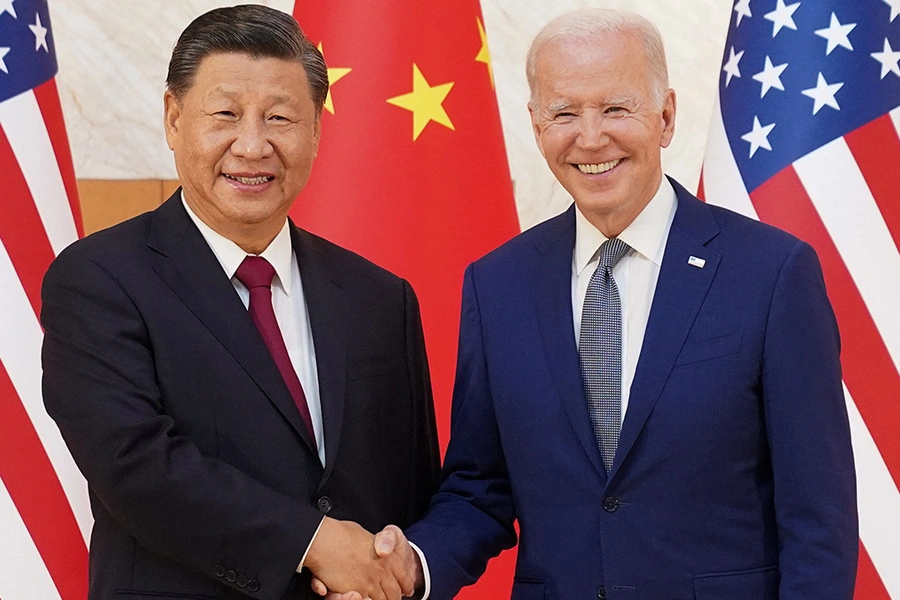
U.S. President Joe Biden and Chinese leader Xi Jinping meet on the sidelines of the Group of Twenty summit in Bali, Indonesia.
U.S. President Joe Biden and Chinese leader Xi Jinping meet on the sidelines of the Group of Twenty summit in Bali, Indonesia. Kevin Lamarque/Reuters

Blog Post by David Sacks

November 15, 2022 9:17 am (EST)

On the margins of the Group of Twenty (G20) gathering in Bali, Indonesia, U.S. President Joe Biden and Chinese leader Xi Jinping met for the first time in person as leaders of their respective nations. Their three-and-a-half-hour meeting came against the backdrop of heightened tensions over Taiwan, unprecedented U.S. export controls on advanced technologies levied against China, ramped up North Korean missile tests, and the ongoing war in Ukraine.

Continue reading What the Biden-Xi Meeting Means for U.S.-China Relations

CFR – The World This Week, November 18, 2022

The World This Week will not be sent next week due to the holiday.
Explore the Biden-Xi Meeting David Sacks
U.S. President Joe Biden and Chinese leader Xi Jinping meet on the sidelines of the Group of Twenty summit in Bali, Indonesia. Kevin Lamarque/ReutersThe meeting between U.S. President Joe Biden and Chinese leader Xi Jinping did not resolve major disagreements, but it could start the process of building guardrails to prevent competition from turning into conflict. Read more on Asia Unbound
Can Cooperation Make a Comeback at the G20?
Group of Twenty (G20) leaders are meeting in Bali, but divisions over trade, climate change, and the war in Ukraine threaten to overshadow the summit. What does the G20 do? Get the background
Continue reading CFR – The World This Week, November 18, 2022

COP27: What’s at Stake for the World?

Council on Foreign Relations

The COP27 climate conference in Sharm el-Sheikh, Egypt, closes out another year of disasters: record-breaking floods, deadly heat waves, and devastating droughts. The urgency for the world’s leaders to make progress at this conference has never been higher, but many obstacles remain. The Council on Foreign Relations explains the issues and lays out what’s at stake in the world’s fight against climate change. 
Continue reading COP27: What’s at Stake for the World?

Council on Foreign Relations: Daily newsbrief Nov. 15, 2022

November 15, 2022
Editor’s note: For the duration of the twenty-seventh Conference of the Parties (COP27), the Daily News Brief will include a special section dedicated to developments at the climate conference.
Top of the Agenda

G20 Summit Focuses on Ukraine War

A draft communiqué from today’s Group of Twenty (G20) summit in Bali, Indonesia, said “most members strongly condemned the war in Ukraine” and its consequences for the world economy, the Financial Times reported. The draft also denounced using or threatening to use nuclear weapons. Russian President Vladimir Putin did not attend the summit, while Ukrainian President Volodymyr Zelenskyy appeared in a video address.  Deals on climate policy and funding were also announced, with the U.S. and Indonesian presidents unveiling a $20 billion plan (Bloomberg) to move Indonesia away from coal power. Ahead of the summit, Brazil, the Democratic Republic of Congo, and Indonesia said they will cooperate on forest preservation (Reuters). The countries collectively contain more than half the world’s tropical rain forests.
Continue reading Council on Foreign Relations: Daily newsbrief Nov. 15, 2022

Ukraine’s true detectives: the investigators closing in on Russian war criminals – podcast

the guardian

Written by Lauren Wolfe, read by Kelly Burke and produced by Jessica Beck. The executive producer was Max Sanderson

Fri 11 Nov 2022 05.00 GMT Last modified on Fri 11 Nov 2022 17.40 GMT

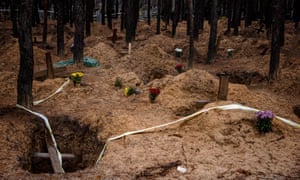
Across the country, fact-finding teams are tirelessly gathering evidence and testimony about Russian atrocities, often within hours of troops retreating. Turning this into convictions will not be easy, or quick, but the task has begun 

empty graves after the exhumation of bodies in the mass grave created during the Russian's occupation in the town of Izyum, Kharkiv region, amid the Russian invasion of Ukraine
 Photograph: Dimitar Dilkoff/AFP/Getty Images

Continue reading Ukraine’s true detectives: the investigators closing in on Russian war criminals – podcast

Council on Foreign Relations – Daily news brief Nov. 14, 2022

Editor’s note: For the duration of the twenty-seventh Conference of the Parties (COP27), the Daily News Brief will include a special section dedicated to developments at the climate conference.
Top of the Agenda

Biden, Xi Hold First In-Person Meeting

U.S. President Joe Biden and Chinese President Xi Jinping signaled an interest in improving cooperation (Nikkei) on global issues during their first in-person meeting of Biden’s presidency. The meeting lasted three hours, and they also discussed policy toward Taiwan (NYT), China’s human rights record, and Russia’s invasion of Ukraine, according to a White House readout. The readout said Biden told Xi that U.S. policy toward Taiwan has not changed, and that Washington objects to Beijing’s “coercive and increasingly aggressive reactions” toward the island. The leaders spoke in Bali, Indonesia, where they will attend the Group of Twenty (G20) summit this week. Their meeting comes amid tensions related to U.S. restrictions on China’s chip sector and Chinese military drills that followed U.S. House Speaker Nancy Pelosi’s visit to Taiwan in August.
Continue reading Council on Foreign Relations – Daily news brief Nov. 14, 2022

The new [US] National Security Strategy in the context of an unstated “cold war”

By John Hemmings, Pacific Forum

John Hemmings (john@pacforum.org) is Senior Director of the Indo-Pacific Foreign and Security Policy Program at the Pacific Forum.

The Biden administration released America’s new National Security Strategy (NSS) on Oct. 12. For those who read such documents regularly, there were few surprises. Values were mentioned in the context of the United States’ position in the world and vis-a-vis perceived adversaries, such as Russia, Iran, and the People’s Republic of China, while the administration’s lines of effort were laid out in a typical ends, ways, and means format. There were also sections on each region of the world, where the strategies laid out a bit more context.
Continue reading The new [US] National Security Strategy in the context of an unstated “cold war”

Egypt faces criticism over crackdown on activists ahead of COP27 climate summit

Ivana Kottasová

By Ivana Kottasová, CNN

Updated 12:44 PM EDT, Sat November 5, 2022

View of a COP27 sign on the road leading to the conference area in Egypt's Red Sea resort town of Sharm el-Sheikh, taken on October 22, as it prepares to host the COP27 summit.

View of a COP27 sign on the road leading to the conference area in Egypt’s Red Sea resort town of Sharm el-Sheikh, taken on October 22, as it prepares to host the COP27 summit.Sayed Sheasha/ReutersCNN — 

Egypt is facing a barrage of criticism over what rights groups say is a crackdown on protests and activists, as it prepares to host the COP27 climate summit starting Sunday.

Rights groups have accused the Egyptian government of arbitrarily detaining activists after Egyptian dissidents abroad called for protests to be held against President Abdel Fattah el-Sisi on November 11, during the United Nations climate talks.

According to rights groups, security forces have been setting up checkpoints on Cairo streets, stopping people and searching their phones to find any content related to the planned protests.

Continue reading Egypt faces criticism over crackdown on activists ahead of COP27 climate summit

ISDS case map

facebook sharing button
twitter sharing button
whatsapp sharing button
linkedin sharing button

Click here for map >>

Click on the dots on the map to explore ISDS cases or look at the list below


Additional resources:

ISDS cases displayed on this map

AfricaAsiaEurope
Ampal-American vs. Egypt
Unión Fenosa vs. Egypt
Veolia vs. Egypt
Al-Kharafi vs. Libya
Carlyle vs. Morocco
Foresti vs. South Africa
Agro EcoEnergy vs. Tanzania
Total vs. Uganda
Border Timbers & Von Pezold vs. Zimbabwe
Bechtel, Enron and seven European banks vs. India
Vodafone vs. India
Churchill Mining vs. Indonesia
Newmont Mining vs. Indonesia
Khan Resources Inc. vs. Mongolia
Tethyan Copper vs. Pakistan
Fraport vs. Philippines
Hanocal & IPIC International vs. South Korea
Kingsgate vs. Thailand
ConocoPhillips & Perenco vs. Vietnam
Razvoj Golf & Elitech vs. Croatia
CME & Lauder vs. Czech Republic
Saluka vs. Czech Republic
Vermilion vs. France
Vattenfall vs. Germany I
Vattenfall vs. Germany II
Rockhopper vs. Italy
RWE vs. Netherlands
Eureko vs. Poland
Gabriel Resources vs. Romania
Micula vs.. Romania
Yukos vs. Russia
Achmea vs. Slovakia
Ascent Resources vs. Slovenia
NextEra vs. Spain
Latin AmericaNorth AmericaPacific
Abaclat vs. Argentina
Azurix vs. Argentina
CMS Gas vs. Argentina
Aguas del Tunari vs. Bolivia
Eco Oro vs. Colombia
Novartis vs. Colombia
Infinito Gold vs. Costa Rica
TCW vs. Dominican Republic
Chevron vs. Ecuador
Copper Mesa vs. Ecuador
Occidental Petroleum vs. Ecuador
Pac Rim vs. El Salvador
Kappes, Cassidy & Associates vs. Guatemala
RDC vs. Guatemala
Abengoa vs. Mexico
Cargill vs. Mexico
Metalclad vs. Mexico
Renco vs. Peru
Philip Morris vs. Uruguay
ConocoPhilips vs. Venezuela
Crystallex vs. Venezuela
Eli Lilly vs. Canada
Ethyl vs. Canada
ExxonMobil and Murphy Oil vs. Canada
Lone Pine vs. Canada
TC Energy vs. United States
Philip Morris vs. Australia
Barrick Gold vs. Papua New Guinea

Key ISDS facts

  • Amount of ISDS cases: 1104 (2020)
  • Total claimed amount: $US 570 billion (2018)
  • Average amount claimed by investors: US$ 1.5 billion
  • Average amount awarded by tribunals: US$ 438 million
  • Largest award: US$ 50 billion (Yukos vs. Russia)
  • Results of decisions (on the merits): 61% in favour of investors (2019)
  • Most invoked treaty in ISDS arbitrations: Energy Charter Treaty (135 cases)
  • Investor legal costs on average: US$ 6.4 million
  • States legal costs on average: US$ 4.7 million
  • ISDS proceedings average length: 4 years and a half

(Source: UNCTADBIICLSOMO)

keywords: investor-state disputes | ISDS

source:

Council on Foreign Relations -Daily News Brief, Nov. 3, 2022

Top of the Agenda

Ethiopian Government Agrees to Truce With Tigrayan Rebels

After two years of fighting, the Ethiopian government and rebel Tigray People’s Liberation Front (TPLF) agreed to end hostilities (WaPo), disarm, and restore “law and order,” said Olusegun Obasanjo, the Horn of Africa envoy for the African Union (AU). The AU-mediated truce has raised hopes for an end to a war that has killed tens of thousands of people and displaced millions (Reuters).  The AU stepped in to mediate after a cease-fire declared by the government in March fell apart after five months. Obasanjo said the AU will monitor the implementation of the new peace deal, which stipulates that Ethiopia’s government will take control of Mekelle, the capital of the Tigray region, and that the TPLF will once again be recognized as a political party. Eritrea, which sent troops to fight alongside the Ethiopian government’s forces, was not part of the talks. 
Analysis

This is a huge breakthrough that involved major concessions from both sides, even if the parties punted the thorniest details to future peace talks,” the International Crisis Group’s Alan Boswell tells Reuters. “If they do stop fighting, then today will just be the start of what will surely prove a very bumpy, long, and difficult peace process.” 

“The African Union-mediated deal in Ethiopia is important for watchers of regional organizations & world order. While too early to celebrate, AU shows the way when European regional institutions are weakening or busy fighting each other,” American University’s Amitav Acharya tweets. 

For the Africa in Transition blog, CFR’s Michelle Gavin explains the challenges that have hindered the AU-mediated negotiation process.
Continue reading Council on Foreign Relations -Daily News Brief, Nov. 3, 2022

Council on Foreign Relations: Daily news brief, Nov. 2, 2022

November 2, 2022
Top of the Agenda

Seoul Fires Back After Barrage of North Korean Missile Tests

North Korea fired a missile that crossed the Northern Limit Line, a maritime border with South Korea that Pyongyang does not recognize (CNN), for the first time since the 1950–53 Korean War. South Korea’s military called the launch “rare and intolerable” and responded by firing three missiles (Yonhap) into waters north of the line. North Korea’s missile was one of as many as twenty-three it test-fired into the seas off of South Korea’s east and west coasts today. The missile deployment was North Korea’s largest in a single day. The launches came after U.S.-South Korea military drills began on Monday. U.S. Defense Secretary Lloyd Austin is set to meet with his South Korean counterpart at the Pentagon tomorrow.  
Continue reading Council on Foreign Relations: Daily news brief, Nov. 2, 2022

Khi các siêu cường phải đi nhờ vả

DANH ĐỨC 30/10/2022 07:04 GMT+7

TTCTCáo giác về xuất xứ những UAV “tự sát” mà Nga đang sử dụng ở Ukraine không mới khi đối chiếu lại quá trình trừng phạt Iran của Hội đồng Bảo an Liên Hiệp Quốc.

Nhưng việc Iran nay cung cấp UAV cho Nga cho thấy thế giới đang tiến đến một cục diện hoàn toàn khác.

Khi các siêu cường phải đi nhờ vả - Ảnh 1.

Ảnh: The New Arab

“Trong đêm 22 và 23-10, kẻ thù “truyền kiếp” đã tấn công miền nam đất nước bằng UAV tự sát. 11 UAV của đối phương đã bị tiêu diệt bởi lực lượng phòng không của Bộ Tư lệnh không quân phía nam ở khu vực Mykolaiv”, Bộ Tư lệnh các lực lượng vũ trang Ukraine đăng trên Facebook sáng thứ hai 23-10. 

Bản tin này còn cho biết “thêm 3 UAV Shahed-136 khác đã bị bắn hạ bởi các đơn vị khác ở phía nam”. Chưa hết, “thêm 2 UAV lảng vảng, tìm cách đột phá từ hướng nam, đã bị phá hủy bởi các khẩu đội phòng không của Bộ Tư lệnh không quân đông và trung tâm ở phía đông và bắc Ukraine”.

Continue reading Khi các siêu cường phải đi nhờ vả

Những chị đại gặp rắc rối ở châu Âu

TƯỜNG ANH 31/10/2022 07:05 GMT+7

TTCT Thủ tướng Anh Liz Truss “sẵn sàng bật nút hạt nhân nếu cần”, Chủ tịch Ủy hội châu Âu Ursula Von der Leyen không sợ bom rơi đạn lạc đến Kiev động viên đồng minh, và nữ Thủ tướng Moldova Maia Sandu sẵn sàng ban lệnh động viên. Chính trường châu

Hai phụ nữ đang là cái gai trong mắt người Nga: Maia Sandu và Ursula von der Leyen. Ảnh: Twitter

Đình đám nhất trong các nữ chính khách này gần đây chắc chắn là bà Truss vừa từ nhiệm. Không chỉ vì kỷ lục giữ ghế ngắn ngủi nhất, chỉ 44 ngày (trong đó hết 10 ngày gần như nước Anh không hoạt động vì tang chế của Nữ hoàng Elizabeth II), mà còn vì thành tích trong nhiệm kỳ ngắn kỷ lục.

Continue reading Những chị đại gặp rắc rối ở châu Âu