The South China Sea is one of the most contested waterways in the world.
Hundreds of kilometres from its mainland, China appears to be increasingly asserting its dominance in this strategically important maritime trade route.
Many of the maritime disputes involve areas claimed by both the Philippines and Beijing.
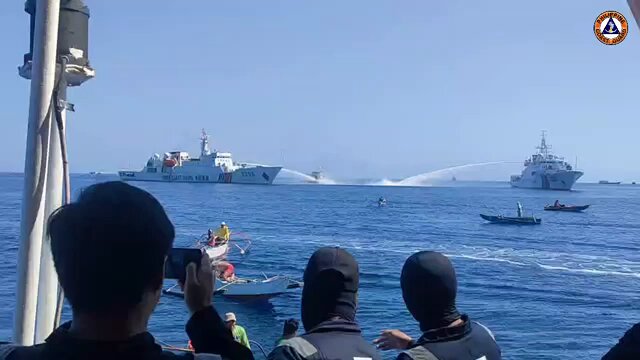
Flashpoints are becoming more frequent, including collisions between coastguard boats and other vessels.
101 East joins the Philippine coastguard and witnesses firsthand skirmishes with the Chinese navy in the disputed waters.
Vietnam is stepping up inspections of a line of children’s toys over concerns that imagery on the face of one product resembles a map China uses to stake its claim to disputed areas in the South China Sea. The investigation was launched after local media reported that a version of widely sold Baby Three toys, many of which are made in China, featured a design that was viewed as similar to Beijing’s maritime map.
Có bốn diễn biến chính định hình môi trường an ninh ở Biển Đông năm 2024: (1) Trung Quốc gia tăng hành vi cưỡng ép đối với tàu thuyền và máy bay của hải quân Philippines; (2) Philippines thông qua chiến lược phòng thủ biển mới; (3) Việt Nam tăng cường hoạt động xây dựng tại quần đảo Trường Sa; và (4) đàm phán về Bộ Quy tắc Ứng xử (COC) tiến triển chậm chạp. Continue reading Tóm tắt tình hình Biển Đông năm 2024→
China announced the discovery of a major natural gas field in the South China Sea on August 7, 2024. Named Lingshui 36-1, the site is said to be the world’s first “ultra-shallow gas field in ultra-deep waters”. Located southeast of China’s southern island of Hainan, the field lies around 1,500 metres below the sea surface. Its discovery is expected to boost energy security for China, the world’s-largest natural gas importer. But developing oil and gas resources in the South China Sea could raise tensions among rival claimants to parts of the disputed waters.
On 17th June 2024, Filipino and China Coast Guards clashed at sea. Armed with knives and axes, this is the worst clash in recent memory. With tensions running high, many question if the USA will step in, and whether Manila will invoke the mutual defense treaty it has with the US.
As confrontations with China increase in frequency, the Philippines has deepened its partnership with Australia, and also Japan. On 8th July 2024, Japan and the Philippines signed the reciprocal access agreement, which is a landmark defence deal that allows both nations to hold joint military drills in each other’s territories.
Why have there been so many clashes between Philippines and China in the South China Sea in the last 2 years? How are countries like the US, Japan and Australia related to the South China Sea conflict?
Japan and the Philippines have signed a historic defence agreement, allowing both countries to station troops on each other’s soil. The pact is the first of its kind for Japan in the region. At the same time, Tokyo and Manila have been strengthening their alliances with the US and its allies in the region, including South Korea, India and Australia. China, which seeks to extend and maintain its influence in the region, has denounced any alliance-building. Why has the latest agreement sounded alarm bells in Beijing?
Vietnam says it is ready to hold discussions with the Philippines regarding Manila’s claims to an extended continental shelf in the South China Sea. Philippine assertions overlap with those from China and Vietnam. While clashes between Beijing and Manila have been high profile and sometimes violent, the Philippines and Vietnam have relied on diplomacy to settle their dispute. Buena Bernal reports.
Việt Nam giới thiệu Viện trưởng Viện Biển Đông Nguyễn Thị Lan Anh ứng cử vào vị trí thẩm phán Tòa án Quốc tế về Luật Biển (ITLOS) nhiệm kỳ 2026-2035.
Thứ trưởng thường trực Bộ Ngoại giao Nguyễn Minh Vũ cho biết thông tin trên tại sự kiện thuộc khuôn khổ Hội nghị các nước thành viên Công ước Liên Hợp Quốc về Luật Biển (UNCLOS) lần thứ 34 ở New York.
Đây là lần đầu tiên Việt Nam giới thiệu ứng viên thẩm phán ITLOS. Tòa án bao gồm 21 thẩm phán, được bầu chọn trong số những người có uy tín cao và năng lực cao nhất, được công nhận trong lĩnh vực luật biển. Phó giáo sư, Tiến sĩ Nguyễn Thị Lan Anh hiện là Viện trưởng Viện Biển Đông thuộc Học viện Ngoại giao.
Mỹ, Nhật Bản, Australia và Philippines đã tổ chức cuộc tập trận chung chính thức đầu tiên ở Biển Đông hôm 7/4. Các nhà lãnh đạo Mỹ, Nhật Bản, Philippines cũng đã tổ chức hội nghị thượng đỉnh 3 bên đầu tiên tại Washington vào ngày 11/4 và dự kiến sẽ công bố lịch tuần tra chung ở Biển Đông trong năm nay.
Theo báo cáo, cuộc tập trận này nhằm duy trì trật tự quốc tế, tự do hàng hải và hàng không trong khu vực Ấn Độ Dương – Thái Bình Dương, đồng thời sẽ giúp tăng cường khả năng tương tác của 4 nước trên các phương diện lý thuyết, chiến thuật và kỹ năng. Theo tin tổng hợp từ các nguồn tin như Bộ Quốc phòng Philippines và Đại sứ quán Nhật Bản tại Philippines, các yếu tố cơ bản của cuộc tập trận lần này gây được sự chú ý và có vẻ được thiết kế một cách cẩn thận.
Gần đây Philippines hai lần đưa người đổ bộ lên rạn san hô Hoài Ân trên quần đảo Trường Sa của Việt Nam. Sự việc đó đã làm căng thẳng với TQ leo thang khi phía TQ dùng cả trực thăng đến thổi gió mạnh để ngăn chặn.
The 5901 vessel by the Chinese Coast Guard. Photo courtesy of CAP
Vietnam strongly opposes acts of violations of its sovereignty over Vanguard Bank, the foreign ministry said Thursday.
“The Vanguard Bank is a part of Vietnam’s continental shelf, established in accordance with the United Nations Convention on the Law of the Sea (UNCLOS),” said spokeswoman for the Ministry of Foreign Affairs Pham Thu Hang in a Thursday press meet.
She was responding to inquiries about China sending its coast guard vessel to the area recently.
The countries’ opposing ideologies amid clashing sovereignty claims could lead to years of militarisation and confrontation in the region if not contained, analysts warn
Manila has been boosting defence ties with various countries with the aim of building ‘collective deterrence’ in the event of conflict in the region
The recent trading of barbs between China and the Philippines over ideological differences highlights the “perennial mistrust” between the two neighbours, experts say, noting that their disparate approaches to democracy and authoritarianism are likely to further escalate tensions in the South China Sea.
The Blue Security Program engages with and facilitates high quality research on issues of critical maritime security across the Indo-Pacific.
Bringing together leading regional experts in politics, international law and strategic studies, Blue Security focuses on three key pillars of maritime security: order, law and power.
Blue Security is a collaboration between La Trobe Asia, Griffith Asia Institute (GAI), University of New South Wales Canberra (ADFA), University of Western Australia’s Defence and Security Institute (DSI), United States Studies Centre at the University of Sydney and the Asia-Pacific Development, Diplomacy & Defence Dialogue (AP4D). It produces working papers, commentaries, and scholarly publications related to maritime security for audiences across the Indo-Pacific.
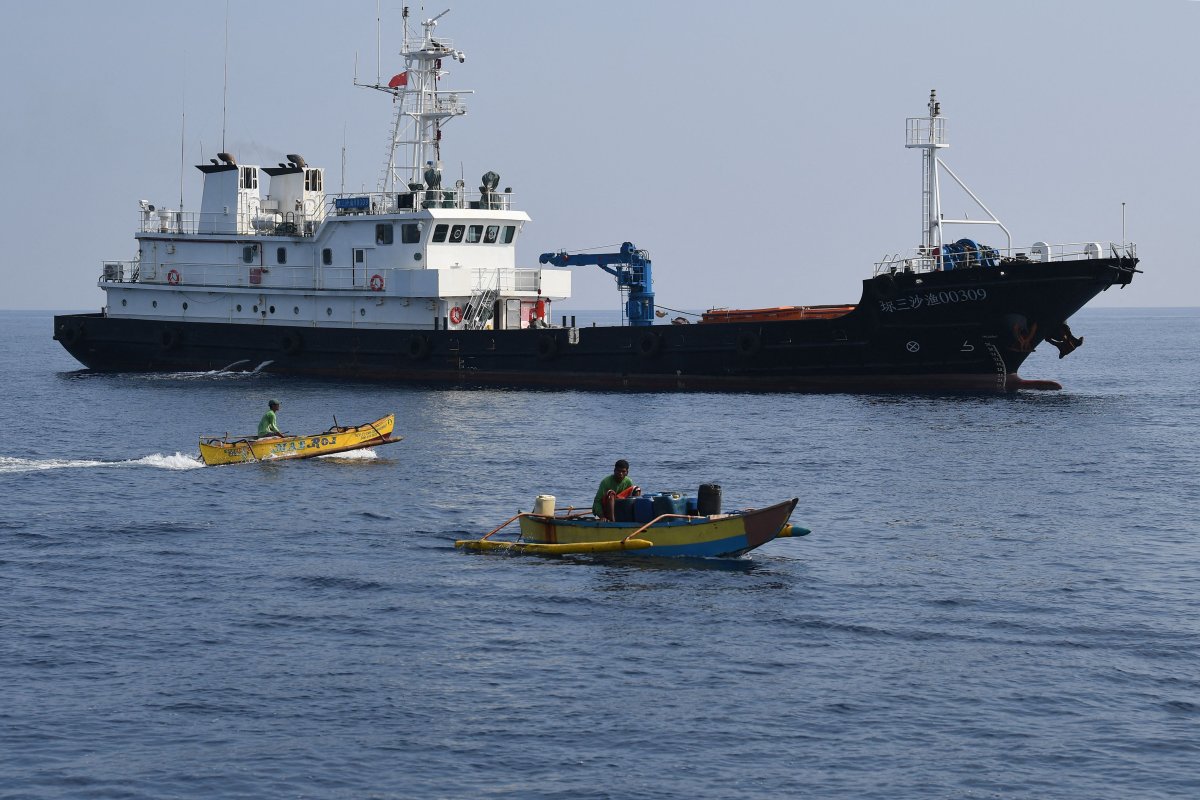
This photo taken on September 20, 2023, shows Philippine fishermen aboard their wooden boats sailing past a Chinese maritime militia vessel near the Chinese-controlled Scarborough Shoal in waters of the disputed South China Sea. China, which claims sovereignty over almost the entire South China Sea, snatched control of Scarborough Shoal from the Philippines in 2012. Since then, it has deployed coast guard and other vessels to block or restrict access to the fishing ground that has been tapped by generations of Filipinos.TED ALJIBE/AFP VIA GETTY IMAGES
The maritime militia fleet is the vanguard of Beijing’s strategy to reshape the geopolitical landscape in the region, experts say, with its blue-hulled ships a frequent sight at territorial standoffs in the South China Sea.
The maritime militia is considered by analysts to be China’s third sea force alongside its navy and coast guard. The Chinese government maintains the fleet is little more than a group of patriotic fishermen.
Dubbed “little blue men” by Andrew Erickson, professor of strategy at the U.S. Naval War College’s China Maritime Studies Institute, the ships regularly join China’s coast guard in blockades against supply missions to a Philippine military outpost at the Spratly Islands’ Second Thomas Shoal, including the most recent tense showdown on December 10. A blockading militia ship was involved in a collision with a Philippine coast guard boat in October, and Manila accused another of using a sonic weapon against a fisheries bureau convoy on December 9.
The National Task Force West Philippine Sea (NTFWPS) vehemently condemns the illegal and aggressive actions carried out by the Chinese Coast Guard and Chinese Maritime Militia against the civilian Bureau of Fisheries and Aquatic Resources (BFAR) vessels Datu Sanday, Datu Bankaw, and Datu Tamblot today during a regular BFAR humanitarian and support mission of providing oil subsidy and grocery packs to over 30 Filipino fishing vessels near Bajo De Masinloc in the West Philippine Sea. As of this reporting the mission is on-going. Continue reading Statement of the National Task Force for the West Philippine Sea→



 Đọt Chuối Non