Dear everyone,
Below is the link to the World Happiness Report 2013 by the Earth Institute of Columbia University.Viet Nam ranks 63 out of 156 country.The report has 170 pages and you can download it here.
Wish you a great day!
Hoành

Dear everyone,
Below is the link to the World Happiness Report 2013 by the Earth Institute of Columbia University.Viet Nam ranks 63 out of 156 country.The report has 170 pages and you can download it here.
Wish you a great day!
Hoành
Đường xá New York chật chội, nguy hiểm.
Janette Sadik-Khan, Giám đốc giao thông của thành phố New York nói về thí nghiệm 6 năm làm đường phố New York thân thiện hơn với người đi bộ và xe đạp, cho người dân nhiều chỗ để đi bộ và ngồi chơi, làm giao thông xe cộ nhanh hơn, các tiệm buôn bán tăng lợi tức, và thành phố thấy thoáng mát hơn, mà tốn rất ít tiền–chỉ cần sơn và một ít bàn ghế.
Foreign direct investment (FDI) is a major driver of economic growth in many countries in the Association of Southeast Asian Nations (ASEAN). ASEAN’s five largest economies – Indonesia, Malaysia, the Philippines, Singapore, Thailand, and Vietnam – have become increasingly attractive to international investors, partly as a result of rising production and wages in China and India. At the same time, some ASEAN countries have tackled corruption and inflation, taken steps to invest in infrastructure, and liberalized their economies to attract more foreign capital. We explore FDI trends in ASEAN by the numbers.
Los Angeles Times
UC Berkeley researchers pull together data on ancient wars, road rage and more, and conclude that violence may increase between now and 2050 because of higher temperatures and extreme rainfall patterns.
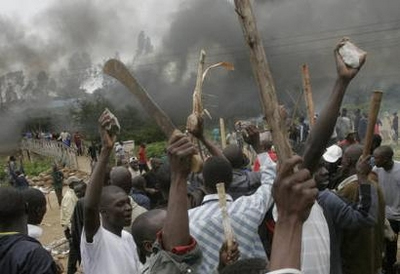
August 01, 2013, By Monte Morin
Long before scientists began to study global warming, author Raymond Chandler described the violent effects of dry, “oven-hot” Santa Ana winds gusting through the city of Los Angeles.
Continue reading Violence will rise as climate changes, scientists predict
Kim Ki-hoon earns $4 million a year in South Korea, where he is known as a rock-star teacher—a combination of words not typically heard in the rest of the world. Mr. Kim has been teaching for over 20 years, all of them in the country’s private, after-school tutoring academies, known as hagwons. Unlike most teachers across the globe, he is paid according to the demand for his skills—and he is in high demand.
![[image]](https://i0.wp.com/si.wsj.net/public/resources/images/RV-AL211_TEACHE_DV_20130802162509.jpg) SeongJoon Cho for The Wall Street Journal
SeongJoon Cho for The Wall Street Journal

Hi cả nhà,
Em có xem mấy video tại Ted.com về âm nhạc rất hay, em vừa được mở mang đầu óc, vừa có cảm hứng và được học thêm tiếng Anh.
Em chia sẻ với cả nhà, chúc cả nhà cuối tuần vui vẻ. Continue reading Âm nhạc cuối tuần
Bernie Krause has been recording wild soundscapes — the wind in the trees, the chirping of birds, the subtle sounds of insect larvae — for 45 years. In that time, he has seen many environments radically altered by humans, sometimes even by practices thought to be environmentally safe. A surprising look at what we can learn through nature’s symphonies, from the grunting of a sea anemone to the sad calls of a beaver in mourning.
Bernie Krause’s legendary soundscapes uncover nature’s rich sonic tapestry — along with some unexpected results.
Dear everyone,
This “Overview of Corruption and Anti-Corruption in Vietnam” was done on Jan 27, 2012 by Transparency International. It is still wholly relevant today.
You can read and download the Overview at
Very good and easy reading.
Have a good day.
Hoanh
http://dailycaller.com/2013/07/17/jimmy-carter-america-no-longer-has-a-functioning-democracy/
8:56 PM 07/17/2013
Katie McHugh
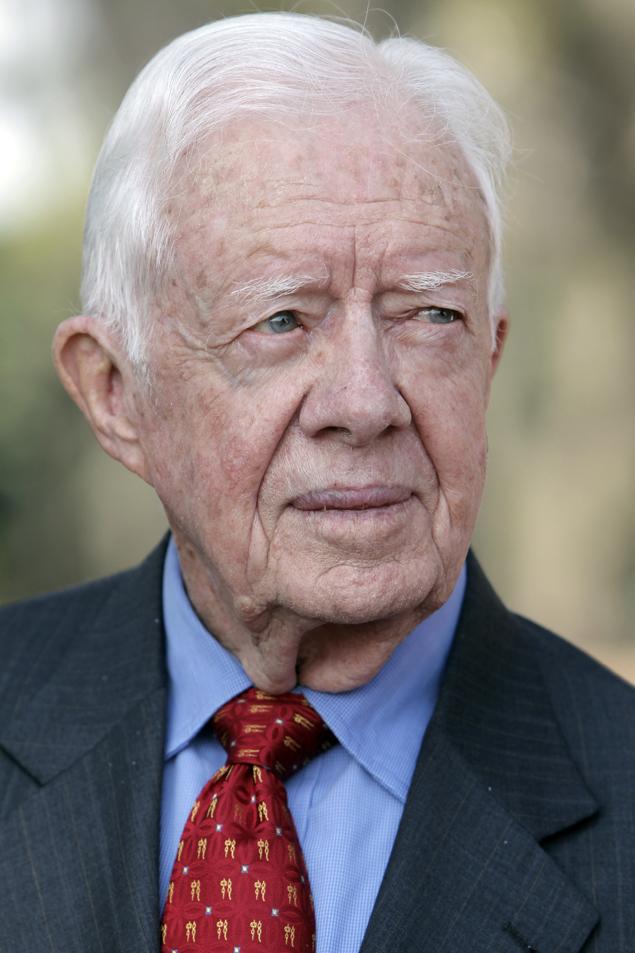 Former president Jimmy Carter condemned the effect U.S. intelligence programs had on U.S. moral authority in the wake of NSA revelations brought to light by leaker Edward Snowden, Der Spiegel reports.
“America has no functioning democracy,” Carter said at a meeting of The Atlantic Bridge in Atlanta, Georgia on Tuesday.
Carter also claimed there was currently no reason for him to be “optimistic” about Egypt’s internal conflicts and mused whether the standards The Carter Center applies to foreign elections could be fulfilled by U.S. elections, which he believes are plagued by confusing campaign rules and a lack of restrictions on free speech in the wake of the Supreme Court’s Citizens United ruling.
Continue reading Jimmy Carter: ‘America no longer has a functioning democracy’
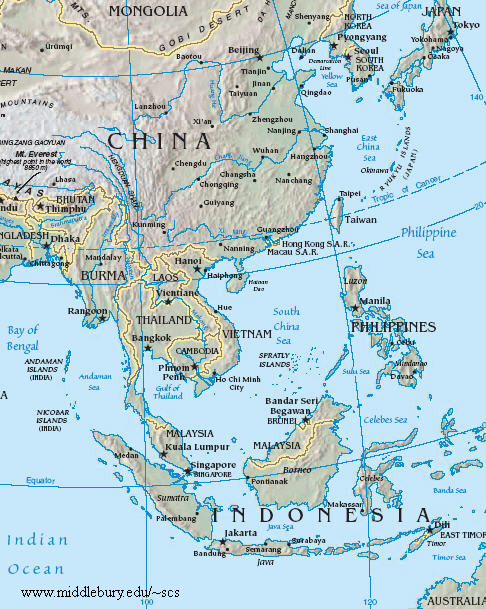 The Sumitro Chair for Southeast Asia Studies at CSIS is pleased to announce the release of our latest report, The South China Sea in Focus: Clarifying the Limits of Maritime Dispute, by Research Associate Gregory Poling.
Satellite imagery and geospatial analysis tools offer an unprecedented opportunity to harness new technologies in order to help resolve boundary disputes. The South China Sea in Focus uses these tools to provide a first and necessary step toward tackling the overlapping maritime disputes in the South China Sea: determining which waters are and are not in dispute under international law.
The report opens with a set of geographic information system (GIS)–based maps that provide an easily understandable benchmark against which policymakers and academics can judge the claims and actions of the South China Sea claimants. More detailed color maps and methodological information follow for those who want to dig deeper into the claims and the report’s conclusions.
To download the full report [from CSIS site] or order a hard copy, please click here.
Kiến trúc sư Michael Green nói về kinh nghiệm xây cao ốc, 20 tầng hay hơn, chỉ toàn bằng gỗ, giúp bảo vệ môi trường sống của chúng ta.
Russian defense minister Sergei Shoigu met with Vietnamese defense minister Phung Quang Thanh in Hanoi on March 5 to discuss strengthening maritime defense ties between their two countries. Following Japanese foreign minister Fumio Kishida’s January visit to Manila, the Philippines announced on February 11 that Japan will be donating ships to the Philippine Coast Guard in an effort to reinvigorate the bilateral security partnership. We look at the Philippines’ and Vietnam’s procurements and strengthening defense ties with their regional neighbors by the numbers:
Continue reading By the Numbers: Vietnam and the Philippines strengthen Air and Sea Capabilities
TDH: It is obvious that China exports its products at unreasonably lơw prices on the world market by subsidizing its export firms, unfairly low-balling other countries’ firms around the world. This is typical monopolistic game. And the world obviously deosn’t have enough knowledge and the will to fight back.
Last week, LDK Solar, a struggling Chinese manufacturer of solar wafers and panels, announced that it had missed $24 million in bond payments. This news followed the bankruptcy in March of Wuxi Suntech, the main operating subsidiary of the world’s largest maker of solar panels, after it defaulted on a $541 million bond payment.
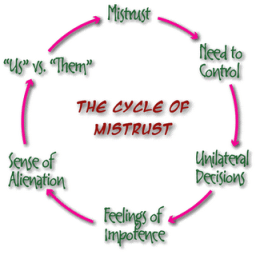 Any of you who have ever read “Romance of the Three Kingdoms” will know that Cao Cao is the most suspicious man in the world. Therefore, we have a saying “Overly suspicious like Cao Cao”. I remember when I was little, I extremely disliked Cao Cao when I read this novel, yet I kept thinking to myself: “Perhaps I should never be as suspicious to the point of cruelty as Cao Cao did, but maybe suspicion is something I should learn more about, otherwise how do I survive in this world?” And this question has followed me for many years as I grow up. Continue reading Suspicious?

 Đọt Chuối Non