Tag Archives: trà đàm

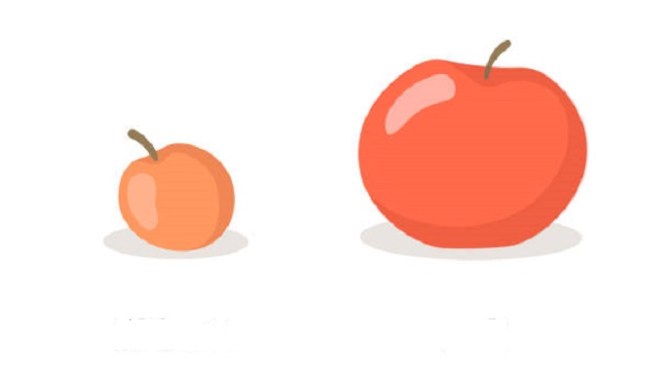
Small and big

Dear Brothers and Sisters,

We all want big things – big house, big car, big job, big position, big money, big power, big name…

Who want small stuff?

But here is the important point: If you do anything very well, you shall have big name and/or big money and/or big power, whether you like it or not. You cannot stop the big things coming to you when you are very good at something. Continue reading Small and big

Goal and non-attachment

Dear Brothers and Sisters,

We have talked about having a major goal in each period of our life, and persistently aiming at that goal to move forward until we reach the goal. Then setting a new goal for the next period. Most of the time, we work more effectively if we have a clear goal to pursuit.

However, if you are so hung up about your goal, you will become attached to it, with all the harmful effects of attachment. For example, you have a goal of having your own house before the age of 30. And you really focus on making money to fulfill that goal, to the degree that you are willing to join a corruption gang to do bribery deals, to make quick money. That is attachment with potential jail sentences. Continue reading Goal and non-attachment

How to practice non-attachment

Dear Brothers and Sisters,

The best and flexible way of living is non-attachment aka non-grasping. How to practice non-attachment?

Non-attachment is much harder than it sounds. Take a look at your own living you will see you attach to thousands of things – coffee in the morning (I can’t live through the day without coffee); I hate Hue people; if you have no religion, you’re no good; I hate tattooed people; no swearing; no slang; I want money and more money… You can see that we are attaching to many things – religion, politics, money, power, position, sacred books, hometown, country, foreign countries, culture, arts… Continue reading How to practice non-attachment

Name, reputation and honor

Dear Brothers and Sisters,

We all have learned to protect our name, our reputation and our honor fiercely, ready to stand up and fight to defend them when they are under attacked.

Name, reputation and honor are probably the same thing in Vietnamese. Name is danh; reputation is danh tiếng (voice/sound of name); honor is danh dự (praised name, meaning reputation too).

So, these threes are actually the same thing: our name (or our good name, if you will).

What does that mean? Continue reading Name, reputation and honor

Giving and receiving

Dear Brothers and Sisters

This is Zen story numbered 53 in 101 Zen Stories.

The Giver Should Be Thankful

While Seisetsu was the master of Engaku in Kamakura he required larger quarters, since those in which he was teaching were overcrowded. Umezu Seibei a merchant of Edo, decided to donate five hundred pieces of gold called ryo toward the construction of a more commodious school. This money he brought to the teacher. Seisetsu said: “All right. I will take it.”

Umezu gave Seisetsu the sack of gold, but he was dissatisfied with the attitude of the teacher. One might live a whole year on three ryo, and the merchant had not even been thanked for five hundred.

– “In that sack are five hundred ryo,” hinted Umezu.
– “You told me that before,” replied Seisetsu.
– “Even if I am a wealthy merchant, five hundred ryo is a lot of money,” said Umezu.
– “Do you want me to thank you for it?” asked Seisetsi.
– “You ought to,” replied Umezu.
– “Why should I?” inquired Seisetsu. “The giver should be thankful.”

Of course, the giver should be thankful, because the receiver has given him an opportunity to do a good deed. Most of us have Umezu’s attitude – when we give, we want the receiver to thank us. That is an arrogant attitude, which takes all the blessings out of the gift. When we give, heaven blesses us, if we have the right attitude – happy and thankful with an opportunity to do a good deed. However, if we are arrogant when giving and want the receiver to thank, we have no blessings from heaven, because heaven doesn’t approve arrogancy.

The most important point, however, is that if we give with an arrogant attitude, we just use the gift to commit the sin of arrogance in our heart. The gift becomes an instrument of sin. We make ourself sinful by giving a gift.

Kahlil Griban in The Prophet wrote beautifully about giving in the chapter “On Giving”:

Then a rich man said, Speak to us of Giving.

And he answered:

You give but little when you give of your possessions.
It is when you give of yourself that you truly give.
For what are your possessions but things you keep and guard for fear you may need them tomorrow?
And tomorrow, what shall tomorrow bring to the overprudent dog burying bones in the trackless sand as he follows the pilgrims to the holy city?
And what is fear of need but need itself?
Is not dread of thirst when your well is full, the thirst that is unquenchable?

There are those who give little of the much which they have—and they give it for recognition and their hidden desire makes their gifts unwholesome.
And there are those who have little and give it all.
These are the believers in life and the bounty of life, and their coffer is never empty.
There are those who give with joy, and that joy is their reward.
And there are those who give with pain, and that pain is their baptism.
And there are those who give and know not pain in giving, nor do they seek joy, nor give with mindfulness of virtue;
They give as in yonder valley the myrtle breathes its fragrance into space.
Through the hands of such as these God speaks, and from behind their eyes He smiles upon the earth.

It is well to give when asked, but it is better to give unasked, through understanding;
And to the open-handed the search for one who shall receive is joy greater than giving.
And is there aught you would withhold?
All you have shall some day be given;
Therefore give now, that the season of giving may be yours and not your inheritors’.

You often say, “I would give, but only to the deserving.”
The trees in your orchard say not so, nor the flocks in your pasture.
They give that they may live, for to withhold is to perish.
Surely he who is worthy to receive his days and his nights, is worthy of all else from you.
And he who has deserved to drink from the ocean of life deserves to fill his cup from your little stream.
And what desert greater shall there be, than that which lies in the courage and the confidence, nay the charity, of receiving?
And who are you that men should rend their bosom and unveil their pride, that you may see their worth naked and their pride unabashed?
See first that you yourself deserve to be a giver, and an instrument of giving.
For in truth it is life that gives unto life—while you, who deem yourself a giver, are but a witness.

And you receivers—and you are all receivers—assume no weight of gratitude, lest you lay a yoke upon yourself and upon him who gives.
Rather rise together with the giver on his gifts as on wings;
For to be overmindful of your debt, is to doubt his generosity who has the freehearted earth for mother, and God for father.

The Prophet, Kahlil Gibran.

Giver, see first that you yourself deserve to be a giver, and an instrument of giving.
And you receivers—and you are all receivers—assume no weight of gratitude, lest you lay a yoke upon yourself and upon him who gives.

Wish us all know how to give and how to receive.

With compassion,

Hoành

© copyright 2024
Trần Đình Hoành
Permitted for non-commercial use
www.dotchuoinon.com

Forgive

Dear Brothers and Sisters,

Although many Buddhists talks about forgiveness, it seems there is no concept of forgiving in the orthodox Buddhist philosophy.

When someone does something wrong to you, he has just sown a bad seed which will give him bad fruit. So, indeed he is sinful to himself, because he causes harm to himself. You may be hurt by his wrongdoing, but you don’t have the power to forgive him – he sows and he will reap, under the law of cause and effect. Your “forgiveness” to him has no effects on the causal law. Continue reading Forgive

Sowing-reaping relations

Dear Brothers and Sisters,

Below are 4 verses from the Dhammapada, the most prominent sutra in the Theravada tradition (Phật giáo Nguyên thủy). Poeple think that this sutra talks about the causal relationship between what we do in this life and what we receive in the next life (and many lives after). But I think this sutra, and all other Buddhist sutras, can fit neatly into this current life – what we sow and reap now and hereafter, in this current life on earth.

Continue reading Sowing-reaping relations

Không có con – là bất hạnh hay là ân phúc?

Chào các bạn,

Với các cặp đôi yêu nhau và muốn có con, thì chuyện khó có con hay không thể có con, được xem như là chuyện đau buồn bất hạnh.

Con cái là lộc Trời cho. Trời không cho ta đường con cái, thì Trời cho ta đường khác. Bây giờ ta chưa thấy đường khác đó thì sau này khi bình tâm lại, hay khi Trời mở mắt cho ta, ta sẽ thấy. Dù Trời cho ta đường nào, đường nào cũng là đường tốt vì đường nào cũng là đường Trời cho. Vì Trời yêu ta, Trời luôn cho ta đường tốt nhất. Continue reading Không có con – là bất hạnh hay là ân phúc?

Is there a God?

Dear Brothers and Sisters

That question has troubled numerous philosophers throughout history, and no one has been able to definitely answered it so that people don’t have to ask that question anymore. Yes, the question will stay alive as long as human is still around.

We cannot use language and logic to determine the existence of God, because God is a spirit, and spirit is invisible. When you talk about what you can’t see with your eyes (plus whatever equipment to aid your vision), it is hard to say anything, just like talking about ghost and demon.

Continue reading Is there a God?

Thụ tinh trong ống nghiệm – hành trình tìm con hay giết con?

Chào các bạn,

Thụ tinh trong ống nghiệm (In vitro fertilization, viết tắt IVF) là gì? Diễn ra như thế nào? Có gì sai trái về mặt đạo đức và tâm linh không? 

“Người đầu tiên sinh con nhờ phương pháp thụ tinh trong ống nghiệm IVF là một phụ nữ ở Anh Quốc vào năm 1978. Người phụ nữ này không thể thụ thai theo cách tự nhiên, vòi trứng của cô bị tắc nên tinh trùng không thể vào để kết hợp với trứng. Nhân viên y tế đã lấy ra một trứng trưởng thành của cô, rồi cho kết hợp với tinh trùng của chồng trên đĩa thủy tinh để tạo thành phôi thai. Sau khi nuôi dưỡng bên ngoài, phôi thai được cấy vào tử cung của cô và làm tổ ở đó. Về sau, cô đã sinh một bé gái. Kỹ thuật đó, cũng như những hình thức khác của nó, được gọi là thụ tinh trong ống nghiệm.

Dù cách tiến hành kỹ thuật này ở mọi nước không hoàn toàn giống nhau, nhưng nhìn chung IVF bao gồm các bước sau: Người vợ được tiêm thuốc kích thích buồng trứng trong vài tuần để thúc đẩy trứng rụng nhiều. Người chồng có thể được yêu cầu lấy tinh trùng qua việc thủ dâm. Các trứng và tinh trùng đã lọc rửa được kết hợp với nhau trong phòng thí nghiệm. Nhiều trứng có thể thụ tinh, rồi bắt đầu phân chia và phát triển thành phôi thai.

Sau khoảng một ngày, kỹ thuật viên kiểm tra cẩn thận những phôi thai để phát hiện những phôi bất thường, cũng như biết những phôi nào khỏe mạnh, có thể bám tốt vào nội mạc tử cung. Vào khoảng ngày thứ ba, thay vì cấy một phôi, người ta thường cấy hai hoặc ba phôi tốt nhất vào tử cung của người vợ để tăng khả năng mang thai. Nếu một hoặc nhiều phôi bám vào nội mạc tử cung thì người vợ có thai và có thể mong đợi việc sinh con.

Còn các phôi thai dư, gồm những phôi dường như yếu hơn hoặc không bình thường, thì sao? Nếu cứ để vậy thì những phôi thai ấy sẽ nhanh bị hư. Vì thế, người ta thường trữ lạnh những phôi thai đó trong nitơ lỏng. Phòng khi ca IVF đầu tiên thất bại, thì một số phôi lưu trữ sẽ được dùng trong ca sau mà không tốn kém nhiều. Tuy nhiên, điều này phát sinh những vấn đề về luân lý. Ví dụ một cặp vợ chồng đã làm IVF nêu câu hỏi: ‘Các phôi thai không được sử dụng hết, những phôi còn dư được đông lạnh và lưu trữ. Vậy, chúng tôi có phải giữ lại những phôi dư đó hay có thể hủy bỏ?'”(1)

Dù phôi thai được giữ lại hay hủy bỏ, hành động nào cũng xúc phạm đến nhân phẩm con người. Phôi thai được giữ lại, nghĩa là phôi thai được tiếp tục đông lạnh, như con tôm con cá trong tủ đông. Còn phôi thai bị hủy bỏ, nghĩa là phôi thai bị giết. Hành động nào cũng không thể áp dụng với em bé sắp hình thành.

[Cần biết, muốn phôi thai được tiếp tục đông lạnh, cha mẹ phải trả tiền. Nếu không, bệnh viện sẽ hủy phôi thai.(2).]

Hệ thống y tế lớn của tiểu bang Alabama (Mỹ) đã tạm dừng hầu hết các thủ thuật thụ tinh trong ống nghiệm sau khi Tòa án Tối cao của tiểu bang này tuyên bố phôi thai nên được coi là trẻ em (3). 

Thụ tinh trong ống nghiệm, vì lẽ đó, rốt cuộc là con đường tìm con hay là con đường giết con? 

Thụ tinh trong ống nghiệm có thể giúp 1 em bé ra đời nhưng lại khiến ít nhất 1-5 em bé khác (4)(5) bị giết khi còn trứng nước. Sao ta có thể để chuyện đó diễn ra được? Đó là việc làm tồi tệ, không có đạo đức và tâm linh.

Tại sao ta lại quan tâm đến chuyện này?

Xin thưa, “Việt Nam là nước thực hiện IVF nhiều nhất khu vực ASEAN. Nước ta có khoảng 50.000 trường hợp IVF mỗi năm (6).” 

Mỗi năm nước ta có khoảng 50.000 trẻ ra đời nhờ IVF thì cũng có khoảng 50.000-250.000 trẻ bị giết.

Trong khoảng 50.000 trẻ ra đời mỗi năm nhờ IVF này, các bạn thử nghĩ xem có bao nhiêu trẻ là gái và bao nhiêu trẻ là trai? Nên nhớ, mỗi năm nước ta có khoảng 40.800 bé gái không được sinh (7) và nước ta đứng thứ 3 trên thế giới về tỷ lệ mất cân bằng giới tính khi sinh cao nhất, chỉ sau Trung Quốc và Ấn Độ – hai quốc gia đông dân nhất thế giới (8).

Các bạn còn đang cân nhắc câu trả lời thì nên nghiên cứu thêm các cuộc Săn con trai bằng IVF, ví dụ như cuộc này – “7 năm, 5 lần làm thụ tinh ống nghiệm, tốn hơn 1 tỷ đồng nhưng vợ chồng Bích Thảo vẫn quyết tâm theo đuổi dù biết lựa chọn giới tính thai nhi là trái pháp luật”(9).

Lựa chọn đẻ con trai hay gái đã tội lỗi rồi. Lựa chọn đẻ con trai bằng thụ tinh trong ống nghiệm IVF lại càng tội lỗi hơn nữa. Vì một đứa con, đặc biệt là con trai, mà biết bao đứa con khác phải chết. Không còn đạo đức làm người nữa.

Phật giáo, Kitô giáo (Công giáo, Chính thống giáo và Tin Lành), Hồi giáo, Do Thái giáo, Ấn giáo (Hindu giáo) và mọi tôn giáo khác trên thế giới đều cấm sát sinh. Sát các phôi thai dữ dội như thế thì tội lỗi cao đến mức nào?

Hãy sám hối và cầu nguyện.

Phạm Thu Hương

Tham khảo:

(1) Thụ tinh trong ống nghiệm, Nhân chứng Giê-hô-va, jw.org

(2) Quy trình hủy phôi đông lạnh, IVFMD, 24-5-2022

(3) A major Alabama health system paused most I.V.F. procedures after the state’s Supreme Court said embryos should be considered children, New York Times, 21-2-2024

(4) “Trong IVF, chỉ có khoảng 60-70% trứng trưởng thành sẽ tạo thành phôi. Khoảng 95% noãn thụ tinh với tinh trùng sau đó sẽ phát triển thành phôi ngày 2; 70-80% noãn thụ tinh sẽ phát triển đến phôi ngày 3; khoảng 50% noãn thụ tinh sẽ phát triển đến phôi ngày 5. Nghĩa là nếu nuôi cấy càng kéo dài, số phôi còn lại càng thấp.

Ví dụ: Nếu chọc hút lấy được 10 trứng trưởng thành thì số phôi trung bình có được khi nuôi cấy đến ngày 2 là 6 phôi; đến ngày 3 là 4-5 phôi, đến ngày 5 là 2-3 phôi. Đây là ước tính trung bình, mỗi trường hợp có thể khác.” – 5 yếu tố tăng khả năng thành công khi thụ tinh trong ống nghiệm, tamanhhospital, 5-6-2017

(5) “…mỗi chu kỳ IVF, bác sĩ thường hướng đến chọc hút được 8-15 trứng đạt tiêu chuẩn để tạo thành nhiều phôi…” – Phôi thai có thể trữ đông bao nhiêu năm?, VNExpress, 29-11-2023

(6) ‘Nở rộ’ trung tâm hỗ trợ sinh sản, người hiếm muộn thành khách hàng tiềm năng – 3 kỳ, VietnamNet, 21-6-2023

(7) Phá thai – Thảm họa quốc gia, PTH, 18-6-2021

(8) Vietnam among top countries of sex ratio imbalance at birth, VietnamNet, 16-10-2020

(9) Săn con trai bằng IVF, VNExpress, 8-10-2022

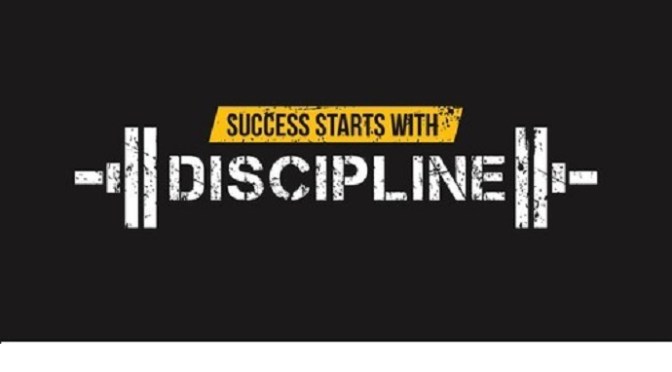
Discipline

Dear Brothers and Sisters,

Do you know the real difference between a soldier and a civilian? The difference is discipline. A civilian very much can live any way he likes. The soldier has to live with the military discipline, which is known worldwide as the toughest discipline anywhere.

Discipline means rules – everything has a rule. Military discipline is: When you eat, when you stop eating, when you go to bed, when you wake up, how to do your bed, how your shoes should look… Every small or big thing of your daily living has at least one rule, sometimes more than one. Continue reading Discipline

Blessed are the meek

Dear Brothers and Sisters,

In the Beatitudes, which is Jesus’ first sermon on the mount, there is an intriguing sentence: “Blessed are the meek, for they shall inherit the earth.” (Matthew 5:5).

The meek are the gentle people, humbly patient or quiet in nature, especially when under provocation from others. The meek avoid confrontation, don’t fight, don’t grab, and try to maintain the peace at all time. Continue reading Blessed are the meek