Council on Foreign Relations: Monitor World Conflicts
The Global Conflict Tracker identifies conflicts around the world, follows their evolution, and assesses their impact on U.S. national security. Our newly redesigned and expertly researched tool from CFR’s Center for Preventive Action includes live data, background information, the latest developments, and critical resources to provide insight on the world’s strife.
Conflict in Ukraine Conflict status: Worsening Russia’s military invasion risks a wider European conflict. Stay up to date.
War in Afghanistan Conflict status: Worsening Decades of instability continue amid the 2021 Taliban takeover. Read about the history.
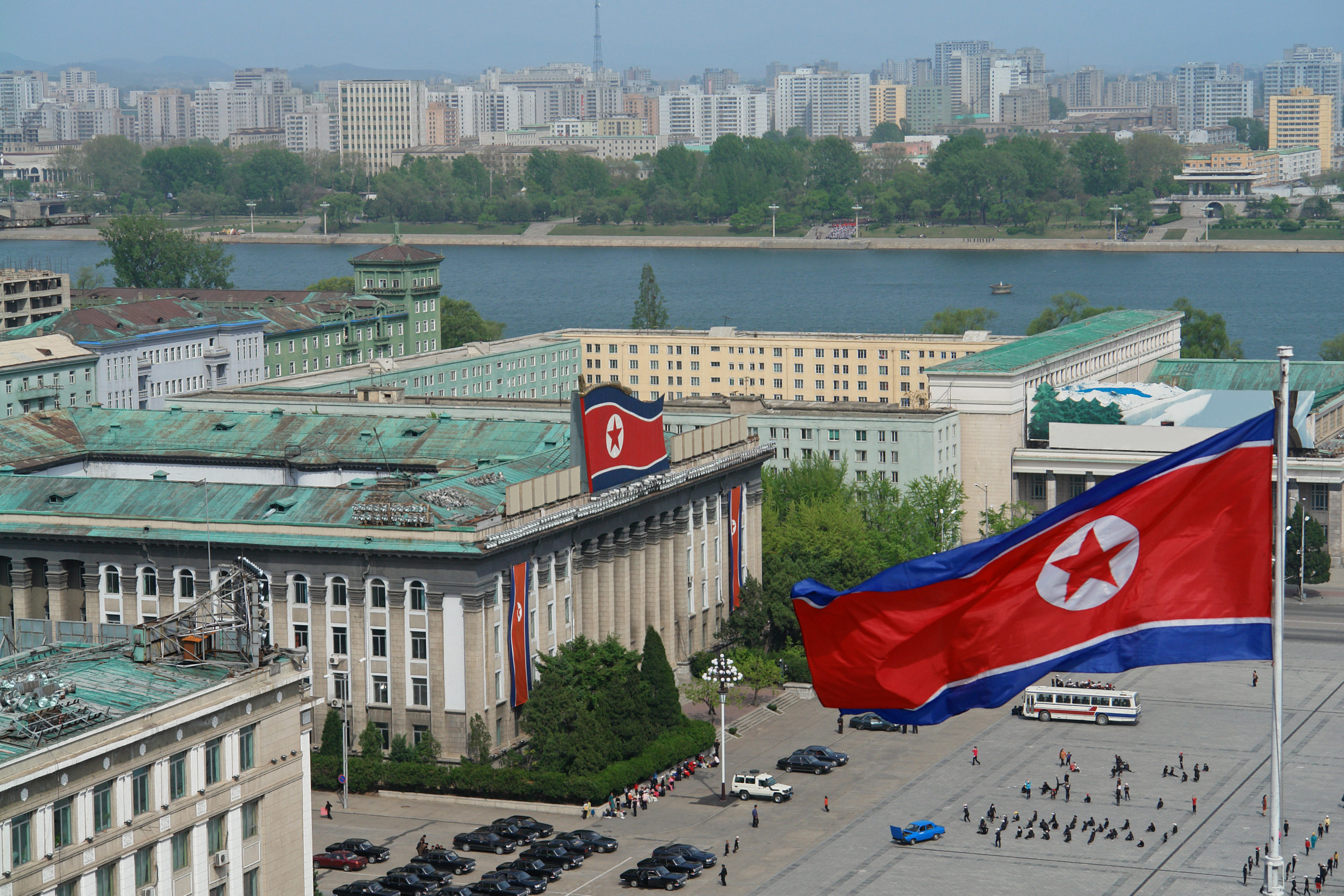
North Korea Crisis Conflict status: Unchanging The nation’s leader continues to provoke a global crisis with his nuclear ambitions. Learn about attempts at rapprochement.
Conflict with Al-Shabab Conflict status: Unchanging Up to 450 U.S. troops return to Somalia for a mission against the al-Qaeda affiliate. Stay current.
(CNN) Shortly after Donald Trump was elected President of the United States, Nobel laureate Toni Morrison wrote in The New Yorker: “Unlike any nation in Europe, the United States holds whiteness as the unifying force. Here, for many people, the definition of ‘Americanness’ is color.” Reflecting on efforts — largely by White men — to define themselves by sustaining that poisonous definition, Morrison argues that those “who are prepared to abandon their humanity out of fear of black men and women, suggest the true horror of lost status.”
The biggest announcement from President Joe Biden’s trip to Asia may be the one that got the least attention. The Quad, a grouping consisting of Australia, India, Japan, and the United States, has just announced a maritime domain awareness partnership that will provide a new stream of data from commercial satellites to countries across the Indo-Pacific. This is a substantial addition to the Quad’s agenda and one of its most promising initiatives to date. Critically, it satisfies the desire of most regional partners for the Quad to provide public goods and address the needs of smaller states in and the Indian Ocean, Southeast Asia, and the Pacific Islands. If properly executed, this effort could be a flagship project for demonstrating the Quad’s value to regional countries. Continue reading THE QUAD GOES TO SEA→
By Graeme DobellGraeme Dobell (graemedobell@aspi.org.au) is Journalist Fellow at the Australian Strategic Policy Institute. He has been reporting on Australian and international politics, foreign affairs and defense, and the Asia-Pacific since 1975.
Australia’s election: Quad continuity and climate alignment, with nuclear disagreements
Sworn-in as Australia’s new prime minister, within hours Anthony Albanese was flying to Japan for the summit of the Quadrilateral Security Dialogue (“Quad”).
An accident of timing—the May 24 summit following Australia’s May 21 election—offered the leader of the Australian Labor Party plenty of flying-start symbolism.
President Joe Biden is keeping Iran’s Islamic Revolutionary Guards Corps on a list of foreign terrorist organizations, according to officials. The decision could complicate international efforts to restore a 2015 deal meant to restrict Iran’s nuclear activities in exchange for sanctions relief. Lifting the IRGC’s 2019 terrorist designation (see background) has been a precondition for Iran to return to talks with global leaders, who have been working on reviving the deal for over a year amid rising tensions between Arab nations and Iran-allied groups.
Editor’s note: There will be no Daily Brief on Monday, May 30, in observance of Memorial Day.
Top of the Agenda
Blinken Details U.S. Strategy Toward ChinaU.S. Secretary of State Antony Blinken laid out (CNN) the Joe Biden administration’s strategy toward China in a speech yesterday (State Dept.), calling Beijing “the most serious long-term threat to the international order.” Blinken said Washington is determined to avoid a conflict or new Cold War with China.
The U.S. approach—called “invest, align, compete”—hinges on efforts to invest in domestic sources of strength, align with allies and partners, and compete with China on issues such as technological innovation. Blinken reiterated that the U.S. strategy toward Taiwan is unchanged, and that Washington seeks to engage and cooperate with China where possible, especially on climate change. Officials said President Biden could hold a phone call (Politico) with Chinese President Xi Jinping within weeks.
This week, policymakers, business executives and other public figures gathered in Davos, Switzerland where the World Economic Forum’s largest meeting took place in person after a two-year hiatus. We sat this one out, but our warning from Davos 2020 on how corruption eats away at democracy still rings true.
Ukrainian President Volodymyr Zelenskyy addresses Davos 2022 on 23 May.
Photo: Sikarin Fon Thanachaiary/World Economic Forum on Flickr Continue reading No more parties in Davos for Kleptocrats→
Today, we – Prime Minister Anthony Albanese of Australia, Prime Minister Narendra Modi of India, Prime Minister Fumio Kishida of Japan, and President Joe Biden of the United States – convene in Tokyo to renew our steadfast commitment to a free and open Indo-Pacific that is inclusive and resilient.
Just over one year ago, Leaders met for the first time. Today in Tokyo, we convene for our fourth meeting, and our second in person, to demonstrate, at a time of profound global challenge, that the Quad is a force for good, committed to bringing tangible benefits to the region. In our first year of cooperation, we established the Quad’s dedication to a positive and practical agenda; in our second year, we are committed to deliver on this promise, making the region more resilient for the 21st century.
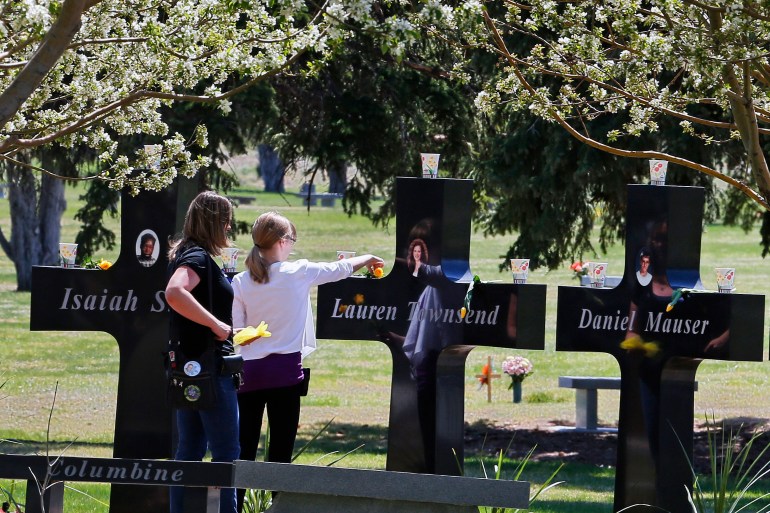
A massacre at a Texas primary school has again drawn attention to the powerful gun lobby in the United States, with Democratic officials blaming Republican legislators for remaining beholden to influential pro-gun interests that advocates say have stalled national gun reforms.
President Joe Biden, speaking hours after an 18-year-old gunman stormed the Robb Elementary School in Uvalde, Texas, fatally shooting 19 children and two teachers on Tuesday, asked: “When, in God’s name, are we going to stand up to the gun lobby?”.
Former President Barack Obama, who was in office when a gunman killed 20 children and six adults at the Sandy Hook Elementary School in Newtown, Connecticut in 2012, said the US “is paralysed, not by fear, but by a gun lobby and a political party that have shown no willingness to act in any way that might help prevent these tragedies”.
Good morning. The Times reveals how Haiti became the poorest country in the Americas.
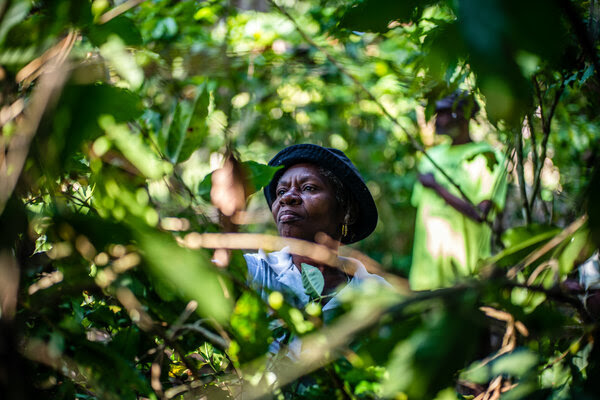
Adrienne Present harvesting coffee beans in Haiti.Federico Rios for The New York Times
Catherine Porter, New Yorl Times newsletter
Haiti is one of the poorest countries in the world, and a new Times investigative series explores why. One stunning detail: France demanded reparations from Haitians it once enslaved. That debt hamstrung Haiti’s economy for decades — and kept it from building even basic social services, like sewage and electricity.
The series is based on more than a year of reporting, troves of centuries-old documents and an analysis of financial records. I spoke to my colleague Catherine Porter, one of the four reporters who led the project, about what they found.
Why tell Haiti’s story now?
I’ve been covering Haiti since the earthquake in 2010, and returned dozens of times. Any journalist that spends time in Haiti continually confronts the same question: Why are things so bad here?
Make no mistake: North Korea leader Kim Jong Un truly believes he needs nuclear weapons.
For years, that need reflected a single objective: the protection and maintenance of his regime. A nuclear arsenal was a defensive tool—a deterrent—to ensure that no foreign power would attack his country and end the Cold War division of the Korean Peninsula. Kim’s rationale for possessing nuclear weapons seems to be shifting and his rhetoric and accompanying military developments indicate a new focus—the acquisition of a war-fighting capability.
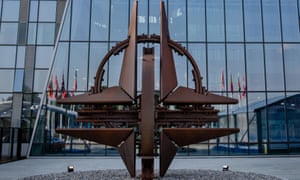
After months of flirting with it, Finland and Sweden have finally decided they want to tie the knot with NATO and join the military alliance. (Thanks again, Russian President Vladimir Putin.) The two countries are meeting with U.S. President Joe Biden on Thursday morning.
Joining NATO, however, isn’t a simple process, even for two developed democracies with strong militaries that seem like just the right fit for the alliance.
It takes unanimous consent from all 30 NATO members, ratified by votes in parliaments (and in the United States’ case, the Senate) across Europe and North America.

 The
The 





 Đọt Chuối Non