Tag Archives: Năng lượng

Fast and dubious: How electric cars are tiring the Mekong – Xe điện phát triển nóng đang bào mòn Mê Kông

mekongeye.com

This five-part series explores how the acceleration of electric vehicle adoption could increase the demand for rubber—a commodity that has historically driven deforestation and land grabbing across the Mekong region. Experts say the EV transition will boost rubber demand, as EVs need specialized tires that can bear heavier vehicle weight and high torque.

This matters to the Mekong region. Our data analysis shows that Cambodia, Laos, Myanmar, Thailand, and Viet Nam together supply nearly 50% of the world’s natural rubber. About 70% of global rubber goes into tires. Without effective traceability in place, deforestation and land conflicts, many of which are ongoing and affecting the lives and livelihoods of local communities—are unlikely to be solved.

Story by Mekong Eye’s investigation team
This series was produced in partnership with Earth Journalism Network and the Pulitzer Center

Electric vehicles (EVs) are on the rise — from Bangkok to Hanoi to Vientiane — promising a cleaner future as part of the global shift to clean energy, with more than 17 million electric cars sold worldwide in 2024.

But there is still a cost to pay for these ‘green cars’. With their heavier battery weight and higher torque, EVs wear out their tires faster than gasoline-powered cars, and therefore consume more tires throughout their lifetime.

In every tire is natural rubber, the key raw material that ensures durability, elasticity and strength.

The growing demand for EV tires has had significant implications for the Mekong region — Cambodia, Laos, Myanmar, Thailand and Viet Nam — which produces about 50% of the world’s natural rubber and hosts major plants for multinational tire manufacturers and EV makers.

Continue reading Fast and dubious: How electric cars are tiring the Mekong – Xe điện phát triển nóng đang bào mòn Mê Kông

Japan pulls out of Vietnam nuclear project, complicating Hanoi’s power plans​

Reuters.com By Francesco Guarascio and Phuong Nguyen Updated December 8, 2025

Workers repair an electric grid in Hanoi
  • Summary
  • Timeline for Vietnam project too tight, Hanoi envoy says
  • Ties already strained over petrol motorbike ban hurting Honda
  • Demand surging from industry, expanding middle class
  • Extreme weather events also threatening supply

HANOI, Dec 8 (Reuters) – Japan has dropped out of plans to build a major nuclear power plant in Vietnam because the time frame is too tight, Japanese ambassador Naoki Ito told Reuters, potentially complicating Vietnam’s long-term strategy to avoid new power shortages.

Vietnam, home to large manufacturing operations for multinationals including Samsung and Apple, has faced major power blackouts as demand from its huge industrial sector and expanding middle class often outpaces supplies, strained by increasingly frequent extreme weather, such as droughts and typhoons.

The Reuters Power Up newsletter provides everything you need to know about the global energy industry. Sign up here.

“The Japanese side is not in a position to implement the Ninh Thuan 2 project,” the ambassador to Vietnam said, referring to a plant with a planned capacity of 2 to 3.2 gigawatts. The project is part of Vietnam’s strategy to boost power generation capacity.

Continue reading Japan pulls out of Vietnam nuclear project, complicating Hanoi’s power plans​

Nuclear energy: Where China is getting with small modular and fusion reactors

On Oct. 13 of this year, the PRC state media outlet CPNN, reported that China is pulling ahead in advanced nuclear power technology development with the launch of the large-scale production “Hualong One” (also known as HPR1000). As it develops, China not only aims to tackle the transmission bottleneck in the south, but also to export to countries like Pakistan as the PRC’s “business card” to the world.

China’s dual goals of localization and export orientation have long defined its nuclear strategy. Led by state-owned giants such as the China National Nuclear Corporation (CNNC), Beijing has invested heavily in domestic innovation while aggressively expanding into overseas markets. Beijing has sought to expand its reactor sales to markets such as Argentina and the United Kingdom, while also securing control over upstream uranium resources. CNNC’s 2019 acquisition of Namibia’s Rössing Uranium Mine, one of the world’s largest open-pit uranium operations, underscored China’s growing dominance across the nuclear value.

Beijing’s policy support for state-owned enterprises has enabled it to build a vertically integrated nuclear industry, driving rapid advances in small modular reactors (SMRs), fourth-generation technologies, and nuclear fusion research (the Artificial Sun). Furthermore, intensifying US–China competition is reshaping global nuclear exports and deepening the geopolitical risks of dependence on Chinese nuclear systems.

Continue reading Nuclear energy: Where China is getting with small modular and fusion reactors

Time for Vietnam to resolve its renewable energy legal quagmire

fulcrm.sg Published 19 Nov 2025 Le Hong Hiep

In Vietnam, an impasse over feed-in-tariffs for renewable energy producers threatens foreign investors’ confidence in government policies

Afestering legal crisis is threatening to derail Vietnam’s energy development plans. 173 solar and wind projects, representing about US$13 billion in investments, are stuck in limbo due to ongoing disputes regarding their feed-in-tariffs (FITs) – the guaranteed payments that the government would pay for their contribution to the power grid. This situation raises concerns about Vietnam’s business environment and the consistency of its economic policy. If Vietnam does not resolve these disputes promptly, the country could face significant legal, financial, and reputational repercussions.

Between 2018 and 2021, Vietnam experienced a significant boom in renewable energy, primarily fuelled by the government’s commitment to offer attractive 20-year FITs to investors for projects that began commercial operations before designated deadlines. However, in 2023, an investigation by the Government Inspectorate found that many of these projects had not obtained their Construction Completion Acceptance (CCA) certificates before their Commercial Operation Date (COD). Following the inspection, the Ministry of Industry and Trade issued a new circular, effective June 2023, stipulating that renewable energy projects must obtain a CCA certificate before being recognised for COD. This effectively disqualified the affected projects from receiving the original FIT rates.

Continue reading Time for Vietnam to resolve its renewable energy legal quagmire

Kết luận của Tổng Bí thư tại buổi làm việc với Viện Năng lượng Nguyên tử Việt Nam

Nangluongvietnam.vn 10:08 | 17/09/2025

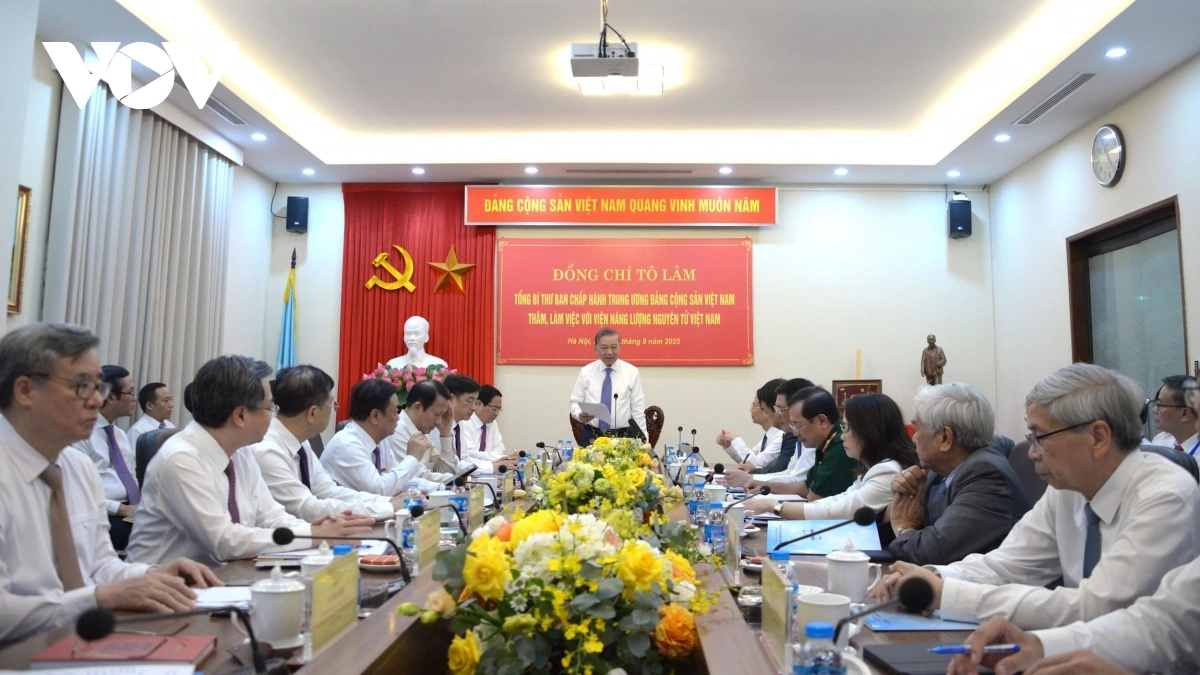
 – Văn phòng Ban Chấp hành Trung ương Đảng vừa có Thông báo số 321-TB/VPTW, ngày 13/9/2025, về Kết luận của Tổng Bí thư Tô Lâm tại buổi làm việc với Viện Năng lượng Nguyên tử Việt Nam (ngày 4/9/2025). Dưới đây là nguyên văn Thông báo Kết luận của Tổng Bí thư.

Ngày 4/9/2025, Tổng Bí thư Tô Lâm đã làm việc với Viện Năng lượng Nguyên tử Việt Nam (VINATOM) tại trụ sở của Viện.

Tham dự buổi làm việc có Thủ tướng Chính phủ Phạm Minh Chính; các Uỷ viên Bộ Chính trị: Nguyễn Duy Ngọc – Chủ nhiệm Uỷ ban Kiểm tra Trung ương, Phó Trưởng Ban Chỉ đạo Trung ương về phát triển khoa học, công nghệ, đổi mới sáng tạo và chuyển đổi số; Lương Tam Quang – Bộ trưởng Bộ Công an; Lê Minh Hoan – Uỷ viên Trung ương Đảng, Phó Chủ tịch Quốc hội.

Continue reading Kết luận của Tổng Bí thư tại buổi làm việc với Viện Năng lượng Nguyên tử Việt Nam

Impact of Trump 2.0 on Southeast Asia’s Energy Geopolitics

Fulcrum.sg Published 3 Mar 2025 Mirza Sadaqat Huda

Trump’s rent-seeking foreign policy pertaining to energy and critical minerals will force Southeast Asian countries to do what they least desire: making a choice between China and the US.

The Trump administration’s insular and rent-seeking foreign policy will significantly alter the geopolitics of energy transition in Southeast Asia. This will manifest in two ways. First, the potential cessation of US involvement in the region’s energy sector will heighten fears of China’s dominance in energy infrastructure projects — including the ASEAN Power Grid (APG). Second, Trump’s intentions of using critical minerals as a bargaining chip for providing military assistance, if applied to the ASEAN region, will impact the regional vision for sustainable mineral development.

The shutting down of the United States Agency for International Development (USAID), an important player in the energy sector, will intensify existing fears of China’s dominance in electricity transmission and generation. As shown in Table 1, China provided approximately US$534 million in aid to the region’s energy sector in 2022, accounting for more than a quarter of the total share. Comparatively, the US provided only US$23.7 million, or 1 per cent of total energy-related aid to Southeast Asia. In addition, the China Southern Power Grid Company and State Grid Corporation of China own and operate significant portions of the national grids in Laos and the Philippines, respectively.

China Leads in Energy Aid

Table 1 Energy-related aid to Southeast Asia 2022 (excerpt) (USD, in %)

Donor Amount Contribution
China 534 million 26
ADB 368 million 18
Germany 274 million 13
Canada 231 million 11
South Korea 211 million 10
Japan 167 million 8
World Bank 90.0 million 4
EU Institutions 42.3 million 2
France 42.2 million 2
AIIB 34.8 million 2
United States 23.7 million 1

The table is modified from Lowy Institute’s (2024) Southeast Asia Aid Map.

Continue reading Impact of Trump 2.0 on Southeast Asia’s Energy Geopolitics

Swapping gas for batteries

USAID – Wednesday, December 18, 2024

Language

How USAID Supports Vietnam’s Journey to Net Zero

With over 70 million scooters and motorcycles on the roads in Vietnam, over 90% of households own one, two wheelers in Vietnam are ubiquitous. They form the backbone of the shipping sector, easily navigating the chaotic traffic and narrow back alleys to deliver goods. However, this contributes to air that is clouded with exhaust for Vietnamese citizens.

Emissions in Vietnam have multiplied fivefold in the last 20 years. As pollution worsened, the demand for electric vehicles (EV) skyrocketed. Vietnam is now home to the third largest two-wheeler EV market in the world—but the sector still lags far behind that of the gasoline-powered two wheelers. Improved government policies and a two wheel EV ecosystem are needed to support Vietnam’s EV shift, reduce emissions, and clean up its air.

Continue reading Swapping gas for batteries

Làng Canh Giao đã có điện rồi!

TT – 12/05/2024 11:04 GMT+7 – LÂM THIÊN

Cuối tháng 4 vừa qua, điện lưới quốc gia đã về đến làng Canh Giao (xã Canh Hiệp, huyện Vân Canh, tỉnh Bình Định) sau bao nhiêu năm sử dụng đèn dầu và bình ắc quy thắp sáng.

Tại trường, các em học sinh được ngồi trong lớp có quạt mát rất thoải mái

Từ khi có điện, tối đến người lớn và trẻ em quây quần bên nhau, nhà nhà tiếng cười không ngớt. Những chiếc tivi, tủ lạnh, quạt, nồi cơm điện… xuất hiện ngày một nhiều hơn.

Bà Nguyễn Thị Trang (42 tuổi) chia vui: “Trước đây cứ tối đến là nhà ai nấy ở, xung quanh tối đen như mực. Từ khi có điện, đường sá sáng sủa, mọi người đến nhà nhau chơi. Thanh niên, trẻ em sinh hoạt, ca hát vui vẻ hơn trước rất nhiều”.

Continue reading Làng Canh Giao đã có điện rồi!

EVN to buy electricity from 26 hydropower plants in Laos

VNN – 10/01/2024   17:06 (GMT+07:00)

Electricity of Vietnam (EVN) has signed 19 contracts with investors on importing electricity from 26 hydropower plants in Laos with a total capacity of 2,689MW.

On January 7, in Hanoi, Vietnamese Prime Minister Pham Minh Chinh and Lao Prime Minister Sonexay Siphandone co-chaired the 46th meeting of the Intergovernmental Committee on Bilateral Cooperation between Vietnam and Laos.

The meeting focused on assessing the implementation of tasks in 2023, including settled and outstanding issues, as well as new orientations for 2024.

The two sides agreed that trade and investment have been promoted. Vietnam now has 245 investment projects in Laos with investment capital of $5.5 billion in total.

Continue reading EVN to buy electricity from 26 hydropower plants in Laos

Vietnam’s forests have been cleared to supply the world’s timber industry (2 parts)

pulitzercenter.org – APRIL 4, 2023

Vietnam’s Forests Have Been Cleared To Supply the World’s Timber Industry

author image

In Central Vietnam’s factory, wood chips are accumulated in the rear of a three-wheel vehicle used to transport acacia wood to the processing machine. Image by Thanh Nguyen.

Vietnam is ranked the fifth-largest country in the world, second in Asia, and the largest in Southeast Asia in furniture exports. Vietnamese furniture has been directly exported to 120 countries and territories.

However, behind this impressive figure is that series of natural forests that have been cut down and quickly. These forest land areas have been occupied for growing short-term timber trees.

Deforestation makes natural disasters in Vietnam more severe, local people suffer the most from the consequences.

An investigation will be published on Mekong Eye.

Continue reading Vietnam’s forests have been cleared to supply the world’s timber industry (2 parts)

The year in clean energy: Wind, solar and batteries grow despite economic challenges

BY ISABELLA O’MALLEY, JENNIFER MCDERMOTT AND ALEXA ST. JOHN Updated 9:50 PM GMT+7, December 27, 2023 AP

Led by new solar power, the world added renewable energy at breakneck speed in 2023, a trend that if amplified will help Earth turn away from fossil fuels and prevent severe warming and its effects.

Clean energy is often now the least expensive, explaining some of the growth. Nations also adopted policies that support renewables, some citing energy security concerns, according to the International Energy Agency. These factors countered high interest rates and persistent challenges in getting materials and components in many places.

The IEA projected that more than 440 gigawatts of renewable energy would be added in 2023, more than the entire installed power capacity of Germany and Spain together.

Here’s a look at the year in solar, wind and batteries.

Continue reading The year in clean energy: Wind, solar and batteries grow despite economic challenges

Cambodia scraps coal power project to build gas-fired plant, import LNG

reuters.com By Sudarshan Varadhan

November 29, 202312:52 PM GMT+7Updated 5 days ago

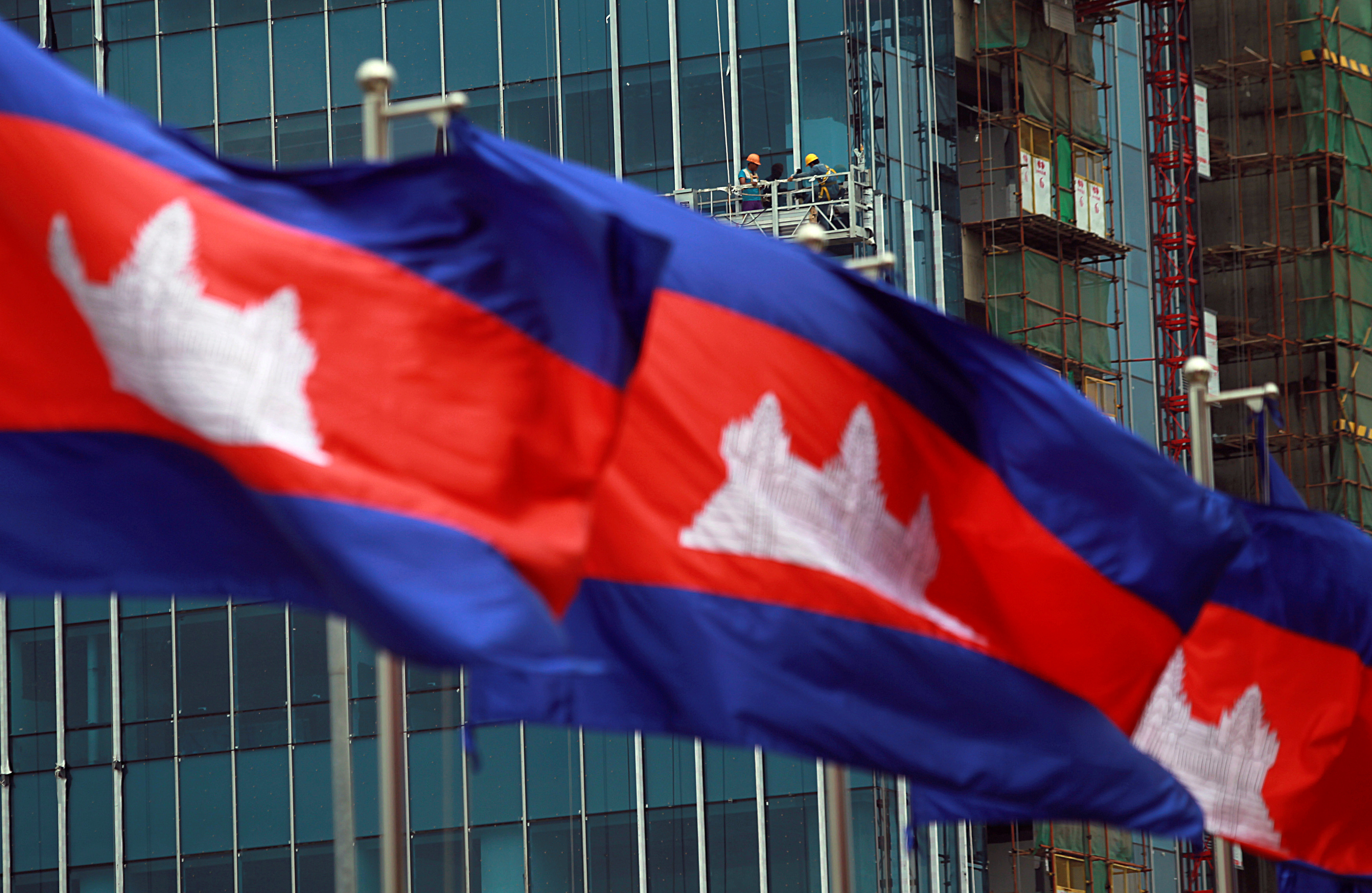
Cambodia's national flags are seen as labourers work at a construction site in Phnom Penh

SINGAPORE, Nov 29 (Reuters) – Cambodia has abandoned plans to build a $1.5 billion 700 megawatt (MW) coal-fired power project in a protected reserve along the southwestern coast and will build an 800 MW natural-gas fired plant instead, its energy minister told Reuters.

As part of the project, Cambodia is exploring construction of a liquefied natural gas (LNG) terminal to import the super-chilled fuel and re-gasify it for use in the power plant, Energy Minister Keo Rottanak told Reuters.

The planned LNG terminal, likely to be a fixed land-based facility, would be Cambodia’s first and would make it a new import market in Southeast Asia. Vietnam and the Philippines took their first shipments this year.

“The Cambodian Prime Minister Hun Manet will announce on Nov. 30 the cancellation of the 700 MW coal power plant project in Koh Kong and the plan to replace it with an 800 MW LNG to be commissioned after 2030,” Rottanak told Reuters.

Continue reading Cambodia scraps coal power project to build gas-fired plant, import LNG

Infrastructure, planning and market keys to develop LNG power

VNN – November 23, 2023 – 07:46

HÀ NỘI — Infrastructure, planning and a market mechanism were among key issues that must be addressed in order to develop a market for liquefied natural gas (LNG) in Việt Nam, heard participants at a conference on LNG on Wednesday in Hà Nội.

Thị Vải Terminal, an LNG storage facility in the southern province of Bà Rịa-Vũng Tàu. — VNA/VNS Photo

Deputy head of the Electricity and Renewable Energy Department under the Ministry of Industry and Trade (MoIT) Bùi Quốc Hùng said the importation of LNG must follow international trade standards and regulations while Việt Nam is still lacking in many key areas including design, construction, and operation of infrastructure for LNG imports. 

Continue reading Infrastructure, planning and market keys to develop LNG power

The human cost of France’s nuclear tests in the Pacific

https://www.youtube.com/watch?v=4UFe4tRMZ0Y

Al Jazeera English – 10-8-2023

For 30 years, France undertook nuclear testing in its Pacific territory, French Polynesia.

In recent years, investigations have revealed the effects of the tests were far greater than France has officially acknowledged.

A total of 193 nuclear tests were undertaken, including 41 atmospheric tests that exposed the local population and site workers to high levels of radiation.

Today, children across the Pacific islands are still dealing with the nuclear fallout.

Cancer and other developmental diseases plague new generations born after the last test in 1996.

101 East investigates the costs of France’s nuclear tests in French Polynesia.

Quy hoạch tổng thể về năng lượng quốc gia thời kỳ 2021 – 2030, tầm nhìn đến năm 2050

(Chinhphu.vn) – Phó Thủ tướng Trần Hồng Hà ký Quyết định số 893/QĐ-TTg phê duyệt Quy hoạch tổng thể về năng lượng quốc gia thời kỳ 2021 – 2030, tầm nhìn đến năm 2050.

27/07/2023  17:33

Quy hoạch tổng thể về năng lượng quốc gia thời kỳ 2021 - 2030, tầm nhìn đến năm 2050 - Ảnh 1.
Quy hoạch tổng thể về năng lượng quốc gia thời kỳ 2021 – 2030, tầm nhìn đến năm 2050.

Mục tiêu tổng quát của Quy hoạch là bảo đảm vững chắc an ninh năng lượng quốc gia, đáp ứng yêu cầu phát triển kinh tế – xã hội và công nghiệp hóa, hiện đại hóa đất nước, bảo đảm quốc phòng, an ninh, nâng cao đời sống của nhân dân, bảo vệ môi trường sinh thái.

Thực hiện thành công chuyển đổi năng lượng góp phần quan trọng đáp ứng mục tiêu phát thải ròng bằng “0” vào năm 2050. Ngành năng lượng phát triển hài hoà giữa các phân ngành với hạ tầng đồng bộ và thông minh, đạt trình độ tiên tiến của khu vực, phù hợp với xu thế phát triển khoa học công nghệ của thế giới.

Phát triển ngành công nghiệp năng lượng độc lập tự chủ; hình thành hệ sinh thái công nghiệp năng lượng tổng thể dựa trên năng lượng tái tạo, năng lượng mới, hướng tới trở thành một trung tâm công nghiệp năng lượng sạch và xuất khẩu năng lượng tái tạo của khu vực.

Continue reading Quy hoạch tổng thể về năng lượng quốc gia thời kỳ 2021 – 2030, tầm nhìn đến năm 2050