By David Lawder Reuters Posted September 9, 2020 12:55 am
Updated September 9, 2020 12:56 am
U.S. impose sanctions on senior Chinese official over alleged Uighur rights abuse
The Trump administration announcement of the actions, initially expected on Tuesday, has been put off until later this week because of “scheduling issues,” a CBP spokesman said.
READ MORE: China vows to respond as U.S. sanctions 11 companies over Uighur abuse complaints
The cotton and tomato bans along with five other import bans over alleged Xinjiang forced-labor abuses would be an unprecedented move by CBP and likely stoke tensions between the world’s two largest economies.
Continue reading on CVD >>
TTO – Bộ Ngoại giao Mỹ ngày 9-9 xác nhận đã hủy thị thực của hơn 1.000 công dân Trung Quốc trong nỗ lực chặn đứng những người “có liên quan quân đội Trung Quốc” tới Mỹ du học và nghiên cứu.
Bộ An ninh nội địa Mỹ ngày 9-9 tuyên bố sẽ tiếp tục chiến dịch ngăn chặn những người Trung Quốc có dính líu quân đội tới Mỹ ăn cắp sở hữu trí tuệ – Ảnh: AFP
“Tính đến ngày 8-9-2020, chúng tôi đã thu hồi hơn 1.000 thị thực được cấp cho công dân Trung Quốc. Đây là những người mà chúng tôi phát hiện là đối tượng bị hạn chế theo chỉ đạo của tổng thống”, một phát ngôn viên của Bộ Ngoại giao Mỹ xác nhận với Hãng tin Reuters qua email.
By Kai He07 Sep 2020 06:09AM(Updated: 07 Sep 2020 06:10AM)
There have been a series of rhetorical attacks directed at the CCP from high-ranking US officials since late June.Advertisement
National Security Adviser Robert O’Brien, FBI Director Christopher Wray, Attorney General William Barr and Secretary of State Mike Pompeo have been dubbed the “four horsemen of the apocalypse” tasked by Trump to overthrow the CCP.
The Trump administration has taken concrete actions to decouple bilateral relations by closing the Chinese Consulate General in Houston, sending Health Secretary Alex Azar to Taiwan and attempting to ban Chinese social-media giants TikTok and WeChat in the United States.
Last Updated : Sep 07, 2020 11:06 AM IST | Source: Moneycontrol.comWhoever wins in the US on November 3, there will be a new normal in US-China ties. There will be new opportunity for India if it builds on its Comprehensive Global Strategic Partnership with the US, to consolidate a ‘trusted partner’ status, or ‘supply chain resilience’
On August 7, under the United States International Emergency Powers Act, US President Donald Trump issued an executive order banning, after 45 days, any transaction by a US entity with TikTok, and its parent company ByteDance. The order cited need to secure the information and communications technology and services supply chain, and asserted that “spread in the United States of mobile applications developed and owned by companies in China continues to threaten the national security, foreign policy, and economy of the United States”.
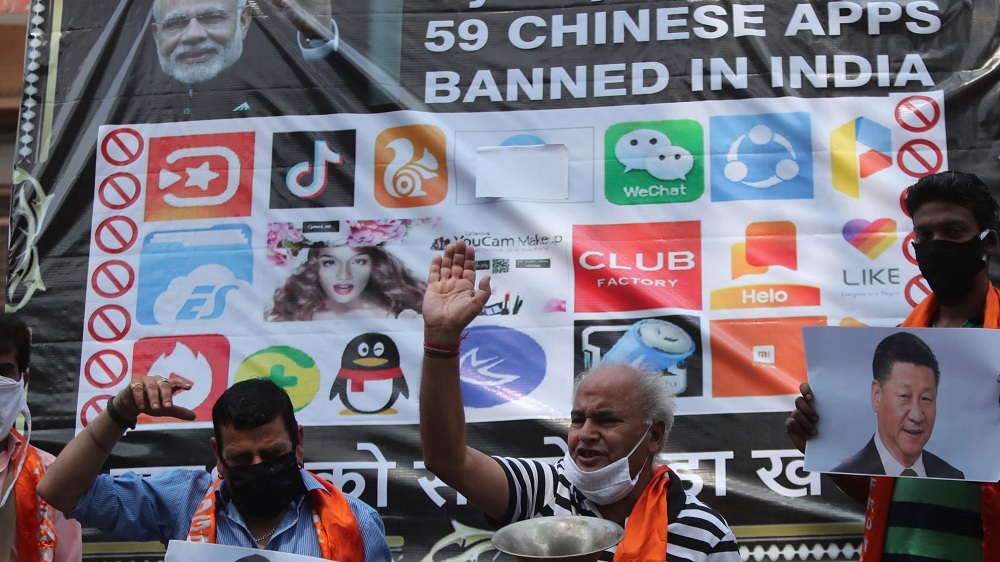
Biểu tình phản đối công nghệ Trung Quốc hôm 1/7 tại Ấn Độ. Ảnh: AP
Hôm 2/9, Ấn Độ tiếp tục cấm 118 ứng dụng Trung Quốc, trong đó có các tựa game lớn của Tencent và NetEase và dịch vụ của Baidu, Alibaba. Bộ Điện tử và Công nghệ thông tin nước này cho rằng các ứng dụng tham gia vào hoạt động gây phương hại đến chủ quyền và tính toàn vẹn của đất nước. Nhà chức trách cũng cáo buộc các dịch vụ gửi dữ liệu công dân sang máy chủ đặt ngoài Ấn Độ.
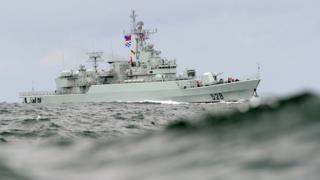
The missiles launched into the South China Sea on Wednesday included the DF-21D and DF-26B, the South China Morning Post reported, citing a person close to the People’s Liberation Army.
(c) 2020 Bloomberg Bloomberg News Updated: August 28, 2020 11:50 am ISTndtv
China rolled out new PLA Rocket Force as part of a massive military parade in October4
China’s latest volley of missile launches into the world’s most hotly contested body of water served as a warning to two key U.S. targets: aircraft carriers and regional bases.
Defence secretary says the region has become ‘the epicentre of great power competition’ with BeijingHe warns the PLA’s bid to become a world-class military will ‘undoubtedly embolden’ its actions in the East China and South China seas
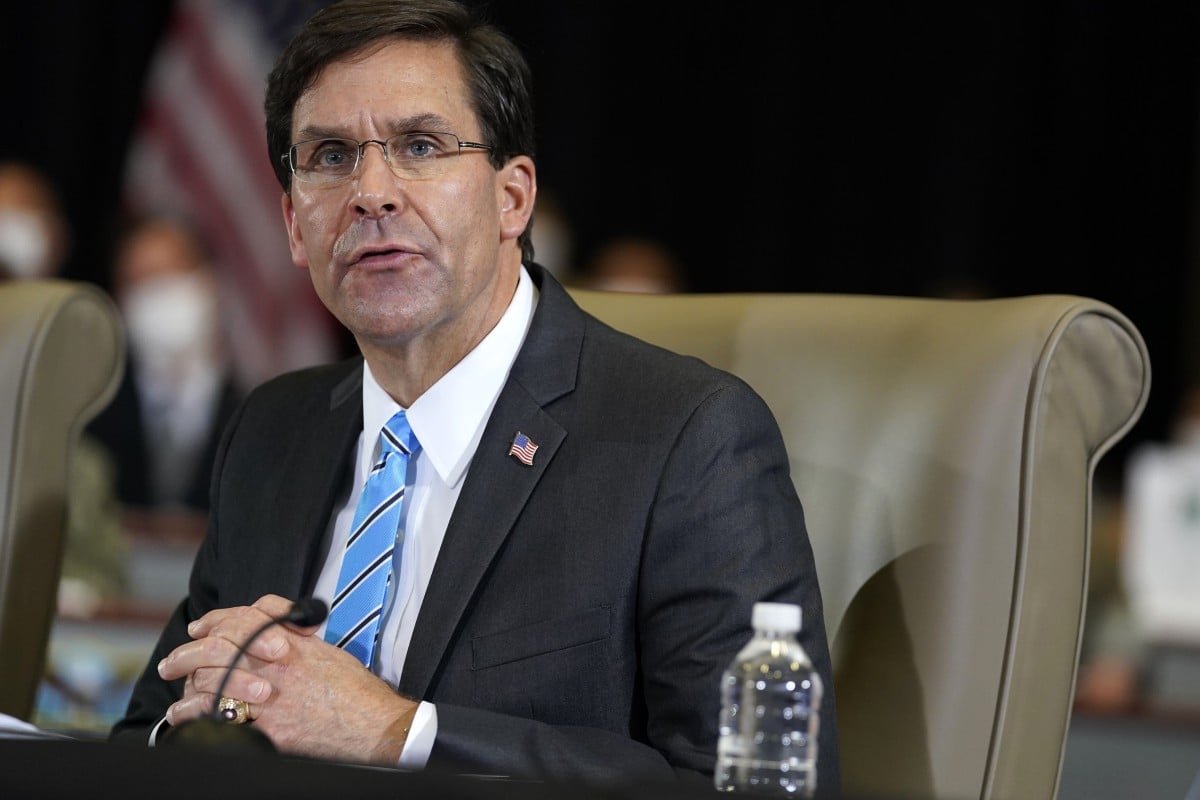
Mark Esper said the US defence department was increasingly focused on China as a threat in the Indo-Pacific and globally. Photo: APContinue reading on CVD >>
The writer is a senior fellow at the Center for International Security and Strategy at Tsinghua University, and a China Forum expert
The relationship between China and the US is in freefall. That is dangerous. US defence secretary Mark Esper has said he wants to visit China this year, which shows the Pentagon is worried. That Wei Fenghe, China’s defence minister, spoke at length with Mr Esper in August shows that Beijing is worried too. Both men have agreed to keep communications open and to work to reduce risks as they arise.
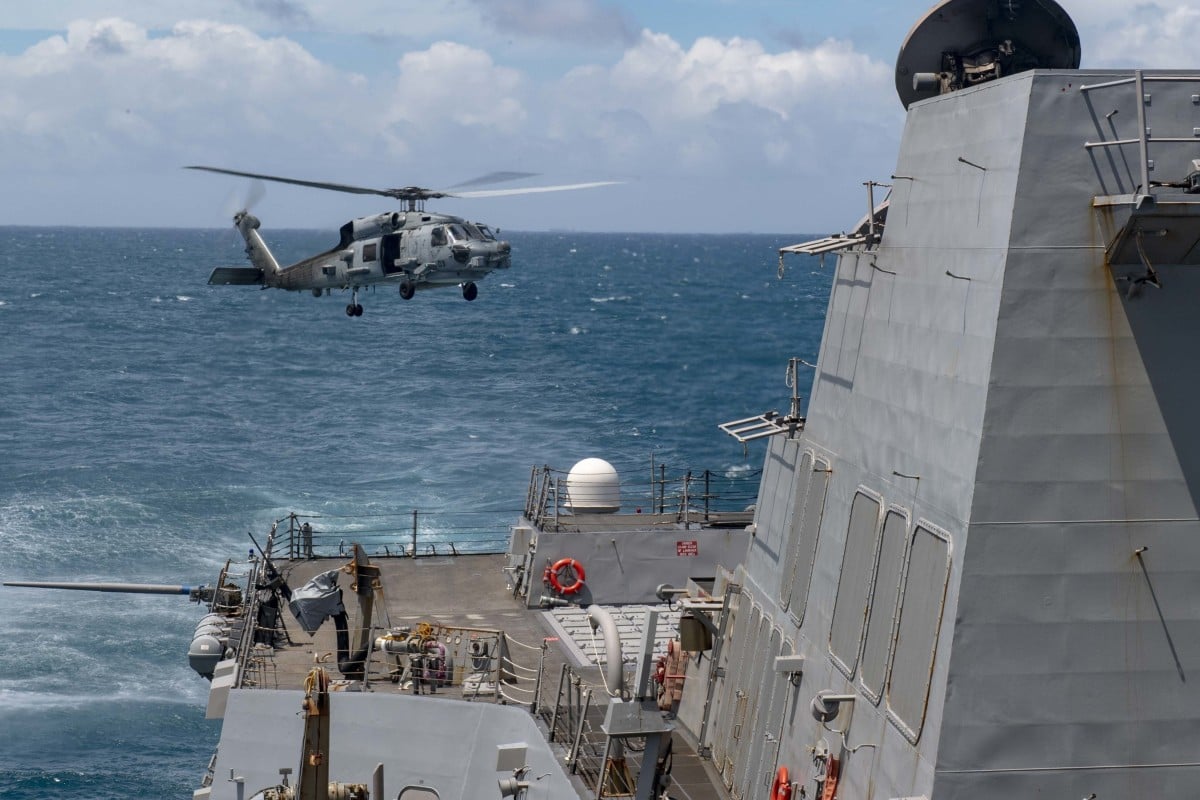
An MH-60R helicopter takes off from the flight deck of the USS Mustin during routine operations. Photo: US Navy
The United States sent a warship through the Taiwan Strait on Tuesday in what it said was a demonstration of its “commitment to a free and open Indo-Pacific”, as military tensions between Washington, Beijing and Taipei in the region continue to simmer.
Vietnam was the United States’ 13th-largest trading partner last year, with bilateral trade increasing by more than 30%. Pictured: Vietnamese Prime Minister Nguyen Xuan Phuc addresses an Aug. 6 videoconference on the European Union-Vietnam Free Trade Agreement in Hanoi. (Photo: Nhac Nguyen/Agence France-Presse/Getty Images)
Anthony B. Kim researches international economic issues at The Heritage Foundation, with a strong focus on economic freedom. Kim is the research manager of the Index of Economic Freedom, the flagship product of the Heritage Foundation in partnership with The Wall Street Journal. Read his research.
A bill introduced in the US Congress would ban US government documents from referring to Xi Jinping, shown at a ceremony last month in Beijing for the BeiDou navigational satellite system, as China’s president. Photo: Xinhua
Wednesday, 19 August 2020 brusselstimes
US President Donald Trump told reporters on Tuesday that he had called off US – China trade deal negotiations.
“I don’t want to talk to them now,” Trump said. “If you know what they’ve done to this country and the world, I don’t want to talk to China just yet. So yes, I canceled the talks.”
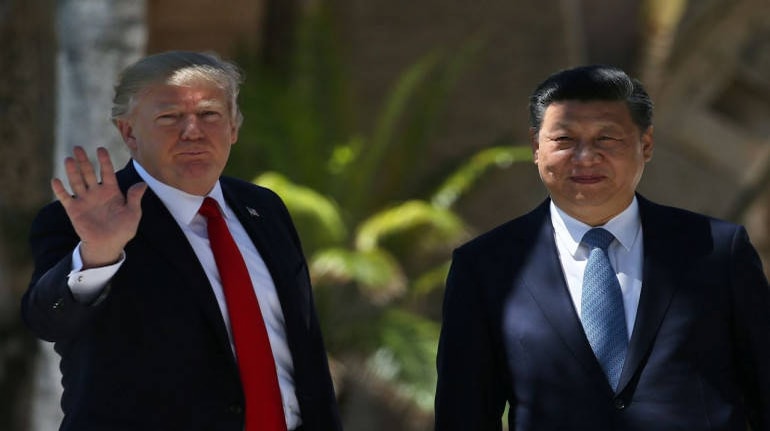
Since Trump’s arrival at the White House in 2017, relations between Washington and Beijing have been tense.
Continue reading on CVD >>
Techno-nationalism: The US-China tech innovation race New challenges for markets, business and academia BY ALEX CAPRI RESEARCH FELLOW, HINRICH FOUNDATION, 20202
The US-China tech innovation race is challenging the laissez-faire economic model. State interventionism, techno-nationalism and US tech funding initiatives are increasing. This paper outlines the implications for markets, academia, research organizations, and governments of the US-China competition to achieve innovation advantage.