All posts by Đọt Chuối Non

Me? Me? Me?... Yeah yeah yeah amigo... What can me say about me-self?... me-self...me-self... Ole ole ole... me me me... I'm a young banana shoot... My dad is Banana Pa... My mom is Banana Ma... I am happy happy happy... I run around... oops... I can't run... I sing aloud... all day long... I sing in the rain... I sing in the shine... I sing day and night... I sing all the time... I watch the butterflies and the bees... and the cranes and the geese... Aha aha aha... here we go again... this little swallow circling on my head... the little swallow on my head... is about to poop on me... Hey, little fella, don't cha know where to unload ya poopa?... But, that's alright... I can swallow my pride to befriend a swallow... Yup yup yup... swallow my pride to befriend a swallow...

Gray Zone Tactics Playbook: Swarming

Swarming is a commonly used tactic involving dispatching a flotilla to overwhelm and intimidate other actors, assert dominance, or provide a security screen for certain Chinese ships on special missions.

Gaute Friis | JULY 6, 2023, Sealight 333

Gray Zone Tactics Playbook: Swarming
Chinese fishing vessels head out to sea from Zhoushan in Zhejiang Province, China. (Source: China Foto Press)

Gaute Friis

Team Member

Swarming is a commonly used tactic involving dispatching a flotilla (often a combination of militia, coast guard, and sometimes navy vessels) to overwhelm and intimidate other countries’ assets, assert dominance, or provide a security screen for certain Chinese ships on special missions. 

Examples: 

Starting on May 7, 2023, Chinese survey ship Xiang Yang Hong 10 and a flotilla of escort vessels consisting of China Coast Guard (CCG) and Maritime Militia (PAFMM) vessels spent nearly a month conducting survey operations deep within Vietnam’s Exclusive Economic Zone (EEZ). These activities led to a formal protest from the Vietnamese government. 

On March 4, 2023, one People’s Liberation Army Navy (PLAN) ship, one CCG ship and 42 PAFMM vessels gathered near Thitu Island. Thitu Island (also known as Pag-Asa) is home to one of the Philippines’ most important military outposts in the West Philippine Sea, as well as a small civilian population. 

On July 22, 2014, a Vietnamese fishing boat was surrounded by Chinese vessels 5 nautical miles South of Collins Reef. Chinese coast guard ships then rammed the fishing boat, which nearly sank.

On June 292014, 45 nautical miles to the southwest of Paracel Islands, about 34 Chinese fishing vessels, supported by 2 coast guard ships, closely followed, obstructed and intimidated Vietnamese fishing vessels operating in the area.

See the rest of the playbook here.

Introducing SeaLight 333

Sealight 333 Episode 1 – Phlippines v. China – The 2016 Arbitral Tribunal Award

None of the Reefs or Rocks in the Spratly Islands Are Big Enough to Generate Their Own EEZ

SeaLight is pleased to announce the first of our new video educational series, SeaLight 333. Over the coming months we will be developing these short-form videos to explain key maritime gray zone concepts in a very accessible way.

Ray Powell | JULY 11, 2023

Introducing SeaLight 333

Ray Powell

Team Member

Share

copy link icon

SeaLight is pleased to announce the first of our new video educational series, SeaLight 333. Over the coming months we will be developing these short-form videos to explain key maritime gray zone concepts in a very accessible way. 

Our first video explains the meaning of the 2016 Aribitral Tribunal case, Philippines v. China, and why the Philippines’ victory was so important infirmly establishing how China’s expansive nine-dash line claim–and the aggressive methods it uses to enforce it–systematically violate the rights of the Philippines and all its smaller neighbors.

Ray Powell

Ray is the Director of SeaLight and Project Lead for Project Myoushu at Stanford University’s Gordian Knot Center for National Security Innovation. He’s a 35-year veteran of the U.S. Air Force and was a 2021 Fellow at Stanford’s Distinguished Careers Institute.

Hội thẩm nhân dân là gì? Điều kiện trở thành hội thẩm nhân dân


Hội thẩm nhân dân là người được bầu hoặc cử theo quy định của pháp luật để làm nhiệm vụ xét xử những vụ án thuộc thẩm quyền của Toà án. Vậy, vai trò, chứng năng, nhiệm vụ của hội thẩm nhân dân là gì ? Bài viết phân tích và giải đáp cụ thể:

Mục lục bài viết

1. Lịch sử hình thành chế định hội thẩm

Chế độ Hội thẩm (phụ thẩm) nhân dân được ghi nhận và trở thành một chế định quan trọng trong hoạt động của Toà án bằng Sắc lệnh số 33/SL ngày 43.9.1945 và Sắc lệnh số 13/SL ngày 21.1.1946. Hiến pháp năm 1946 19.11.1946 bản Hiến pháp đầu tiên của Nhà nước ta đã chính thức ghi nhận nguyên tắc đại diện nhân dân tham gia xét xử. “Trong khi xét xử việc hình phải có Phụ thẩm nhân dân để tham gia ý kiến nếu là việc tiểu hình, hoặc cùng quyết định với Thẩm phán nếu là việc đại hình”. Bước vào những năm 50, nền tư pháp của chế độ mới đã có những cải cách lớn nhằm đáp ứng đầy đủ hơn nữa yêu cầu của cách mạng, đòi hỏi của nhân dân. Bằng Sắc lệnh số 85/SL ngày 22.5.1950 về cải cách bộ máy tư pháp và Luật tố tụng, phụ thẩm nhân dân được đổi là Hội thẩm nhân dân và đã quy định rõ hơn về địa vị pháp lí của Hội thẩm. Hiến pháp năm 1959 được ban hành và đã ghỉ nhận nguyên tắc Hội thẩm nhân dân tham gia xét xử. “Việc xét xử ở các Toà án nhân dân có Hội thẩm nhân dân tham gia theo quy định của pháp luật” (Điều 59). Trên cơ sở Hiến pháp năm 1959, Luật tổ chức Toà án nhân dân năm 1960 quy định: Khi xét xử sơ thẩm, Toà án nhân dân gồm có một Thẩm phán và hai Hội thẩm nhân dân… (Điều 112). Từ năm 1986, công cuộc đổi mới đất nước theo tinh thần Đại hội Đảng toàn quốc lần thứ VỊ được tiến hành. Để phù hợp với tỉnh thần đổi mới, Hiến pháp năm 1992 được ban hành để thay thế Hiến pháp năm 1980.

Continue reading Hội thẩm nhân dân là gì? Điều kiện trở thành hội thẩm nhân dân

Buoys Placed in the Spratly Islands

PUBLISHED: JULY 11, 2023, ATMI

In May, the Philippines and China took turns installing buoys in the disputed Spratly Islands. The deployment of buoys and other sovereignty markers in the South China Sea has a long history. But amid a flurry of new activity by the Philippines, including publicized patrols and surveillance missions, it is noteworthy that the buoy deployment triggered an almost immediate reaction from China, which installed its own. And with the Philippines planning to install more buoys by the end of 2023, this trend will remain a point of contention between Manila and Beijing for the foreseeable future.

On May 15, the Philippine Coast Guard installed 30-foot navigational buoys at five features in the Spratly Islands: Philippine-occupied Flat Island, Loaita Island, and Loaita Cay, and unoccupied Irving Reef and Whitsun Reef. The buoys are of the same type as five installed in May of 2022 at four Philippine-occupied features: Nanshan Island, West York Island, Northeast Cay, and Thitu Island.

“The Mekong is dying”: How China’s river diplomacy neglects locals, exacerbates climate change

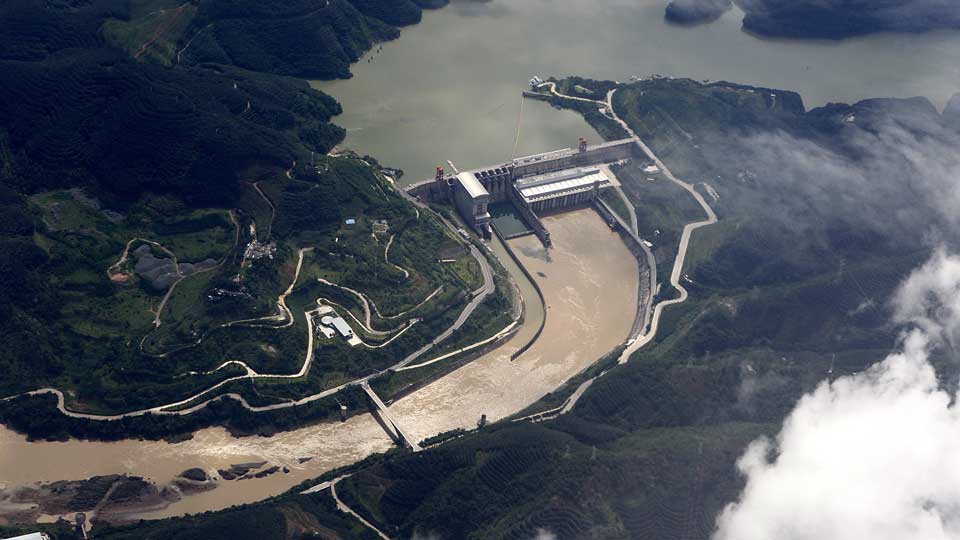
File image of the aerial view of the Jinghong Hydropower Station on the Lancang River, the Chinese part of the Mekong River, in Jinghong city, Xishuangbanna Dai Autonomous Prefecture, southwest China’s Yunnan province. Imaginechina Limited / Alamy Stock Photo

Chinaglobalsouth.com

The rainy season would usually start in May, but this was late June and it was still not raining much. Niwat Roykaew, who grew up on the bank of the Mekong River in Thailand’s northern Chiang Rai province, noticed. 

Born and raised in the Chiang Khong district, Roykaew, 63, was taught to observe the Mekong River to tell the season. But, in the past two decades, the river has become unpredictable like it has “pulsated out of tune”.

Niwat Roykaew is a Thai activist who campaigns for China to share data about water restrictions by its dams upstream.

“The water would get high for two days, then on the third day it would suddenly drop, even during the rainy season,” said Roykaew. 

Local residents like him knew that this delay could mean another year of drought. Since at least 2019, that’s what has happened: the monsoon rain is late, and when it comes, it departs early.

The Mekong River’s water levels in the lower basin, including in Thailand, are now very unstable, being heavily affected both by climate change and hydropower dams upstream that are mostly powered by China, according to local residents, activists, and experts.

Continue reading “The Mekong is dying”: How China’s river diplomacy neglects locals, exacerbates climate change

Canada Statement on 7th anniversary of 2016 South China Sea Arbitral Tribunal Ruling

From: Global Affairs Canada

Statement

July 11, 2023 – Ottawa, Ontario – Global Affairs Canada

Global Affairs Canada today issued the following statement:

“On the anniversary of the award rendered by the Arbitral Tribunal constituted under the United Nations Convention on the Law of the Sea (UNCLOS) in the matter of the South China Sea, Canada reiterates that this decision is final, binding on the parties, and provides a vital foundation for the peaceful resolution of competing maritime claims in the region, consistent with international law.

Continue reading Canada Statement on 7th anniversary of 2016 South China Sea Arbitral Tribunal Ruling

Buoy battle in the Spratly islands


PUBLISHED: JULY 11, 2023 CSIS

In May, the Philippines and China took turns installing buoys in the disputed Spratly Islands. The deployment of buoys and other sovereignty markers in the South China Sea has a long history. But amid a flurry of new activity by the Philippines, including publicized patrols and surveillance missions, it is noteworthy that the buoy deployment triggered an almost immediate reaction from China, which installed its own. And with the Philippines planning to install more buoys by the end of 2023, this trend will remain a point of contention between Manila and Beijing for the foreseeable future. Continue reading Buoy battle in the Spratly islands

NATO: Vilnius Summit Communiqué

Issued by NATO Heads of State and Government participating in the meeting of the North Atlantic Council in Vilnius 11 July 2023

Press Release, July 11, 2023, NATO

The NATO Invitee associates itself with this Communiqué.

1.           We, the Heads of State and Government of the North Atlantic Alliance, bound by shared values of individual liberty, human rights, democracy, and the rule of law, have gathered in Vilnius as war continues on the European continent, to reaffirm our enduring transatlantic bond, unity, cohesion, and solidarity at a critical time for our security and international peace and stability.  NATO is a defensive Alliance.  It is the unique, essential and indispensable transatlantic forum to consult, coordinate and act on all matters related to our individual and collective security.  We reaffirm our iron-clad commitment to defend each other and every inch of Allied territory at all times, protect our one billion citizens, and safeguard our freedom and democracy, in accordance with Article 5 of the Washington Treaty.  We will continue to ensure our collective defence from all threats, no matter where they stem from, based on a 360-degree approach, to fulfil NATO’s three core tasks of deterrence and defence, crisis prevention and management, and cooperative security.  We adhere to international law and to the purposes and principles of the Charter of the United Nations and are committed to upholding the rules-based international order.  This Summit marks a milestone in strengthening our Alliance.

Continue reading NATO: Vilnius Summit Communiqué

Bồi thường, tái định cư khi thu hồi đất: Nhìn từ Dự án thuỷ điện Bản Vẽ

Nghệ An TV – 8/3/2023

Thu hồi đất, bồi thường, tái định cư là một trong nội dung nhận được nhiều sự quan tâm khi Chính phủ đang xin ý kiến góp ý vào dự thảo Luật đất đai sửa đổi lần này. Trên thực tế, các nội dung này đều đã được quy định trong Luật đất đai 2013, hướng dẫn thi hành tại Nghị định 47 và một số nghị định bổ sung. Tuy nhiên, quá trình thực hiện đã bộc lộ nhiều bất cập. Những vấn đề nảy sinh tại Khu tái định cư cho các hộ dân bị thu hồi đất xây dựng Thuỷ điện Bản Vẽ tại huyện Tương Dương là một minh chứng.

The global movement against China’s economic coercion is accelerating

COMMENTARY, RAND Corporation

(The Hill)G7 leaders before a meeting on economic security during the G7 summit, at the Grand Prince Hotel in Hiroshima, Japan, May 20, 2023, photo by Jonathan Ernst/Reuters

G7 leaders before a meeting on economic security during the G7 summit, at the Grand Prince Hotel in Hiroshima, Japan, May 20, 2023

Photo by Jonathan Ernst/Reuters

by Bryan Frederick and Howard J. Shatz

June 9, 2023

With the launch of the Coordination Platform on Economic Coercion in May, the Group of Seven (G7) leading economies have taken an important step after years of U.S. allies and partners facing coercion from the People’s Republic of China (PRC) alone. Continue reading The global movement against China’s economic coercion is accelerating

Mường Nhé builds brighter futures | Trường học Mường Nhé được nâng cấp

Vietnam News – 5/7/2023

Mường Nhé District has transformed its learning environment from cramped classrooms to spacious schools. The local authorities and organisations have helped create better conditions for children to thrive.

Equipped with better facilities and resources, these classrooms inspire quality education, attracting more students to school. A testament to unity and determination, Mường Nhé is building brighter futures for its children.

Rich nations pledge to unlock hundreds of billions of dollars for climate fight

By John Irish and Leigh Thomas, Reuters

June 23, 20237:15 PM GMT+7 Updated 15 days ago

  • Summary
  • World leaders and global organisations meet in Paris
  • Agreement for development banks to boost lending
  • Rich nations close in on $100 bln climate finance pledge
  • U.S., China adopt conciliatory tone on debt relief

PARIS, June 23 (Reuters) – Multilateral development banks like the World Bank are expected to find $200 billion in extra firepower for low-income economies by taking on more risk, a move that may require wealthy nations to inject more cash, world leaders said on Friday.

The leaders, gathered at a summit in Paris to thrash out funding for the climate transition and post-COVID debt burdens of poor countries, said their plans would secure billions of dollars of matching investment from the private sector.

Continue reading Rich nations pledge to unlock hundreds of billions of dollars for climate fight

2016 Philippines v. China: Arbitration Outcomes

On July 12 an arbitral tribunal issued a long-awaited ruling in Manila’s case against Beijing’s claims in the South China Sea. How did the judges rule and how does the area of the South China Sea they found to be legally disputed compare to China’s infamous nine-dash line claim?

The tribunal invalidated Beijing’s claims to ill-defined historic rights throughout the nine-dash line, found that Scarborough Shoal is a rock entitled only to a 12-nautical-mile territorial sea, and surprised many observers by ruling on the legal status of every feature in the Spratly Islands raised by the Philippines. It found that none of the Spratlys, including the largest natural features—Itu Aba, Thitu Island, Spratly Island, Northeast Cay, and Southwest Cay—are legally islands because they cannot sustain a stable human community or independent economic life. As such, they are entitled only to territorial seas, not EEZs or continental shelves. Of the seven Spratlys occupied by China, the court ruled that Johnson Reef, Cuarteron Reef, Fiery Cross Reef, and Gaven Reef are rocks, while Hughes Reef and Mischief Reef are below water at high-tide and therefore generate no maritime entitlements of their own. It also ruled that Kennan Reef is a low-tide elevation, while Second Thomas Shoal and Reed Bank are submerged and belong to the Philippine continental shelf. Taken together, these decisions effectively invalidate any Chinese claim within the nine-dash line to more than the disputed islets themselves and the territorial seas they generate.

VIEW OTHER AMTI MAPS

Ngày mới Chen – Chự – Hồ

 Chủ nhật, 01/01/2023 | 14:25 GMT+7

baophutho.vnChen- Chự – Hồ là ba bản người Dao nằm cheo leo cuối dãy núi Tu Tinh, nhìn xuống dòng suối Cái cuộn chảy và những dãy núi sừng sững như cột chống trời. Đây là ba bản cao và xa nhất, cách trung tâm xã Yên Sơn (huyện Thanh Sơn) gần 20km. Từng là địa bàn “sơn cùng, cốc thẳm”, lọt thỏm giữa bạt ngàn rừng, biệt lập với các thôn bản khác bởi giao thông cách trở nhưng nhờ Chương trình mục tiêu Quốc gia phát triển kinh tế- xã hội vùng đồng bào dân tộc thiểu số và miền núi, nhất là từ khi triển khai chương trình xây dựng nông thôn mới, Chen – Chự – Hồ đã ngày một đổi thay.

Đường từ bản Dao về trung tâm xã được mở rộng và trải nhựa, thuận lợi cho việc đi lại, giao thương, phát triển kinh tế – xã hội của người dân. Continue reading Ngày mới Chen – Chự – Hồ