
Chào anh chị em,
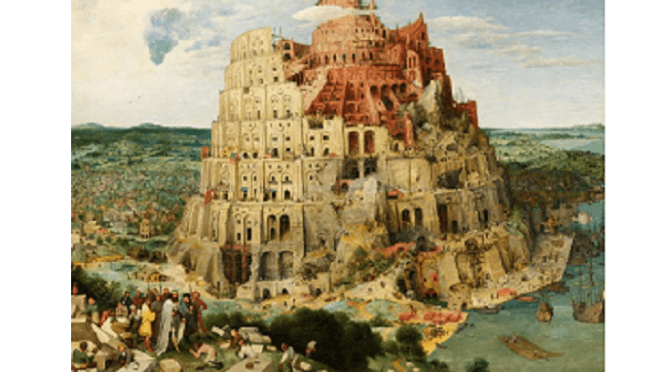
Thánh kinh nói con người muốn xây một cái tháp thật cao lên trời đến nơi Chúa ở. Chúa thấy con người ngạo mạn quá, nên làm cho họ mỗi người nói một thứ tiếng, chẳng ai hiểu ai được, nên phải bỏ dở công trình xây tháp. Cho nên ngày nay mỗi nước nói một thứ tiếng.
Bable là gốc của từ babble trong tiếng Anh, có nghĩa nói lảm nhảm.
Câu chuyện này dùng để lý giải tại sao thế giới có nhiều tiếng nói khác nhau. Đó là câu chuyện về khó khăn trong truyền thông (communication). Tuy nhiên nói về ngôn ngữ khác nhau của các quốc gia thì chỉ mới sờ vào lớp da bên ngoài của vấn đề truyền thông. Câu chuyện Tháp Babel có thể đi sâu hơn thế 1 nghìn lần.
Vấn đề truyền thông và giao tiếp (gọi chung là communication) xảy ra thường xuyên, hằng ngày, ngay giữa những người gần gũi nhau nhất: vợ chồng, bố mẹ con cái, anh chị em, bạn bè, đồng nghiệp, thầy trò, lãnh đạo và nhân viên, chủ tiệm và khách hàng, và giữa bất kì hai người nào trong thế giới 10 tỉ người. Có hai người trở lên là có truyền thông sai (miscommunication) – không thể nào tránh được.
Trong liên hệ con người thì nền tảng sâu sắc nhất là tình yêu. Và lớp nền sâu ngay bên trên tình yêu là communication – Sống là communicate, và con người chỉ có thể sống và làm việc với nhau bằng communication.
Communication quan trọng như thế, nhưng mọi người, không chừa ai, đều vấp phải miscommunication. Đã bao nhiêu lần chồng/vợ bạn nói một câu và bạn hiểu sai ý? Đã bao nhiêu lần ai đó nói một câu mà bạn hiểu sai ý? Đây là chuyện hằng ngày, như cơm bữa, ồ, thường xuyên hơn cơm bữa vì bạn thường có miscommunication hơn 3 lần một ngày.
Communication của chúng ta gồm có: Nói, nhìn, nghe, body language ( cách đứng ngồi và cử chỉ), ra dấu hiệu, nín thinh… Chúng ta có rất nhiều cách communicating như thế, và ta communicate điều ta có trong đầu ta cho một người, và người kia phải suy đoán chính xác ý ta, và thường suy đoán không chính xác – không sai nhiều thì cũng sai ít, hay nắm được bề mặt nhưng không thấy chiều sâu…
Có rất nhiều loại miscommuniction:
1. Một người cố tình đánh lạc hướng người kia.
2. Người này nói người kia nghe không rõ.
3. Người này nói người kia nghe rõ, nhưng hiểu sai ý hoặc hiểu không hết ý. Đây là miscomunication xảy ra nhiều nhất và thường xuyên nhất.
4. Có người rất tồi về communication, không biết ăn nói, ăn nói lắp bắp khó hiểu, hoặc ăn nói thô lỗ cộc cằn.
Miscommunication số 3 bên trên là giữa những người bình thường và có liên hệ tốt với nhau, nhưng cũng hiểu sai ý nhau thường xuyên. Và đây là vấn đề lớn trong đời sống thường nhật của một người, một gia đình, một công ty, một tổ chức nhà nước, tập thể lớn gọi là thế giới.
Vì thế, khi bạn nói gì với ai nên nắm chắc là người kia hiểu đúng và hiểu hết ý mình. Nếu có cảm tưởng người kia vẫn mơ màng, thì lập lại điều mình nói một hai lần. Hỏi người kia: “Anh hiểu hết ý tôi chưa?” Đôi khi cần hỏi lại, nhất là với người dưới trướng mình: “Cậu lập lại điều tôi nhờ cậu làm để xem cậu hiểu đúng lời tôi nói chưa.”
Nói chuyện qua phone thì luôn luôn gửi một follow-up email nói: “Mình tóm tắt cuộc điện đàm mới rồi của chúng ta để chắc chắn là minh hiểu đúng ý cậu. Nếu mình chưa rõ, thì cậu chỉnh lại cho mình.”
Nói chung là bạn cần siêng năng và sáng tạo một chút, để nói và chắc chắn người nghe hiểu đúng ý bạn. Nếu bạn nói chưa kip hết câu mà người kia nói: “Tôi hiểu ý anh rồi”, thì hỏi lại: “Anh hiểu thế nào?”
Chuyên Tháp Babel chẳng chỉ là rối rắm vì ngôn ngữ khác nhau, mà rối rắm vì không đọc được ý nhau dù là cùng một ngôn ngữ – vấn đề khó khăn rối rắm là hai người có hai cái đầu khác nhau, và chẳng dễ gì để hiểu đúng tư duy trong đầu người khác.
Với yêu thương,
Hoành
Tháp Bable – The Bable Tower
Dear Brothers and Sisters,
The Bible says that people wanted to build a tower so high that it would reach to the sky where God lived. God saw that people were so arrogant, so he made them each speak a different language, and no one could understand each other, so the tower construction had to be abandoned. That is why today each country speaks a different language.
Bable is the origin of the English word babble, which means to speak nonsense.
This story is used to explain why the world has so many different languages. It is a story about the difficulty in communication. However, talking about different languages of all the countries only touches the outer layer of the communication problem. The story of the Tower of Babel can go a thousand times deeper than that.
Communication and interaction problems (generally called “communication problem”) occur frequently, every day, even between the closest people: husband and wife, parents and children, siblings, friends, colleagues, teachers and students, leaders and employees, shop owners and customers, and between any two people in the world of 10 billion people. Miscommunication is inevitable when there are two or more people.
In human relationships, the deepest foundation is love. And the deep layer right above love is communication – Life is communication; people can only live and work together through communication.
Communication is so important, but everyone, without exception, stumbles upon miscommunication. How many times did your husband/wife say a sentence and you misunderstood it? How many times did someone say a sentence and you misunderstood it? This is a daily thing, like eating, oh, more often than eating, because you often miscommunicate more than 3 times a day.
Our communication includes: Speaking, looking, listening, body language (standing, sitting, and gestures), making signs, silence… We have many ways of communicating like that, and we communicate what we have in our mind to someone, and the other person has to guess exactly what we mean, and often guesses incorrectly – if not too much wrong, then at least a little wrong, or grasping the surface but not seeing the depth…
There are many types of miscommunication:
1. One person intentionally misleads the other person.
2. One person speaks so clearly but the other person cannot hear clearly.
3. One person speaks so clearly and the other person can hear clearly, but misunderstands or does not fully understand the meaning. This is the most common and frequent miscommunication.
4. Some people are very bad at communication – they do not know how to speak, they stutter and it’s hard to understand them, or they speak rudely and impolitely.
Miscommunication number 3 above is between normal people who have good relationships with each other, but also often misunderstand each other. And this is a big problem in the daily life of a person, a family, a company, a state organization, a large collective called the world.
Therefore, when you say something to someone, you should make sure that the other person understands you correctly and fully. If you feel that the other person is still foggy in the head, repeat what you said once or twice. Ask the other person: “Do you understand what I mean?” Sometimes you need to ask again, especially with your subordinates: “Please repeat what I asked you to do, to see if you correctly understand what I said.”
When talking on the phone, always send a follow-up email saying: “I summarize our last phone call to make sure I understood what you meant. If I’m not clear, please correct me.”
In general, you need to be a little diligent and creative, to speak and make sure the listener understands what you mean. If you haven’t finished your sentence and the other person says: “I understand what you mean”, then ask: “How do you understand it?”
The Tower of Babel is not only about confusion because of different languages, but also about the confusion arising from our inability to read each other’s thoughts, even though we are speaking the same language – the difficult is that two people have two different heads, and it is not easy to understand the thoughts in the other person’s head.
With compassion,
Hoành
© copyright 2025
Trần Đình Hoành
Permitted for non-commercial use
http://www.dotchuoinon.com
 Đọt Chuối Non