A doctor checks the eyes of a 53-year-old woman in Vietnam after she received corneas from a brain-dead man at a hospital in HCMC. Photo by VnExpress/Thu AnhThe number of people registered to donate organs after brainstem death has kept increasing over the years to almost 50,000.
When the Vietnam National Coordinating Center for Human Organ Transplantation was established in 2014, it received just 200 registrations, most including center officials and staff while the rest comprised medical workers.
TTCT – Tình trạng thiếu thuốc, trang thiết bị y tế đang diễn ra ở nhiều nơi trong cả nước.
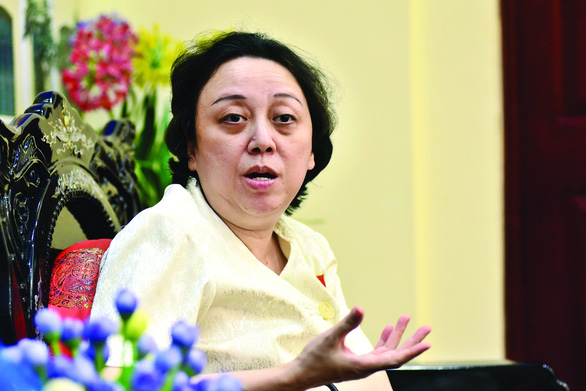
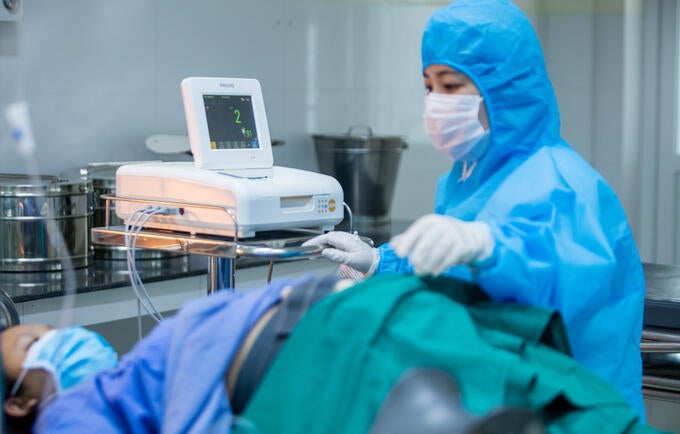
Tình trạng thiếu thuốc, trang thiết bị y tế đang diễn ra ở nhiều nơi trong cả nước. Các địa phương, bệnh viện (BV) vẫn loay hoay, hoạt động điều trị của các BV vốn đã khó càng thêm khó. Tuổi Trẻ Cuối Tuần trao đổi với phó giáo sư, dược sĩ Phạm Khánh Phong Lan, phó chủ tịch Hội Dược học Việt Nam, về việc đấu thầu, mua sắm thuốc, trang thiết bị y tế.
John F. Helliwell, Vancouver School of Economics, University of British Columbia
Haifang Huang, Professor, Department of Economics, University of Alberta
Shun Wang, Professor, KDI School of Public Policy and Management
Max Norton, Vancouver School of Economics, University of British Columbia
Acknowledgment: The authors are grateful for the financial support of the WHR sponsors, and especially for data from the Gallup World Poll, the Lloyd’s Register Foundation World Risk Poll, and the ICL/YouGov Data Portal. For much helpful assistance and advice we are grateful to Lara Aknin, Ragnhild Bang Nes, Chris Barrington-Leigh, Meike Bartels, Jan-Emmanuel De Neve, Liz Dunn, Martine Durand, Maja Eilertsen, Carrie Exton, Carol Graham, Jon Hall, David Halpern, Nancy Hey, Sarah Jones, Richard Layard, Sonja Lyubomirsky, Hannah Metzler, Tim Ng, Gus O’Donnell, Rachel Penrod, Julie Ray, Rajesh Srinivasan, Jeff Sachs, Grant Schellenberg, Ashley Whillans, and Meik Wiking
A large-scale study has highlighted the “triple burden” of child malnutrition in Southeast Asia – coexistence of undernutrition, micronutrient deficiencies and overweight/obesity.
The SEANUTS II study has emphasized an urgent need to improve food security and nutrition among children in Southeast Asia. Photo by FCV
These three burdens often coexist in the same country and can even occur in the same family.
The study of nearly 14,000 children aged six months to 12 years in Vietnam, Indonesia, Malaysia and Thailand was conducted between 2019 and 2021. The children were from urban and rural schools, community health centers and sub-district administrative organizations in the four countries.
A large-scale study has highlighted the “triple burden” of child malnutrition in Southeast Asia – coexistence of undernutrition, micronutrient deficiencies and overweight/obesity.
The SEANUTS II study has emphasized an urgent need to improve food security and nutrition among children in Southeast Asia. Photo by FCV
These three burdens often coexist in the same country and can even occur in the same family.
The study of nearly 14,000 children aged six months to 12 years in Vietnam, Indonesia, Malaysia and Thailand was conducted between 2019 and 2021. The children were from urban and rural schools, community health centers and sub-district administrative organizations in the four countries.
Các quận huyện Bình Tân, 12, Tân Phú, Bình Chánh và TP Thủ Đức nguy cơ bùng dịch sốt xuất huyết cũng như Covid-19, theo Giám đốc Sở Y tế Tăng Chí Thượng.
Thông tin được ông Tăng Chí Thượng nói tại cuộc họp về tình hình kinh tế – xã hội giữa năm của UBND TP HCM, sáng 29/6. Cảnh báo được đưa ra trong bối cảnh biến thể Covid-19 mới đã xuất hiện tại Việt Nam, song tỷ lệ tiêm nhắc vaccine còn rất thấp và dịch sốt xuất huyết cũng đang bùng phát ở địa phương này.
Về Covid-19, ông Thượng dẫn Tổ chức Y tế Thế giới (WHO) cho biết các biến thể mới như BA.4 và BA.5 đang có xu hướng thay thế chủng cũ (BA.2) trên toàn cầu. Theo nhận định của Cục Y tế Dự phòng, BA.5 cũng có khả năng trở thành biến thể chủ đạo ở Việt Nam trong thời gian tới.
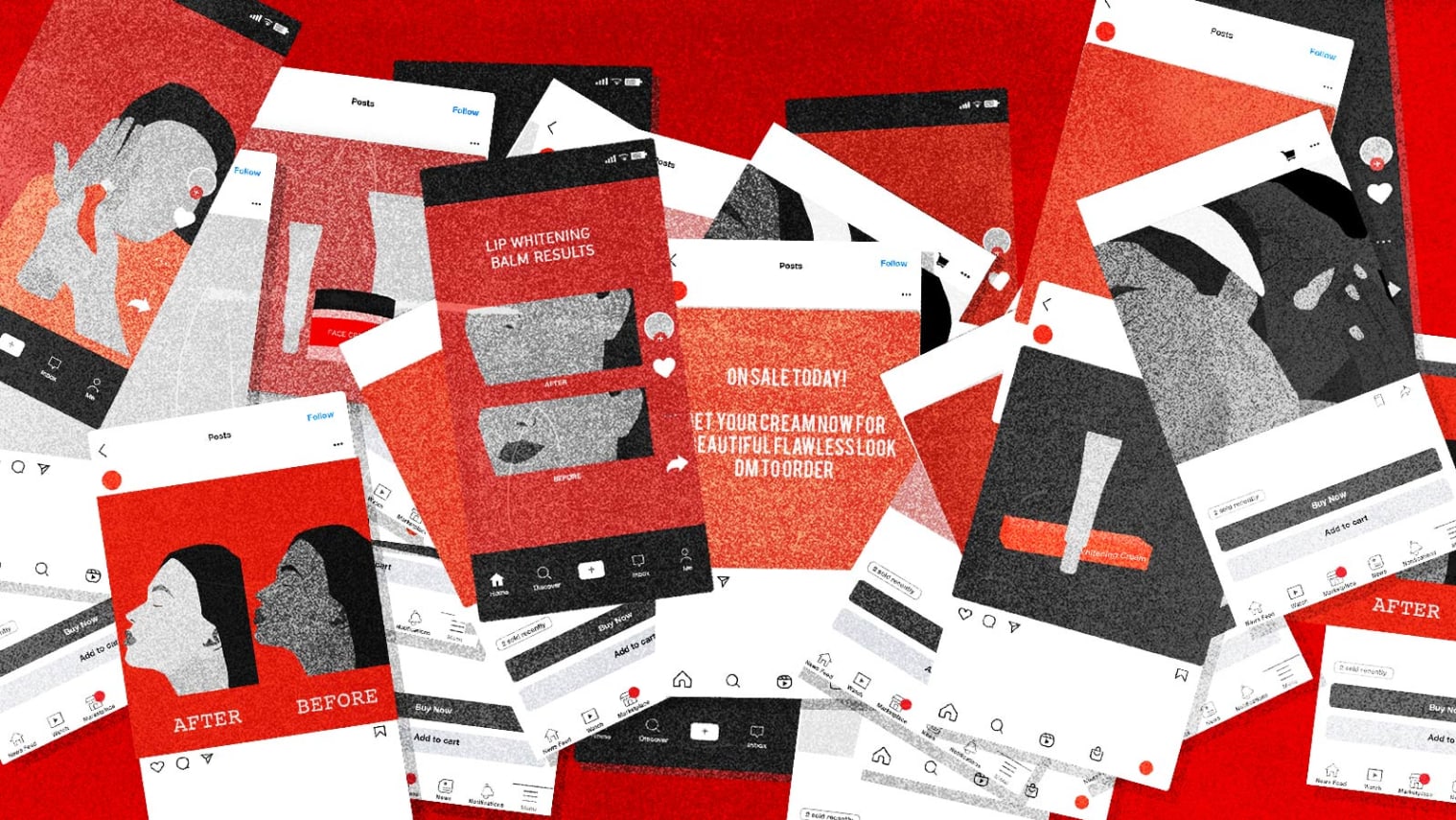
Skin-lightening products have exploded in their availability on major social media platforms where there are few rules about how they are promoted or sold. With some products containing potentially toxic ingredients, consumers could be at risk.
Written by:Jacqui Palumbo, CNN Editors: Meera Senthilingam, Eliza Anyangwe; Illustrations: Kathy Kim; Data journalist: Carlotta Dotta; Researchers: Elizabeth Yee, Jacqui Palumbo
Updated 20th June 2022
Editor’s note: This story is part of ‘White lies‘, a series by CNN’s As Equals investigating skin whitening practices worldwide to expose the underlying drivers of colorism, the industry that profits from it and the cost to individuals and communities. For information about how CNN As Equals is funded and more, check out our FAQs.
Once primarily sold in markets and beauty stores, skin-lightening products have exploded in their availability online and today, they are pervasive on every major social media platform.
On Facebook and Instagram, vendors hawk creams and serums that promise lighter skin yet offer scant information about the products themselves, while on YouTube and TikTok you can find thousands of tutorials by people promoting potent products or home remedies without qualifications that support their claims. On TikTok alone, the hashtag #skinwhitening has over 254 million views, while #skinlightening has another 62 million.
“Social media has become the most powerful tool right now for the sale of skin-lightening products,” says Dr. Anita Benson, Nigeria-based dermatologist and founder of the Embrace Melanin Initiative to combat colorism and harmful skin-lightening practices in Africa.
The annual meeting of the World Health Assembly (WHA) concluded on May 28. At the gathering, member states of the World Health Organization (WHO) made many decisions, some of which stood out as potential turning points for global health. The WHA did not ignore COVID-19, but member states primarily grappled with challenges that the pandemic created and that must be addressed beyond COVID-19. However, member states demonstrated as much caution as resolution in some of the most prominent decisions taken. This wariness creates uncertainty about the importance of these decisions as the WHO labors to put global health governance on more solid post-pandemic footing.
Hanoi (VNS/VNA) – Vietnam is in danger of missing the target of providing 93-95 percent of people in rural areas, and at least 95 percent in urban areas, access to clean water by 2025.
VNA Wednesday, April 27, 2022 10:18
Three members of a family get clean water from a tap in Bu Ren commune, in the southern province of Binh Phuoc. (Photo: VNA)
Data revealed at a conference in Hanoi on April 26 showed that only 84.2 percent of people in urban areas have access to clean water. That number is just 34.8 percent in rural areas.
The target was set under Resolution No. 16/2021/QH15, as part of the five-year socio-economic development plan for 2021-2025.
Nguyen Quang Dong, Director of the Institute for Policy Research and Media Development (IPS), already pointed out some reasons for the situation.
Marnie Hunter and Forrest Brown, CNN • Updated 1st March 2022
Tourists take boat tours through the Thu Bon River on April 24, 2021, in Hoi An, Vietnam. (Linh Pham/Getty Images)
(CNN) — Vietnam was the only destination added to the US Centers for Disease Control and Prevention’s highest-risk Level 4 category for travel on Monday.
The “very high” risk category still contains more destinations than all the other levels put together, with nearly 140 places now at Level 4. In early January, there were around 80 destinations listed there.
The CDC places a destination at “Level 4: Covid-19 Very High” risk when more than 500 cases per 100,000 residents are registered in the past 28 days.
To recap, a single destination was added to Level 4 on February 28:
Tuyên bố của Giám đốc điều hành UNFPA, Tiến sĩ Natalia Kanem
Ngày Quốc tế Hộ sinh
Ngày 05 tháng 05 năm 2021
Mỗi ngày, ở khắp mọi nơi trên thế giới, các nhân viên hộ sinh đang cứu sống phụ nữ và trẻ em, cũng như nâng cao sức khoẻ và phúc lợi của toàn thể cộng đồng.
Họ xứng đáng được tôn trọng và biết ơn, nhưng như vậy vẫn chưa đủ.
Các nhân viên hộ sinh xứng đáng được đầu tư nhiều hơn vào năng lực, cũng như nơi làm việc để giúp họ được trao quyền và công nhận toàn diện những kỹ năng và đóng góp của họ.
Những phụ nữ, đặc biệt là phụ nữ đang mang thai ở 60 xã dân tộc thiểu số thuộc vùng sâu, vùng xa của sáu tỉnh khó khăn nhất bao gồm Bắc Cạn, Lai Châu, Sơn La, Đắc Nông, Kon Tum và Gia Lai, sẽ được hưởng lợi từ các can thiệp đổi mới sáng tạo nhằm ngăn chặn tình trạng tử vong mẹ khi có thể phòng ngừa được.
Khởi động Dự án Giảm tình trạng tử vong mẹ tai các vùng dân tộc thiểu số tại Việt Nam
Dữ liệu về sức khỏe của chúng ta hiện nay do những ai nắm giữ và khai thác, được lưu trữ và chia sẻ cho những đâu, chính chúng ta có được tiếp cận chúng không? Có lẽ là không. Buổi hội thảo “Chuyển đổi số và an toàn dữ liệu trong lĩnh vực y tế” do Hội Truyền thông số Việt Nam tổ chức vào ngày 18/11 cho biết rằng: trong gần 20 năm đẩy mạnh “chuyển đổi số”, số hóa các hoạt động trong lĩnh vực y tế, nhà nước chưa có quy định nào về quyền của chủ thể dữ liệu. Nói cách khác, chúng ta chưa có quyền gì đối với những dữ liệu về sức khỏe của chính chúng ta và do chúng ta góp phần tạo ra.
Y bác sĩ ở Đại học Y Dược TP.HCM đang hội chẩn dựa trên bệnh án điện tử. Ảnh: Hoàng Hưng/báo Sài Gòn giải phóng.
ZN – Dù có rao giảng về trách nhiệm cộng đồng thế nào thì cái đích cuối cùng các nhà sản xuất rượu bia hướng đến vẫn chỉ là lợi nhuận.
Frances Black, Thượng nghị sĩ Ireland Frances Black là thượng nghị sĩ, ca sĩ và CEO của RISE Foundation, một tổ chức hỗ trợ các gia đình có thành viên đang cai nghiện ở Ireland. Bà Black từng phải đi cai nghiện rượu trong suốt 15 tháng. Đây là quan điểm của bà Black về nhóm vận động hành lang thao túng dự luật về phòng chống tác hại rượu bia và hạn chế quảng cáo mặt hàng này. Zing.vn chuyển ngữ với sự đồng ý của tác giả.
Dự luật nhằm hạn chế tác hại của rượu bia với người dân Ireland được thông qua năm 2018 nhưng trong ròng rã 3 năm, không ít lần dự luật này bị các nhà sản xuất rượu bia hợp sức tiêu diệt. Bởi nếu dự luật được thông qua, hiển nhiên lợi ích của các hãng rượu bia sẽ bị ảnh hưởng.
KHPT – Sau khi mất gần hai năm phát triển và sản xuất vaccine COVID, dồn tâm huyết và cả nguồn lực để chạy đua với đại dịch, các nhà sản xuất Việt Nam vẫn chưa thể về đích khi sản phẩm của họ mới chỉ tồn tại với cái mũ vaccine dự tuyển. Trước mắt điều gì chờ đón họ?
Chỉ có sự bất định, dẫu đại dịch vẫn đang tiếp diễn và virus SARS-CoV-2 đã tự “hoán cải” qua bao lần đột biến…
Vì sao vậy? Đó là câu hỏi mà cả Nanogen và IVAC – hai công ty phát triển và sản xuất vaccine COVID-19 là Nanocovax và COVIVAC, còn ngơ ngác chưa thể trả lời ngay được, dẫu là người nhập cuộc với quyết tâm làm bằng được một vaccine “make in Vietnam” để có thể giúp chủ động ngăn chặn đại dịch trong nước bởi họ cảm thấy trách nhiệm của mình ở đó.





.jpg)


 Đọt Chuối Non