ĐCN sẽ có bài đặc biệt cho ngày mồng 1 Tết Nguyên đán – ngày 29-1-2025 Dương lịch. Các anh chị em nào muốn viết bài cho ngày đó thì gửi bài cho mình (phamthuhuong1010@gmail.com). Hạn chót là ngày 27-1-2025. Cám ơn các anh chị em.
Nhân tiện, mình cũng thông báo với các anh chị em là ĐCN sẽ nghỉ Tết theo lịch nhà nước, nghĩa là nghỉ từ ngày 25-1 đến ngày 2-2-2025 (tức 26 Tết đến mồng 5 Tết), ngoại trừ ngày mồng 1 Tết sẽ có bài Tết.
Luật này quy định chế độ hôn nhân và gia đình; chuẩn mực pháp lý cho cách ứng xử giữa các thành viên gia đình; trách nhiệm của cá nhân, tổ chức, Nhà nước và xã hội trong việc xây dựng, củng cố chế độ hôn nhân và gia đình.
1. Hôn nhân tự nguyện, tiến bộ, một vợ một chồng, vợ chồng bình đẳng.
2. Hôn nhân giữa công dân Việt Nam thuộc các dân tộc, tôn giáo, giữa người theo tôn giáo với người không theo tôn giáo, giữa người có tín ngưỡng với người không có tín ngưỡng, giữa công dân Việt Nam với người nước ngoài được tôn trọng và được pháp luật bảo vệ.
3. Xây dựng gia đình ấm no, tiến bộ, hạnh phúc; các thành viên gia đình có nghĩa vụ tôn trọng, quan tâm, chăm sóc, giúp đỡ nhau; không phân biệt đối xử giữa các con.
4. Nhà nước, xã hội và gia đình có trách nhiệm bảo vệ, hỗ trợ trẻ em, người cao tuổi, người khuyết tật thực hiện các quyền về hôn nhân và gia đình; giúp đỡ các bà mẹ thực hiện tốt chức năng cao quý của người mẹ; thực hiện kế hoạch hóa gia đình.
5. Kế thừa, phát huy truyền thống văn hóa, đạo đức tốt đẹp của dân tộc Việt Nam về hôn nhân và gia đình.
We explore the challenges faced by India’s youth, who comprise a significant portion of the population and represent a substantial opportunity for economic growth and social progress. Despite their high aspirations, many young Indians are confronted with unemployment and underemployment, leading to frustration and disillusionment. Through personal stories and expert insights, we examine the social instability caused by this crisis, highlighted by protests and riots over job quotas. It also showcases how some young Indians are overcoming these obstacles.
Top of the Agenda International Envoys Call for Accountability, Aid, and Peace in Syria Amid Transition
UN Special Envoy for Syria Geir Pedersen says that the war in Syria has not fully ended. In a testimony to the UN Security Council yesterday, he flagged the risk of ongoing fighting between armed groups in the country’s north. A cease-fire between U.S.-backed Kurdish fighters and Turkish-backed forces in the town of Manbij was extended to the end of this week, Washington announced. UN humanitarian chief Tom Fletcher said that continued combat could impede the flow of aid into Syria, where the UN refugee agency expects some one million refugees to return in the first six months of 2025. An agency official called on countries not to force refugees to return.
Some three million refugees are in Turkey. Yesterday, European Commission President Ursula von der Leyen pledged more than $1 billion to support Syrian refugees in or returning from Turkey, and Turkish President Recep Tayyip Erdoğan called for an upgrade to Turkey’s relationship with the European Union. Meanwhile, as mass graves in Syria have become accessible to outside investigators, the U.S. government, UN bodies, and human rights groups have begun compiling evidence on abuses under the Bashar al-Assad regime in order to seek accountability. (AFP, Reuters, Euronews)
Đất không có sổ đỏ, trộm cắp xảy ra không được giải quyết, cuộc sống của 118 hộ với gần 400 người dân xã Vân Hòa, huyện Ba Vì hàng chục năm nay luôn bất định.
Cách trung tâm Thủ đô 60 km về phía tây, cụm dân cư xóm 4 thôn Xuân Hòa, xã Vân Hòa có 118 hộ với 375 nhân khẩu. Nhà cửa, vườn tược san sát, nằm dọc khoảng 1,5 km trục đường chính qua xã. Các hộ dân chủ yếu sống nhờ nghề chăn nuôi bò sữa. Theo ông Vương Quốc Luân, 85 tuổi, nhìn qua cụm dân cư giống như làng quê yên bình, song thực tế lại không được thừa nhận, bao năm qua nay chỗ này mai lại về chỗ khác.
Cụm dân cư xóm 4 thôn Xuân Hòa với nhà cửa hai bên trục đường chính. Ảnh: Việt An
China has the world’s longest high-speed railway. It only took about 20 years for the country to develop the 45,000km (28,000-mile) network. Known as an “infrastructure monster”, it is an example of the sort of development that has benefited China’s political system. The country also exports railway technology as a key part of the Belt and Road Initiative, the central government’s plan to link economies into a China-centred trading network. However, the rapid development of the high-speed transport system has also raised some important concerns.
Cambodia’s Angkor Wat, or “City of Temples”, is the largest religious structure in the world.
A truly spectacular place, it is deeply revered across Cambodia and depicted on its flag as the defining image of the nation.
In 1992, UNESCO designated Angkor as a World Heritage Site.
The UN agency also affirmed it as a “living” site whose traditional communities were as important as the stones.
But now, locals accuse the Cambodian government of the mass forced eviction of thousands of people from those communities, while the government claims each one has voluntarily moved after settling illegally in Angkor. It also says the relocations are at UNESCO’s behest.
Ahead of the U.S. election, some analysts worried that artificial intelligence could imperil election integrity. Although AI did not end up disrupting the vote, experts aren’t writing off the risks it poses to democracy.“I think it would be foolhardy to say: ‘Well, there’s been no major disaster yet, so we’re okay here,’” Gary Marcus, a scientist and AI expert, recently told FP’s Rishi Iyengar. “That’d be like saying we made a bunch of steamships, so this one’s invincible, and whoops, you hit an iceberg.”In this edition of Flash Points, FP contributors consider the ways AI could endanger democratic societies and how policymakers might face down those threats.—Chloe Hadavas
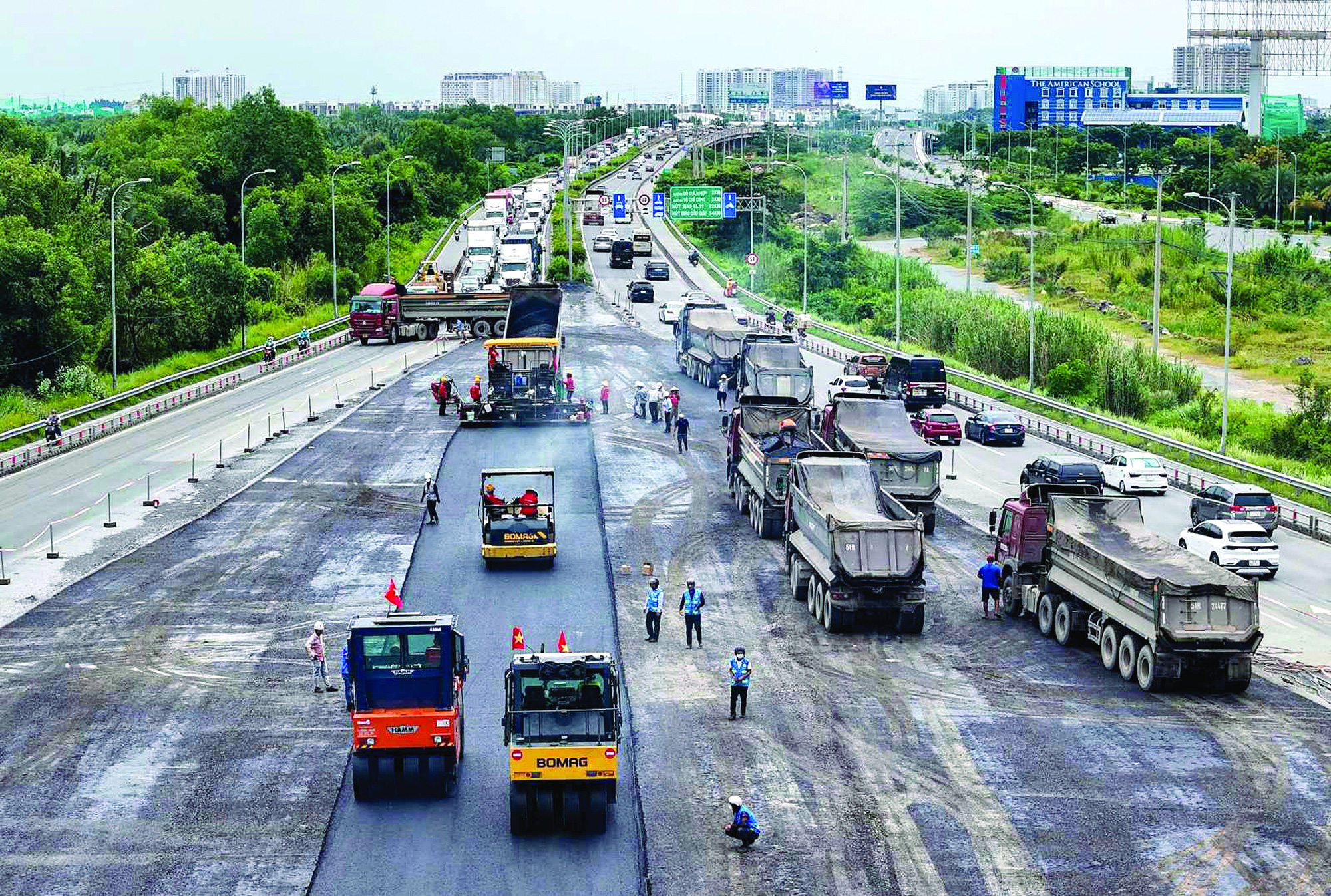
TTCT – Theo báo cáo mới nhất của Bộ Kế hoạch và Đầu tư thì hết tháng 9-2024 mới giải ngân đầu tư công được hơn 52% kế hoạch cả năm.
Nút giao thông An Phú, một trong những dự án giải ngân chậm tại TP.HCM. Ảnh: CHÂU TUẤN
Riêng vùng kinh tế trọng điểm Đông Nam Bộ, những con số còn đáng lo ngại hơn. Theo Sở KH&ĐT tỉnh Đồng Nai, tính đến cuối tháng 10, tổng vốn đầu tư công trên địa bàn tỉnh đã giải ngân mới đạt gần 46% kế hoạch; ở Bình Dương là 44,3%; TP.HCM còn thấp hơn, khi tính đến cuối tháng 10-2024, đầu tàu kinh tế cả nước mới giải ngân vốn đầu tư công được 22% tổng nguồn vốn được giao của năm 2024!
Những con số thống kê đó được báo chí nêu lên không lâu trước ngày 6-11, khi Bộ trưởng Bộ KH&ĐT Nguyễn Chí Dũng phát biểu giải trình với Quốc hội về dự án Luật Đầu tư công sửa đổi, gồm nhiều điểm mới về tư duy lập pháp. Cho thấy rõ ý thức của người đứng đầu ngành trước những vướng mắc hiện tại dẫn tới tốc độ giải ngân đầu tư công chậm chạp, bất chấp quyết tâm chính trị là không nhỏ, ông Nguyễn Chí Dũng đã đề xuất thông qua luật đầu tư công mới dưới dạng thay thế toàn bộ luật năm 2019, chứ không chỉ là sửa đổi, bổ sung. Đáng chú ý, ông Nguyễn Chí Dũng nói luật mới sẽ thay đổi trước hết về “tư duy và phương thức quản lý”, cụ thể là từ “tiền kiểm” sang “hậu kiểm”, và từ “quản lý” sang “quản lý cho kiến tạo phát triển”.
Slowing growth, weak investor confidence and brain drain – Hong Kong, the Pearl of the Orient, may be losing its lustre. Could its future lie in the Greater Bay Area, an economic integration project joining the Special Administrative Region to Guangdong and Macau?
Over the next decade, greater transport, administrative and economic links will tie Hong Kong inextricably to Southern China. But will Hong Kong find opportunity or obsolescence in the Greater Bay Area? And with around two decades till the end of “One Country Two Systems” in 2047, is the Greater Bay Area a way to assimilate Hong Kong with the Mainland?
Hanoi resident Nguyen Van Lung and his family would like to buy their own home. With high property prices in Vietnam’s capital city, a mortgage is currently beyond their budget. So they are renting for now – but is renting a sustainable option in the long term?
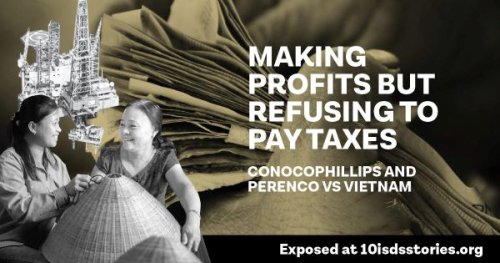
Treaty invoked: United Kingdom – Vietnam BIT (2002)
Sector: energy
Issue: tax avoidance
by CEO, FOE & TNI
Effectively and fairly collecting taxes is essential for all states, and especially for developing countries that wish to sustainably develop. Tax collection also offers a means to guarantee quality public services for all and to collectively face the challenges of climate change. However, in Vietnam and in other countries, big corporations challenge governments that try to impose taxes on their massive profits. Investor-state dispute settlement (ISDS) is one of their main avenues to try to avoid paying taxes and to receive millions in compensation instead.
07:00 26/11/2024 – Vũ Quang Việt (*) – Hồ Văn Tiến (**)
(KTSG) – Bài này đặt câu hỏi chính là tại sao Việt Nam lại muốn trở thành trung tâm của kỹ thuật chuỗi khối và lý do cho việc đặt câu hỏi.
Tại sao lại đặt vấn đề?
Công nghệ chuỗi khối (blockchain) dùng làm gì và tại sao Việt Nam lại đặt nặng vấn đề công nghệ chuỗi khối ở Việt Nam. Công nghệ chuỗi khối chính là công nghệ dùng để ghi (chứa) và cập nhật trong sổ cái (ledger) tất cả thông tin về các giao dịch (transaction) của một tài sản nào đó (có thể là tiền số, chứng chỉ sở hữu tài sản nhà, bằng lái xe hay thông tin). Hệ thống này có khả năng xác minh tính trung thực của mã địa chỉ từng túi thông tin, thông tin chứa trong túi, tính khả thi của từng trao đổi nếu là tiền số (như có đủ tiền không). Xác minh không được làm tập trung, mà làm phân tán ở khối, ở địa chỉ liên quan, rồi cuối cùng ở địa chỉ chứa sổ cái. Một khối ghi một số trao đổi mới nhất trong một thời gian nhất định, và đóng lại với mã thời gian sau khi được kiểm định. Toàn bộ các giao dịch, có thể xuyên biên giới, nhanh chóng, không qua trung gian, được máy kiểm chứng, được ghi trong sổ cái, nhưng chính vì thế mà người thứ ba (như chính phủ hay bất cứ ai) không thể biết được chủ sở hữu thật của các trao đổi và số chung kết về tài sản của một túi tiền là ai và ở đâu.
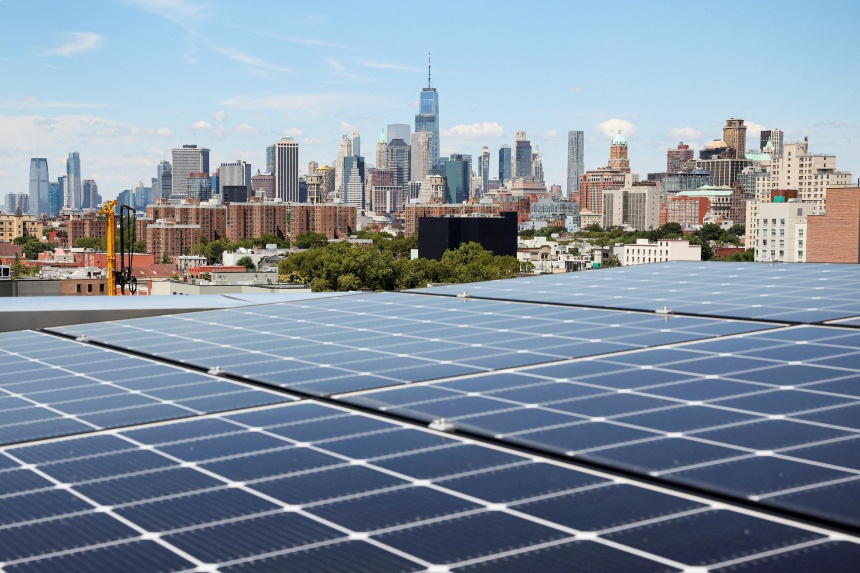
American makers of solar panels say companies in Malaysia, Cambodia, Vietnam and Thailand are flooding the market with unfairly cheap goods. PHOTO: REUTERS
WASHINGTON – US trade officials announced on Nov 29 a new round of tariffs on solar panel imports from four South-east Asian nations after American manufacturers complained that companies there are flooding the market with unfairly cheap goods.
It is the second of two preliminary decisions that President Joe Biden’s Commerce Department is making in 2024 in a trade case brought by South Korea’s Hanwha Qcells, Arizona-based First Solar and several smaller producers seeking to protect billions of dollars in investments in US solar manufacturing.
The group, the American Alliance for Solar Manufacturing Trade Committee, accused big Chinese solar panel makers with factories in Malaysia, Cambodia, Vietnam and Thailand of causing global prices to collapse by dumping products into the market.






 Đọt Chuối Non