Tag Archives: Thế giới

G7 Leaders’ Statement (in Brussels, Belgium)

MARCH 24, 2022• STATEMENTS AND RELEASES

  1. We, the Leaders of the G7, met today in Brussels at the invitation of the German G7 Presidency, to further strengthen our cooperation in light of Russia’s unjustifiable, unprovoked and illegal aggression and President Putin’s war of choice against independent and sovereign Ukraine. We will stand with the government and people of Ukraine.
  2. We are united in our resolve to restore peace and stability and uphold international law. Following the United Nations General Assembly resolution on March 2022, we will continue to stand with the overwhelming majority of the international community, in condemning Russia’s military aggression and the suffering and loss of life it continues to cause.
  3. We remain appalled by and condemn the devastating attacks on the Ukrainian population and civilian infrastructure, including hospitals and schools. We welcome the investigations of international mechanisms, including by the Prosecutor of the International Criminal Court. We will work together to support the gathering of evidence of war crimes. The siege of Mariupol and other Ukrainian cities, and the denial of humanitarian access by Russian military forces are unacceptable. Russian forces must immediately provide for safe pathways to other parts of Ukraine, as well as humanitarian aid to be delivered to Mariupol and other besieged cities.
  4. The Russian leadership is obligated to immediately comply with the order of the International Court of Justice to suspend the military operations that it commenced on 24 February 2022 in the territory of Ukraine, without any further delay. We also urge Russia to withdraw its military forces and equipment from the entire territory of Ukraine.
  5. We further call upon the Belarusian authorities to avoid further escalation and to refrain from using their military forces against Ukraine. Moreover, we urge all countries not to give military or other assistance to Russia to help continue its aggression in Ukraine. We will be vigilant regarding any such assistance.
     
  6. We will spare no efforts to hold President Putin and the architects and supporters of this aggression, including the Lukashenko regime in Belarus, accountable for their actions. To this end, we will continue to work together, along with our allies and partners around the world.
  7. We underline our resolve to impose severe consequences on Russia, including by fully implementing the economic and financial measures we already imposed. We will continue to cooperate closely, including by engaging other governments on adopting similar restrictive measures to those already imposed by G7 members and on refraining from evasion, circumvention and backfilling that seek to undercut or mitigate the effects of our sanctions. We task the relevant Ministers in a focused initiative to monitor the full implementation of sanctions and to coordinate responses related to evasive measures, including regarding gold transactions by the Central Bank of Russia. We stand ready to apply additional measures as required, continuing to act in unity as we do so. We commend those partners who have aligned with us in these efforts.
  8. Russia’s attack has already risked the safety and security of nuclear sites in Ukraine. Russian military activities are creating extreme risks for the population and the environment, with the potential for catastrophic result. Russia must comply with its international obligations and refrain from any activity that imperils nuclear sites, allowing unhindered control by the Ukrainian authorities, as well as full access by and cooperation with the International Atomic Energy Agency.
  9. We warn against any threat of the use of chemical, biological and nuclear weapons or related materials. We recall Russia’s obligations under the international treaties to which it is a signatory, and which protect us all. In this regard, we categorically denounce Russia’s malicious and completely unfounded disinformation campaign against Ukraine, a state in full compliance with international non-proliferation agreements. We express concern about other countries and actors that have amplified Russia’s disinformation campaign.
     
  10. We are resolved in our support to the Ukrainian people in their heroic resistance to Russia’s unjustifiable and illegal aggression. We will step up our support to Ukraine and neighbouring countries. We thank all those who are already providing humanitarian aid to Ukraine and ask others to join. We will furthermore collaborate in our efforts to bolster democratic resilience and defend human rights in Ukraine and neighbouring countries.
  11. We will continue efforts to support Ukraine in defending its networks against cyber incidents. In preparation for any Russian malicious cyber response to the actions we have taken, we are taking steps to increase the resilience of the infrastructure in our respective nations by strengthening our coordinated cyber defences and improving our shared awareness of cyber threats. We will also work to hold accountable those actors that engage in destructive, disruptive, or destabilising activities in cyberspace.
  12. We further commend neighbouring states for their solidarity and humanity in welcoming Ukrainian refugees and third country nationals from Ukraine. We highlight the need to further increase international assistance to countries neighbouring Ukraine, and, as a concrete contribution to this end, underline our commitment to receiving, protecting, and supporting refugees and displaced persons as a consequence of the conflict. We thus all stand ready to welcome them on our territories. We will take further steps to broaden our support to Ukraine and neighbouring countries.
  13. We are concerned by the escalating and reinforced repression against the Russian people and the increasingly hostile rhetoric of the Russian leadership, including against ordinary citizens. We deplore the Russian leadership’s attempt to deprive Russian citizens of access to unbiased information through censorship, and denounce its malicious disinformation campaigns, which we will not leave unaddressed. We express our support to those Russian and Belarusian citizens standing up against the unjustified war of aggression against their close neighbour Ukraine. The world sees them.
  14. The people of Russia must know that we hold no grievances against them. It is President Putin, his government and supporters, including the Lukashenko regime in Belarus, who are imposing this war and its consequences on Russians and it is their decision that besmirches the history of the Russian people.
  15. We are taking further steps to reduce our reliance on Russian energy, and will work together to this end. At the same time, we will ensure secure alternative and sustainable supplies, and act in solidarity and close coordination in the case of possible supply disruptions. We commit to actively support countries willing to phase out their dependency on Russian gas, oil and coal imports. We call on oil and gas producing countries to act in a responsible manner and to increase deliveries to international markets, noting that OPEC has a key role to play. We will work with them and all partners to ensure stable and sustainable global energy supplies. This crisis reinforces our determination to meet the goals of the Paris agreement and of the Glasgow climate pact and limit the rise in global temperatures to 1.5°C, by accelerating reduction of our reliance on fossil fuels and our transition to clean energy. 
  16. We stand in solidarity with our partners who have to bear the rising price of President Putin’s unilateral choice to wage war in Europe. His decision is putting the global economic recovery at risk, undermines the resilience of global value chains and will have severe impacts on the most fragile countries. We call on the international community to take action by fully recognising Russia’s responsibility and protecting the most vulnerable countries, with the support of international and regional institutions.
  17. More immediately, President Putin’s war places global food security under increased pressure. We recall that the implementation of our sanctions against Russia takes into account the need to avoid impact on global agricultural trade. We remain determined to monitor the situation closely and do what is necessary to prevent and respond to the evolving global food security crisis. We will make coherent use of all instruments and funding mechanisms to address food security, and build resilience in the agriculture sector in line with climate and environment goals. We will address potential agricultural production and trade disruptions, in particular in vulnerable countries. We commit to provide a sustainable food supply in Ukraine and support continued Ukrainian production efforts.
  18. We will work with and step up our collective contribution to relevant international institutions including the World Food Programme (WFP), in parallel with Multilateral Development Banks and International Financial Institutions, to provide support to countries with acute food insecurity. We call for an extraordinary session of the Council of the Food and Agriculture Organization (FAO) to address the consequences on world food security and agriculture arising from the Russian aggression against Ukraine. We call on all participants of the Agriculture Markets Information System (AMIS) to continue to share information and explore options to keep prices under control, including making stocks available, in particular to the WFP. We will avoid export bans and other trade-restrictive measures, maintain open and transparent markets, and call on others to do likewise, consistent with World Trade Organization (WTO) rules, including WTO notification requirements.
  19. International organisations and multilateral fora should no longer conduct their activities with Russia in a business as usual manner. We will work closely with our partners to act as appropriate, based on shared interests, as well as rules and regulations of respective institutions.
Continue reading G7 Leaders’ Statement (in Brussels, Belgium)

In Mexico, It is the unions against the workers

Plain English Version – February 3, 2022

The General Motors facility in Silao, Mexico. Photo Credit: Luis Antonio Rojas for The New York Times.

Unions make life better for workers. That is the idea. But what if the unions are corrupt? What if union leadership works for the benefit of employers? That is the reality for labor in Mexico.

Mexico has big factories. It is a rich country in Latin America. Yet its workers still earn low wages compared to other countries in the region.

The unions in Mexico are the reason. Big unions are closely allied with politicians and employers. They have kept wages low. They have made it hard to organize new unions. Their leaders have wealth and power. There is suspicion of corruption.

Continue reading In Mexico, It is the unions against the workers

The war comes to Asia

nikkeiFrom refugees to sanctions, Asian countries are being forced to pick sides in the Russia-Ukraine war.

Nikkei staff writers – March 18, 2022 11:43 JST

NEW YORK — Welcome to Nikkei Asia’s podcast: Asia Stream.

LISTEN HERE

Every week, Asia Stream tracks and analyzes the Indo-Pacific with a mix of expert interviews and original reporting by our correspondents from across the globe.

Continue reading The war comes to Asia

Teaching resources to help students make sense of the War in Ukraine

nytime.com Articles, maps, photos, videos, podcasts and more, as well as suggestions for using them in your classroom.

Residents salvage their belongings from their homes on March 14 after the shelling of a residential building in Kyiv, Ukraine. Related ArticleCredit…Lynsey Addario for The New York Times

By Katherine SchultenMichael Gonchar and Jeremy Engle

March 16, 2022

Young people all over are avidly following what some have called “the first TikTok war.” In late February, we created a place on our site for teenagers to react to the invasion, and within a week, over 900 had. This comment from Winn Godier, a high school student in North Carolina, echoes what we have heard from many teenagers:

Continue reading Teaching resources to help students make sense of the War in Ukraine

This was supposed to be Xi Jinping’s big year. Instead, he’s dealing with Covid and war

Analysis by Simone McCarthy, CNN

Chinese President Xi Jinping, center, and other officials sing the Chinese national anthem during a ceremony to mark Martyr's Day at Tiananmen Square in Beijing, in September 2019.

Chinese President Xi Jinping, center, and other officials sing the Chinese national anthem during a ceremony to mark Martyr’s Day at Tiananmen Square in Beijing, in September 2019.

Updated 1005 GMT (1805 HKT) March 16, 2022

Hong Kong (CNN)In a year when all Xi Jinping craved was for things to be stable, 2022 is shaping up to be anything but.

After years of careful preparation, the Chinese leader is expected to step into an almost unprecedented third term at the helm of the country and its Communist Party this fall.

But instead of a smooth ride, dual crises are threatening to upend the status-quo, with China’s largest outbreak of Covid-19 in two years emerging at home while overseas, Russia embarks on a brutal, widely denounced invasion of Ukraine.

Continue reading This was supposed to be Xi Jinping’s big year. Instead, he’s dealing with Covid and war

PODCAST: Asia Stream: The old and new Cold War

From Nixon’s 1972 visit to Beijing condoning Russia’s invasion of Ukraine, we investigate what went wrong in the U.S.-China relationship

Nikkei – February 25, 2022 13:08 JST

NEW YORK — Welcome to Nikkei Asia’s podcast: Asia Stream.

Every week, Asia Stream tracks and analyzes the Indo-Pacific with a mix of interviews and original reporting by our correspondents from across the globe.

New episodes are recorded weekly and available on Apple PodcastsSpotify and all other major platforms, and on our YouTube channel.

LISTEN HERE

Continue reading PODCAST: Asia Stream: The old and new Cold War

Asia Stream: A tale of three cities

Asia is home to some of the world’s largest and most dynamic cities. Why do some of them fail?

Nikkei staff writersFebruary 18, 2022 11:59 JST

asia.nikkei.com

NEW YORK — Welcome to Nikkei Asia’s podcast: Asia Stream.

Every week, Asia Stream tracks and analyzes the Indo-Pacific with a mix of interviews and original reporting by our correspondents from across the globe.

New episodes are recorded weekly and available on Apple PodcastsSpotify and all other major platforms, and on our YouTube channel.

LISTEN HERE

Continue reading Asia Stream: A tale of three cities

International Court of Justice order of March 16, 2022 concerning Russia-Ukraine war

Read the Court’s full text here >>

The full text of the operative clause of the Order reads as follows:

“For these reasons,

THE COURT,
Indicates the following provisional measures:

(1) By thirteen votes to two,
The Russian Federation shall immediately suspend the military operations that it commenced on 24 February 2022 in the territory of Ukraine;


IN FAVOUR: President Donoghue; Judges Tomka, Abraham, Bennouna, Yusuf, Sebutinde, Bhandari, Robinson, Salam, Iwasawa, Nolte, Charlesworth; Judge ad hoc Daudet;
AGAINST: Vice-President Gevorgian; Judge Xue;

(2) By thirteen votes to two,
The Russian Federation shall ensure that any military or irregular armed unitswhich may be directed or supported by it, as well as any organizations and persons which may be subject to its control or direction, take no steps in furtherance of the military operations referred to in point (1) above;

IN FAVOUR: President Donoghue; Judges Tomka, Abraham, Bennouna, Yusuf, Sebutinde, Bhandari, Robinson, Salam, Iwasawa, Nolte, Charlesworth; Judge ad hoc Daudet;
AGAINST: Vice-President Gevorgian; Judge Xue;

(3) Unanimously,
Both Parties shall refrain from any action which might aggravate or extend the dispute before the Court or make it more difficult to resolve.”

Further readings: Convention on the Prevention and Punishment of the Crime of Genocide

Countries currently at war 2022

Click here to hover over a tile for details.

worldpopulationreview.com

The Oxford English Dictionary defines “war” as: (1) A state of armed conflict between different countries or different groups within a country; (2) a state of competition or hostility between different people or groups, or (3) a sustained campaign against an undesirable situation or activity. There are many possible reasons for war to begin between—or more often, within—nations. Among these are economic gain, territorial gain, religion, nationalism, civil war, and political revolution. Often, countries’ leaders become primary motivators of conflict by instigating a territorial dispute, trying to control another country’s natural resources, or exercising authoritarian power over people.

Continue reading Countries currently at war 2022

A new culture of dissent is remaking Cuba’s politics

worldpoliticsreview.com – William M. LeoGrande Tuesday, March 8, 2022

Anti-government protesters march in Havana, Cuba, July 11, 2021 (AP photo by Eliana Aponte).

In mid-February, a court in Holguin, Cuba, about 500 miles east of Havana, handed down sentences of up to 20 years in prison to 20 people convicted of sedition the previous month. Their crime, and that of the hundreds of others like them still awaiting verdicts elsewhere, was to have participated in widespread protests last summer, some peaceful but some violent, that took the Cuban government—and the world—by surprise.

Continue reading A new culture of dissent is remaking Cuba’s politics

The War in Ukraine is transforming the EU

Dave Keating Thursday, March 10, 2022 worldpoliticsreview

The European Union’s 27 leaders are in Versailles today for a summit that could prove to be historic. They are expected to sign the “Versailles Declaration,” intended to formalize the far-reaching but ad hoc policy changes the EU has implemented in response to Russia’s invasion of Ukraine, which is now entering its third week. The measures under discussion would strengthen the union’s existing military, economic and border control capabilities, while also giving the bloc new powers in those areas that will push it further down the path toward federalism.

The symbolism of the decision to sign the declaration at the Palace of Versailles—where the Versailles Treaty, another pivotal document that proved central to the remaking of Europe after World War I, was signed in 1919—is not lost on anyone. In 1919, Europe’s leaders got it very wrong. Will they get it right this time? It’s very hard to say, since nobody knows what the world that emerges after the war in Ukraine will look like.

Continue reading The War in Ukraine is transforming the EU

Currency adrift – 50 years after the “Nixon shock”

Nikkei50 years ago a major event in the history of money occurred — the “Nixon shock” of August 15, 1971. The “floating exchange rate system” that became the norm after this spurred the development of the global postwar economy. However, it has also frequently caused crises in emerging countries. Recently “digital currencies” have begun to spread, and there are signs that the reserve currency system based on the dollar may be changing. How will the future of currency impact the global economy?

Continue reading Currency adrift – 50 years after the “Nixon shock”

A handshake that changed the world: 50 years after Nixon’s trip to China

U.S. President Nixon shakes hands with Chinese President Mao Zedong (Feb. 21, 1972, AP)

nikkeiFeb. 21 marks the 50th anniversary of U.S. President Richard Nixon’s trip to China, a turning point in international relations.

Washington and Beijing joined together to counter the Soviet Union, but China did not democratize as the U.S. hoped. It has now become an economic and military powerhouse under the one-party rule of the Communist Party. A half-century after the handshake that changed the world, cooperation has turned to confrontation. The U.S.-China relationship and global affairs have all undergone tumultuous change.

Continue reading A handshake that changed the world: 50 years after Nixon’s trip to China

How international law applies to attacks on nuclear and associated facilities in Ukraine

thebulletin.org

By George M. Moore | March 6, 2022

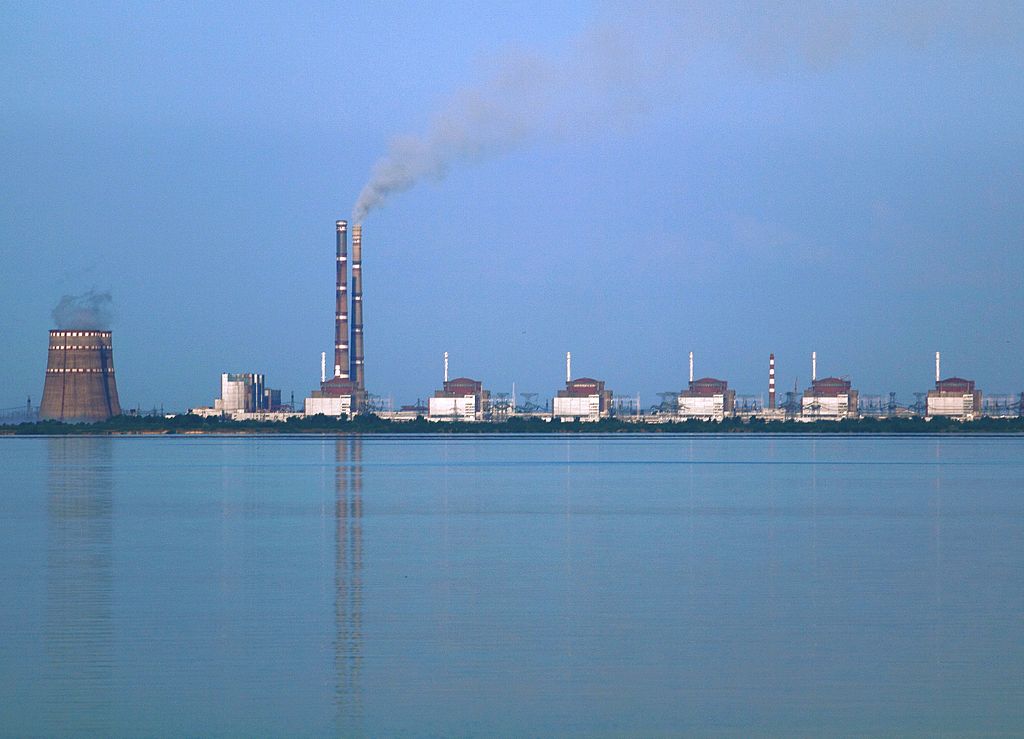
 Zaporizhzhia nuclear power plant in southern Ukraine. The two tall smokestacks are at a coal-fired generating station about 3km beyond the nuclear plant. Photo credit: Ralf1969 via Wikimedia Commons.
As the Russian invasion of Ukraine began to unfold, Russia’s swift occupation of the Chernobyl reactor complex and the surrounding exclusion zone sparked widespread speculation and concern.[1] The concern was not limited to whether the occupation would cause further radioactive release from Chernobyl;[2] it also included possible Russian military action against other Ukrainian nuclear facilities. These fears were further accelerated when Russian forces shelled and apparently occupied the Zaporizhzhia nuclear power complex near Enerhodar, Ukraine.[3] There have also been reports of attacks on a former Radon disposal site near Kyiv.[4]

Continue reading How international law applies to attacks on nuclear and associated facilities in Ukraine

India’s ‘neutrality’ on the Ukraine conflict could hurt it in the long run

New Delhi has been silent on Russia’s actions in Ukraine so far.

thediplomat – By Sudha Ramachandran – February 25, 2022

India’s ‘Neutrality’ on the Ukraine Conflict Could Hurt It in the Long Run
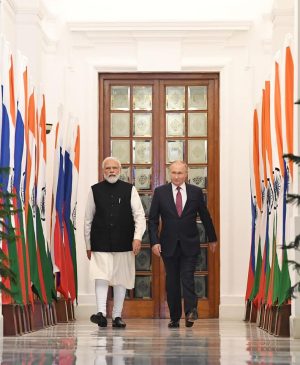
India’s Prime Minister Narendra Modi with Russian President Vladirmir Putin during the summit in New Delhi, India on December 6, 2021.Credit: Facebook/ Ministry of External Affairs, India

Russia’s invasion of Ukraine on February 24 has put India in a particularly difficult spot. Since the conflict between Moscow and the U.S. over Ukraine began escalating late last year, India has avoided taking sides. But with Moscow’s invasion of Ukraine, that cautious approach will become increasingly untenable for New Delhi. It could hurt India’s interests in the long-run.

Continue reading India’s ‘neutrality’ on the Ukraine conflict could hurt it in the long run