The US invasion of Iraq kicked off a cycle of violence and instability that persists to this day. #AJStartHere with Sandra Gathmann explains how the invasion set Iraq on a troubled path, and where things stand twenty years later.
Republish our articles for free, online or in print, under Creative Commons licence.
The details are disputed, but either way the result was the same: On March 14, 2023, a U.S. drone crashed into the Black Sea after an encounter with Russian aircraft.
According to the U.S. version of events, the unarmed MQ-9 surveillance drone was flying in international airspace when two Russian fighter jets dumped fuel on the drone before colliding with it in violation of international law.
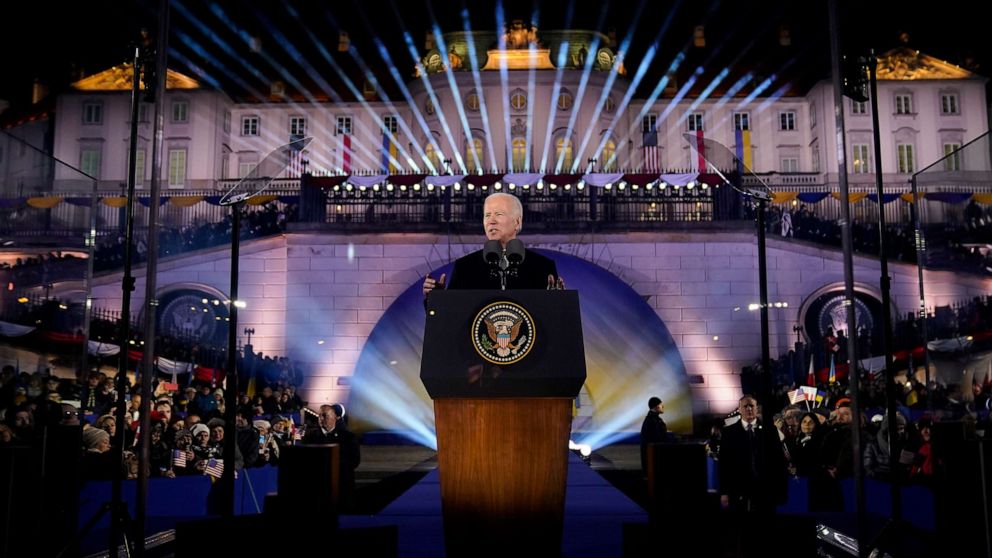
Anthony Albanese, Joe Biden and Rishi Sunak announce the Aukus nuclear-powered submarine deal in San Diego. Photograph: Stefan Rousseau/AP
In a tripartite deal with the US and the UK, Australia has unveiled a plan to acquire a fleet of up to eight nuclear-powered submarines, forecast to cost up to $368bn between now and the mid-2050s. Australia will spend $9bn over the next four years.
From this year Australian military and civilian personnel will embed with US and UK navies, including within both countries’ submarine industrial bases. From 2027 the UK and the US plan to rotate their nuclear-powered submarines through HMAS Stirling near Perth as part of a push to step up training of Australians.
This week, we at Transparency International faced an unexpected turn as the Russian Federation announced it would designate our organisation as “undesirable”. It claimed that we “interfere in the internal affairs of the Russian Federation, which poses a threat to the foundations of the constitutional order”
. Corruption is an issue that knows no borders. It is the essential mission of Transparency International to call attention to and fight against it everywhere. It is our specific mandate to combat transnational corruption, when deficiencies in one country enable abuses in others – to global detriment.
On Friday, March 10, Saudi Arabia and Iran announced their agreement to reestablish diplomatic relations based on talks held in Beijing. China has portrayed itself as the broker of the agreement, and China’s senior diplomat congratulated the two countries on their “wisdom.”
Q1: Why did the two countries reestablish relations now?
A1: The agreement seems to have been moved forward during President Ebrahim Raisi’s visit to Beijing last month. For months, Saudi Arabia has put pressure on Iran through its reported support for Iran International, a foreign-based Persian-language broadcaster critical of the regime that is received in Iran. Since President Raisi took office in August 2021, he announced it was a priority to reduce tensions with regional neighbors. Saudi Arabia and Iran have had a wide variety of differences throughout the region, often fought through proxies. They span from Lebanon to Syria to Iraq to Yemen. Iran has supplied weapons to Houthi forces in Yemen that have threatened Saudi populations both on the border and in interior areas. Saudi Arabia has been increasingly interested in finding a way to end the conflict in Yemen, and this agreement is likely to move that forward.
The Netherlands Announces Chip Export Curbs After U.S. Urging
The Dutch government announced that it will impose export restrictions (FT) on “the most advanced” semiconductor technology, citing security concerns. While it did not name China in the announcement, the restrictions come after U.S. officials urged the Dutch and Japanese governments to limit chip exports to China over fears that the tech could be used to make weapons and commit human rights abuses. Washington announced its own curbs on chip exports in October.
U.S.-China tensions over technology access came up as U.S. intelligence officials testified to Congress yesterday during an annual hearing on security threats. CIA Director William Burns called tech innovation (Reuters) “the main arena for competition” with China. Additionally, Director of National Intelligence Avril Haines said China will increasingly try to undercut U.S. influence (CNN), though it will likely try to prevent tensions from spiraling into conflict.
Good morning. We tell you about a real-life spy caper involving a General Electric engineer and his handler in Nanjing.
Illustrations by Hokyoung Kim
Intelligence Inc.
The invitation seemed like an exciting honor. Hua, as The New York Times is referring to him, was an engineer at GE Aviation in Cincinnati, and a Chinese aeronautical university had asked him to come back to China in 2017 to deliver a lecture about his field.
But Hua knew that GE might deny him permission to give the talk out of a concern that it would betray proprietary information. So he accepted the invitation — and traveled to Nanjing — without telling his bosses. When a suspicious F.B.I. agent later interviewed him about the trip, Hua dissembled and said he was only visiting friends and family.
By this point, Hua was facing likely criminal charges for lying to a federal agent, and he agreed to participate in a counterintelligence operation rather than being charged. Over the next six months, one of his hosts in Nanjing — a Ministry of State Security employee who had posed as a regional economic development official — tried to persuade Hua to download sensitive material from GE computers. All the while, the F.B.I. was coaching Hua and ultimately hoping to set up a meeting in a European country where Hua’s handler could be arrested and extradited to the United States.
Forests cover Bhutan, which has protected 50 percent of its land. Sergi Reboredo/VW Pics/Universal Images Group/Getty Images
During the 2022 UN biodiversity conference, COP15, countries reached a landmark agreement that aims to reverse the unprecedented destruction of nature. One of the agreement’s twenty-three targets, known as 30×30, aims to protect at least 30 percent of the planet’s land and water by 2030. That goal, which almost doubles the target for 2020 that was set through the UN process more than a decade ago, was the inspiration behind a 2023 UN agreement to protect biodiversity in the high seas, the international waters that comprise more than half the world’s oceans. So far, nearly 16 percent of all land and inland waters have been protected, as have 8 percent of marine areas.
Protected areas are those that are designated and managed in order to achieve conservation goals, according to the UN Convention on Biological Diversity. Human activities, such as farming, resource extraction, and settlement, are generally allowed in these areas as long as they are done sustainably. But there are no formal mechanisms to monitor these activities, and countries report their own progress with limited oversight.
One of the main motivations for the goal is to protect biodiversity, which refers to the variety of all living things on Earth and the natural systems they form. In recent decades, animal populations have plummeted and more species have gone extinct than ever before. This loss has sweeping consequences for livelihoods, economic growth, medicine, food systems, and climate resilience. To put a price on it, the world lost $4–20 trillion per year [PDF] from 1997 to 2011 because of changes in how humans use land, according to the Organization for Economic Cooperation and Development.
Conservation is also critical to achieving climate goals. Forests, peatlands, and oceans are carbon sinks, meaning they absorb massive amounts of planet-warming carbon dioxide. When they’re destroyed, all that carbon goes back into the atmosphere. Some ecosystems can also guard against climate disasters. Coral reefs and mangroves, for example, form natural barriers against extreme storms.
Protected Areas and Wilderness Around the World
*Land estimated to be habitat unmodified by humans. Areas that are important for biodiversity can occur within and outside of these areas.
Notes: Includes terrestrial areas only. Data for protected areas in China, Estonia, India, Ireland, New Zealand, and Turkey is not complete due to limited reporting.
Sources: Protected Planet; UN Environment Program World Conservation Monitoring Center.
The 30×30 goal is a global target. More than one hundred countries have voiced support, but that doesn’t mean they’ve pledged to protect 30 percent of their own land and waters. Experts say that’s not necessarily a bad thing. “The hope is that each nation will set the most ambitious goal that it can,” says the Pew Charitable Trusts’ Masha Kalinina.
The study’s main finding is that Taiwan’s fall would have devastating consequences for the United States and many countries in the region and beyond. Regardless of how it happens (without or despite US/allied intervention), Taiwan’s fall to the PRC would be earth shattering. The PRC could eclipse US power and influence in the region once and for all. Taiwan’s fall could lead to the advent of a Pax Sinica where Beijing and its allies would pursue their interests much more aggressively and with complete impunity. Nuclear proliferation in several parts of the Indo-Pacific could also be the net result of Taiwan’s fall, leading to much more dangerous regional and international security environments. To several authors, it would thus be necessary to build an Asian equivalent to the North Atlantic Treaty Organization to prevent PRC adventurism and ultimately retake Taiwan.
Accordingly, the United States, its allies, and others should take major action—rapidly—to prevent such a development. In particular, the United States should lead an effort to strengthen collective deterrence and defense in the Indo-Pacific; this is especially important in the aftermath of the Russian invasion of Ukraine, which has shown territory takeovers still happen in the twenty-first century. The United States should also give serious consideration to establishing region-wide nuclear sharing arrangements; at a minimum, it should jumpstart research to examine the benefits, costs, and risks that such arrangements would bring to the Indo-Pacific security architecture, as well as assess the opportunities and challenges that such a development would present.
Kinh tế Sài Gòn Online – Tiếng Anh liên tục đẻ ra từ mới. Mấy năm rồi, báo chí cả tỉ lần dùng từ “Brexit” để chỉ quá trình nước Anh ra khỏi Liên minh châu Âu (EU), một từ ngắn gọn thay cho cách diễn đạt dài dòng, nói lên ai cũng hiểu, khỏi cần chú thích. Nay nảy sinh một từ mới – “Bregret” – một cách chơi chữ kết hợp hai từ British và regret để nói đến tình cảnh nước Anh bây giờ, hối tiếc đã vội vàng dứt áo ra khỏi EU, để lại nhiều hậu quả nặng nề cho nền kinh tế.
In favor (8): Bruinei, Indonesia, Cambodia, Thailand, Malaysia, Myanmar, Philippines, Singapore
Abstensions (2): Vietnam, Laos.
Observers (2): In favor: Papua New Guinea, Timor-Leste
Total: 10 in favors, 2 abstentions]
141 members of the 193-nation body voted in support of the nonbinding, largely symbolic resolution.
Monitors show result of a United Nations General Assembly vote for a U.N. resolution upholding Ukraine’s territorial integrity and calling for a cessation of hostilities after Russia’s invasion. | Bebeto Matthews/AP Photo
The United Nations General Assembly on Thursday adopted a resolution calling for Russia to withdraw its troops from Ukraine, almost exactly one year after it invaded the neighboring country.
China’s post-pandemic charm offensive with Europe was supposed to shift into overdrive this past week.
Instead, a visit by China’s top diplomat, Wang Yi, showed just how challenging it will be for Beijing to get its relationship with Europe back on track, at a time when China’s ties with Russia appear to be deepening and those with Washington are sinking to new depths.
Wang’s appearance at the Munich Security Conference, sandwiched between trips to Paris, Rome, Budapest, and Moscow, was the clearest illustration to date of the diplomatic dilemma China faces as it emerges from three years of self-imposed COVID isolation, the last of which clouded by the war in Ukraine.
Big Oil’s Big Lies: How the industry denied global warming – Part 1 | People and Power
Big Oil’s Big Lies: How the industry denied global warming – Part 2 | People and Power
Al Jazeera English – 9-2-2023
More than 40 years ago, the world’s largest and most profitable oil companies began to understand the effects their products were having on our climate. Their own scientific research told them so – well before it became common knowledge.
But for the next four decades – time we could have better spent transitioning to greener forms of energy – they sought to discredit and downplay evidence of global warming and the calamities it would lead to; wildfires, rising sea levels, extreme storms and much else besides. Continue reading Big Oil’s Big Lies: How the industry denied global warming – 2 parts→

 We believe in the free flow of information

 Corruption is an issue that knows no borders. It is the essential mission of Transparency International to call attention to and fight against it everywhere. It is our specific mandate to combat transnational corruption, when deficiencies in one country enable abuses in others – to global detriment.

 Illustrations by Hokyoung Kim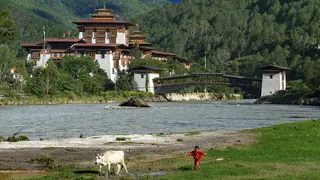


 Đọt Chuối Non