Tag Archives: Biển Đông

How the United States Can Effectively Contain China

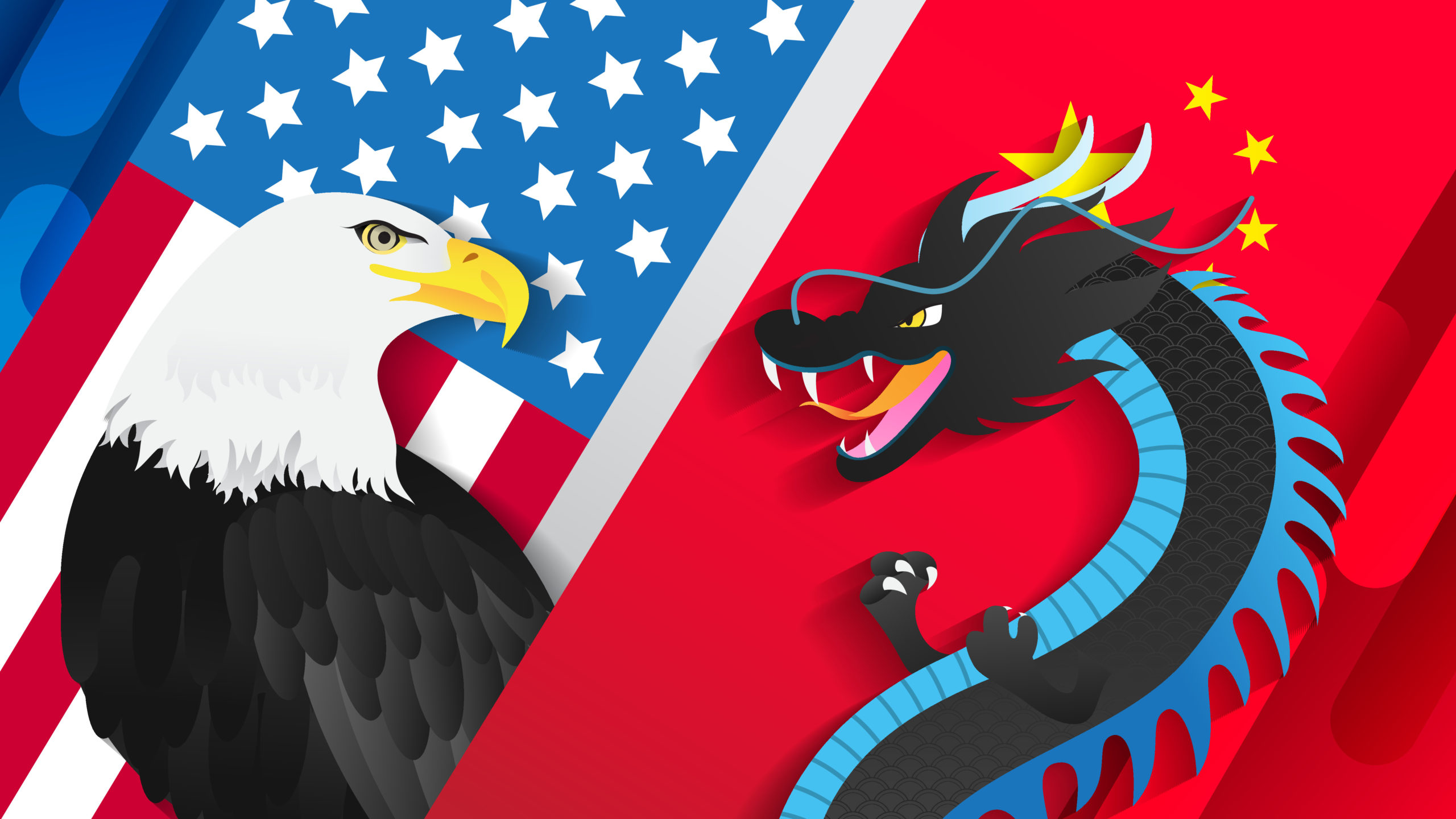
Kết quả hình ảnh cho china and us

Daniel HoffmanHARVAFRD’s Belfer Center

| May 21, 2020

Pluralism and freedom vs. Communist autocracy

During his Senate confirmation hearing last week to be the next director of national intelligence, Texas Republican Rep. John Ratcliffe emphasized China is this country’s “greatest threat actor,” a status only confirmed by rising acrimony over Beijing’s handling of the coronavirus pandemic. But though tensions are rising in the South China Sea, where U.S. Navy missions challenge China’s unsubstantiated claims of hegemony over the region, an actual war between the two powers appears unlikely.

But are the United States and China on a path to a new Cold War?

The heart of U.S.-China conflict is in the realm of ideas. Democratic principles of liberty, pluralism and freedom are antithetical to China’s autocratic Communist state and Chinese President Xi Jinping’s expanding cult of personality. Through its ubiquitous state surveillance and “Great Firewall” on online dissent, China seeks to deny its citizens freedom of expression and access to the outside world.

East Sea: What is gray zone? (Maritime Gray Zone Tactics: The Argument for Reviewing the 1951 U.S.-Philippines Mutual Defense Treaty)

By Adrien Chorn and Monica Michiko Sato – October 1, 2019, CSIS

Kết quả hình ảnh cho East Sea: What is gray zone? (Maritime Gray Zone Tactics: The Argument for Reviewing the 1951 U.S.-Philippines Mutual Defense Treaty)

Download PDF   |    

On August 31, 1951, representatives of the United States and the Republic of the Philippines signed the Mutual Defense Treaty (MDT) in Washington. In recognition that “an armed attack in the Pacific Area on either of the Parties would be dangerous to [the] peace and safety” of both countries, the treaty declared that each state would “act to meet the common dangers in accordance with its constitutional processes.”i However, like most conventional defense treaties and standards, the MDT is not clear about the increasingly common unconventional gray zone threats that skirt the definition of war to avoid prompting a kinetic response. Since its inception, the United States’ commitment to the MDT regarding attacks on Philippine assets in contested waters in the South China Sea has been unclear. 

Continue reading on CVD >>

Japan weighs in on South China Sea dispute, adding to pressure on Beijing

Permanent mission to UN sends note saying China’s territorial baselines on some islands and reefs fail to satisfy conditions in United Nations conventionIt also accuses China of restricting freedom of navigation and overflight

Laura Zhou

Laura Zhou in Beijing

Published: 7:51pm, 21 Jan, 2021 SCMP

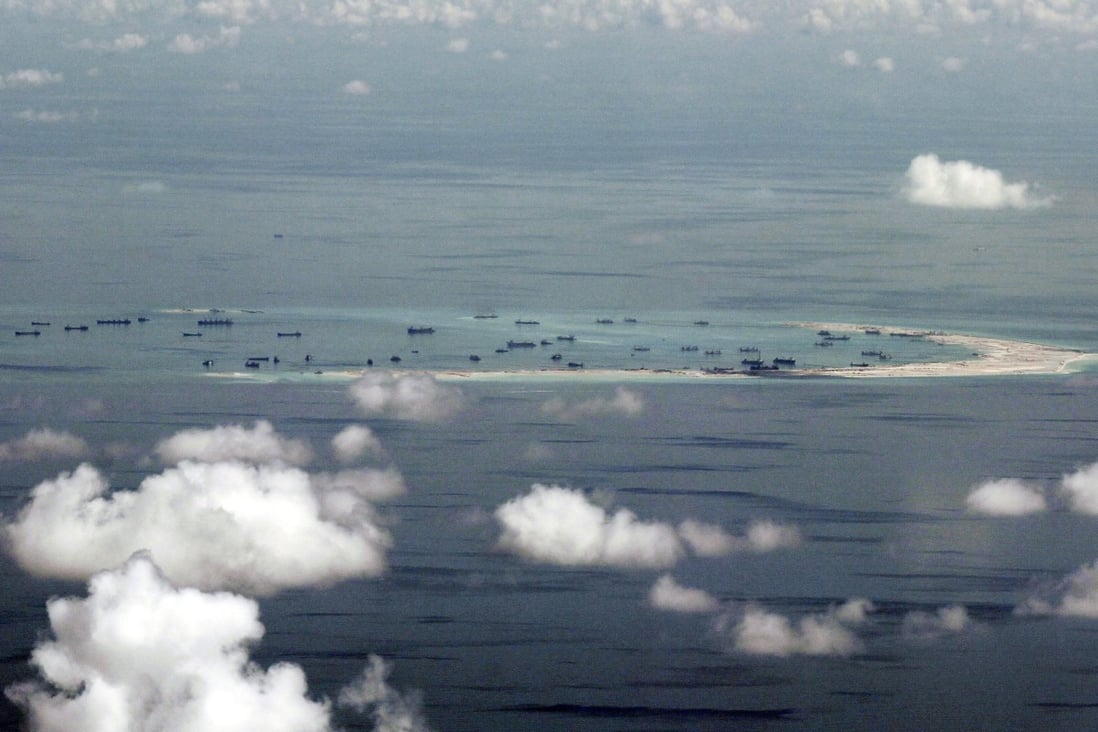
Japan’s diplomatic note made reference to China’s protests against the overflight of Japanese aircraft at Mischief Reef. Photo: AP

Japan’s diplomatic note made reference to China’s protests against the overflight of Japanese aircraft at Mischief Reef. Photo: AP

Japan has joined a battle of diplomatic notes over the South China Sea dispute, adding to pressure on Beijing over its expansive claims in the strategically important waterway.

In a note verbale – a type of diplomatic communication – sent on Tuesday, Japan’s permanent mission to the United Nations said China’s “drawing of territorial sea baselines … on relevant islands and reefs in the South China Sea” failed to satisfy conditions set out in the UN Convention on the Law of the Sea.

Continue reading on CVD >>

China ‘threatens war’ with Philippines as US pledges support to Manila

31 Jan, 2021 01:26 AM7 minutes to read Nzherald

China's President Xi Jinping 'threatened war' with the Philippines this week. Photo / AP
China’s President Xi Jinping ‘threatened war’ with the Philippines this week. Photo / AP

news.com.auBy: Jamie Seidel25

China is “threatening war” after it authorised its warships to open fire on fishers plying traditional waters, warns the Philippines. Now Washington says it has Manila’s back.

Beijing has passed legislation calling upon its military-controlled coast guard to open fire upon “foreign” vessels and destroy “illegal” structures within the East and South China seas.

Problem is, those territories don’t belong to it.

Continue reading on CVD >>

Aircraft carrier Theodore Roosevelt steams into the South China Sea

Geoff Ziezulewicz
Sailors aboard the aircraft carrier Theodore Roosevelt watch the warship John Finn approach for a replenishment-at-sea earlier this month. TR and its strike group entered the South China Sea on Saturday. (MC1 Chris Cavagnaro/Navy)
The aircraft carrier Theodore Roosevelt and its strike group entered the South China Sea Saturday [1/23/2021], a month into their second deployment in a year. While a Navy release announcing TR’s move states the carrier is conducting routine operations, very little has been routine in the disputed waters for several years. Beijing and its regional neighbors all have competing claims to various swaths of the busy waterway, and the U.S. Navy regularly sails into the sea to push back on Beijing’s expanding territorial claims and island building, and to reinforce the fact that such waters are international. Continue reading on CVD >>

China to conduct military drills in South China Sea amid tensions with U.S.

By Reuters Staff, Reuters

FILE PHOTO: An aerial view of China occupied Subi Reef at Spratly Islands in disputed South China Sea April 21, 2017. REUTERS/Francis Malasig/Pool

BEIJING (Reuters) – China said on Tuesday it will conduct military exercises in the South China Sea this week, just days after Beijing bristled at a U.S. aircraft carrier group’s entry into the disputed waters.

A notice issued by the country’s Maritime Safety Administration prohibited entry into a portion of waters in the Gulf of Tonkin to the west of the Leizhou peninsula in southwestern China from Jan. 27 to Jan. 30, but it did not offer details on when the drills would take place or at what scale.

ADVERTISEMENT

A U.S. carrier group led by the USS Theodore Roosevelt entered the South China Sea on Saturday to promote “freedom of the seas,” the U.S. military said, days after Joe Biden began his term as president.

The contested waters have become another flashpoint in the increasingly testy bilateral relationship between Beijing and Washington. The U.S. military has steadily increased its activities there in recent years as China asserts its territorial claims in the area in conflict with neighbouring countries including Vietnam, Malaysia, the Philippines, Brunei and Taiwan.

ADVERTISEMENT

The announcement of the drills in the Gulf of Tonkin, just east of Vietnam, came as the Southeast Asian country opened a key Communist Party congress in Hanoi.

China on Monday complained that the United States frequently sends aircraft and vessels into the South China Sea, through which trillion dollars in trade flow every year, to “flex its muscles” and said such actions are not conducive to peace and stability in the region.

Reporting by Beijing Newsroom; Additional reporting by James Pearson in Hanoi; Writing by Se Young Lee; Editing by Raju Gopalakrishnan

Our Standards: The Thomson Reuters Trust Principles.

China authorises coast guard to fire on foreign vessels

Al Jareeza
Legislation also allows demolition of other countries’ structures built on Chinese-claimed reefs.

A Philippine fisherman watches a China Coast Guard vessel patrolling the disputed Scarborough Shoal [File: Erik De Castro/Reuters]

23 Jan 2021

China has passed a law that for the first time explicitly allows its coast guard to fire on foreign vessels, a move that could make the contested South China Sea and nearby waters more choppy.

The Coast Guard Law passed on Friday empowers it to “take all necessary measures, including the use of weapons when national sovereignty, sovereign rights, and jurisdiction are being illegally infringed upon by foreign organisations or individuals at sea”.

Continue reading on CVD >>

Biển Đông: Vùng biển quan trọng nhất trên thế giới

English: The World’s Most Important Body of Water: More than most, four men shaped the oft-cited “strategic tensions” over the South China Sea.
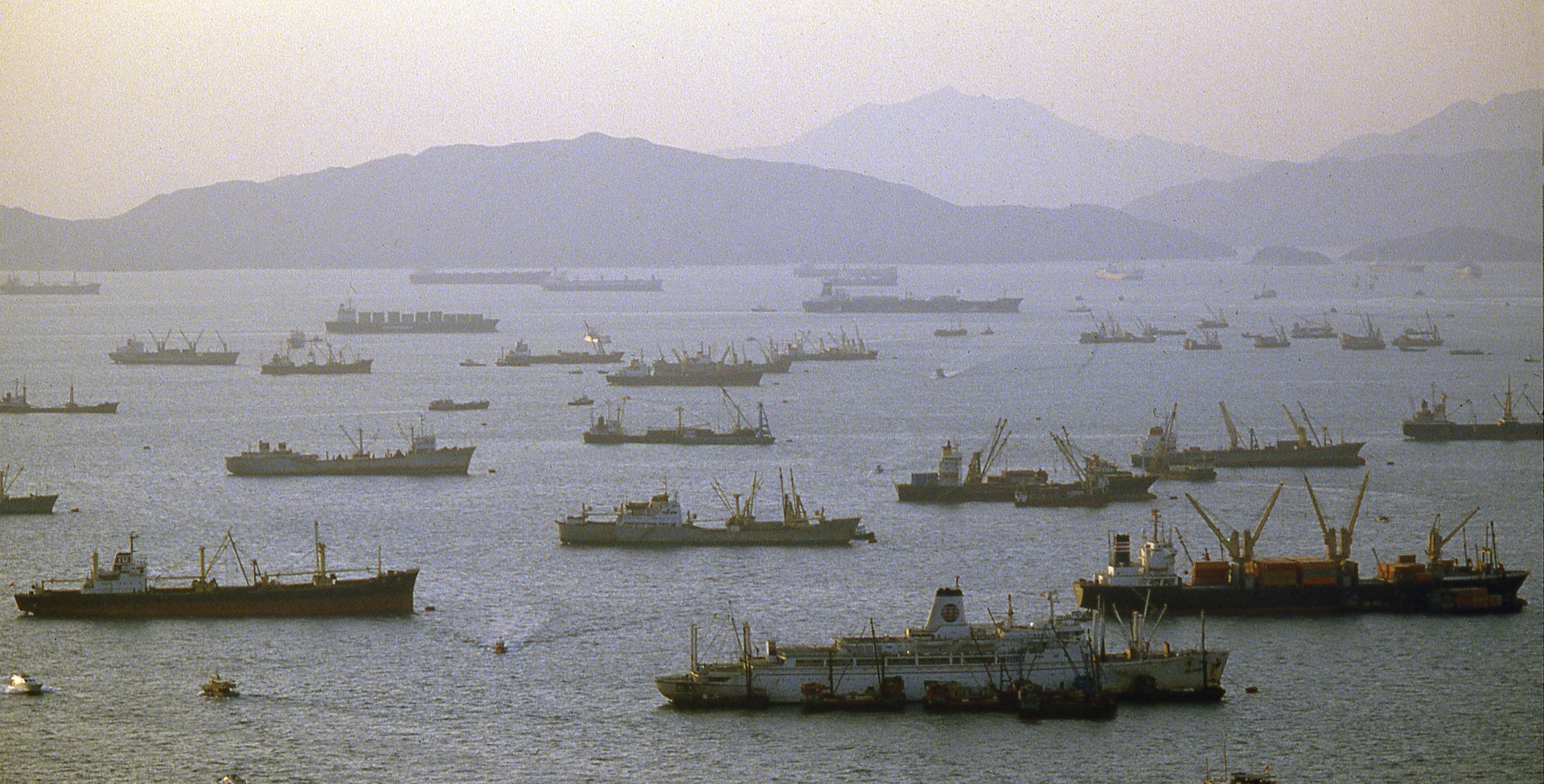
An aerial view of cargo ships in Hong Kong harbor.

Hơn ai hết, có bốn nhân vật đã định hình “căng thẳng chiến lược” thường được nhắc đến về Biển Đông

Biển Đông là vùng lãnh hải quan trọng nhất cho nền kinh tế thế giới — nơi mà ít nhất một phần ba thương mại toàn cầu thông thương qua lại. Đây cũng là vùng biển nguy hiểm nhất thế giới, nơi mà quân đội Hoa Kỳ và Trung Quốc có thể dễ dàng va chạm nhất.

Các tàu chiến của Trung Quốc và Mỹ gần như chỉ ngăn chặn được một số sự cố ở đó trong vài năm qua, và quân đội Trung Quốc đã cảnh báo về các máy bay phản lực của Mỹ bay phía trên. Vào tháng 7, hai quốc gia đã tiến hành các cuộc tập trận hải quân cạnh tranh trong vùng biển này. Với việc được gọi là “cạnh tranh chiến lược” ngày càng tăng giữa Washington và Bắc Kinh, nỗi lo sợ về một tai nạn có thể châm ngòi cho một cuộc đối đầu quân sự lớn hơn khiến các nhà chiến lược ở cả hai bên phải bận tâm.

Đọc tiếp trên CVD >>

‘Thương binh’ Hoàng Sa tập tễnh mưu sinh

NN – Thứ Hai 28/12/2020 , 07:01 (GMT+7)

Sau nhiều năm, tôi mới gặp lại ngư dân Tu Thanh Sơn với bước chân tập tễnh vì từng bị dính đạn ở gần đảo Phú Lâm, quần đảo Hoàng Sa.

Ngư dân Tu Thanh Sơn dù bị thương nhưng vẫn quay trở lại Hoàng Sa

Anh Sơn trông gầy yếu hơn và cho biết, vẫn phải đi lặn, vẫn quay lại Hoàng Sa mưu sinh để lo cho gia đình. Anh cũng đặt câu hỏi về việc đi giữ đảo nhưng bị Trung Quốc bắn bị thương thì Nhà nước có chính sách hỗ trợ gì.

Đọc tiếp trên CVD >>

What Does Vietnam Want from the US in the South China Sea?

The Diplomat

Despite seeking a balance between the superpowers, Vietnam desires more robust security ties with Washington.

Derek Grossman

By Derek GrossmanJanuary 04, 2021   

What Does Vietnam Want from the US in the South China Sea?
Sailors signal to an MH-60S Sea Hawk helicopter as it hovers over the flight deck of the guided-missile destroyer USS McCampbell during a training exercise in the South China Sea, July 22, 2016.Credit: Flickr/U.S. Navy

As the incoming Biden administration formulates its South China Sea strategy, one regional partner that looms large is Vietnam. Over the last few years, tensions between China and Vietnam in the South China Sea have remained high, impacting fishing and natural resource exploration in disputed waters. While the Biden administration is likely to continue the positive momentum in bilateral ties, it is less clear what specifically Hanoi seeks from Washington to help it effectively deter Beijing.

Continue reading on CVD >>