Wednesday, 19 August 2020 brusselstimes
US President Donald Trump told reporters on Tuesday that he had called off US – China trade deal negotiations.
“I don’t want to talk to them now,” Trump said. “If you know what they’ve done to this country and the world, I don’t want to talk to China just yet. So yes, I canceled the talks.”
Since Trump’s arrival at the White House in 2017, relations between Washington and Beijing have been tense.
Continue reading on CVD >>
Techno-nationalism: The US-China tech innovation race New challenges for markets, business and academia BY ALEX CAPRI RESEARCH FELLOW, HINRICH FOUNDATION, 20202
The US-China tech innovation race is challenging the laissez-faire economic model. State interventionism, techno-nationalism and US tech funding initiatives are increasing. This paper outlines the implications for markets, academia, research organizations, and governments of the US-China competition to achieve innovation advantage.
Bloomberg News August 17, 2020, 4:00 AM GMT+7 Updated on
Tensions rise as president highlights tough-on-China stances
Topics range from TikTok to Taiwan jet sales to Hong Kong
The almost daily drumbeat of tensions between the U.S. and China shows little sign of letting up, while touching on everything from the coronavirus to trade to defense issues to monetary policy.
President Donald Trump has made his tough positions on China a key element in the lead-up to the U.S. presidential election, now less than three months away, and he seems intent on keeping the pressure on.
Tensions have been mounting since the Covid-19 pandemic spread across the globe early this year. Barely a day goes by without Trump slamming what he calls a “plague” unleashed on the world by China in press briefings, Twitter and elsewhere.
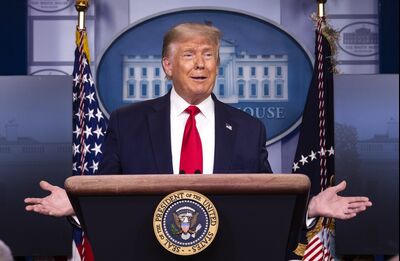
Donald Trump speaks on Aug. 14.Photographer: Kevin Dietsch/UPI/Bloomberg
The hawks in Donald Trump’s administration are on the ascent. Do not expect the US to u-turn on this march towards a harsher stance on China, say Steven R Okun and James Green.
A WeChat logo is displayed on a mobile phone as a woman walks past as she talks on her mobile phone at a taxi rank in this picture taken on Jul 21, 2016. (Photo: REUTERS/Siphiwe Sibeko)
SINGAPORE: Last week’s suite of actions by the United States against WeChat and TikTok were among the most significant developments since March 2018 when US President Donald took formal action in retaliation for China’s unfair trade practices.
What a difference two months can make. In May, Taiwan Semiconductor Manufacturing Co. (TSMC), the world’s largest chipmaker, lost the business of Huawei Technologies—its biggest Chinese customer and the source of 13% of its revenue—as a casualty of geopolitical jockeying between superpowers. But TSMC shareholders took the loss in stride. And by late July, after a stumble by rivalIntel, TSMC’s stock had risen almost 50% since May, making it one of the world’s 10 most valuable companies.
Republican senators line up in favor of Microsoft purchase
Mnuchin says Democratic leaders agree new approach needed
The Trump administration will announce measures shortly against “a broad array” of Chinese-owned software deemed to pose national-security risks, U.S. Secretary of State Michael Pompeo said.
The comments suggest a possible widening of U.S. measures beyond TikTok, the popular music-video app owned by ByteDance Ltd., one of China’s biggest tech companies. President Donald Trump told reporters Friday that he plans to ban TikTok from the U.S., but his decision hasn’t been announced. Pompeo signaled he expects a Trump announcement “shortly.” Chinese newspapers slammed a potential ban on TikTok.
The president continues to weigh his options and may have an answer Monday or Tuesday, Fox Business reported on Sunday evening.
Al JazeeraBeijing says move is a ‘legitimate and necessary response’ to Washington’s order to close Chinese consulate in Houston.30 minutes agoWang Wenbin says ‘malicious slander’ is behind US order to close Chinese consulate in Houston, Texas [Ng Han Guan/ AP Photo]
MORE ON US & CANADA
China has ordered the United States to close its consulate in the southwestern city of Chengdu, retaliating against Washington’s move earlier this week to shut down the Chinese consulate in the Texas city of Houston.
Continue reading on CVD >>
Vietnam supports a comprehensive, fair and lasting solution to the conflict between Palestine and Israel through dialogues and negotiations, as well as the exercise of indisputable legal rights of Palestinians.
Ambassador Dang Dinh Quy, head of the Vietnamese Permanent Mission to the United Nations, made the reaffirmation at an online meeting of the UN Security Council (UNSC) on July 21 discussing the Middle East situation, including the recent Palestinian issue.
CHANGSHA, China — The United States has ordered China to close its consulate general in Houston “in order to protect American intellectual property and American’s private information,” State Department spokeswoman Morgan Ortagus said Wednesday.
Beijing vowed to retaliate, calling the order “an unprecedented escalation” in a broader conflict between the world’s two biggest economies, which now encompasses trade and technology, freedom of the press and religion, and the coronavirus and the race for a vaccine.
Vietnam needs to address environmental challenges to fully reap the benefits from its new free trade and investment agreements with the European Union. On 8 June, Vietnam’s National Assembly ratified the EU–Vietnam Free Trade Agreement and Investment Protection Agreement, following the European Parliament’s approval in February. Ratifying the agreement clears the path for Vietnam to expand exports to the potentially lucrative EU market and to attract more investment from the economic bloc.
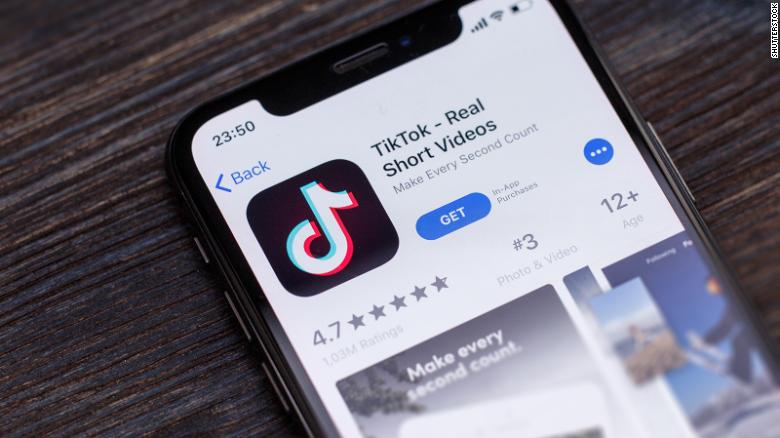
Hong Kong/Washington (CNN Business) – The United States is “looking at” banning Chinese social media apps, including TikTok, Secretary of State Mike Pompeo said Monday.
Pompeo suggested the possible move during an interview with Fox News’ Laura Ingraham, adding that “we’re taking this very seriously.”
Pompeo was asked by Ingraham whether the United States should be considering a ban on Chinese social media apps, “especially TikTok.”
The presidential order under consideration would be based on the same statute in the Immigration and Nationality Act used in a 2017 travel ban on several predominantly Muslim countries.
Morning rush hour in Beijing this month. A broad travel ban would be the most provocative U.S. action against China since the start of the trade war in 2018.Credit…Roman Pilipey/EPA, via Shutterstock
The Trump administration is considering a sweeping ban on travel to the United States by members of the Chinese Communist Party and their families, according to people familiar with the proposal, a move that would almost certainly prompt retaliation against Americans seeking to enter or remain in China and exacerbate tensions between the two nations.
The presidential proclamation, still in draft form, could also authorize the United States government to revoke the visas of party members and their families who are already in the country, leading to their expulsion. Some proposed language is also aimed at limiting travel to the United States by members of the People’s Liberation Army and executives at state-owned enterprises, though many of them are likely to also be party members.
Sau một phần tư thế kỷ bình thường hoá quan hệ, hai quốc gia cựu thù Mỹ và Việt Nam đang có một mối quan hệ được đánh giá là “mạnh mẽ”. Tuy nhiên, họ đã không thể nâng tầm quan hệ lên đối tác chiến lược trong 25 năm qua vì những quan niệm khác biệt, mà theo Giáo sư Carl Thayer của Đại học New South Wales, là do “đồng sàng dị mộng” về lợi ích chiến lược.
Mỹ chính thức công bố bình thường hoá quan hệ ngoại giao với quốc gia cựu thù Cộng sản Việt Nam vào ngày 11/7/1995. Một ngày sau đó tại Hà Nội, Thủ tướng Võ Văn Kiệt ra tuyên bố thành lập quan hệ ngoại giao với Hoa Kỳ, mà theo truyền thông trong nước, đã mở ra một chương mới trong lịch sử hàn gắn và phát triển giữa hai nước.
By Hoang Tao July 11, 2020 | 08:08 pm GMT+7 VNexpress
Chuck Searcy (R) poses with Bui Trong Hong, National Technical Officer at Project RENEW. Photo by VnExpress/Ngo Xuan Hien.
For the past 25 years, Chuck Searcy has cleaned up explosives and helped disabled children in Quang Tri Province, a prime Vietnam War battleground.
Chuck Searcy is no stranger to the employees of Project RENEW, a Vietnamese organization that deals with unexploded ordnance left from the Vietnam War. His thin stature and silver hair are a stark contrast to his gregarious, lively persona. Traveling back and forth between Hanoi and Quang Tri Province, a major former battlefield in central Vietnam, Searcy has done all in his capacity to mend wartime wounds.