Category Archives: Trang tiếng Anh

What’s really important about China’s stock market disaster, and what’s not

January 7

Washingtonpost – You can only defy financial gravity for so long. At some point, what went up for no reason must come down for a very good one, no matter what the government does to try to keep it aloft.

Which is to say that it was another disastrous day for Chinese stocks. On the plus side, though, it was a short one. Indeed, China’s market was only open for 14 minutes on Thursday before it fell the maximum 7 percent it’s allowed to in a single session. It’s the second time that’s happened this week, enough to erase almost all its gains since the summer.

Continue Reading on CVD

Family planning in Vietnam Running deer

A draft population law looks ill-considered and discriminatory

 
economist – BRIGHTLY coloured plastic flowers greet patients at the reception desk of Nguyen To Hao’s abortion clinic. Yet the mood in her waiting room is grim. Ms Hao, an obstetrician and gynaecologist, says that many of her patients are teenagers who know shockingly little about sex or its consequences. Some young women with late-term pregnancies are sent to a nearby hospital for abortions; others carry their pregnancies to term and leave their newborn babies in the care of Buddhist monks.

Continue Reading on CVD

Here’s How Chinese Stocks Short-Circuited

TEA LEAF NATION

Beijing’s rules intended to stem market panic only made things worse. Blame human nature.

Here’s How Chinese Stocks Short-Circuited

It was an embarrassing about-face for Chinese securities regulators. Just days after introducing “circuit breaker” policies on Jan. 4 — which paused stock markets for 15 minutes on a five percent drop and shut them down for the day on a seven percent drop — Beijing announced Jan. 7 that it would suspend the new rules, effective immediately.

Continue Reading on CVD

Migration and refugees

ODI – Development is migration: millions leave their countries each year in search of opportunities and better lives. People also leave their homes to escape conflict, repression or environmental disasters. Remittances – the money that people send home from abroad – accounts for nearly 600 billion dollars, dwarfing global aid budgets.

Our research and high-level debates on the crisis in the Mediterranean and, more recently, on the Syrian refugee crisis, examine how we can meet these global challenges – and the role of international development to better manage global migration.

Through research, events, media engagement and partnerships, ODI offers evidence to lay bare the political and economic realities of migration and to inform the public debate.

Specifically, we focus on three areas: refugees and displacement, European migration policy and human mobility.

Opening borders and barriers

Nature 527, S80–S82 (12 November 2015) doi:10.1038/527S80a
Published online
11 November 2015

Collaboration may result in higher impact science, but are government initiatives the best way to promote such international and interdisciplinary connections?

Kavli Institute

Tea time at Kavli Institute allows for an organized and informal exchange of collaborative ideas.

Nature – An American physicist, a Japanese mathematician and a German cosmologist walk into a lab; what do you get? Based on recent outcomes, you’ll get ground-breaking science. And lately, governments have begun paying heed to evidence1 that suggests international, multidisciplinary collaborations such as these will yield high-impact results.

Policymakers from diverse countries, including China, Japan, Australia, Chile and Germany, have sought to foster excellent science and technological innovation — and reap the associated economic benefits — by promoting collaboration across borders and disciplines, and setting up specialist centres with the necessary resources (see ‘Conduits to collaboration’).

Reinvigorating agricultural productivity in the Lower Mekong

November 27, 2015 1:00 pm JST
Aladdin D. Rillo and Mercedita A. Sombilla

 
asia.nikkei.com – The green revolution has done wonders for Asia. Yields for most crops, particularly the region’s main staple of rice, have doubled over recent decades. In the Lower Mekong Delta, considered to be Asia’s rice bowl, the new technologies and crop strains that the green revolution brought were a big success.

Cambodian farmers load vegetables onto a cart for transport to market, at a farm in Kandal Province, south of Phnom Penh, on Oct. 16, which was World Food Day. © AP

Rice production in the Lower Mekong countries of Cambodia, Laos, Myanmar and Vietnam soared 68% between 1980 and 1995. During the same period, average yields more than doubled from their levels in the 1960s to about 3.5 tons per hectare. Total land area planted with rice also increased by around 25% to 16.3 million hectares between 1996 and 2005.

How kids in Vietnam, other countries embark on extreme journeys to school (photos)

 Xem toàn bộ Gallery

TUOI TRE NEWS – Updated : 09/07/2015 18:16 GMT + 7

As the world marks the 48th annual International Literacy Day on Tuesday, have a look at how children in Vietnam and several Asian countries go to school in this photo feature provided by World Vision Vietnam.

Millions of children across Asia returned to school this month, pursuing their right to education. The new school year in Vietnam officially kicked off on September 5.

While many have schools in their own communities, others have to go on long and difficult journeys to access their education, which is a major challenge in Asia and the Pacific.

In remote villages, schools are often far away and difficult to reach. The distance from home to school is one of the reasons why 26.3 million children are out of school in Asia and the Pacific, according to UNESCO.

Continue Reading on CVD

Powering the Internet with renewable energy

December 3, 2015

GoogleblogToday we’re announcing the largest, and most diverse, purchase of renewable energy ever made by a non-utility company. Google has already committed to purchase more renewable energy than any other company. Now, through a series of new wind and solar projects around the world, we’re one step closer to our commitment to triple our purchases of renewable energy by 2025 and our goal of powering 100% of our operations with clean energy. 842 MW of renewable energy around the world Today’s agreements will add an additional 842 megawatts of renewable energy capacity to power our data centers. Across three countries, we’re nearly doubling the amount of renewable energy we’ve purchased to date. We’re now up to 2 gigawatts—the equivalent to taking nearly 1 million cars off the road. These additional 842 megawatts represent a range of locations and technologies, from a wind farm in Sweden to a solar plant in Chile.

Continue Reading on CVD

Vietnam’s Divide: Slow Healing, Fewer Prospects for Children of U.S. Allies — Việt Nam vẫn còn chia cách: vết thương chậm hồi phục, ít có triển vọng cho con cái của đồng minh Mỹ

(English and Vietnamese — Song ngữ Anh Việt)

Families who were allied with U.S. barred from Communist Party

December 23, 2015

The Week That Was In Asia Photo Gallery

Photographer: Dita Alangkara/AP
Vu Tien, a university student in Ho Chi Minh City, holds photographs of his father who served in the military of the former Republic of Vietnam that governed the nation's south from 1954 to 1975.
Vu Tien, a university student in Ho Chi Minh City, holds photographs of his father who served in the military of the former Republic of Vietnam that governed the nation’s south from 1954 to 1975.
Source: Bloomberg News

As a graduate from one of Vietnam’s most prestigious schools, 22-year-old Cao would seem to have a bright future ahead of him — if only the past would get out of the way. He’s found his career prospects hemmed in by the lingering legacy of a war that ended nearly two decades before he was born.

Continue Reading on CVD

What makes a good life? Lessons from the longest study on happiness

Chào các bạn,

Năm 1938, Đại học Harvard bắt đầu một nghiên cứu về những điều gì quan trọng nhất cho đời sống con người, kéo dài cho đến nay (77 năm) và vẫn tiếp tục. Đây là cuộc nghiên cứu về phát triển đời sống của người lớn dài nhất thế giới.

Nhóm người được nghiên cứu gồm 724 người, một nửa là sinh viên năm thứ 2 ở Harvard thời đó, tức là các đối tượng đến từ các gia đình quyền lực và thành công, và nửa kia là các thanh niên nghèo khổ ở Boston, gia đình thiếu ăn thiếu mặc. Khoảng 60 người trong số 724 người đó vẫn còn sống ngày nay.

Trong cuộc nói chuyện dưới đây, Robert Waldinger, giám đốc đời thứ 4 của cuộc nghiên cứu, cho biết sau hơn 75 năm nghiên cứu, nhóm nghiên cứu tìm thấy: Điều quan trọng nhất cho hạnh phúc của con người không phải là tiền bạc, quyền lực, hay mục tiêu nào cả, mà là quan hệ con người: Continue reading What makes a good life? Lessons from the longest study on happiness

The Untold Story of the U.S. and Cuba’s Middleman

FP Report

The Untold Story of the U.S. and Cuba’s Middleman

On the day the United States and Cuba restored full diplomatic ties after a half-century of acrimony, the scene at the newly opened Cuban Embassy in Washington was euphoric. A boisterous band played the Cuban national anthem as a three-man honor guard marched onto the front lawn and mounted the island nation’s flag. Five hundred dignitaries, including senior U.S. diplomats, a large visiting Cuban delegation, and U.S. lawmakers filled the nearly century-old mansion. Even Hollywood B-lister Danny Glover made an appearance.

Continue Reading on CVD

The Current State of Sustainable Energy Provision for Displaced Populations: An analysis

Author: Rebecca Gunning, Independent Sustainable Energy Consultant

This paper examines the benefits and impacts of sustainable energy access for displaced populations, considers the challenges to energy access and assesses the role of the private sector in delivering energy for displaced populations.

Photo: iStockphoto
Photo: iStockphoto

By the end of 2013, the number of forcibly displaced persons worldwide had reached 51.2 million, of which 33.3 million were internally displaced persons (IDPs) and 16.7 million were refugees. Access to energy is a basic human need; for these displaced people however, access to energy is a real challenge. This initial research reviews camp situations (which are home to approximately 50% of refugees) and focuses on the evidence of the benefits and impacts of sustainable energy access for displaced populations. The paper also assesses how the private sector could help to provide energy for displaced populations.

Continue Reading for CVD

Being a good servant – I am living my dream

I can’t remember when I came to know the phrase “Living your dream” when I started learning English. The phrase doesn’t have a precise meaning in Vietnamese.  It implies that you have obtained what you have dreamed for, have tried and worked to make it come true.  For that, you are living your dream.

Do you have a dream? Let me tell you the stories of my dreams.

When I was a little girl, I had a wish (let call it a dream) to own a telescope since I loved astronomy. I then made my own telescope  while in junior (?) high school. My self-made telescope costed me about 15USD. Though the telescope did not work as good as I expected, it brought me enough joy. Continue reading Being a good servant – I am living my dream

The Power of Smallholder Land Rights to Combat Climate Change

CSIS

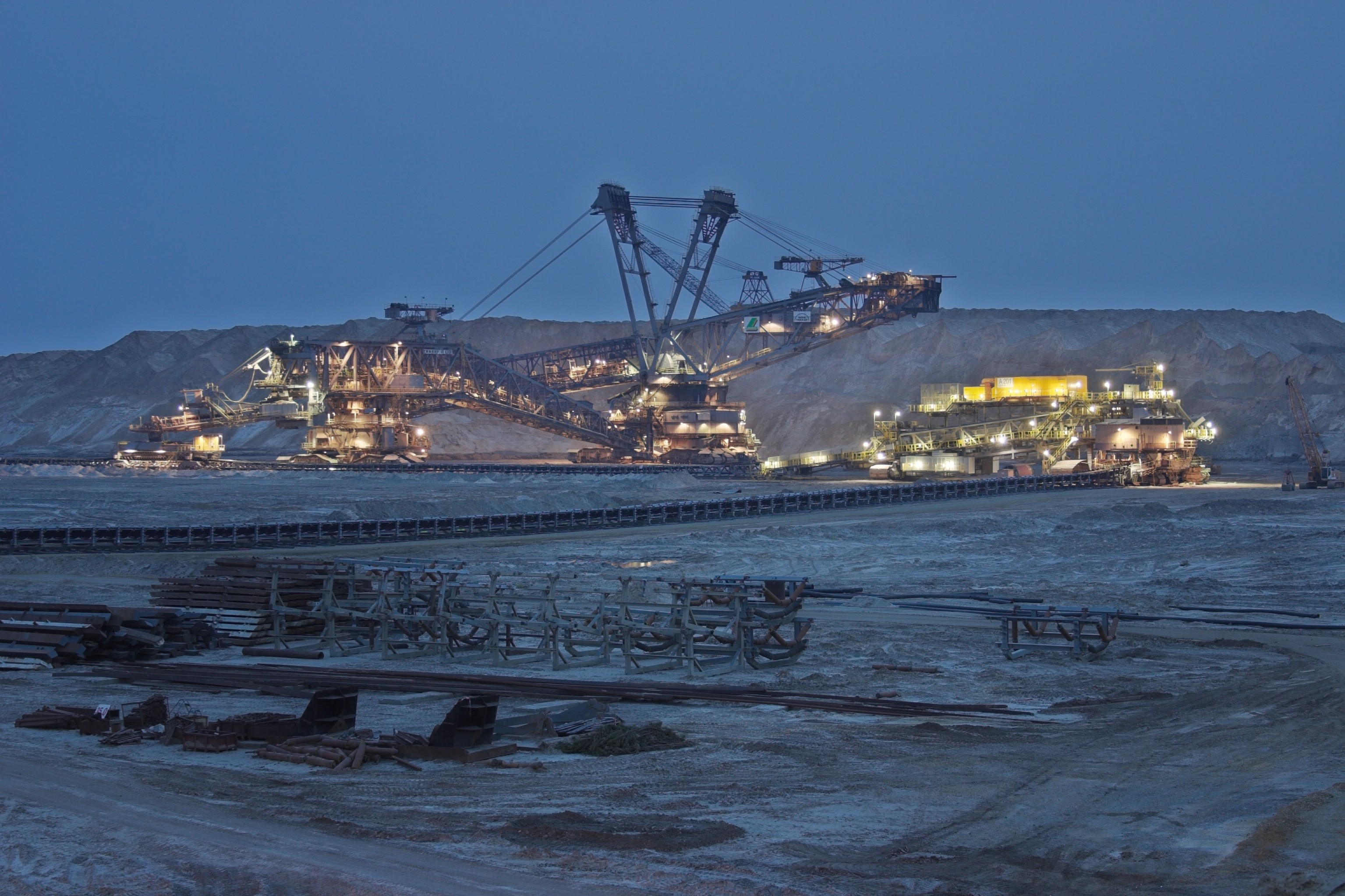
Photo courtesy of Groman123 from https://www.flickr.com/photos/pkirtz/21038826799/
Dec 16, 2015

Last weekend the world rejoiced over the historic, long-awaited climate-change agreement reached at the Paris Climate Conference (COP21). While the cooperation of 190 countries around a singular issue, especially one as pressing as climate change, should be applauded, the COP21 pact is missing something major: the role of agriculture.

This year is on target to be the hottest in recorded history. Just in the past few months, we have watched El Nino, which is likely to be one of the strongest on record, create unpredictable and chaotic weather patterns, taking a tremendous toll on harvests and pushing millions into extreme poverty and emergency levels of food insecurity. Ethiopia is experiencing its worst drought in decades, with predictions of at least 15 million people requiring emergency food assistance by early 2016. As climate change continues to threaten global stability, it pressures the international community to enact creative solutions. One solution that hasn’t received enough attention is increasing land rights for smallholder farmers, particularly for women in the developing world.

Continue Reading on CVD

CSIS: Asia Maritime Transparency Initiatie, Dec. 18, 2015 brief

A Case of Rocks or Islands?
This issue of AMTI explores the ongoing case between China and the Philippines at the arbitral tribunal at the Permanent Court of Arbitration in The Hague. The Philippines argued the merits of its case against China’s claims in the South China Sea before an arbitral tribunal at the Permanent Court of Arbitration in The Hague from November 24 to 30. As it has since the case was filed in early 2013, China refused to recognize or take part in the proceedings.

Continue Reading on CVD

Tư duy tích cực mỗi ngày