Category Archives: Thế giới

Barack Obama: Thoughts on Israel and Gaza

Barack Obama

·It’s been 17 days since Hamas launched its horrific attack against Israel, killing over 1,400 Israeli citizens, including defenseless women, children and the elderly. In the aftermath of such unspeakable brutality, the U.S. government and the American people have shared in the grief of families, prayed for the return of loved ones, and rightly declared solidarity with the Israeli people.

Continue reading Barack Obama: Thoughts on Israel and Gaza

The U.S. media has a Palestine problem

AJ+ – 22-5-2021

Israeli occupation of Palestine tends to be a touchy subject for news media, so much so that they break journalistic standards and writing etiquette just to avoid implicating one party over another — which still seems to end up working out in Israel’s favor and never Palestine’s. That’s led to a media environment that can’t clearly call out the ethnic cleansing and apartheid inflicted upon Palestinians, doesn’t point to context when talking about the results of decades-long oppression and displacement, and can’t help but equivocate about two disproportionately affected populations. But maybe that’s starting to change.

Sana Saeed looks at what U.S. media coverage has gotten wrong about recent events in Gaza, Sheikh Jarrah and occupied Palestine, and offers her own media critique.

Three big questions on the Israel-Gaza war answered


Al Jazeera English
– 19-10- 2023

What’s happening with civilians in Gaza? Why is it so complicated to open Egypt’s border for aid? And where’s this all going? #AJStartHere with Sandra Gathmann answers three big questions on the Israel-Gaza war.

00:55 – What will happen to civilians in Gaza?

01:16 – Israel’s air assault on Gaza

01:56 – Israel’s total blockade on Gaza

02:34 – Half of Gaza’s population has been displaced

02:43 – Why people moved from the north to the south of Gaza

03:58 – Why can’t Egypt send supplies or open the Rafah crossing?

04:06 – The relationship between Egypt and Israel

04:51 – Egypt and Israel say some aid can now cross through Rafah

05:25 – The situation for Palestinian dual nationals in Gaza

06:06 – Why Egypt and Jordan don’t want to take any Palestinian refugees

07:30 – Where’s the Israel-Gaza war going? How will it end?

09:33 – Is Israel’s aim to wipe out Hamas actually possible?

This episode features:

Youmna ElSayed – Al Jazeera correspondent in Gaza

Rami Khouri – American University of Beirut

Elijah Magnier – military analyst

Laila El-Haddad – Palestinian journalist & author

China’s Belt and Road Initiative: 10 years of evolution and beyond

China’s Belt And Road Initiative: 10 Years Of Evolution And Beyond | Insight | Full Episode


CNA Insider
– 12 thg 9, 2023

It is the 10th year of the Belt and Road Initiative (BRI). From Central and Southeast Asia to the Middle East and Africa, how has China’s mega infrastructure project changed the world? In this retrospective on the 10th anniversary of the BRI, Insight looks at the developments in Asia and Africa that have sprung from China’s marquee project. From growing trade links to environmental impacts to political influence, the BRI has undeniably changed the region. But with growing economic headwinds and a flagging Chinese economy, will Beijing continue to invest in the BRI? What will the next decade bring?

0:00 Introduction

01:10 Belt and Road Initiative in Central Asia

07:55 How the war in Ukraine is shaping the BRI

12:13 Growing China-ASEAN trade

13:57 How the BRI increased durian exports from Thailand to China

17:54 Dams: Good for energy generation, bad for food supply?

26:28 China’s growing influence in the Middle East

31:21 Why China is investing so much in Africa

35:34 Debt trap diplomacy?

38:40 Rise in non-performing loans on the Belt and Road

40:16 A shift in strategy for the BRI?

===============

ABOUT THE SHOW: Insight investigates and analyses topical issues that impact Asia and the rest of the world.

Experts say Hamas and Israel are committing war crimes in their fight

Israeli soldiers inspect the site of a music festival near the border with the Gaza Strip in southern Israel, Friday. Oct. 13, 2023. At least 260 Israeli festival-goers were killed during the attack by Hamas gunmen last Saturday. (AP Photo/Ariel Schalit)

1 of 4 | 

Israeli soldiers inspect the site of a music festival near the border with the Gaza Strip in southern Israel, Friday. Oct. 13, 2023. At least 260 Israeli festival-goers were killed during the attack by Hamas gunmen last Saturday. (AP Photo/Ariel Schalit)Read More

Israeli tanks head towards the Gaza Strip border in southern Israel on Friday, Oct.13, 2023. (AP Photo/Ariel Schalit)

2 of 4 | 

Israeli tanks head towards the Gaza Strip border in southern Israel on Friday, Oct.13, 2023. (AP Photo/Ariel Schalit)Read More

Palestinians evacuate wounded people after an Israeli airstrike in Rafah refugee camp, southern Gaza Strip, Thursday, Oct. 12, 2023. As Israel escalates its war on Hamas, it will confront many of the same dilemmas it has grappled with over decades of conflict with the Palestinians. It will want to punish Hamas like never before, but without killing so many Palestinian civilians that it loses international support. (AP Photo/Hatem Ali)

3 of 4 | 

Palestinians evacuate wounded people after an Israeli airstrike in Rafah refugee camp, southern Gaza Strip, Thursday, Oct. 12, 2023. As Israel escalates its war on Hamas, it will confront many of the same dilemmas it has grappled with over decades of conflict with the Palestinians. It will want to punish Hamas like never before, but without killing so many Palestinian civilians that it loses international support. (AP Photo/Hatem Ali)Read More

Palestinians inspect the rubble of buildings hit by an Israeli airstrike at Al Shati Refugee Camp Thursday, Oct. 12, 2023. As Israel escalates its war on Hamas, it will confront many of the same dilemmas it has grappled with over decades of conflict with the Palestinians. It will want to punish Hamas like never before, but without killing so many Palestinian civilians that it loses international support. (AP Photo/Hatem Moussa)

4 of 4 | 

Palestinians inspect the rubble of buildings hit by an Israeli airstrike at Al Shati Refugee Camp Thursday, Oct. 12, 2023. As Israel escalates its war on Hamas, it will confront many of the same dilemmas it has grappled with over decades of conflict with the Palestinians. It will want to punish Hamas like never before, but without killing so many Palestinian civilians that it loses international support. (AP Photo/Hatem Moussa)Read More

BY MIKE CORDER AND JULIA FRANKEL APnews

Updated 3:14 AM GMT+7, October 14, 2023

THE HAGUE, Netherlands (AP) — The deadly attacks by Hamas on Israeli civilians and the devastating Israeli airstrikes and blockade of Gaza have raised accusations among international legal experts that both sides were violating international law.

Continue reading Experts say Hamas and Israel are committing war crimes in their fight

UN condemns attacks on civilians in Israel and Gaza


From CNN’s Caitlin Danaher in London

The United Nations has “unequivocally condemned” attacks on civilians in Israel and Gaza, and also Israel’s “further tightening of the unlawful blockade,” in a statement released Thursday.

The killings and hostage-taking by Hamas “constitute heinous violations of international law and international crimes, for which there must be urgent accountability,” the statement read.

There is no justification for such violence in Israel or Gaza, the statement said.

The UN also focused on the plight of Palestinians in Gaza.

“We also strongly condemn Israel’s indiscriminate military attacks against the already exhausted Palestinian people of Gaza, comprising over 2.3 million people, nearly half of whom are children. They have lived under unlawful blockade for 16 years, and already gone through five major brutal wars, which remain unaccounted for,” they said. “This amounts to collective punishment.”

The experts also warned the withholding of essential supplies, such as food, water and medicine, will “precipitate a severe humanitarian crisis in Gaza, where its population is now at inescapable risk of starvation.” They called for the establishment of humanitarian corridors to allow people to leave Gaza.

The UN urged the international community to “address the root causes of the current conflict, including the 56-year-old occupation and the annexation pursued by Israel.”

What was Hamas thinking? For over three decades, it has had the same brutal idea of victory

FILE - A Palestinian Hamas supporter attends a protest against Israel's attacks on the Gaza Strip, in Gaza City, on March 3, 2008. In the three and a half decades since it began as an underground militant group, Hamas has pursued a consistently violent strategy aimed at rolling back Israeli rule. Despite bringing enormous suffering to both sides of the conflict, it has made steady progress. But its stunning incursion into Israel over the weekend marks its deadliest gambit yet, and the already unprecedented response from Israel threatens to bring an end to its 16-year rule over the Gaza Strip. (AP Photo/Khalil Hamra, File)

BY JOSEPH KRAUSSUpdated 1:56 AM GMT+7, October 12, 2023Share

JERUSALEM (AP) — In the three and a half decades since it began as an underground militant group, Hamas has pursued a consistently violent strategy aimed at rolling back Israeli rule — and it has made steady progress despite bringing enormous suffering to both sides of the conflict.

But its stunning incursion into Israel over the weekend marks its deadliest gambit yet, and the already unprecedented response from Israel threatens to bring an end to its 16-year rule over the Gaza Strip.

Continue reading What was Hamas thinking? For over three decades, it has had the same brutal idea of victory

US Migrant Crisis

Why are more migrants trying to cross the US southern border? | Inside Story

“Breaking Point”: Cities Struggle with Increasing Asylum Seekers; U.S. Foreign Policy Linked to Rise

Why are more migrants trying to cross the US southern border? | Inside Story

MIGRANT MAYHEM: Biden’s border falls apart as cities are flooded

Crisis at the Border: A Conversation with Texas Governor Greg Abbott

U.S. sanctuary cities struggle to handle drastic influx of migrants from southern border

Humanitarian crisis grows at U.S.-Mexico border | On the Frontline with John Carlin

The UN and the multilateral system are in crisis – what the Global South must do

Note taken from wiki:

 Developed countries or territories (IMF) (blue)

 Developing countries or territories (IMF) (yellow)

 Least developed countries (UN) (red)

Data unavailable (grey)

World map showing country classifications per the IMF[1] and the UN[2] (last updated April 2023). The countries in light blue form the “Global North”, the rest are mostly categorized as belonging to the “Global South”, with few exceptions under some listings.

The concept of Global North and Global South (or North–South divide in a global context) is used to describe a grouping of countries along the lines of socio-economic and political characteristics. The Global South is a term that broadly comprises countries in the regions of Africa, Latin America and the Caribbean, Asia (without Israel, Japan, and South Korea), and Oceania (without Australia and New Zealand), according to the United Nations Conference on Trade and Development (UNCTAD).[3][4][a] Most of the countries in the Global South are characterized by low incomedense populationpoor infrastructure, and often political or cultural marginalization.[5] The Global South forms one side of the divide; on the other is the Global North (broadly comprising Northern America and Europe, Israel, Japan and South Korea, as well as Australia and New Zealand, according to the UNCTAD).[3][4][a] As such, the terms Global North and Global South do not refer to the cardinal directions of north and south as many of the Global South countries are geographically located in the Northern Hemisphere.

The UN and the multilateral system are in crisis – what the Global South must do

Published: September 28, 2023 2.54pm BST The Conversation

Authors

  1. Monica Herz Full Professor, Institute of International Relations (PUC-Rio), Associate Dean for Research of the Social Science Center (PUC-Rio), Senior Researcher, BRICS Policy Center, Pontifícia Universidade Católica do Rio de Janeiro (PUC-Rio)
  2. Giancarlo Summa Co-fundador com Mônica Herz do projeto MUDRAL (Multilateralismo e Direita Radical na América Latina), Pesquisador no Centre d’Études Sociologiques et Politiques Raymond Aron (CESPRA), École des Hautes Études en Sciences Sociales (EHESS)

Disclosure statement

Continue reading The UN and the multilateral system are in crisis – what the Global South must do

The rules-based international order is quietly disintegrating

It hasn’t been this threatened since the 1930s.


Walter Russell Mead

By Walter Russell Mead

Sept. 25, 2023 6:06 pm ETS, WSJ

The most important fact in world politics is that 19 months after Vladimir Putin challenged the so-called rules-based international order head-on by invading Ukraine, the defense of that order is not going well. The world is less stable today than in February 2022, the enemies of the order hammer away, the institutional foundations of the order look increasingly shaky, and Western leaders don’t yet seem to grasp the immensity of the task before them.

Continue reading The rules-based international order is quietly disintegrating

The Threat of an Authoritarian Century

September 21, 2023  Topic: Authoritarianism  Region: Eurasia  Tags: AuthoritarianismDemocracyRussiaChinaCold WarGreat Power Competition

Across much of the world, the ideas of a democratic liberal political order, of multilateral international collaboration, and of liberal free-market capitalism are now in retreat.

by Azeem Ibrahim Follow Azeem Ibrahim on TwitterL , nationalinterest.org

The world is in turmoil. Only thirty years after the fall of the USSR and the collapse of its proxy network in Eastern Europe, a land war is being fought in Europe between a democracy and a dictatorship. 

When the Cold War ended, we could have scarcely imagined that in just three decades we would be where we are now. We know now that the collapse of the USSR in 1991 did not bring about “the end of history” as prophesied. Instead, it bred complacency among the leaders of the Western democracies, great complacency which has sowed the seeds for the current global anti-democratic reckoning. 

Continue reading The Threat of an Authoritarian Century

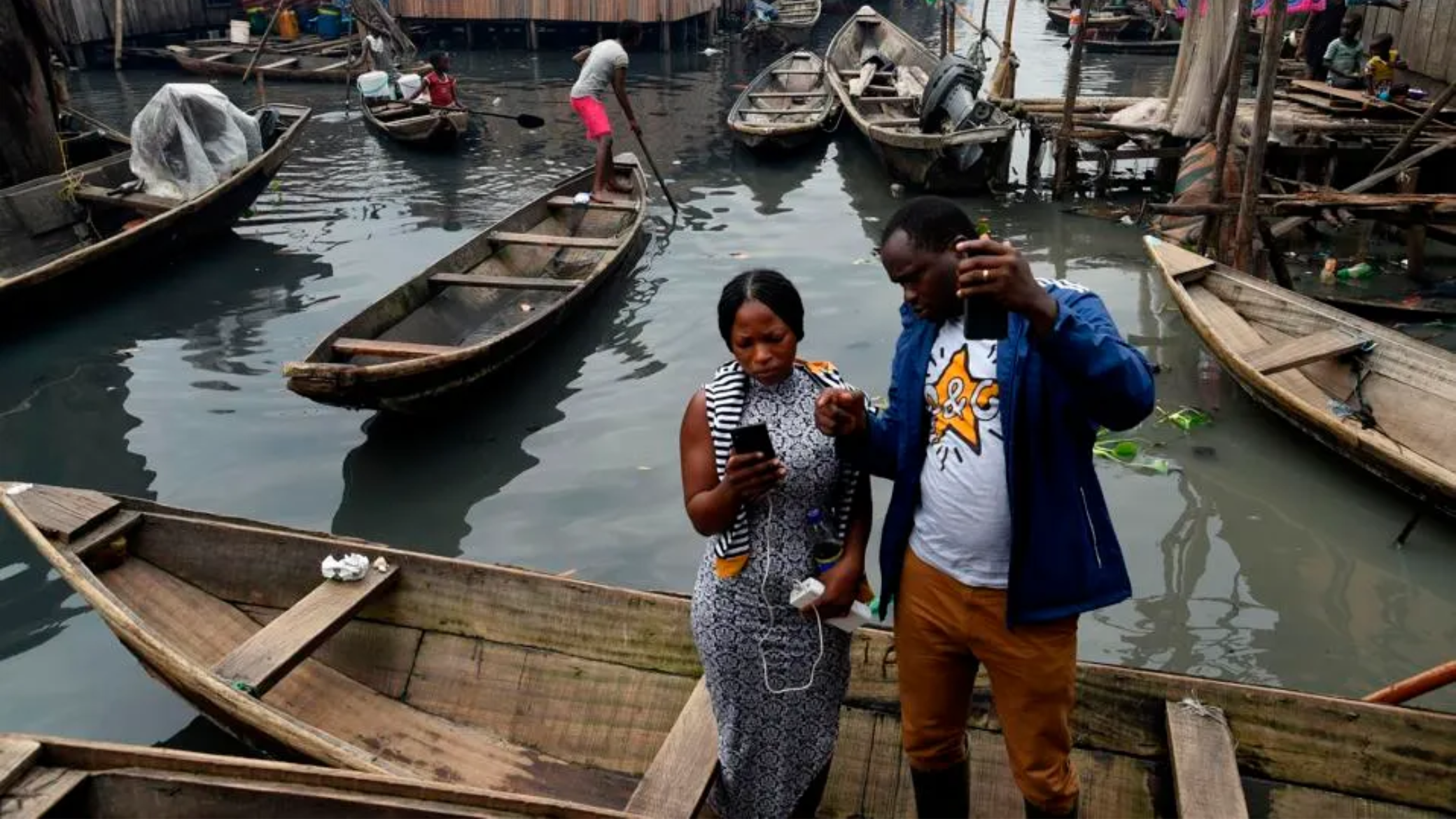
The developing world needs an alternative to Chinese tech

Pacific Forum

Download Document

  • Tabatha T. Anderson

MEDIA QUERIES

Shanna Khayat
Communications and Outreach Manager

 (808) 852-2595

August 22, 2023

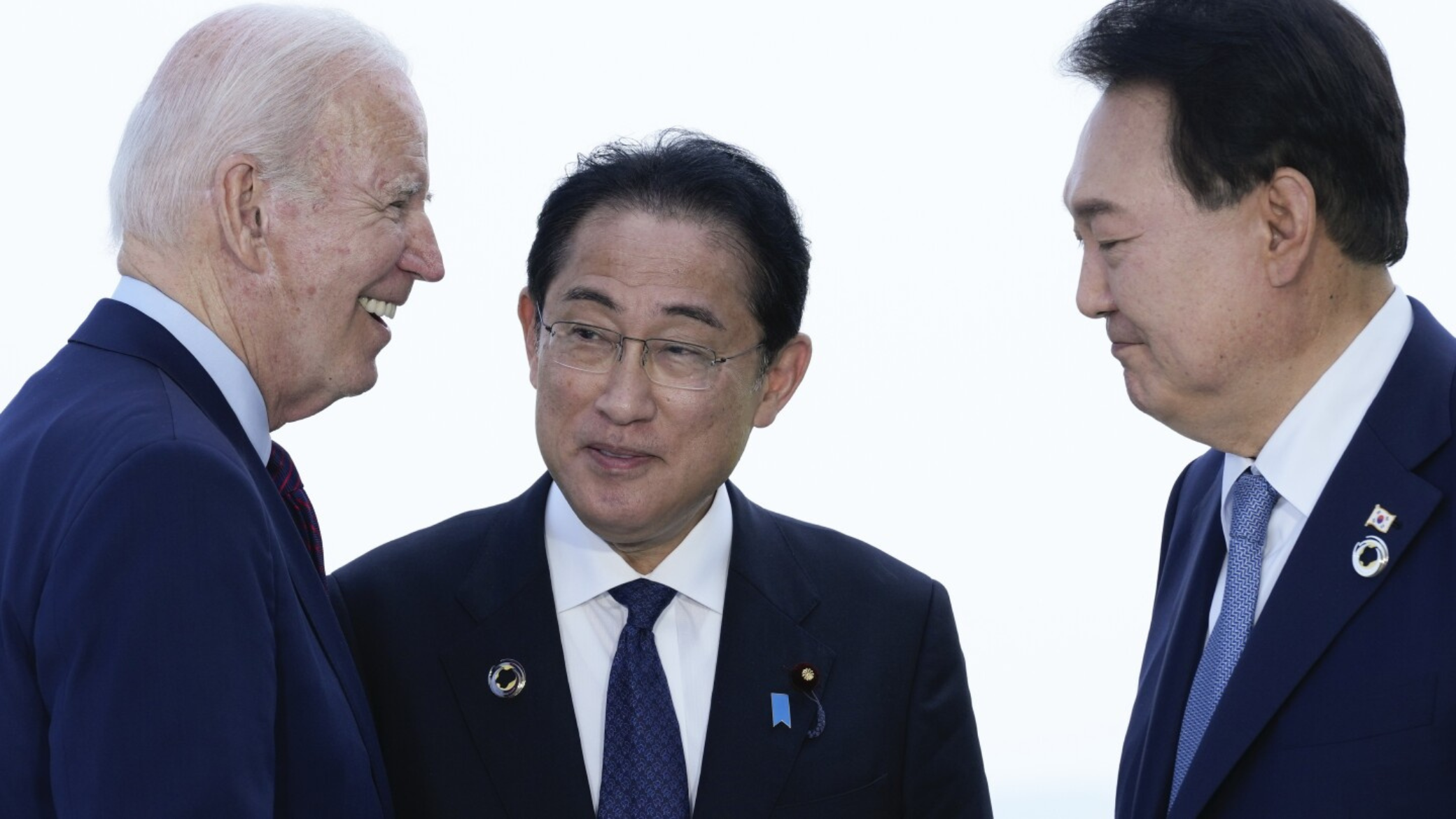
This PacNet was developed as a part of the United States-Japan-Republic of Korea Trilateral Next-Generation Leaders Dialogue to encourage creative thinking about how this vital partnership can be fostered. For the previous entries please click herehere, and here.

In April 2022, the United States launched its “Declaration for the Future of the Internet.” It asserts that human rights and democratic values must remain central to future technological development, innovation, and investment. Along with Japan, South Korea, and 58 other signatories, the United States argued that universal values should be embedded and enhanced at every stage of technological design, implementation, and diffusion. It’s time for the United States and its allies to match words with actions and ensure that developing countries have access to the resources they need to make that future a global reality.

Continue reading The developing world needs an alternative to Chinese tech

An AUKUS-Japan-ROK framework for the Indo-Pacific

Download Document

  • Jasmin Alsaied

MEDIA QUERIES

Shanna Khayat
Communications and Outreach Manager

 (808) 852-2595

August 17, 2023

This PacNet was developed as a part of the United States-Japan-Republic of Korea Trilateral Next-Generation Leaders Dialogue to encourage creative thinking about how this vital partnership can be fostered. For previous entries please click here and here.

The AUKUS security agreement, cemented between Australia, the United States, and the United Kingdom in September 2021, enhances regional partnership in the Indo-Pacific by facilitating technology sharing, strengthened supply chains, and the acquisition of nuclear powered, conventionally armed submarines for Australia. The pact also creates a pathway to establish engagements focused on renewing, strengthening, and expanding military cooperation between AUKUS, South Korea, and Japan.

Continue reading An AUKUS-Japan-ROK framework for the Indo-Pacific