
Category Archives: Artificial island
CSIS: Asia Maritime Transparency Initiative, March 22, 2016

Exploring Itu Aba: A Virtual Tour of a South China Sea Islet
On January 23, AMTI Director Gregory Poling and Ambassador José Abeto Zaide, now with the Manila Bulletin, became the first foreigners to visit Itu Aba (Taiping Dao in Chinese)—the only feature in the Spratly Islands occupied by Taiwan. They accompanied a delegation of Taiwanese experts and officials, including the ministers of foreign affairs, mainland affairs, and environmental protection. President Ma Ying-jeou made his first visit to the island five days later. Using the graphic below, you can explore each location the group visited. And even more images and video follow.
Exclusive: U.S. sees new Chinese activity around South China Sea shoal

“Phá trận” đảo nhân tạo Trung Quốc trên Biển Đông
VT – Trên hết, nếu Trung Quốc vẫn quyết tâm biến biển Đông thành ao nhà của mình thì các nước Việt Nam, Philippines, Mỹ, Nhật và Ấn Độ cần hình thành một liên minh mạnh mẽ hòng đảo ngược lại trạng thái mất cân bằng quyền lực ấy.
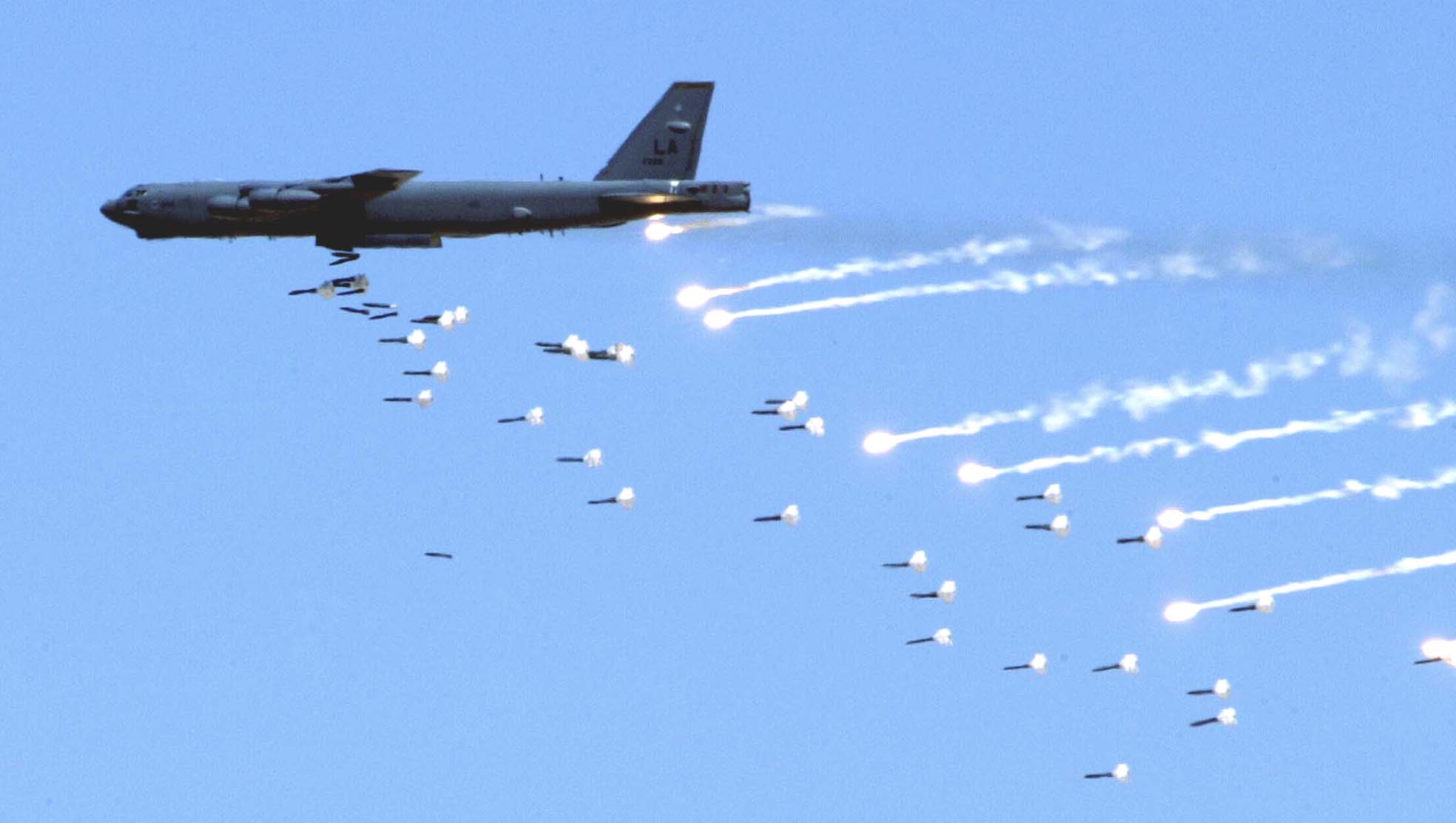
Pháo đài bay B-52 của Mỹ thể hiện uy lực trong cuộc tập trậnNhững hình ảnh chụp từ vệ tinh được tờ tạp chí tình báo quốc phòng IHS Jane’s phân tích cho thấy Trung Quốc đang xây dựng trên Đá Chữ Thập thuộc quần đảo Trường Sa một doi đất mang hình dáng sân bay dài 3.000m và một hải cảng đủ lớn cho các tàu chở dầu và tàu chiến lớn neo đậu. Đây không phải là lần đầu tiên Trung Quốc làm vậy, đảo này là hòn đảo mới nhất được Trung Quốc xây dựng trong chuỗi hành động xây đảo lấn biển mà nước này đang tiến hành ở cả quần đảo Trường Sa và Hoàng Sa trên biển Đông.
ICAO sửa bản đồ vùng thông báo bay Tam Á theo yêu cầu của Việt Nam
VNExpress Thứ sáu, 29/1/2016 | 22:34 GMT+7
Tổ chức hàng không dân dụng quốc tế (ICAO) đã sửa bản đồ vùng thông báo bay có nội dung không phù hợp, ảnh hưởng đến chủ quyền của Việt Nam với hai quần đảo Trường Sa và Hoàng Sa, sau khi Việt Nam trao công hàm phản đối.
 |
|
Vùng thông báo bay Hồ Chí Minh (màu xanh). |
Washington’s Muddled Message in the South China Sea
TĐH: I totally disagree with this article and the experts it quotes as support.China has a policy of requiring any foreign vessel to (1) inform Chinese authorities of its intention to make an innocent passage through Chinese territorial sea, and (2) have Chinese permission prior to making such innocent passage.
USS Lassen did not inform Chinese authorities and did not have a Chinese permission, so that was not an innocent passage according to Chinese standards, and that explaines why China was so upset at USS Lassen passage.
That was a US Freedom of Navigation at the lowest level, which was a very good strategy. You don’t want to shock China so much with your first FON sail. Just enough to get China noticed. Then you can increase intensity in later sails.

The Impact of Artificial Islands on Territorial Disputes Over The Sparatly Islands
Abstract: The issue of artificial islands in the South China Sea has little been detailed discussed in the context of territorial and maritime disputes. Even in international law, the term “artificial islands” remains controversial and there is no universally accepted definition of it, though several provisions of the 1982 United Nations Convention on the Law of the Sea mention “artificial islands”.

With the development of science and technology and the increasing endeavors of nations States to creep over to occupy more space from the oceans, the issue of artificial islands becomes more salient. This paper attempts to discuss this issue in an international law perspective with special reference to the Spratly Islands and to provoke more discussions about it in future.
Introduction
It is difficult to find a clear answer to the question on how and to what extent artificial islands will have impacts on the disputes over the Spratly Islands. There might also be some doubts as to whether there are artificial islands really existing in the South China Sea. If yes, what are these artificial islands? This paper attempts to discuss the issue of artificial islands in an international law perspective. Although the term artificial islands also includes artificial installations and structures such as oil platforms or fishing breeding constructions (for example, abandoned or obsolete oil platforms sometimes can be used as artificial reefs for fishery habitat construction),[1]this paper mainly focuses on artificial islands per se.
The Impact of Artificial Islands on Territorial Disputes Over The Sparatly Islands
Thursday, 21 July 2011
Abstract: The issue of artificial islands in the South China Sea has little been detailed discussed in the context of territorial and maritime disputes. Even in international law, the term “artificial islands” remains controversial and there is no universally accepted definition of it, though several provisions of the 1982 United Nations Convention on the Law of the Sea mention “artificial islands”.
With the development of science and technology and the increasing endeavors of nations States to creep over to occupy more space from the oceans, the issue of artificial islands becomes more salient. This paper attempts to discuss this issue in an international law perspective with special reference to the Spratly Islands and to provoke more discussions about it in future.
Lộ rõ đường băng, cơ sở quân sự Trung Quốc xây ở Trường Sa
VE – Đường băng, các cơ sở quân sự Trung Quốc xây dựng trái phép lộ rõ trong các bức ảnh vệ tinh mới nhất chụp bãi đá Subi, Chữ Thập ở quần đảo Trường Sa của Việt Nam.

Những bức ảnh vệ tinh chụp của Digital Globe ngày 13/7 tại bãi đá Chữ Thập, thuộc quần đảo Trường Sa của Việt Nam, càng củng cố thêm nhận định của một tư lệnh hải quân Mỹ rằng, đường băng tại đây sẽ đi vào hoạt động sớm hơn dự kiến vào cuối năm nay.
Continue reading Lộ rõ đường băng, cơ sở quân sự Trung Quốc xây ở Trường Sa
CSIS: Countering China’s Gradual Creation of a Fait Accompli in the South China Sea

July 7, 2015
Countering China’s Gradual Creation of a Fait Accompli in the South China Sea:
Providing Civilian Air Patrol Capability by Utilizing the U.S.-Japan Alliance
Hiroshi Waguri

Increased tensions over China’s maritime sovereignty claims in the Western Pacific pose a challenge for the international system. A confrontation between China and Japan in the East China Sea continues mainly between Japan’s national coast guard ships and China’s government and civilian fishery vessels, but it seems to have reached a kind of moderate stalemate as the two governments have resumed working-level talks aimed at establishing a maritime communication mechanism between Japan and China. While the situation bears watching, U.S. statements reiterating that Article V of the U.S.-Japan Security Treaty, which obligates the United States to defend Japan, applies to the Senkaku islands, as well as the continuous presence of Japan’s coast guard and Maritime Self-Defense Forces around the islands, must have played a major role in achieving the current relative stability. Continue reading CSIS: Countering China’s Gradual Creation of a Fait Accompli in the South China Sea
A fair and effective Code of Conduct for the South China Sea


AMTI – In 2002, ASEAN and China signed the Declaration on the Conduct of Parties in the South China Sea (DOC) that promised to “enhance favourable conditions for a peaceful and durable solution of differences and disputes among countries concerned.” Unfortunately, thirteen years on, the claimant countries are no closer to a solution for any of the disputes, while coercive and other unilateral acts are steadily accumulating into serious tensions. What is needed now is a Code of Conduct (COC) that not only overcomes the DOC’s weaknesses but also addresses the new challenges that have arisen since 2002. Continue reading A fair and effective Code of Conduct for the South China Sea
An Operational South China Sea Strategy for the United States
By Marvin Ott • June 24, 2015

cogitASIA – China’s campaign of overt territorial expansion in the South China Sea constitutes an increasingly urgent strategic challenge to the United States and its security partners in Southeast Asia. Absent effective countermeasures, the predictable future for the South China Sea will include China’s piecemeal seizure of additional territory and its further deployment of naval and air assets until it has de facto control of all the South China Sea within the “nine-dash line” demarcated on Chinese maps. International maritime passage through the South China Sea will be subject to Chinese regulation and approval. Continue reading An Operational South China Sea Strategy for the United States
Nhận diện chiến lược “đảo hóa” của Trung Quốc
TT – Các hình ảnh vệ tinh mới nhất (công bố ngày 17 và 19-6) cho thấy việc xây dựng đảo nhân tạo, hay như cách một số chuyên gia gọi là chiến lược “đảo hóa”, của Trung Quốc vẫn tiếp tục được triển khai.
 |
| Hàng ngàn người Việt cùng bạn bè quốc tế tuần hành ở thủ đô Berlin của Đức hôm 14-6 phản đối Trung Quốc chiếm đóng và bồi đắp đảo trái phép ở Biển Đông – Ảnh: Trương Anh Tú |
Bãi Xu Bi đã được mở rộng tới 74% chỉ trong vòng chưa tới hai tháng. Bãi Vành Khăn, vốn rộng gấp hai lần Xu Bi, cũng đã cải tạo được một nửa diện tích.
Các cụm đá san hô khác như Ga Ven, Tư Nghĩa, Châu Viên hay Gạc Ma đã gần như thành hình việc cải tạo. Continue reading Nhận diện chiến lược “đảo hóa” của Trung Quốc
Diplomacy changes, construction continues: New images of Mischief and Subi Reefs


amti.csis – On June 16, 2015, China’s Foreign Ministry spokesman Lu Kang announced that “as planned, the land reclamation project of China’s construction on some stationed islands and reefs of the Nansha (Spratly) Islands will be completed in the upcoming days.” He went on to note that after land reclamation on existing features was complete, China would continue to construct facilities on its new islands. As of June 17, AMTI assesses that two of China’s land reclamation projects are fully complete, three are nearly complete, and two are ongoing, with active land reclamation still taking place. The map below shows the current status of China’s Spratly building projects.
Continue reading Diplomacy changes, construction continues: New images of Mischief and Subi Reefs
Southeast Asia’s Geopolitical Centrality and the U.S.-Japan Alliance

JUN 11, 2015
CSIS – Building on a careful analysis of Southeast Asia’s recent history, politics, economics, and place within the Asia Pacific, this report looks forward two decades to anticipate the development of trends in the region and how they will impact the U.S.-Japan alliance. How will Southeast Asian states come to grips with the political and economic rise of China? How will they modernize their military forces and security relationships, and what role can the United States and Japan play? Continue reading Southeast Asia’s Geopolitical Centrality and the U.S.-Japan Alliance
 Đọt Chuối Non