All posts by Trần Đình Hoành

I am an attorney in the Washington DC area, with a Doctor of Law in the US, attended the master program at the National School of Administration of Việt Nam, and graduated from Sài Gòn University Law School. I aso studied philosophy at the School of Letters in Sài Gòn. . I have worked as an anti-trust attorney for Federal Trade Commission and a litigator for a fortune-100 telecom company in Washington DC. I have taught law courses for legal professionals in Việt Nam and still counsel VN government agencies on legal matters. I have founded and managed businesses for me and my family, both law and non-law. I have published many articles on national newspapers and radio stations in Việt Nam. In 1989 I was one of the founding members of US-VN Trade Council, working to re-establish US-VN relationship. Since the early 90's, I have established and managed VNFORUM and VNBIZ forum on VN-related matters; these forums are the subject of a PhD thesis by Dr. Caroline Valverde at UC-Berkeley and her book Transnationalizing Viet Nam. I translate poetry and my translation of "A Request at Đồng Lộc Cemetery" is now engraved on a stone memorial at Đồng Lộc National Shrine in VN. I study and teach the Bible and Buddhism. In 2009 I founded and still manage dotchuoinon.com on positive thinking and two other blogs on Buddhism. In 2015 a group of friends and I founded website CVD - Conversations on Vietnam Development (cvdvn.net). I study the art of leadership with many friends who are religious, business and government leaders from many countries. I have written these books, published by Phu Nu Publishing House in Hanoi: "Positive Thinking to Change Your Life", in Vietnamese (TƯ DUY TÍCH CỰC Thay Đổi Cuộc Sống) (Oct. 2011) "10 Core Values for Success" (10 Giá trị cốt lõi của thành công) (Dec. 2013) "Live a Life Worth Living" (Sống Một Cuộc Đời Đáng Sống) (Oct. 2023) I practice Jiu Jitsu and Tai Chi for health, and play guitar as a hobby, usually accompanying my wife Trần Lê Túy Phượng, aka singer Linh Phượng.

China ruled Vietnam for over 1,000 years, why is Vietnam not an “ancient, inseparable part of China” like Taiwan is? (2)

QUORA

Profile photo for Weston Blaine

Weston Blaine · Former Infantryman, So. Vietnam April 1966 – March 1967. at U.S. Army (1965–1968)1y

China has attempted to make Vietnam part of China for hundreds of years and failed every time. Vietnam just will not cooperate. It`s not so much that they hate each other, although they may, but that the Vietnamese People are proud of their nation, as well they should be, and they refuse to ever give that up. No matter how many times the Chinese come in and try to tame them into becoming Chinese too. I used to know how many times that was, but it`s been too long. At least several. The Vietnamese will never give up their Country.

Continue reading China ruled Vietnam for over 1,000 years, why is Vietnam not an “ancient, inseparable part of China” like Taiwan is? (2)

Bạn thực sự tin Chúa Phật? – Do you really trust in God/Buddha?

Chào anh chị em,

Các bạn, dù đi Đền hay không đi Đền bao giờ, nhưng nếu bạn nghĩ là mình tin vào Chúa, Phật, Trời Đất, thì câu hỏi cho bạn là bạn có tin thật không, hay chỉ tin ngoài miệng?

Câu trả lời cho chính bạn rất dễ. Bạn có thể xem đây là một cái test nhanh để bạn biết được chính mình: Nếu bạn thực sự tin vào Chúa, Phật, Trời Đất, Thánh thần, thì bạn đương nhiên là bình an và hạnh phúc luôn luôn, chẳng thể bị stressed vì bất kỳ lý do gì. Nếu bạn có lo lắng, sợ hãi, stressed thường xuyên mỗi ngày, thì bạn chẳng tin ai như bạn tưởng tượng. Continue reading Bạn thực sự tin Chúa Phật? – Do you really trust in God/Buddha?

Why does Vietnam have no historical sites in the form of temple? If it does, not as much as Indonesia or Thailand.

QUORA.

Profile photo for Vũ Song Vũ

Vũ Song Vũ · Lives in Ho Chi Minh City7yr

Unlike other Asian nations, Vietnam doesn’t have many large or massive temples and pagodas. As Tim Tran and others have already stated, Vietnamese culture is heavily influenced by Confucianism. However, it’s wrong to say that Vietnam has NO HISTORICAL SITES IN THE FORM OF TEMPLE. Just because we didn’t build it big doesn’t mean we own none. Vietnamese believe in the harmony of nature so every shrine, temple and pagoda is always built within nature like on mountain, by the river/stream, etc. Furthermore, most of Vietnamese religious building (except for Christianity) tend to bend Buddhism, Taoism and indigenous religions together so they are considered highly sacred, seeking spirituality rather than emphasising on the architecture and size. Most of Vietnamese temples are small YET SUBTLE in terms of the decorating. Below are some of my favourite temples and pagodas.

Chùa Hương (Perfume Pagoda)

Continue reading Why does Vietnam have no historical sites in the form of temple? If it does, not as much as Indonesia or Thailand.

Xin cha tha nợ chúng con – Forgive us our debts

Chào các bạn,

Kinh Lạy Cha (the Lord’s Prayer – lời cầu nguyện Chúa Giêsu dạy các môn đệ) có câu: “Xin cha tha nợ chúng con, như chúng con cũng tha kẻ mắc nợ chúng con.” Nợ là gì? Tha nợ là gì?

Trước hết hãy nhắc lại truyên thống tha nợ của Do Thái giáo mà Chúa Giêsu đã học được thời đó.

– Nợ không có tiền lời: Thánh kinh Torah – sau này là Cựu Ước trong Thánh kinh Kitô giáo – và các luật lệ của hàng giáo phẩm Do Thái giáo định rằng người Do Thái cho người Do Thái vay thì không tính tiền lời. Tính lời là tội lỗi. Continue reading Xin cha tha nợ chúng con – Forgive us our debts

The latest on what’s happening in China from Asia Society Policy Institute’s  Center for China Analysis

(https://asiasociety.org/policy-institute, Feb. 2, 2026)

THIS WEEK:
Politburo meeting projects institutional continuity after purges, Xi balances Putin and Trump diplomacy, Beijing signals reserve-currency ambitions, “future industries” take center stage in the 15th Five-Year Plan, and Shanxi marks a clean-energy turning pointRead back issues in the China 5 Archive.

China’s President Xi Jinping stands with Politburo Standing Committee members at the Monument to the People’s Heroes on Martyrs’ Day in Beijing’s Tiananmen Square on September 30, 2025. (Photo by Greg Baker/AFP via Getty Images)

1. A Signal of Institutional Stability Following High-Profile Purges

What Happened: On January 30, Xi Jinping chaired a routine Politburo meeting to review the annual Party affairs work reports of the National People’s Congress, the State Council, the Chinese People’s Political Consultative Conference, the Supreme People’s Court, the Supreme People’s Procuratorate, and the Chinese Communist Party Central Secretariat. The meeting also discussed “other matters,” a phrase sometimes used to conceal politically sensitive issues from public reporting. Continue reading The latest on what’s happening in China from Asia Society Policy Institute’s  Center for China Analysis

Chúng ta có thể làm điều gì “lớn” mà không khoe khoang? – Can we do anything “big” without bragging?

Chào anh chị em,

Mình để chữ “lớn” (“big”) trong ngoặc kép vì thực ra mọi sự trên đời đều không có lớn nhỏ. Mọi sự đều là mộng, ảo, bọt, bóng (mộng, huyễn, bào, ảnh – Kinh Kim Cang). Chẳng có gì đáng để nói lớn nhỏ.

Trong văn hóa quảng cáo rầm rộ ngày nay, điều gì cũng có quảng cáo, quảng cáo nào cũng khoe khoang đồ mình đang quảng cáo là nhất (lớn, quan trọng), quảng cáo nào cũng láo, nhiều khi nhà quảng cáo trả tiền cho phóng viên để viết quảng cáo dưới hình thức một bản tin (đó là lừa dối trắng trợn), và ngay cả các đại gia cũng có tự quảng cáo tràn ngập trên các phương tiện truyền thông. Continue reading Chúng ta có thể làm điều gì “lớn” mà không khoe khoang? – Can we do anything “big” without bragging?

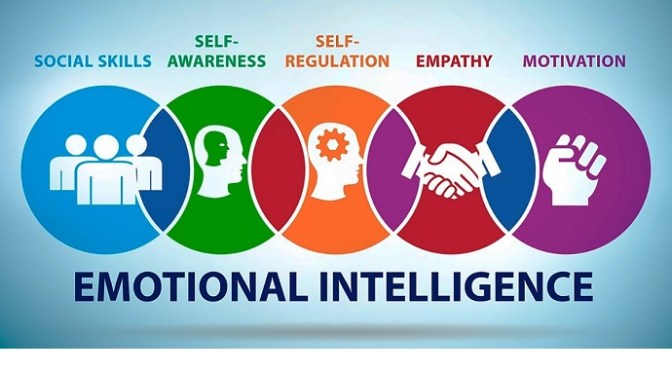
Trí tuệ cảm xúc – Emotional intelligence

Chào anh chị em,

Trí tuệ cảm xúc (Emotional intelligence, hay Emotional quotient – EQ) là mức độ cảm nhận và hiểu biết cảm xúc của chính ta và của người khác, do đó có thể kiểm soát và quản lý tình cảm của chính mình, sử dụng hiểu biết cảm xúc vào xây dựng các mối liên hệ với người khác, cũng như vào công việc quản lý và lãnh đạo trong các tập thể, từ gia đình và công ty, đến xã hội rộng hơn, như là đất nước. Continue reading Trí tuệ cảm xúc – Emotional intelligence

Would China protect Vietnam if it is being attacked by another country?

QUORA

Profile photo for Mo Chen

Mo Chen · Lives in China (1989–present) 7y

Would China protect Vietnam if it is being attacked by another country?

Are you serious!

Whoever would start a war in Southeast Asia has got to be the single most delusional person in this universe!

Look. Around.

It’s a pile of black powder barrel in here!

What? You think all you hear in the news is Vietnam being pushed around by China, that Vietnam is weak?

Continue reading Would China protect Vietnam if it is being attacked by another country?

Why is the Philippines still richer and look a lot more modern than Vietnam?

QOURA

Profile photo for Ngo The Hoan

Ngo The Hoan · Software Engineer with an interest in history

Why is the Philippines still richer and look a lot more modern than Vietnam?

Because many Filipinos love to dig out photos of Vietnam like this:

They then proceed to compare it with photos of their cities like this:

Then conclude that their country looks richer and more developed. But the reality is much more complicated.

You see, each tiny white blob you see in the Vietnam photo is a private property. Something that looks like this on land:

They are called tube houses, a characteristic feature of Vietnamese cities. Tube houses came about due to people’s desire to make use of their small land. The more money you have, the more you build up.

Continue reading Why is the Philippines still richer and look a lot more modern than Vietnam?

Tội hà tiện – The sin of stinginess

Chào anh chị em,

Thiên Chúa Giáo (Do Thái giáo, Chính Thống giáo, Công giáo, Tin lành) có giáo huấn Bảy Mối Tội Đầu (Seven Cardinal Sins):

– Thứ nhất là tội kiêu ngạo (arrogance).
– Thứ hai là tội hà tiện (stinginess)
– Thứ ba là tội mê dâm dục (lust)
– Thứ tư là tội hờn giận (wrath)
– Thứ năm tội mê ăn uống (gluttony)
– Thứ sáu tội ghen ghét (envy)
– Thứ bảy tội làm biếng (sloth)

Tội hà tiện đứng thứ hai, chỉ sau tội kiêu ngạo. Wow, hà tiện là tội rất cao cấp. Continue reading Tội hà tiện – The sin of stinginess

Should China, South Korea, and Vietnam quit eating dog meat?

QUORA

Profile photo for Thang Luu

Thang Luu · Updated 8y

I am a Vietnamese guy who casually eats dog meat. Normally, I eat dog meat with my friend in a party, simply because dog meat is tasty (there’s no religious or monetary issue here). I think it is hypocritical to ask us to stop eating dog meat, simply because dogs are considered a “friend” in some areas of the world. Besides, there are a lot of other practices that should receive the same attention outside of the eating of dog meat, such as:

  • Japan’s whalin
  • Canada’s clubbing of seals
Continue reading Should China, South Korea, and Vietnam quit eating dog meat?

China ruled Vietnam for over 1,000 years, why is Vietnam not an “ancient, inseparable part of China” like Taiwan is?

QUORA

Profile photo for Hongtao Zhang

Hongtao Zhang · Manchu Chinese From Tangshan.Updated 8y

Good question, you got the point.

This question tells us a very important thing: you do NOT have to lie for independence.

If you want independence, just fight for it.

Don’t be a liar.

Continue reading China ruled Vietnam for over 1,000 years, why is Vietnam not an “ancient, inseparable part of China” like Taiwan is?

Dùng trái tim để làm kinh doanh – Use your heart to do business

Chào anh chị em,

Vấn đề của hầu hết mọi người là họ không tin vào sức mạnh của một trái tim yêu thương và quan tâm chân thành trong kinh doanh. Hầu hết mọi người đều thấy người khác nói dối, giả tạo, tham lam, đâm sau lưng, tranh giành… và họ cũng làm chính xác những gì họ thấy, tin rằng đó là cách để thành công trong kinh doanh. Continue reading Dùng trái tim để làm kinh doanh – Use your heart to do business

Why do many Korean netizens say they feel kinship with Vietnamese and Vietnam?

Hosiki Kim · 

Living in Busan Updated 4y

QOURA

Yes. We share plenty of similar cultures throughout our neighbor China.

We, Koreans and Vietnamese fought against the formidable Chinese army for centuries. Meanwhile, we adopted many Chinese cultures such as Confucianism, Chinese characters and building styles. And we developed those into our unique styles.

Especially, the last dynasty of both Vietnam and Koreawere both influenced by Ming dynastynot Qing dynasty which was the lastest one in Chinese history.

Korea and Vietnam loved Ming dynasty more than Qing Dynasty founded by Manchu. Japan, on the other hand, was influenced by Tang dynasty. China was influenced by the lastest danysty, Qing.

Continue reading Why do many Korean netizens say they feel kinship with Vietnamese and Vietnam?