Me? Me? Me?... Yeah yeah yeah amigo... What can me say about me-self?... me-self...me-self... Ole ole ole... me me me... I'm a young banana shoot... My dad is Banana Pa... My mom is Banana Ma... I am happy happy happy... I run around... oops... I can't run... I sing aloud... all day long... I sing in the rain... I sing in the shine... I sing day and night... I sing all the time...
I watch the butterflies and the bees... and the cranes and the geese...
Aha aha aha... here we go again... this little swallow circling on my head... the little swallow on my head... is about to poop on me... Hey, little fella, don't cha know where to unload ya poopa?... But, that's alright... I can swallow my pride to befriend a swallow... Yup yup yup... swallow my pride to befriend a swallow...
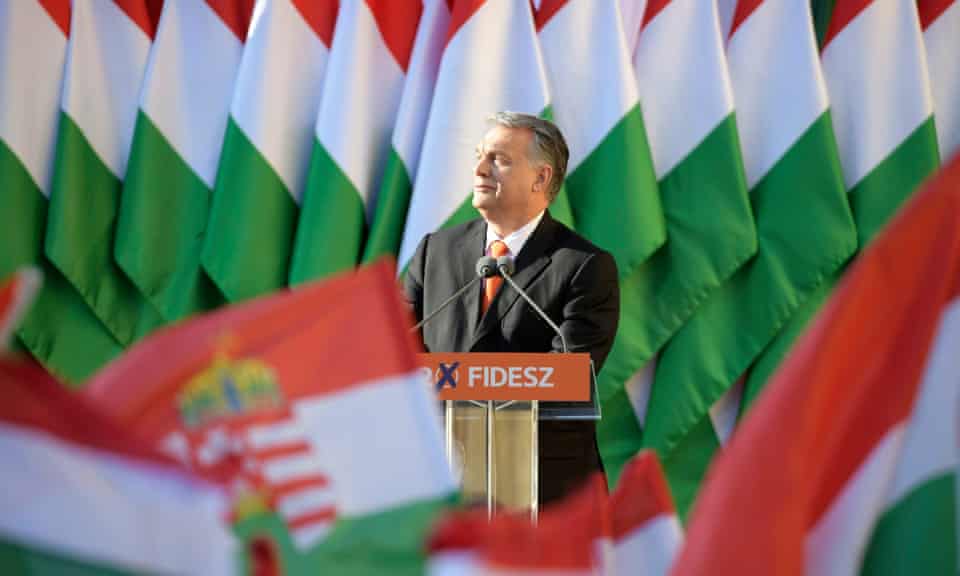
For the hardline conservatives ruling Poland and Hungary, the transition from communism to liberal democracy was a mirage. They fervently believe a more decisive break with the past is needed to achieve national liberation. By Nicholas Mulder
Soha – Đại sứ Nguyễn Quang Khai – 24/03/2022 20:12
Ngày 20/3 năm nay, người Iraq tưởng nhớ lại 19 năm ngày liên quân 49 nước do Mỹ cầm đầu xâm lược đất nước của họ vào năm 2003, lật đổ chế độ của Tổng thống Saddam Hussein.
Rạng sáng ngày 20/3/2003, cuộc tấn công mở màn bằng các cuộc không kích nhắm vào toà nhà chính phủ và bộ máy lãnh đạo Iraq. Tổng thống Mỹ George W. Bush tuyên bố chiến dịch “Tự do cho Iraq – Operation Iraqi Freedom” bắt đầu. Các lực lượng bộ binh của Mỹ và Anh được máy bay, xe tăng, đại bác… yểm trợ từ Kuwait vượt biên giới tràn vào lãnh thổ Iraq.
Iraq bị đánh hội đồng. Hội đồng Bảo an Liên hợp quốc không có cuộc họp nào, không có lệnh trừng phạt được áp đặt, không có nghị quyết lên án Mỹ và đồng minh.
Following is a joint statement on Armed Forces Day in Myanmar issued by the High Representative on behalf of the European Union and the Foreign Ministers of Albania, Australia, Bosnia and Herzegovina, Canada, Georgia, Iceland, Liechtenstein, Marshall Islands, the Federated States of Micronesia, Montenegro, New Zealand, North Macedonia, Norway, Palau, Republic of Korea, Serbia, Switzerland, Ukraine, the United Kingdom, and the United States.
Begin text:
On Armed Forces Day, we remember those killed and displaced by violence over the last year, including at least 100 people killed on this day alone one year ago.
Some countries continue to supply lethal assistance to Myanmar’s military regime, enabling its violence and repression. We urge all countries to support the people of Myanmar by immediately stopping the sale or transfer of arms, military equipment, materiel, dual-use equipment, and technical assistance to Myanmar, in line with UN General Assembly Resolution A/RES/75/287. We reiterate our call on the military to cease its violence and restore Myanmar’s path to democracy.
As a child, I fled Afghanistan with my family. When we arrived in Britain after a harrowing journey, we thought we could start our new life in safety. But the reality was very different.
Mar 23, 2022
In an exclusive interview for Eurovision News in Kyiv, Ukrainian President Volodymyr Zelenskyy has told TV reporters that he is ready to discuss a commitment from his country not to seek NATO membership in exchange for a cease-fire, Russian troop withdrawal and guarantee of Ukraine’s security.
In an exclusive interview for Eurovision News in Kyiv, Ukrainian President Volodymyr Zelenskyy has told TV reporters that he is ready to discuss a commitment from his country not to seek NATO membership in exchange for a cease-fire, Russian troop withdrawal and guarantee of Ukraine’s security.
Growing up in Essex, my summers in Iran felt like magical interludes from reality – but it was a spell that always had to be broken. By Arianne Shahvisi
THE PRESIDENT: Thank you, thank you, thank you. Please, if you have a seat, be seated. (Laughter.) If you don’t, come up on stage.
Thank you very much. It’s a great honor to be here. Mr. President, they tell me you’re over there somewhere. There you are. Thank you, Mr. President.
“Be not afraid.” They were the first words at the first public address of the first Polish Pope after his election on October of 1978. They were words that would come to define Pope John Paul II. Words that would change the world.
John Paul brought the message here to Warsaw in his first trip back home as Pope in June of 1979. It was a message about the power — the power of faith, the power of resilience, and the power of the people.
In the face of a cruel and brutal system of government, it was a message that helped end the Soviet repression in the Central land and Eastern Europe 30 years ago. It was a message that will overcome the cruelty and brutality of this unjust war.
When Pope John Paul brought that message in 1979, the Soviet Union ruled with an iron fist behind an Iron Curtain.
Then a year later, the Solidarity movement took hold in Poland. And while I know he couldn’t be here tonight, we’re all grateful in America and around the world for Lech Wałęsa. (Applause.)
It reminds me of that phrase of philosopher Kierkegaard: “[F]aith sees best in the dark.” And there were dark moments.
Ten years later, the Soviet Union collapsed, and Poland and Central and Eastern Europe would soon be free. Nothing about that battle for freedom was simple or easy. It was a long, painful slog fought over not days and months, but years and decades.
But we emerged anew in the great battle for freedom: a battle between democracy and autocracy, between liberty and repression, between a rules-based order and one governed by brute force.
In this battle, we need to be clear-eyed. This battle will not be won in days or months either. We need to steel ourselves for the long fight ahead.
Mr. President, Mr. Prime Minister, Mr. Mayor, members of the Parliament, distinguished guests, and the people of Poland, and I suspect some people of Ukraine that are here: We’re — (applause) — we are gathered here at the Royal Castle in this city that holds a sacred place in the history of not only of Europe, but humankind’s unending search for freedom.
For generations, Warsaw has stood where liberty has been challenged and liberty has prevailed.
In fact, it was here in Warsaw when a young refugee, who fled her home country from Czechoslovakia was under Soviet domination, came back to speak and stand in solidarity with dissidents.
Her name was Madeleine Korbel Albright. She became — (applause) — one of the most ardent supporters of democracy in the world. She was a friend with whom I served. America’s first woman Secretary of State. She passed away three days ago.
She fought her whole life for essential democratic principles. And now, in the perennial struggle for democracy and freedom, Ukraine and its people are on the frontlines fighting to save their nation.
And their brave resistance is part of a larger fight for an essential democratic principles that unite all free people: the rule of law; free and fair elections; the freedom to speak, to write, and to assemble; the freedom to worship as one chooses; freedom of the press.
These principles are essential in a free society. (Applause.) But they have always — they have always been under siege. They’ve always been embattled. Every generation has had to defeat democracy’s mortal foes. That’s the way of the world — for the world is imperfect, as we know. Where the appetites and ambitions of a few forever seek to dominate the lives and liberties of many.
My message to the people of Ukraine is the message I delivered today to Ukraine’s Foreign Minister and Defense Minister, who I believe are here tonight: We stand with you. Period. (Applause.)
Today’s fighting in Kyiv and Mariupol and Kharkiv are the latest battle in a long struggle: Hungary, 1956; Poland, 1956 then again 1981; Czechoslovakia, 1968.
Soviet tanks crushed democratic uprisings, but the resistance continued until finally, in 1989, the Berlin Wall and all of the walls of Soviet domination — they fell. They fell. And the people prevailed. (Applause.)
But the battle for democracy could not conclude and did not conclude with the end of the Cold War.
Over the last 30 years, the forces of autocracy have revived all across the globe. Its hallmarks are familiar ones: contempt for the rule of law, contempt for democratic freedom, contempt for the truth itself.
Today, Russia has strangled democracy — has sought to do so elsewhere, not only in its homeland. Under false claims of ethnic solidarity, it has invalidated [invaded] neighboring nations.
Putin has the gall to say he’s “de-Nazifying” Ukraine. It’s a lie. It’s just cynical. He knows that. And it’s also obscene.
President Zelenskyy was democratically elected. He’s Jewish. His father’s family was wiped out in the Nazi Holocaust. And Putin has the audacity, like all autocrats before him, to believe that might will make right.
In my own country, a former president named Abraham Lincoln voiced the opposing spirit to save our Union in the midst of a civil war. He said, “Let us have faith that right makes might.” “Right makes might.” (Applause.)
Today, let us now have that faith again. Let us resolve to put the strength of democracies into action to thwart the denigns [sic] of our — the designs of autocracy. Let us remember that the test of this moment is the test of all time.
The Kremlin wants to portray NATO enlargement as an imperial project aimed at destabilizing Russia. Nothing is further from the truth. NATO is a defensive alliance. It has never sought the demise of Russia.
In the lead-up to the current crisis, the United States and NATO worked for months to engage Russia to avert a war. I met with him in person and talked to him many times on the phone.
Time and again, we offered real diplomacy and concrete proposals to strengthen European security, enhance transparency, and build confidence on all sides.
But Putin and Russia met each of the proposals with disinterest in any negotiation, with lies and ultimatums. Russia was bent on violence from the start.
I know not all of you believed me and us when we kept saying, “They are going to cross the border. They are going to attack.”
Repeatedly, he asserted, “We have no interest in war.” Guaranteed he would not move.
Repeatedly saying he would not invade Ukraine.
Repeatedly saying Russian troops along the border were there for “training” — all 180,000 of them.
There is simply no justification or provocation for Russia’s choice of war. It’s an example of one of the oldest of human impulses: using brute force and disinformation to satisfy a craving for absolute power and control.
It’s nothing less than a direct challenge to the rule-based international order established since the end of World War Two.
And it threatens to return to decades of war that ravaged Europe before the international rule-based order was put in place. We cannot go back to that. We cannot.
The gravity of the threat is why the response of the West has been so swift and so powerful and so unified, unprecedented, and overwhelming.
Swift and punishing costs are the only things that are going to get Russia to change its course.
Within days of its invasion, the West had moved jointly with sanctions to damage Russia’s economy.
Russia’s Central Bank is now blocked from the global financial systems, denying Kremlin’s access to the war fund it stashed around the globe.
We’ve aimed at the heart of Russia’s economy by stopping the imports of Russian energy to the United States.
To date, the United States has sanctioned 140 Russian oligarchs and their family members, seizing their ill-begotten gains: their yachts, their luxury apartments, their mansions.
We’ve sanctioned more than 400 Russian government officials, including key architects of this war.
These officials and oligarchs have reaped enormous benefit from the corruption connected to the Kremlin, and now they have to share in the pain.
The private sector is acting as well. Over 400 private multinational companies have pulled out of doing business in Russia — left Russia completely — from oil companies to McDonald’s.
As a result of these unprecedented sanctions, the ruble almost is immediately reduced to rubble. The Russian economy — (applause) — that’s true, by the way. It takes about 200 rubles to equal one dollar.
The economy is on track to be cut in half in the coming years. It was ranked — Russia’s economy was ranked the 11th biggest economy in the world before this evasion [sic] — invasion. It will soon not even rank among the top 20 in the world. (Applause.)
Taken together, these economic sanctions are a new kind of economic statecraft with the power to inflict damage that rivals military might.
These international sanctions are sapping Russian strength, its ability to replenish its military, and its ability — its ability to project power. And it is Putin — it is Vladimir Putin who is to blame, period.
At the same time, alongside these economic sanctions, the Western world has come together to provide for the people of Ukraine with incredible levels of military, economic, and humanitarian assistance.
In the years before the invasion, we, America, had sent over $650 million, before they crossed the border, in weapons to Ukraine, including anti-air and anti-armor equipment.
Since the invasion, America has committed another $1.35 billion in weapons and ammunition.
And thanks to the courage and bravery of the Ukrainian people — (applause) — the equipment we’ve sent and our colleagues have sent have been used to devastating effect to defend Ukrainian land and airspace. Our Allies and partners have stepped up as well.
But as I’ve made clear: American forces are in Europe — not in Europe to engage in conflict with Russian forces. American forces are here to defend NATO Allies.
Yesterday, I met with the troops that are serving alongside our Polish allies to bolster NATO’s frontline defenses. The reason we wanted to make clear is their movement on Ukraine: Don’t even think about moving on one single inch of NATO territory.
We have a sacred obligation — (applause) — we have a sacred obligation under Article 5 to defend each and every inch of NATO territory with the full force of our collective power.
And earlier today, I visited your National Stadium, where thousands of Ukrainian refugees are now trying to answer the toughest questions a human can ask: “My God, what’s going to happen to me? What’s going to happen to my family?”
I saw tears in many of the mothers’ eyes as I embraced them; their young children — their young children not sure whether to smile or cry. One little girl said, “Mr. President” — she spoke a little English — “is my brother and my daddy — are they going to be okay? Will I see them again?” Without their husbands, their fathers, in many cases, their brothers or sisters who stayed back to fight for their country.
I didn’t have to speak the language or understand the language to feel the emotion in their eyes, the way they gripped my hand, and little kids hung on to my leg, praying with a desperate hope that all this is temporary; apprehension that they may be perhaps forever away from their homes, almost with debilitating sadness that this is happening all over again.
But I was also struck by the generosity of the people of Warsaw — for that matter, all the Polish people — for the depths of their compassion, their willingness to reach out — (applause) — opening their hearts.
I was saying to the Mayor they’re preparing to open their hearts and their homes simply to help. I also want to thank my friend, the great American chef, José Andrés, and his team who helped feeling [sic] those — (applause) — feeding those who are yearning to be free.
But helping these refugees is not something Poland or any other nation should carry alone. All the world democracies have a responsibility to help. All of them. And the people of Ukraine can count on the United States to meet its responsibility.
I’ve announced, two days ago, we will welcome 100,000 Ukrainian refugees. We already have 8,000 a week coming to the United States of other nat- — nationalities.
We’ll provide nearly $300 million of humanitarian assistance, providing tens of thousands of tons of food, water, medicine, and other basic supplies.
In Brussels, I announced the United States is prepared to provide more than $1 billion, in addition, in humanitarian aid.
The World Food Programme told us that despite significant obstacles, at least some relief is getting to major cities in Ukraine, but not Metropol [sic] — no, excuse me, Mar- — not Mariupol, because Russian forces are blocking relief supplies.
But we’ll not cease our efforts to get humanitarian relief wherever it is needed in Ukraine and for the people who’ve made it out of Ukraine.
Notwithstanding the brutality of Vladimir Putin, let there be no doubt that this war has already been a strategic failure for Russia already. (Applause.) Having lost children myself — I know that’s no solace to the people who’ve lost family.
But he, Putin, thought Ukrainians would roll over and not fight. Not much of a student of history. Instead, Russian forces have met their match with brave and stiff Ukrainian resistance.
Rather than breaking Ukrainian resolve, Russia’s brutal tactics have strengthened the resolve. (Applause.)
Rather than driving NATO apart, the West is now stronger and more united than it has ever been. (Applause.)
Russia wanted less of a NATO presence on its border, but now he has [we have] a stronger presence, a larger presence, with over a hundred thousand American troops here, along with all the other members of NATO.
In fact — (applause) — Russia has managed to cause something I’m sure he never intended: The democracies of the world are revitalized with purpose and unity found in months that we’d once taken years to accomplish.
It’s not only Russia’s actions in Ukraine that are reminding us of democracy’s blessing. It’s our own country — his own country, the Kremlin, is jailing protestors. Two hundred thousand people have allegedly already left. There’s a brain drain — leaving Russia. Shutting down independent news. State media is all propaganda, blocking the image of civilian targets, mass graves, starvation tactics of the Russian forces in Ukraine.
Is it any wonder, as I said, that 200,000 Russians have all left their country in one month? A remarkable brain drain in such a short period of time, which brings me to my message to the Russian people:
I’ve worked with Russian leaders for decades. I sat across the negotiating table going all the way back to Soviet Premier Alexei Kosygin to talk arms control at the height of the Cold War.
I’ve always spoken directly and honestly to you, the Russian people.
Let me say this, if you’re able to listen: You, the Russian people, are not our enemy.
I refuse to believe that you welcome the killing of innocent children and grandparents or that you accept hospitals, schools, maternity wards that, for God’s sake, are being pummeled with Russian missiles and bombs; or cities being surrounded so that civilians cannot flee; supplies cut off and attempting to starve Ukrainians into submission.
Millions of families are being driven from their homes, including half of all Ukraine’s children. These are not the actions of a great nation.
Of all people, you, the Russian people, as well as all people across Europe, still have the memory of being in a similar situation in the late thirties and forties — the situation of World War Two — still fresh in the minds of many grandparents in the region.
What — whatever your generation experienced — whether it experienced the Siege of Leningrad or heard about it from your parents and grandparents — train stations overflowing with terrified families fleeing their homes; nights sheltering in basements and cellars; mornings sitting through the rubble in your homes — these are not memories of the past. Not anymore. Because it’s exactly what the Russian army is doing in Ukraine right now.
March 26, 2022. Just days before — we’re at the twenty-fir- — you were a 21st century nation with hopes and dreams that people all over the world have for themselves and their family.
Now, Vladimir Putin’s aggression have cut you, the Russian people, off from the rest of the world, and it’s taking Russia back to the 19th century.
This is not who you are. This is not the future reserve — you deserve for your families and your children. I’m telling you the truth: This war is not worthy of you, the Russian people.
Putin can and must end this war. The American people stand with you and the brave citizens of Ukraine who want peace.
And my message to the rest of Europe: This new battle for freedom has already made a few things crystal clear.
First, Europe must end its dependence on Russian fossil fuels. And we, the United States, will help. (Applause.) That’s why just yesterday, in Brussels, I announced a plan with the President of the European Commission to get Europe through the immediate energy crisis.
Over the long term, as a matter of economic security and national security and for the survivability of the planet, we all need to move as quickly as possible to clean, renewable energy. And we’ll work together to help get that done so that the days of any nation being subject to the whims of a tyrant for its energy needs are over. They must end. They must end.
And second, we have to fight the corruption coming from the Kremlin to give the Russian people a fair chance.
And finally, and most urgently, we maintain absolute unity — we must — among the world’s democracies.
It’s not enough to speak with rhetorical flourish, of ennobling words of democracy, of freedom, equality, and liberty. All of us, including here in Poland, must do the hard work of democracy each and every day. My country as well.
That’s why — (applause) — that’s why I came to Europe again this week with a clear and determined message for NATO, for the G7, for the European Union, for all freedom-loving nations: We must commit now to be in this fight for the long haul. We must remain unified today and tomorrow and the day after and for the years and decades to come. (Applause.)
It will not be easy. There will be costs. But it’s a price we have to pay. Because the darkness that drives autocracy is ultimately no match for the flame of liberty that lights the souls of free people everywhere.
Time and again, history shows that it’s from the darkest moments that the greatest progress follows. And history shows this is the task of our time, the task of this generation.
Let’s remember: The hammer blow that brought down the Berlin Wall, the might that lifted the Iron Curtain were not the words of a single leader; it was the people of Europe who, for decades, fought to free themselves.
Their sheer bravery opened the border between Austria and Hungary for the Pan-European Picnic. They joined hands for the Baltic Way. They stood for Solidarity here in Poland. And together, it was an unmistakable and undeniable force of the people that the Soviet Union could not withstand.
And we’re seeing it once again today with the brave Ukrainian people, showing that their power of many is greater than the will of any one dictator. (Applause.)
So, in this hour, let the words of Pope John Paul burn as brightly today: “Never, ever give up hope, never doubt, never tire, never become discouraged. Be not afraid.” (Applause.)
A dictator bent on rebuilding an empire will never erase a people’s love for liberty. Brutality will never grind down their will to be free. Ukraine will never be a victory for Russia — for free people refuse to live in a world of hopelessness and darkness.
We will have a different future — a brighter future rooted in democracy and principle, hope and light, of decency and dignity, of freedom and possibilities.
For God’s sake, this man cannot remain in power.
God bless you all. And may God defend our freedom. (Applause.) And may God protect our troops. Thank you for your patience. Thank you. (Applause.) Thank you. Thank you.
Since launching his unprovoked and unjust war of choice, Russian President Vladimir Putin has unleashed unrelenting violence that has caused death and destruction across Ukraine. We’ve seen numerous credible reports of indiscriminate attacks and attacks deliberately targeting civilians, as well as other atrocities. Russia’s forces have destroyed apartment buildings, schools, hospitals, critical infrastructure, civilian vehicles, shopping centers, and ambulances, leaving thousands of innocent civilians killed or wounded. Many of the sites Russia’s forces have hit have been clearly identifiable as in-use by civilians. This includes the Mariupol maternity hospital, as the UN Office of the High Commissioner for Human Rights expressly noted in a March 11 report. It also includes a strike that hit a Mariupol theater, clearly marked with the word “дети” — Russian for “children” — in huge letters visible from the sky. Putin’s forces used these same tactics in Grozny, Chechnya, and Aleppo, Syria, where they intensified their bombardment of cities to break the will of the people. Their attempt to do so in Ukraine has again shocked the world and, as President Zelenskyy has soberly attested, “bathed the people of Ukraine in blood and tears.”
Every day that Russia’s forces continue their brutal attacks, the number of innocent civilians killed and wounded, including women and children, climbs. As of March 22, officials in besieged Mariupol said that more than 2,400 civilians had been killed in that city alone. Not including the Mariupol devastation, the United Nations has officially confirmed more than 2,500 civilian casualties, including dead and wounded, and emphasizes the actual toll is likely higher.
Chinese President Xi Jinping at the Great Hall of the People in Beijing Photo Credit: Aly Song/Reuters.
China is challenging the West. What is the West? It is not only nations in Europe or North America. It is countries that practice democracy.
India, Japan, South Korea, and Australia are Western nations that surround China. They worry about China’s size and ambitions. They view China with suspicion. Also, in the West, the United States and most of Europe see China as an adversary.
At a summer camp for kids from conflict zones, I met my brave, funny friend Aseel. He was Palestinian. I was Israeli. When he was killed by police, my hope for our future died with him
theguardian.com – by Roy Cohen – Thu 13 Jan 2022 06.00 GMT
Warren Buffett shares two stories about women who started from nothing and sold their businesses to the legendary investor. This is one of the greatest speeches Mr. Buffett has ever delivered and he also gives really good advice to all entrepreneurs in the audience.
Warren E. Buffett is an American long-term investor, philanthropist, business tycoon, and the chairman & CEO of Berkshire Hathaway. He is considered one of the most successful investors in the world and has a net worth of over 100 billion dollars. Buffett was born in Omaha, Nebraska. He developed an interest in business and investing in his youth and made truly incredible stock market returns over his career.
TTCT – Bên cạnh các khoản thưởng tiền tỉ, những lời tán dương không dứt, các cô gái của bóng đá Việt Nam còn nhận một phần quà đặc biệt ý nghĩa sau thành tích giành vé dự World Cup: suất học bổng đại học.
Đội trưởng tuyển nữ Việt Nam Huỳnh Như. Ảnh: Nguyên Khôi
Với riêng các nữ tuyển thủ ở TP.HCM, có ít nhất hai trường đại học trao tặng học bổng cho họ, là Đại học Hoa Sen và Đại học Công nghệ thông tin.
We, the Leaders of the G7, met today in Brussels at the invitation of the German G7 Presidency, to further strengthen our cooperation in light of Russia’s unjustifiable, unprovoked and illegal aggression and President Putin’s war of choice against independent and sovereign Ukraine. We will stand with the government and people of Ukraine.
We are united in our resolve to restore peace and stability and uphold international law. Following the United Nations General Assembly resolution on March 2022, we will continue to stand with the overwhelming majority of the international community, in condemning Russia’s military aggression and the suffering and loss of life it continues to cause.
We remain appalled by and condemn the devastating attacks on the Ukrainian population and civilian infrastructure, including hospitals and schools. We welcome the investigations of international mechanisms, including by the Prosecutor of the International Criminal Court. We will work together to support the gathering of evidence of war crimes. The siege of Mariupol and other Ukrainian cities, and the denial of humanitarian access by Russian military forces are unacceptable. Russian forces must immediately provide for safe pathways to other parts of Ukraine, as well as humanitarian aid to be delivered to Mariupol and other besieged cities.
The Russian leadership is obligated to immediately comply with the order of the International Court of Justice to suspend the military operations that it commenced on 24 February 2022 in the territory of Ukraine, without any further delay. We also urge Russia to withdraw its military forces and equipment from the entire territory of Ukraine.
We further call upon the Belarusian authorities to avoid further escalation and to refrain from using their military forces against Ukraine. Moreover, we urge all countries not to give military or other assistance to Russia to help continue its aggression in Ukraine. We will be vigilant regarding any such assistance.
We will spare no efforts to hold President Putin and the architects and supporters of this aggression, including the Lukashenko regime in Belarus, accountable for their actions. To this end, we will continue to work together, along with our allies and partners around the world.
We underline our resolve to impose severe consequences on Russia, including by fully implementing the economic and financial measures we already imposed. We will continue to cooperate closely, including by engaging other governments on adopting similar restrictive measures to those already imposed by G7 members and on refraining from evasion, circumvention and backfilling that seek to undercut or mitigate the effects of our sanctions. We task the relevant Ministers in a focused initiative to monitor the full implementation of sanctions and to coordinate responses related to evasive measures, including regarding gold transactions by the Central Bank of Russia. We stand ready to apply additional measures as required, continuing to act in unity as we do so. We commend those partners who have aligned with us in these efforts.
Russia’s attack has already risked the safety and security of nuclear sites in Ukraine. Russian military activities are creating extreme risks for the population and the environment, with the potential for catastrophic result. Russia must comply with its international obligations and refrain from any activity that imperils nuclear sites, allowing unhindered control by the Ukrainian authorities, as well as full access by and cooperation with the International Atomic Energy Agency.
We warn against any threat of the use of chemical, biological and nuclear weapons or related materials. We recall Russia’s obligations under the international treaties to which it is a signatory, and which protect us all. In this regard, we categorically denounce Russia’s malicious and completely unfounded disinformation campaign against Ukraine, a state in full compliance with international non-proliferation agreements. We express concern about other countries and actors that have amplified Russia’s disinformation campaign.
We are resolved in our support to the Ukrainian people in their heroic resistance to Russia’s unjustifiable and illegal aggression. We will step up our support to Ukraine and neighbouring countries. We thank all those who are already providing humanitarian aid to Ukraine and ask others to join. We will furthermore collaborate in our efforts to bolster democratic resilience and defend human rights in Ukraine and neighbouring countries.
We will continue efforts to support Ukraine in defending its networks against cyber incidents. In preparation for any Russian malicious cyber response to the actions we have taken, we are taking steps to increase the resilience of the infrastructure in our respective nations by strengthening our coordinated cyber defences and improving our shared awareness of cyber threats. We will also work to hold accountable those actors that engage in destructive, disruptive, or destabilising activities in cyberspace.
We further commend neighbouring states for their solidarity and humanity in welcoming Ukrainian refugees and third country nationals from Ukraine. We highlight the need to further increase international assistance to countries neighbouring Ukraine, and, as a concrete contribution to this end, underline our commitment to receiving, protecting, and supporting refugees and displaced persons as a consequence of the conflict. We thus all stand ready to welcome them on our territories. We will take further steps to broaden our support to Ukraine and neighbouring countries.
We are concerned by the escalating and reinforced repression against the Russian people and the increasingly hostile rhetoric of the Russian leadership, including against ordinary citizens. We deplore the Russian leadership’s attempt to deprive Russian citizens of access to unbiased information through censorship, and denounce its malicious disinformation campaigns, which we will not leave unaddressed. We express our support to those Russian and Belarusian citizens standing up against the unjustified war of aggression against their close neighbour Ukraine. The world sees them.
The people of Russia must know that we hold no grievances against them. It is President Putin, his government and supporters, including the Lukashenko regime in Belarus, who are imposing this war and its consequences on Russians and it is their decision that besmirches the history of the Russian people.
We are taking further steps to reduce our reliance on Russian energy, and will work together to this end. At the same time, we will ensure secure alternative and sustainable supplies, and act in solidarity and close coordination in the case of possible supply disruptions. We commit to actively support countries willing to phase out their dependency on Russian gas, oil and coal imports. We call on oil and gas producing countries to act in a responsible manner and to increase deliveries to international markets, noting that OPEC has a key role to play. We will work with them and all partners to ensure stable and sustainable global energy supplies. This crisis reinforces our determination to meet the goals of the Paris agreement and of the Glasgow climate pact and limit the rise in global temperatures to 1.5°C, by accelerating reduction of our reliance on fossil fuels and our transition to clean energy.
We stand in solidarity with our partners who have to bear the rising price of President Putin’s unilateral choice to wage war in Europe. His decision is putting the global economic recovery at risk, undermines the resilience of global value chains and will have severe impacts on the most fragile countries. We call on the international community to take action by fully recognising Russia’s responsibility and protecting the most vulnerable countries, with the support of international and regional institutions.
More immediately, President Putin’s war places global food security under increased pressure. We recall that the implementation of our sanctions against Russia takes into account the need to avoid impact on global agricultural trade. We remain determined to monitor the situation closely and do what is necessary to prevent and respond to the evolving global food security crisis. We will make coherent use of all instruments and funding mechanisms to address food security, and build resilience in the agriculture sector in line with climate and environment goals. We will address potential agricultural production and trade disruptions, in particular in vulnerable countries. We commit to provide a sustainable food supply in Ukraine and support continued Ukrainian production efforts.
We will work with and step up our collective contribution to relevant international institutions including the World Food Programme (WFP), in parallel with Multilateral Development Banks and International Financial Institutions, to provide support to countries with acute food insecurity. We call for an extraordinary session of the Council of the Food and Agriculture Organization (FAO) to address the consequences on world food security and agriculture arising from the Russian aggression against Ukraine. We call on all participants of the Agriculture Markets Information System (AMIS) to continue to share information and explore options to keep prices under control, including making stocks available, in particular to the WFP. We will avoid export bans and other trade-restrictive measures, maintain open and transparent markets, and call on others to do likewise, consistent with World Trade Organization (WTO) rules, including WTO notification requirements.
International organisations and multilateral fora should no longer conduct their activities with Russia in a business as usual manner. We will work closely with our partners to act as appropriate, based on shared interests, as well as rules and regulations of respective institutions.
The General Motors facility in Silao, Mexico. Photo Credit: Luis Antonio Rojas for The New York Times.
Unions make life better for workers. That is the idea. But what if the unions are corrupt? What if union leadership works for the benefit of employers? That is the reality for labor in Mexico.
Mexico has big factories. It is a rich country in Latin America. Yet its workers still earn low wages compared to other countries in the region.
There is a surge in the number of Asian residents across New York City. Photo Credit: Janice Chung for The New York Times.
It looked like the number of people living in New York City was shrinking. The 2020 census data would tell us how much.
Surprise! The city’s population actually grew by almost eight percent. Most of the population increase was Asian people. Today, people who call themselves Asian are sixteen percent of all the residents of New York City.