Me? Me? Me?... Yeah yeah yeah amigo... What can me say about me-self?... me-self...me-self... Ole ole ole... me me me... I'm a young banana shoot... My dad is Banana Pa... My mom is Banana Ma... I am happy happy happy... I run around... oops... I can't run... I sing aloud... all day long... I sing in the rain... I sing in the shine... I sing day and night... I sing all the time...
I watch the butterflies and the bees... and the cranes and the geese...
Aha aha aha... here we go again... this little swallow circling on my head... the little swallow on my head... is about to poop on me... Hey, little fella, don't cha know where to unload ya poopa?... But, that's alright... I can swallow my pride to befriend a swallow... Yup yup yup... swallow my pride to befriend a swallow...
Lời tòa soạn: Như chúng tôi đã đề cập trong những số báo gần đây về vùng Đồng bằng sông Hồng là hợp lưu của những luồng di dân từ hàng ngàn năm trước cho đến đầu thời Đại Việt. Bài viết dưới đây của TS Nguyễn Tiến Đông tiếp tục dòng thảo luận ấy ở một khía cạnh cụ thể hơn: người Cham pa đã đóng góp như thế nào vào không gian văn hóa ngay tại kinh đô Đại Việt và vùng phụ cận.
Ngay trên chính Hoàng thành này, những dấu tích văn hóa Cham Pa đã hiển hiện khi các nhà khảo cổ học khai quật khu di tích 18 Hoàng Diệu. Trong ảnh, sinh viên đại học nghe nhà khảo cổ học Nguyễn Tiến Đông giới thiệu những di tích thời Lý – Trần (Khu A). Ảnh: Viện Khảo cổ học (2004).
Làm nhạt nhòa sự mô phỏng phương Bắc
Ngay từ buổi đầu của nền độc lập, nhà Tiền Lê đã cất quân đi đánh Cham Pa, sử cũ chép rằng:“Năm Nhâm Ngọ thứ 3[982]… Vua thân đi đánh nước Chiêm Thành thắng được. Trước đây, vua sai Từ Mục và Ngô Tử Canh sang sứ Chiêm Thành, bị họ bắt giữ, vua giận, mới đóng thuyền chiến, sửa binh khí, tự làm tướng đi đánh, chém được Phê-mỵ-thuế tại trận; Chiêm thành thua to; bắt sống được binh sĩ không biết bao nhiêu mà kể; bắt được kỹ nữ trong cung trăm người và một thầy tăng người Thiên Trúc…”(Ngô Sĩ Liên 1967).
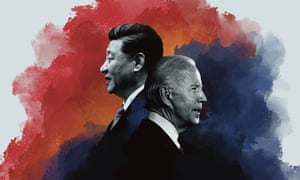
Armed conflict between the world’s two superpowers, while not yet inevitable, has become a real possibility. The 2020s will be the decade of living dangerously. By Kevin Rudd
Kỳ Nam và Trầm hương là sản phẩm đặc biệt nằm trong lõi của cây Gió. Ở Campuchia, cây Gió có tên là Can Krasna (Can, cannada: Trầm, Krasna: sẫm). Có lẽ từ âm ấy mà có tên khoa học bằng tiếng La tinh.
Kỳ Nam và Trầm hương là sản phẩm đặc biệt nằm trong lõi của cây Gió. Ở Campuchia, cây Gió có tên là Can Krasna (Can, cannada: Trầm, Krasna: sẫm). Có lẽ từ âm ấy mà có tên khoa học bằng tiếng La tinh.
+ Tên khoa học : Aquilaria Crasna Pierre
+ Họ: Thymeleaceae
+ Bộ: Thyméales
+ Lớp: Song-tử-diệp
+ Ngành: Hiển hoa (bí tử)
Cây Gió là một loài đại mộc có thể cao 40-50 mét, vỏ màu xám có nhiều sợi có thể làm giấy được, gỗ mềm màu trắng. Lá không lông có 15-18 cặp gân. Trái là nang dài 4cm.
The Russia-Ukraine War could cost the global economy $950bn in 2022, but which countries will be hit hardest? ODI index ranks 118 LICs & MICs and finds Belarus, Armenia, Kyrgyz Republic & Lebanon are most vulnerable.
TTCT – Các cuộc đàm phán tăng lương chưa bao giờ là dễ dàng và phiên họp đầu tiên của Hội đồng Tiền lương quốc gia về đàm phán lương tối thiểu vùng vào hôm 28-3 cũng vậy. Năm nay, vấn đề càng khó khăn hơn khi cả doanh nghiệp và người lao động đều cùng chịu những tổn thất lớn sau đại dịch COVID-19. Tổng Liên đoàn Lao động VN kiên định đề xuất tăng lương tối thiểu vùng từ 1-7-2022 mà không đợi đến 1-1-2023 theo thông lệ. Tất nhiên, đại diện khu vực doanh nghiệp phản đối điều này. Đã hai năm lương tối thiểu “giậm chân tạo chỗ” trong khi đây là mức sàn thấp nhất và có ý nghĩa bảo vệ người yếu thế, cũng là căn cứ để thương lượng tiền lương trên thực tế. Sức chịu đựng của người lao động sau hai năm đại dịch đã tới ngưỡng và lạm phát cũng đã tác động tới họ trực diện. Ngày 12-4, Hội đồng Tiền lương quốc gia họp phiên thứ 2, thống nhất đề xuất mức tăng lương tối thiểu vùng 6% từ 1-7-2022 để trình Thủ tướng Chính phủ quyết định.
Giá cả liên tục tăng khiến đời sống của người lao động ngày càng khó khăn hơn. Trong ảnh: Gia đình anh Lâm Thi Dũng (quê Ninh Thuận) trong một phòng trọ tại quận 12, TP.HCM. Ảnh: NGỌC PHƯỢNG
Lần điều chỉnh gần nhất đã là từ năm 2020, mức lương tối thiểu là 4,42 triệu đồng (vùng I), 3,92 triệu đồng (vùng II), 3,42 triệu đồng (vùng III).
Theo Viện Công nhân và công đoàn (Tổng liên đoàn Lao động VN), lương tối thiểu cần tăng 10% so với mức hiện tại để “trả nợ” cho khoảng thời gian không điều chỉnh.
Russia’s Continuing Ties to Southeast Asia—and How They Factor Into the Ukraine War: Part 1
Longstanding ties and weapons sales to a number of countries in Southeast Asia insulate Russia from ASEAN criticism over Ukraine war.
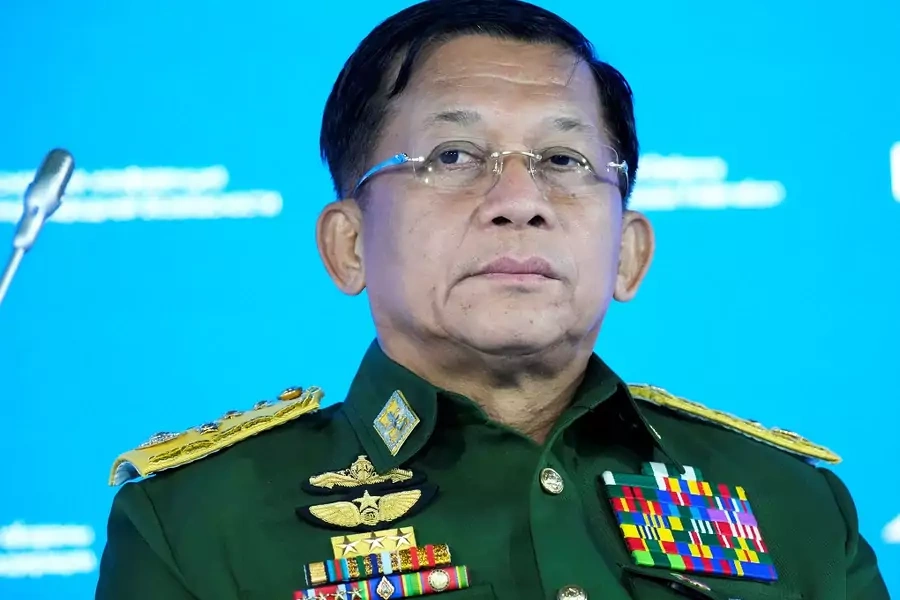
Commander-in-Chief of Myanmar’s armed forces, Senior General Min Aung Hlaing, attends the IX Moscow conference on international security in Moscow, Russia, on June 23, 2021. Alexander Zemlianichenko/Pool via Reuters
In recent years, Russia, which had not had much of a strategic or economic presence in Southeast Asia, has become a more involved player once again. It has cultivated close ties with Myanmar, regularly selling weapons to Myanmar and cultivating strategic ties. Particularly after the February 2021 Myanmar coup, when even Beijing seemed to have doubts about how the coup had destabilized the country and led to potential risks to China’s investments, Russia stood strongly behind the junta. Russian officials participated in a prominent military ceremony in Myanmar after the coup, Russian continued to supply large numbers of arms to the junta, even as it launched a scorched earth policy against coup opponents and ethnic minority groups, and the Kremlin invited junta leader Min Aung Hlaing to Moscow in June (before he had any major visits to Beijing), sending a strong signal of support to Naypyidaw.
Đây là từ khá quen thuộc trong tiếng Việt. Tuy nhiên, đã có không ít trường hợp, nhất là trong báo chí, nó bị dùng sai một cách… hồn nhiên.
Lạm dụng là một từ Việt gốc Hán. Trong đó, chữ lạm thuộc bộ thủy (liên quan tới nước), nghĩa gốc là “nước tràn ngập”, sau phái sinh nghĩa “quá mức” (như trong lạm thu, lạm quyền, lạm phát); chữ dụng (chữ cũng là bộ) có nghĩa là “dùng”. Lạm dụng có thể hiểu là “dùng quá mức”. Từ điển tiếng Việt định nghĩa lạm dụng là “dùng, sử dụng quá mức hoặc quá giới hạn” (Hoàng Phê chủ biên, 1992, tr.538).
We, the G7 Foreign Ministers of Canada, France, Germany, Italy, Japan, the United Kingdom, and the United States of America, and the High Representative of the European Union, condemn in the strongest terms the atrocities committed by the Russian armed forces in Bucha and a number of other Ukrainian towns. Haunting images of civilian deaths, victims of torture, and apparent executions, as well as reports of sexual violence and destruction of civilian infrastructure show the true face of Russia’s brutal war of aggression against Ukraine and its people. The massacres in the town of Bucha and other Ukrainian towns will be inscribed in the list of atrocities and severe violations of international law, including international humanitarian law and human rights, committed by the aggressor on Ukrainian soil.
In the presence of the Foreign Minister of Ukraine, Dmytro Kuleba, we expressed today our heart-felt solidarity with the Ukrainian people and our deepest condolences to the victims of this war and their families. We underline our unwavering support for Ukraine within its internationally recognised borders and express our readiness to assist further, including with military equipment and financial means, to allow Ukraine to defend itself against Russia’s aggression and to rebuild Ukraine.
We underscore that those responsible for these heinous acts and atrocities, including any attacks targeting civilians and destruction of civilian infrastructure, will be held accountable and prosecuted. We welcome and support the ongoing work to investigate and gather evidence of these and other potential war crimes and crimes against humanity, including by the ICC Office of the Prosecutor, the Commission of Inquiry mandated by the UN Human Rights Council, the Human Rights Monitoring Mission Ukraine of the OHCHR, and the OSCE’s mission of experts mandated by OSCE Participating States. We will provide investigative support, technical experts and funding. We will continue to promote accountability for all those complicit in Moscow’s war of choice, including the Lukashenka regime in Belarus. We are convinced that now is the time to suspend Russian membership of the Human Rights Council.
Russia must immediately comply with the legally binding order of the International Court of Justice (ICJ) to suspend the military operations that it commenced on 24 February 2022 in the territory of Ukraine. Further, we urge Russia to withdraw completely its military forces and equipment from the entire territory of Ukraine within its internationally recognised borders.
We warn against any threat or use of chemical, biological or nuclear weapons. We recall Russia’s obligations under international treaties of which it is a party, and which protect us all. Any use by Russia of such a weapon would be unacceptable and result in severe consequences. We condemn Russia’s unsubstantiated claims and false allegations against Ukraine, a respected member of the Biological and Toxin Weapons Convention and the Chemical Weapons Convention that is in compliance with its legal obligations under those instruments. We express concern about other countries and actors that have amplified Russia’s disinformation campaign.
We express our gravest concern with Russia forcefully seizing control of nuclear facilities, and other violent actions in connection with a number of nuclear facilities, nuclear and other radioactive material, which have caused and continue to pose serious and direct threats to the safety and security of these facilities and their civilian personnel, significantly raising the risk of a nuclear accident or incident, which endangers the population of Ukraine, neighbouring States and the international community.
We reiterate our demand that Russia upholds its obligations under international humanitarian law and desists from further blatant abuses. The Russian leadership must immediately provide for safe, rapid and unimpeded humanitarian access and make safe passages work, enabling humanitarian aid to be delivered to besieged cities and civilians to reach safety.
We commit to supporting the Government of Ukraine’s humanitarian coordination structure and to disburse humanitarian support quickly. We ask others to join in this effort. A humanitarian push including more funding is urgently needed for Ukraine and beyond as Russia’s ruthless war and actions are having massive consequences on global commodity and food prices. The resulting rise in food insecurity is being felt disproportionately by the most vulnerable. We stand in solidarity with our partners across the world who have to bear the rising price of President Putin’s unilateral choice to wage war in Europe. We will make coherent use of all instruments and funding mechanisms to address food insecurity, keep markets open, and build resilience in the agriculture sector on all continents. We will actively counter Russia’s narrative that Western sanctions have caused the rise in global food prices and call it out for what it is: a blatant lie.
In light of Russia’s ongoing aggression against Ukraine, carried out with Belarus’ complicity, we have already adopted unprecedented and coordinated economic and financial sanctions against Russia that impose a significant cost on its economy. We stress the necessity of further increasing the economic pressure inflicted on Russia and the Lukashenka regime in Belarus. Together with international partners, the G7 will sustain and increase pressure on Russia by imposing coordinated additional restrictive measures to effectively thwart Russian abilities to continue the aggression against Ukraine. We will work together to stop any attempts to circumvent sanctions or to aid Russia by other means. We are taking further steps to expedite plans to reduce our reliance on Russian energy, and will work together to this end.
We commend those neighbouring states to Ukraine that demonstrated great solidarity and humanity by welcoming Ukrainian refugees and third country nationals affected by the conflict. We confirm the need for increased international assistance and will continue to support these countries, including by receiving more refugees. President Putin’s war of aggression against Ukraine has already forced millions of civilians, especially women, children, and elderly, to flee their homes. Over 4.2 million crossed the border to other countries, almost all of them to the EU and the Republic of Moldova. We reiterate our concern about the risk to this vulnerable population, including the risk of human trafficking and our commitment to protect these refugees.
Ministers paid special attention to the Republic of Moldova, which hosts the largest group of refugees from Ukraine per capita. The Ministers agreed to further coordinate their assistance for Moldova’s humanitarian response and long-term resilience following the Moldova Support Conference co-hosted by Germany, France and Romania on 5 April in Berlin and the establishment of the Moldova Support Platform.
Trước thế kỷ thứ II, vùng đất của vương quốc Chăm Pa cổ đã được nhắc đến với tên Hồ Tôn Tinh (trong truyền thuyết), rồi tên huyện Tượng Lâm (thuộc quận Nhật Nam thời nhà Hán) khi nằm dưới sự thống trị của Trung Quốc. Lãnh thổ này được ghi nhận là từ miền Trung trở vào miền NamViệt Nam, thay đổi tùy thời kỳ. Từ 1694 đến 1832, chúa Chăm Pa (Trấn vương Thuận Thành) nằm dưới sự đô hộ của các chúa Nguyễn, vua nhà Tây Sơn và vua nhà Nguyễn cho đến lúc bị sáp nhập hoàn toàn.
Southeast Asian nations have been rather subdued in their responses to Russia’s invasion of Ukraine, although all but two—Vietnam and Laos—voted in the United Nations in early March to condemn Moscow’s aggression. The fighting erupted thousands of miles away, but the effects, particularly of the sanctions imposed by the United States, Europe, Japan, Australia, and others, will still have economic reverberations in Southeast Asia.
Overall, Russia and Ukraine are relatively minor economic players in Southeast Asia, with Russia making up just over 0.64 percent of global trade with the region while Ukraine accounts for just 0.11 percent, according to ASEANstats. But Moscow’s Economic Development Ministry has said that it will work to boost trade and economic links with Asia to balance sanctions.
TTO – Sau khi tỉnh Bình Phước có ý kiến làm cầu Mã Đà nối vào tuyến quốc lộ 13C đã quy hoạch, tỉnh Đồng Nai đã họp bàn và yêu cầu có giải pháp để bảo vệ Khu bảo tồn thiên nhiên – văn hóa Đồng Nai vì đây là khu dự trữ sinh quyển thế giới.
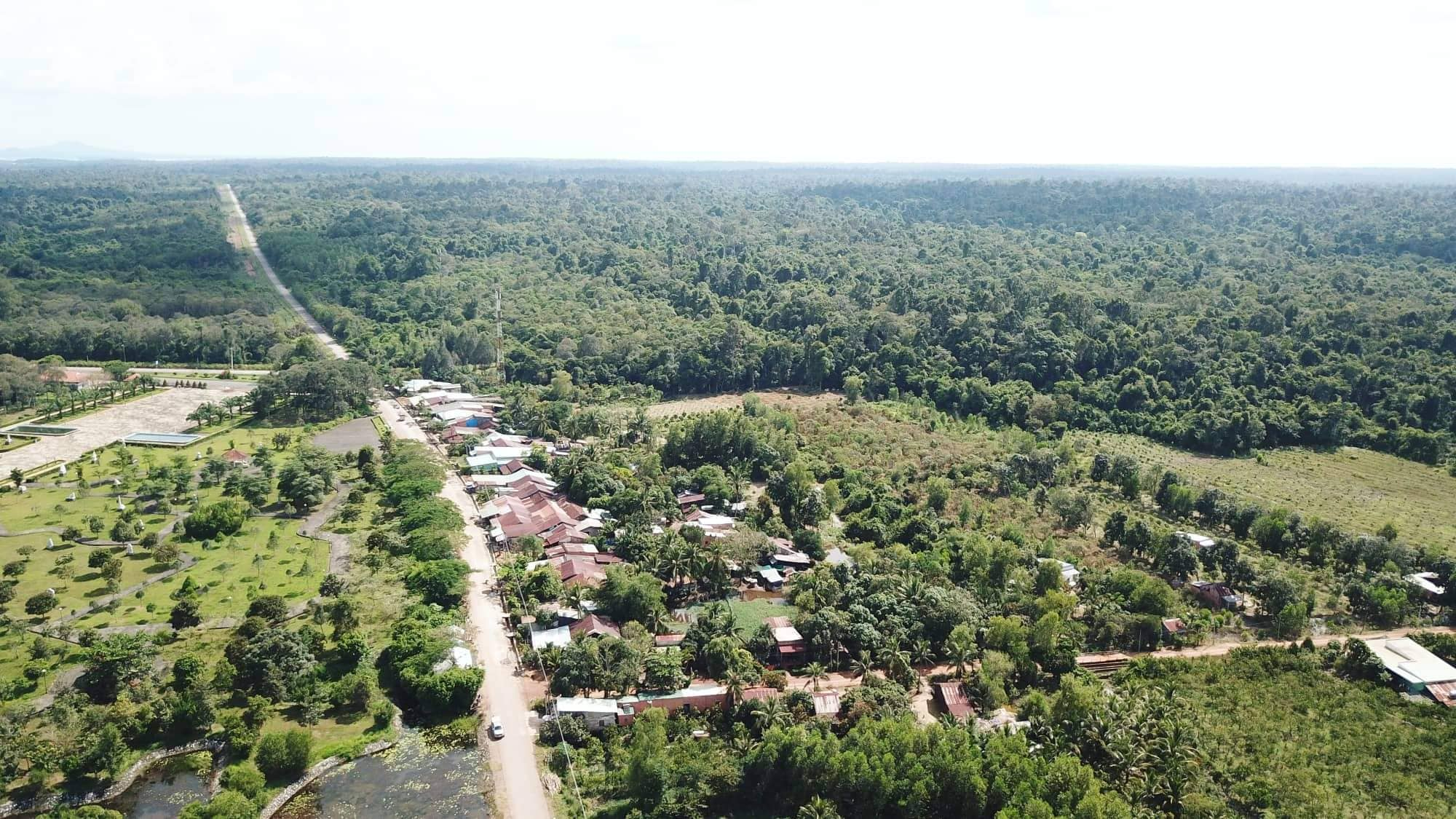
Khu bảo tồn thiên nhiên – văn hóa Đồng Nai nhìn từ trên cao – Ảnh: NGỌC KHẢI
Thời tôi còn công tác, tỉnh Bình Phước muốn làm cầu Mã Đà qua Đồng Nai. Hai tỉnh họp bàn, lo ngại kết nối tuyến đường với 2 tỉnh sẽ ảnh hưởng đến việc bảo vệ rừng ở khu bảo tồn nên dừng lại không làm. Tỉnh Bình Phước cũng đình chỉ bến đò tự phát ngang sông Mã Đà.
Nay lại có kiến nghị muốn làm cầu Mã Đà để kết nối với tuyến quốc lộ 13C đi xuyên qua khu bảo tồn. Làm đường có nhiều vị trí và phương án khác không đụng đến rừng sao không lựa chọn, lại muốn làm đường xuyên rừng thì liệu có động cơ khác không?
Đồng Nai đã đổ bao mồ hôi, nước mắt để bảo vệ rừng mấy chục năm nay, không thể chỉ vì tuyến đường được rút ngắn hơn mà để rừng tự nhiên biến mất vĩnh viễn.
Dứt khoát không đụng đến rừng và không nên làm đường qua khu bảo tồn. Nếu cho làm tức là chấp nhận phá bỏ khu dự trữ sinh quyển thế giới. Bởi đường đi vào rừng sẽ chia cắt đa dạng sinh học, làm thú nhát, không sinh sản được, mất dần, tuyệt chủng và chúng ta sẽ trả giá rất đắt..
Ông Trần Văn Mùi, nguyên giám đốc Khu bảo tồn thiên nhiên – văn hóa Đồng Nai
The Ministry of Public Security’s Investigation Police Agency on April 8 launched criminal proceedings against and detained two other suspects for assisting Trinh Van Quyet, former Chairman of the FLC Group JSC, in manipulating the stock market.
VNA Friday, April 08, 2022 21:42
Functional forces seal and seize documents at the FLC headquarters. (Photo: VNA)
Hanoi (VNA) – The Ministry of Public Security’s Investigation Police Agency on April 8 launched criminal proceedings against and detained two other suspects for assisting Trinh Van Quyet, former Chairman of the FLC Group JSC, in manipulating the stock market.
Aboriginal and Torres Strait Islander readers and listeners are advised this article and podcast contain names of deceased people.
The Aboriginal Tent Embassy – a site of First Nations protest in Canberra, Australia – marks its 50th anniversary this year. In this episode of The Conversation Weekly podcast, we hear about its history and how the ongoing protest has influenced a new generation of Indigenous activism.
Our mission is to share knowledge and inform decisions.
About us
On the morning of January 26, 1972, four young Aboriginal men left Sydney for the Australian capital, Canberra. When they arrived, they sat down on the lawns outside parliament house, erected a beach umbrella and held up a sign that said “Aboriginal embassy”. They were protesting against a speech by the government, which dismissed hopes for Aboriginal land rights.
For most of the following 50 years, the Aboriginal Tent Embassy has kept up a presence on the lawn in front of what is now Old Parliament House in Canberra. It has become a symbol of an enduring fight for Indigenous sovereignty in Australia. It’s also survived attacks and controversies, most recently from a group calling themselves the “Original Sovereigns” who tried to hijack the Tent Embassy.
In this episode of The Conversation Weekly podcast, Carissa Lee, First Nations and public policy editor at The Conversation in Australia, yarns with two Indigenous researchers about the enduring place the Tent Embassy plays in the fight for Indigenous land rights and justice.
Bronwyn Carlson is a professor of Indigenous studies and director of the Centre for Global Indigenous Futures at Macquarie University in Sydney. “While the Tent Embassy is primarily a symbol of land rights, it means so much more,” she says. “It’s actually a symbol against the power that’s unlawfully in place across this continent that continues to oppress Indigenous people and deny us our rights as sovereign peoples to this place.”
Lynda-June Coe, a PhD candidate at Macquarie University, has family ties to the Tent Embassy and first visited as a child in the late 1980s. “I can remember my aunties and uncles standing up having very fiery, very robust conversations with other First Nations people around the fire,” says Coe. She says the Tent Embassy still exists today because “we refuse to go away, we refuse to die out”. Coe’s aunt, Jenny Munro, also talks to us at the Tent Embassy site in Canberra about her continued involvement in the protest site today.
This episode of The Conversation Weekly is supported by the UK/Australia Season Patrons Board, the British Council and the Australian Government as part of the UK/Australia Season, which centres on the theme Who Are We Now? The season’s programme reflects on the two countries’ shared history, explores their current relationship, and imagines their future together.