
Chào anh chị em,
Câu chuyện Chúa Giêsu giáng sinh đã được các tiên tri Do Thái (trong phần Cựu Ước) của Thánh kinh (Bible) tiên tri vài trăm năm trước đó – tiên tri được nhắc đến nhiều nhất là Isaiah, 800 năm trước khi Giêsu giáng sinh. Có nguồn tiên tri đi ngược lại cả mấy ngàn năm (như Samuel, sinh năm 1120 trước công nguyên). Vì vậy, đó là sự ra đời của một em bé có lẽ tạo ra nhiều thú vị và lý giải nhất lịch sử loài người, chẳng chỉ là lịch sử Do Thái.
Người mà dân Do Thái được tiên tri và chờ đợi là một Đấng Được Chọn, Đấng Được Xức Dầu, (the Chosen One, the Annointed One) – trong tiếng Hy Lạp là Christo, tiếng Anh là Christ, tiếng Hebrew (Do Thái cổ) là Mashiach, hay Messiah – đến để tạo ra một vương quốc hùng mạnh mang đến hòa mình và quyền lực cho dân Do Thái – ít ra là dân Do Thái nghĩ như thế. Và đương nhiên, cho đến ngày nay, đại đa số người Do Thái vẫn không tin Giêsu là đấng Messiah vì Giêsu chẳng cầm quân để biến Do Thái thành quốc gia thống trị thế giới như người Do Thái nghĩ.
Nhưng vương quốc của Giêsu là Nước Trời trong trái tim con người và mỗi người.
Trong 4 cuốn Tin Mừng (Phúc Âm, Gospels – Matthew, Luke, Mark và John) chỉ có Matthew và Luke kể lại chuyện em bé Giêsu giáng sinh.
(Chú thích: Trong bài này mình theo Bible tiếng Anh ở Biblegateway.com (New International Version) và tên mọi người mình cũng viết theo tiếng Anh, ngoại trừ tên Giêsu bằng tiếng Việt. Lý do là Công giáo VN và Tin lành VN cỏ 2 bản tiếng Việt nghe khác nhau đến mức người này đọc bản viết của người kia sẽ cảm thấy cực kì khó hiểu).
* Matthew bắt đầu Chương 1, viết lại gia phả Giêsu, từ tổ phụ Abraham đến vua David (Matt. 1:6) và đi xuống Joseph (Matt 1:17), chồng của Mary, mẹ của Giêsu. Gia phả này quan trọng vì nhiều tiên tri đã nói về Đấng Được Chọn (The Messiah) thuộc dòng dõi vua David.
* Kế tiếp Matthew nói về chuyện Joseph chấp nhận Giêsu là con:
18 Mary đã đính hôn với Joseph. Nhưng trước khi hai người về chung sống, Mary đã có thai do quyền năng của Thánh Linh. 19 Joseph là người công chính, nhưng không muốn Mary bị ô nhục đối với mọi người, nên mới định bỏ Mary cách kín đáo.20 Sứ thần Chúa hiện đến báo mộng cho ông rằng: “Này Joseph, con cháu David, đừng sợ đón Mary về nhà như là vợ của ông, vì người con cô ấy cưu mang là do quyền năng của Thánh Linh.21 Cô ấy sẽ sinh con trai và ông phải đặt tên cho con trẻ là Giêsu, vì chính Người sẽ cứu dân Người khỏi tội lỗi của họ.”22 Tất cả sự việc này đã xảy ra, là để ứng nghiệm lời xưa kia Chúa phán qua miệng ngôn sứ:23 Này đây, Trinh Nữ sẽ thụ thai và sinh hạ một con trai, người ta sẽ gọi tên con trẻ là Immanuel, nghĩa là “Chúa-Trời-ở-cùng-chúng-ta.”24 Khi tỉnh giấc, Joseph làm như sứ thần Chúa dạy và đón Mary về nhà.25 Joseph không ăn ở với Mary, cho đến khi nàng sinh một con trai, và Joseph đặt tên cho con trẻ là Giêsu.
Chú thích:
* Jesus (Giêsu) là tiếng Hy Lạp của từ Joshua (tiếng Do Thái cổ), có nghĩa là “Chúa cứu rỗi”.
* Câu Matt 1:23 nhắc lại lời tiên tri Isaiah nói với Ahaz, vua của Judah, Vương Quốc Phía Nam của dân Do Thái (Vương Quốc Phía Bắc của dân Do Thái là Israel): “Vậy, chính Chúa sẽ cho nhà vua một dấu hiệu: Người nữ đồng trinh sẽ mang thai và sinh ra một con trai, và sẽ gọi con trẻ là Immanuel.” (Isaiah 7:14).
Kế đến Luke 2:1-20 kể về Mary sinh hạ Giêsu:
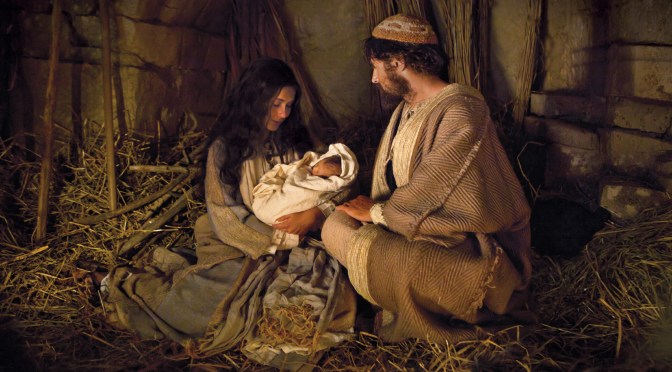
1 Thời ấy, Caesar (Hoàng đế) Augustus ra chiếu chỉ, truyền kiểm tra dân số trong khắp cả thiên hạ… 3 Ai nấy đều phải về nguyên quán mà khai tên tuổi.4 Bởi thế, Joseph từ thành Nazareth, miền Galilee, lên thành vua David tức là Bethlehem, miền Judeah, vì ông thuộc gia đình dòng tộc vua David.5 Joseph lên đó khai tên cùng với người đã thành hôn với ông là Mary, lúc ấy đang có thai.6 Khi hai người đang ở đó, thì Mary đã tới ngày mãn nguyệt khai hoa.7 Bà sinh con trai đầu lòng, lấy tã bọc con, rồi đặt nằm trong máng cỏ, vì hai ông bà không tìm được chỗ trong nhà trọ.
[Chú thích: Hoàng đế La Mã Augustus ra lệnh kiểm tra dân số vì lúc đó La Mã đang cai trị Do Thái]
8 Trong vùng ấy, có những người chăn chiên sống ngoài đồng và thức đêm canh giữ đàn vật.9 Bỗng sứ thần Chúa đứng bên họ, và vinh quang của Chúa chiếu tỏa chung quanh, khiến họ kinh khiếp hãi hùng.10 Nhưng sứ thần bảo họ: “Anh em đừng sợ. Này tôi báo cho anh em một tin mừng trọng đại, cũng là tin mừng cho toàn dân:11 Hôm nay, một Đấng Cứu Độ (a Savior) đã sinh ra cho anh em trong thành vua David, Người là Đấng Được Chọn (the Messiah), là Chúa (The Lord).12 Anh em cứ dấu này mà nhận ra Người: anh em sẽ gặp thấy một trẻ sơ sinh bọc tã, nằm trong máng cỏ.”13 Bỗng có muôn vàn thiên binh hợp với sứ thần cất tiếng ngợi khen Chúa Trời rằng:
14 “Vinh danh Thiên Chúa trên trời,
bình an dưới thế cho người Chúa thương.”
15 Khi các thiên sứ từ biệt mấy người chăn chiên để về trời, những người này bảo nhau: “Nào chúng ta sang Bethlehem, để xem sự việc đã xảy ra, như Chúa đã tỏ cho ta biết.”16 Họ liền hối hả ra đi. Đến nơi, họ gặp Mary, Joseph, cùng với Hài Nhi đặt nằm trong máng cỏ.17 Thấy thế, họ liền kể lại điều đã được nói với họ về Hài Nhi này.18 Nghe các người chăn chiên thuật chuyện, ai cũng ngạc nhiên.19 Còn Mary thì trân quý những điều đó, và suy tưởng sâu thẳm về chúng trong lòng.20 Rồi các người chăn chiên ra về, vừa đi vừa tôn vinh ca tụng Chúa Trời, vì mọi điều họ đã được mắt thấy tai nghe, đúng như đã được nói với họ.
Các bạn, đó là vắn tắt Đêm Giáng Sinh của Giêsu Hài Đồng, sinh ra trong nghèo hèn của con người – nằm trong máng cỏ cho lừa ăn, trong chuồng lừa, và khách chia vui là những kẻ chăn cừu nghèo hèn, nhưng trong vinh quang của Chúa Trời với các thiên binh, thiên thần, ánh sáng rực rỡ của vinh quang Chúa, và lời ca tiếng nhạc của mọi thiên sứ trên trời. Chẳng còn cảnh nào vinh quang hơn thế, bao quanh một gia đình nghèo trong một nơi nghèo hèn hơn thế.
Nghèo hèn của thế gian, chính là vinh quang Chúa. “Phúc cho người nghèo khó trong tâm linh, vì Nước Thiên Đàng là của họ.”
Dưới đây là các bài chant và bài nhạc Gloria in excelsis Deo nổi tiếng:
Gloria in excelsis Deo
et in terra pax hominibus bonae voluntatis.
Vinh danh Thiên Chúa trên các tầng trời
Bình an dưới thế cho người thiện tâm
Gloria in excelsis Deo (Kinh Vinh Danh) bắt đầu bằng câu các thiên thần ca tụng Chúa Hài Đồng trong Tin Mừng Luke: “Vinh danh Thiên Chúa trên các tầng trời, và bình an dưới thế cho người thiện tâm” (Luke 2:14), bắt nguồn từ thế kỷ thứ 4 như là lời cầu nguyện buổi sáng trong truyền thống Byzantine (Giáo hội miền đông, ngày nay là Chính thống giáo). Tục truyền, là Kinh Vinh Danh được thánh Saint Hilary of Poitiers (c. 300–368) học được khi ông ở miền đông năm 359–360 và mang sang Giáo hội miền tây (tức Công giáo và Tin Lành ngày nay).
Đây là bài thánh ca luôn luôn được hát trong Lễ Giánh Sinh, Phục Sinh và những ngày lễ lớn.
Lời La Tinh
Gloria in excelsis Deo,
et in terra pax hominibus bonae voluntatis.
Laudamus te, benedicimus te, adoramus te, glorificamus te,
gratias agimus tibi propter magnam gloriam tuam,
Domine Deus, Rex caelestis, Deus Pater omnipotens.
Domine fili unigenite, Jesu Christe,
Domine Deus, Agnus Dei, Filius patris,
Qui tollis peccata mundi, miserere nobis.
Qui tollis peccata mundi, suscipe deprecationem nostram.
Qui sedes ad dexteram Patris, miserere nobis.
Quoniam tu solus sanctus,
Tu solus Dominus,
Tu solus Altissimus, Jesu Christe,
Cum Sancto Spiritu in gloria Dei Patris. Amen.
Gloria in Escelsis Deo – Gregorian chant
Gloria in Escelsis Deo – Andrea Bocelli
Gloria in Escelsis Deo – Ca đoàn Hallelujah – kênh Thư viện Tin Lành
Chương Trình Cùng Hát Nhạc Giáng Sinh
Liên Hữu Tin Lành Việt Nam Thế Giới
Viện Thần Học Tin Lành Việt Nam
Ca Đoàn Hallelujah
Thư Viện Tin Lành – http://www.thuvientinlanh.org
Used with permission from the Union University of California
Kinh Vinh Danh
Vinh danh Thiên Chúa trên các tầng trời
và bình an dưới thế cho người thiện tâm.
Chúng con ca ngợi Chúa,
chúng con chúc tụng Chúa,
chúng con thờ lạy Chúa,
chúng con tôn vinh Chúa,
chúng con cảm tạ chúa vì vinh quang cao cả Chúa,
lạy Chúa là Thiên Chúa, là Vua trên trời,
là Chúa Cha toàn năng.
Lạy Con một Thiên Chúa, Chúa Giêsu Kitô.
Lạy Chúa là Thiên Chúa, là Chiên Thiên Chúa, là Con Ðức Chúa Cha,
Chúa xóa tội trần gian, xin thương xót chúng con,
Chúa xóa tội trần gian, xin nhậm lời chúng con cầu khấn.
Chúa ngự bên hữu Ðức Chúa Cha, xin thương xót chúng con.
Vì lạy Chúa Giêsu Kitô,
chỉ có Chúa là Ðấng Thánh, chỉ có Chúa là Chúa, chỉ có Chúa là Ðấng Tối Cao,
cùng Ðức Chúa Thánh Thần trong vinh quang Ðức Chúa Cha.
Amen
Tiếng Anh
Glory be to God on high.
And in earth peace towards men of good will.
We praise thee.
We bless thee.
We worship thee.
We glorify thee.
We give thanks to thee for thy great glory.
O Lord God, heavenly King
God the Father almighty.
O Lord, the only-begotten Son Jesus Christ.
O Lord God, Lamb of God, Son of the Father.
Thou that takest away the sins of the world, have mercy upon us.
Thou that takest away the sins of the world, receive our prayer.
Thou that sittest at the right of the Father, have mercy upon us.
For thou only art Holy. Thou only art the Lord. Thou only art the Most High.
Thou only, O Jesus Christ,
with the Holy Ghost, art Most High in the glory of God the Father.
Amen.
Mời các bạn nghe Gloria In Excelsis Deo qua cách hát lễ Gregorian Chant.
Chúc các bạn Giáng Sinh linh thánh.
Với yêu thương,
Hoành
o0o
Đêm Chúa Giêsu Giáng sinh – The night Jesus was born
Dear Brothers and Sisters,
The story of Jesus’ birth was prophesied by Jewish prophets (in the Old Testament) of the Bible several hundred years before – the most frequently mentioned prophet being Isaiah, 800 years before Jesus’ birth. Some prophetic sources go back thousands of years (like Samuel). Therefore, that was the birth of a baby that perhaps has generated most fascination and elaboration in human history, not just Jewish history.
The one whom the Jewish people were prophesied and awaited was the Chosen One, the Anointed One – in Greek, Christo; in English, Christ; in Hebrew, Mashiach, or Messiah – who would come to create a powerful kingdom that would bring harmony and power to the Jewish people – at least that’s what the Jewish people thought. And of course, to this day, the vast majority of Jews still do not believe Jesus is the Messiah because Jesus did not lead an army to turn the Jews into a world-dominating nation as they think.
But Jesus’ kingdom is the Kingdom of Heaven in the hearts of each and every person.
In the four Gospels (Matthew, Luke, Mark, and John), only Matthew and Luke recount the story of Jesus’ birth.
(Note: In this article, I am following the English Bible at Biblegateway.com (New International Version), and I am writing everyone’s names in English, except for Jesus’ name in Vietnamese. The reason is that the Catholic and Protestant versions of the Bible in Vietnamese sound so different that one person reading the other’s version will feel very difficult to understand).
* Matthew begins Chapter 1, writing down the genealogy of Jesus, from the patriarch Abraham to King David (Matt. 1:6) and going down to Joseph (Matt. 1:17), the husband of Mary, the mother of Jesus. This family tree is important because many prophets spoke of the Chosen One (the Messiah) being of the lineage of King David.
* Next, Matthew speaks of Joseph’s acceptance of Jesus as his son:
18 Mary was pledged to be married to Joseph, but before they came together, she was found to be pregnant through the Holy Spirit. 19 Because Joseph her husband was faithful to the law, and yet[e] did not want to expose her to public disgrace, he had in mind to divorce her quietly.
20 But after he had considered this, an angel of the Lord appeared to him in a dream and said, “Joseph son of David, do not be afraid to take Mary home as your wife, because what is conceived in her is from the Holy Spirit. 21 She will give birth to a son, and you are to give him the name Jesus,[f] because he will save his people from their sins.”
22 All this took place to fulfill what the Lord had said through the prophet: 23 “The virgin will conceive and give birth to a son, and they will call him Immanuel”[g] (which means “God with us”).
24 When Joseph woke up, he did what the angel of the Lord had commanded him and took Mary home as his wife. 25 But he did not consummate their marriage until she gave birth to a son. And he gave him the name Jesus.
Notes:
* Jesus is the Greek word for Joshua (ancient Hebrew), meaning “The Lord saves.”
* Matthew 1:23 mentioned the prophecy of Isaiah to Ahaz, king of Judah, the Southern Kingdom of the Jewish people (the Northern Kingdom of the Jewish people being Israel): “Then the Lord himself will give you a sign: The virgin will conceive and bear a son, and will call him Immanuel.” (Isaiah 7:14).
Then Luke 2:1-20 tells of Mary giving birth to Jesus:
1 In those days Caesar Augustus issued a decree that a census should be taken of the entire Roman world… 3 And everyone went to their own town to register.
4 So Joseph also went up from the town of Nazareth, in Galilee, to Judeah, to Bethlehem the town of David, because he belonged to the house and line of David. 5 He went there to register with Mary, who was pledged to be married to him and was expecting a child. 6 While they were there, the time came for the baby to be born, 7 and she gave birth to her firstborn, a son. She wrapped him in cloths and placed him in a manger, because there was no guest room available for them.
[Note: Ceasar Augustus of Rome ordered the Census, because Rome was colonizing the Jewish nation then]
8 And there were shepherds living out in the fields nearby, keeping watch over their flocks at night. 9 An angel of the Lord appeared to them, and the glory of the Lord shone around them, and they were terrified. 10 But the angel said to them, “Do not be afraid. I bring you good news that will cause great joy for all the people. 11 Today in the town of David a Savior has been born to you; he is the Messiah, the Lord. 12 This will be a sign to you: You will find a baby wrapped in cloths and lying in a manger.”
13 Suddenly a great company of the heavenly host appeared with the angel, praising God and saying,
14 “Glory to God in the highest heaven,
and on earth peace to those on whom his favor rests.”
15 When the angels had left them and gone into heaven, the shepherds said to one another, “Let’s go to Bethlehem and see this thing that has happened, which the Lord has told us about.”
16 So they hurried off and found Mary and Joseph, and the baby, who was lying in the manger. 17 When they had seen him, they spread the word concerning what had been told them about this child, 18 and all who heard it were amazed at what the shepherds said to them. 19 But Mary treasured up all these things and pondered them in her heart. 20 The shepherds returned, glorifying and praising God for all the things they had heard and seen, which were just as they had been told.
My friends, that’s a brief summary of the birth night of Baby Jesus, born into human poverty – lying in a manger for donkeys to eat, in a stable, with poor shepherds as guests to celebrate, but in the glory of God with the heavenly hosts, the glory of the Lord, and the singing of all the angels in heaven. There is no scene more glorious than this, around a poor family in a place poorer than this place.
The poverty of the world is the glory of God. “Blessed are the poor in spirit, for theirs is the kingdom of heaven.”
Below are the famous chant and songs of Gloria in excelsis Deo:
Gloria in excelsis Deo
et in terra pax hominibus bonae voluntatis.
Glory to God in the highest!
Peace on earth to those of good will!
The Gloria in excelsis Deo (Glory to God in the highest, and peace on earth to those of good will) begins with the angels praising the Child Jesus in the Gospel of Luke: “Glory to God in the highest, and peace on earth to those of good will” (Luke 2:14). It originated in the 4th century as a morning prayer in the Byzantine tradition (Eastern Church, today’s Orthodox Church). Tradition holds that the Gloria was learned by Saint Hilary of Poitiers (c. 300–368) while he was in the East in 359–360 and brought to the Western Church (today’s Catholic and Protestant Churches).
This hymn is always sung during Christmas, Easter, and other major feast days.
Latin
Gloria in excelsis Deo,
et in terra pax hominibus bonae voluntatis.
Laudamus te, benedicimus te, adoramus te, glorificamus te,
gratias agimus tibi propter magnam gloriam tuam,
Domine Deus, Rex caelestis, Deus Pater omnipotens.
Domine fili unigenite, Jesu Christe,
Domine Deus, Agnus Dei, Filius patris,
Qui tollis peccata mundi, miserere nobis.
Qui tollis peccata mundi, suscipe deprecationem nostram.
Qui sedes ad dexteram Patris, miserere nobis.
Quoniam tu solus sanctus,
Tu solus Dominus,
Tu solus Altissimus, Jesu Christe,
Cum Sancto Spiritu in gloria Dei Patris. Amen.
Gloria in Excelsis Deo – Gregorian chant
Glria in Escelsis Deo – Andrea Bocelli
Gloria in Escelsis Deo – Hallelujah Choir – Channel Protestant Library
Christmas Sing-along Program
World Vietnamese Evangelical Fellowship
Vietnamese Evangelical Theological Institute
Hallelujah Choir
Evangelical Library – http://www.thuvientinlanh.org
Used with permission from the Union University of California
English
Glory be to God on high.
And in earth peace towards men of good will.
We praise thee.
We bless thee.
We worship thee.
We glorify thee.
We give thanks to thee for thy great glory.
O Lord God, heavenly King
God the Father almighty.
O Lord, the only-begotten Son Jesus Christ.
O Lord God, Lamb of God, Son of the Father.
Thou that takest away the sins of the world, have mercy upon us.
Thou that takest away the sins of the world, receive our prayer.
Thou that sittest at the right of the Father, have mercy upon us.
For thou only art Holy. Thou only art the Lord. Thou only art the Most High.
Thou only, O Jesus Christ,
with the Holy Ghost, art Most High in the glory of God the Father.
Amen.
Wish everyone Holy Christmas.
With compassion,
Hoành
o0o
© copyright 2025
Trần Đình Hoành
Permitted for non-commercial use
www.dotchuoinon.com
 Đọt Chuối Non
Thank you, Anh.
Lots of love to you and yours. 🙏❤️
Happy New Year to you too.
In Christ,
e. Thắng
LikeLiked by 1 person
Thank you, Thắng.
Merry Christmas and Happy New Year.
Jesus be with you.
A. Hoành
LikeLike
Thanks a lot, Chị Thu Hương.
You are amazing and beautiful at heart. I am so happy and grateful to have you here.
e. Thắng
LikeLike
Cảm ơn Thắng chúc lành.
You are the merciful. May God show mercy on your way.
In Christ,
C.Hương
LikeLiked by 1 person
Mến chúc anh Hoành, chị Hương và mọi anh chị em trong vườn chuối một mùa giáng sinh an lành.
May God always be with you and yours.
In Christ.
e. Thắng
LikeLiked by 1 person