
Chào anh chị em,
Mình không biết thái độ chỉ tập trung vào bằng cấp, và không cần biết lễ nghĩa, của tri thức Việt bắt đầu từ lúc nào. Có lẽ là từ thời Pháp thuộc. Quan lại Mẫu quốc chỉ muốn đào tạo một số rất nhỏ trí thức Việt, giỏi tiếng Pháp, có bằng cấp Pháp, để giúp Pháp cai trị người Việt. Không cần học lễ nghĩa. You hống hách vá áp bức dân Việt, đè đầu chúng nó thì càng tốt, miễn là đối với quan thầy Pháp you “gọi dạ bảo vâng” là được.
Cho đến ngày nay trí thức học có bằng để làm quan, rồi tham nhũng, chạy chọt, áp bức dân, và hoàn toàn chẳng biết lễ nghĩa đạo đức là gì, cũng chỉ là chuyện thường. Đọc báo hằng ngày thì thấy quan chức đi tù hà rầm.
Tự do, độc lập, hạnh phúc. Đã có tự do và độc lập, nhưng hạnh phúc thì rất bất hạnh.
Chữ lễ chỉ là một chữ trong Ngũ Thường (Five Constant Virtues). Lễ là propriety (đúng phép, đúng quy tắc ứng xử – etiquette, phép lịch sự). Nhưng chữ “lễ” ở đây thực sự là đại diện cho cả Ngũ Thường: Nhân, Nghĩa, Lễ, Trí, Tín.
Chữ lễ (礼) không phải do Khổng Tử nghĩ ra và cũng không xuất phát từ Nho gia, bởi vì trước đó, “lễ” đã manh nha từ thời Tam Hoàng Ngũ Đế (Tam Hoàng: Thiên Hoàng, Địa Hoàng và Thái Hoàng/Nhân Hoàng. Theo dân gian thì – Thần Nông, Phục Hy, Nữ Oa); Ngũ đế (khoảng 2852 TCN – 2205 TCN) gồm: Hoàng Đế, Chuyên Húc, Đế Khốc, Đế Nghiêu, và Ngu Thuấn).
Đến thời Nghiêu-Thuấn thì trở thành lễ nghi qua “ngũ lễ”: cát lễ (吉礼 – lễ điều lành; hung lễ (凶礼 – lễ điều dữ); tân lễ (宾礼 – lễ khách); quân lễ (军礼 – lễ quân sự); và gia lễ (嘉礼 – lễ gia đình).
Khổng Tử (551 TCN – 479 TCN) thời Xuân Thu (771 TCN – 476 TCN) chỉ là người kế thừa, phát huy chữ lễ đến mức tột đỉnh của Nho gia: “khắc kỉ phục lễ” (克己复礼 – Kềm chế chính mình, quay về với lễ), để rồi trong thiên Nhan Uyên của Luận ngữ, Khổng Tử viết: “Phi lễ vật thị, phi lễ vật thính, phi lễ vật ngôn, phi lễ vật động”, nghĩa là: “Không hợp với lễ thì đừng nhìn, không hợp với lễ thì đừng nghe, không hợp với lễ thì đừng nói, không hợp với lễ thì chẳng nên làm”.
Đến thời Chiến Quốc (475 TCN – 221 TCN), Mạnh Tử (372 TCN – 289 TCN) đã sử dụng Nhân, Nghĩa, Lễ, Trí, Tín để làm nền tảng chuẩn mực cho đạo đức.
Nhân (Benevolence) là nhân ái, yêu người.
Nghĩa (Righteouness) là làm điều gì công chính, dù mình có bị thiệt thòi.
Lễ (Propriety) là ứng xử đúng phép, đúng lễ độ.
Trí (Wisdom) là biết phân biệt đúng sai và theo đó mà hành động.
Tín (Trust) là đáng tin và luôn giữ lời.
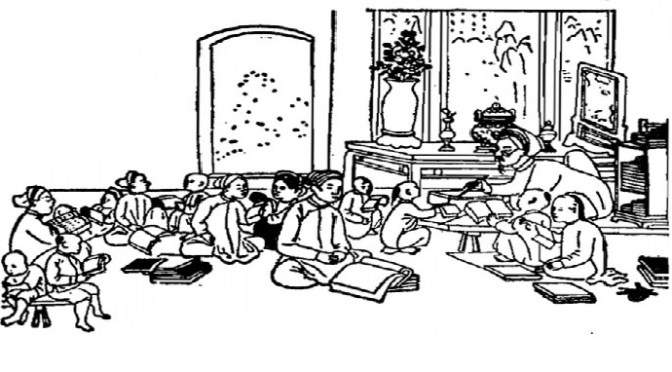
Học lễ versus học văn là học và thực hành cả Ngũ Thường trước, rồi mới lo các môn học nghề nghiệp.
“Tiên học lễ, hậu học văn” là như thế. Ưu tiên một dành cho Đạo làm người. Ưu tiên hai dành cho chuyên môn nghề nghiệp.
Tại sao?
Tại vì nếu bạn giữ Đạo làm người thì ai cũng mến, cũng phục, cũng tin tưởng bạn. Cho nên ai cũng muốn giao tiếp và làm việc với bạn, và do đó, bạn sẽ thành công lớn trên đời, dù bạn định nghĩa thành công là gì.
Còn nếu bạn chỉ biết học các môn hàn lâm và nghề nghiệp, mà thái độ kiêu căng, áp bức, tham nhũng, xem mọi người như giẻ rách, thì ai cũng không ưa bạn, không muốn gặp bạn, không muốn làm việc với bạn, thì dù bạn có năm bằng tiến sĩ trong túi, bạn sẽ thường thất nghiệp, hoặc đi tù.
Lý lẽ này rất hiển nhiên, nhưng tại sao nhiều trí thức stupid đến mức không hiểu, không học, không thực hành. Mình chịu thua.
Đa số các chị bán hàng rong, các anh quét đường, những người lao động thấp kém, hiểu chân lý đơn giản này.
Lành thay, lành thay!
Thiền Tông Lục Tổ Huệ Năng làm nghề đốn củi, mù chữ, không biết đọc, không biết viết, nhưng khi nghe người hàng xóm đọc Kinh Kim Cang đến câu “Ưng vô sở trụ nhi sanh kỳ tâm” thì Huệ Năng giác ngộ (và sau đó thành tổ thứ sáu của Thiền Tông).
Các bạn trí thức, các bạn có nhiệm vụ dẫn đường cho đất nước này. Các bạn không có quyền ngu. Wake up!
Với yêu thương,
Hoành
Xem thêm video clips “Trung Quốc cổ đại: Hạ – Thương – Tây Chu – Xuân Thu Chiến Quốc”
“Xuân Thu – Chiến Quốc”
2000 Năm Thời Kỳ Phong Kiến Phân Quyền Trung Quốc (Thế Kỷ 21 TCN – 249 TCN)
o0o
Tiên học lễ, hậu học văn – First learn propriety, then learn academic subjects
Dear Brothers and Sisters,
I don’t know when Vietnamese intellectuals’ attitude of focusing only on degrees, and not caring about manners, started. Maybe it was from the French colonial period. The Mother Country’s governing oficials only wanted to train a very small number of Vietnamese intellectuals, good at French, with French degrees, to help the French rule the Vietnamese. There was no need to learn manners. You could be arrogant and oppress the Vietnamese people, that was even better, as long as you always said “Yes, Sir!” to your French bosses.
To this day, intellectuals study to get degrees to become officials, then they do corruption, illegal lobbying, oppression of their people, and complete ignorance of what manners and ethics are. It is just a normal way of living. Reading the daily newspaper, we see officials going to jail in droves.
Freedom, independence, happiness. There are freedom and independence, but happiness is still very unhappy.
The word “Propriety” is just one of the Five Constant Virtues. Propriety means correct rules of conduct – etiquette, politeness, proper behavior. But the word “propriety” here actually represents the Five Constant Virtues: Benevolence, Righteousness, Propriety, Wisdom, and Trust.
“The concept of ‘Lễ’ (Propriety or Ritual) was not invented by Confucius, nor did it originate from Confucianism. It had already begun to take shape during the era of the Three Sovereigns and Five emperors (Three Sovereigns: Heavenly Sovereign, Earthly Sovereign, and Great Sovereign/Man Sovereign. According to folklore – Shennong, Fuxi, and Nüwa). The Five Emperors (around 2852 BC – 2205 BC) included: Yellow Emperor, Zhuanxu, Emperor Ku, Emperor Yao, and Emperor Shun).
By the time of Emperors Yao and Shun, Propriety had developed into formal rituals known as the ‘Five Rites’: Auspicious Rites (吉礼), Inauspicious Rites (凶礼), Guest Rites (宾礼), Military Rites (军礼), and Celebratory Rites (嘉礼).
Confucius (551 BC – 479 BC), during the Spring and Autumn period (771 BC – 476 BC), was merely an inheritor who elevated the concept of Propriety to its highest refinement within Confucianism through the principle of “Self-restraint and returning to Propriety” (克己复礼). In the Analects, chapter Yan Yuan, Confucius wrote: “Do not look at what is contrary to Propriey, do not listen to what is contrary to Propriety, do not speak what is contrary to Propriety, do not act in ways contrary to “Propriety.”
By the Warring States period (475 BC – 221 BC), Mencius (372 BC – 289 BC) had adopted Benevolence (仁), Righteousness (义), Propriety (礼), Wisdom (智), and Trust (信) as the foundational standards for morality.”
Benevolence is kindness, love for people.
Righteousness is doing what is just, even when you are disadvantaged by that.
Propriety is behaving properly, politely with corect rituals.
Wisdom is knowing how to distinguish right from wrong and act accordingly.
Trust is being trustworthy and always keeping your word.
Learning Propriety versus learning academic subjects means learning and practicing the Five Constant Virtues first, then worrying about learning academically later.
“First learn Propriety, then learn academic subjects” is like that. Give first priority to the Way of humanity. Give second priority to professional expertise.
Why?
Because if you keep the Way of humanity, everyone will love, admire, and trust you. So everyone will want to communicate and work with you, and therefore, you will be very successful in life, no matter how you define success.
However, if you only know how to study academic and professional subjects, but have an arrogant, oppressive, corrupt attitude, and see everyone as rags, then everyone will dislike you, will not want to meet you, will not want to work with you, then even if you have five doctorate degrees in your pockets, you will often be unemployed or go to jail.
This reasoning is very obvious, but why are so many intellectuals so stupid that they do not understand, do not study, do not practice. I give up.
Most street vendors, street sweepers, and low-class laborers understand this simple truth.
Thank goodness, thank goodness!
Zen Sixth Patriarch Hui Neng was a woodcutter, illiterate, could not read or write, but when he heard his neighbor recite the Diamond Sutra to the phrase “Not abiding anywhere, giving birth to [Enlightened] mind,” Hui Neng became Enlightened (and later became the Zen Sixth Patriarch).
You intellectuals, you have the duty to lead the way for this country. You have no right to be stupid. Wake up!
With compassion,
Hoành
Addition Watching – Video “Ancient China: Xia – Shang – Western Zhou – Spring and Autumn Warring States”
Video “Spring and Autumn – Warring States”
2000 Years of Feudal Decentralization in China (21st Century BC – 249 BC)
o0o
© copyright 2025
Trần Đình Hoành
Permitted for non-commercial use
www.dotchuoinon.com
 Đọt Chuối Non