
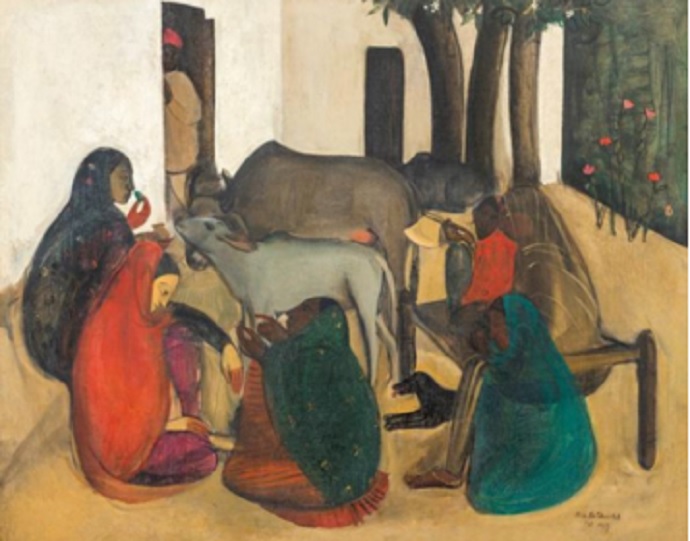
The Story Teller by Amrita Sher-Gil (30 January 1913 – 5 December 1941) a Hungarian-Indian painter. (Not directly related to this Zen story.)
Chào anh chị em,
Encho là người kể truyện rất nổi tiếng. Những truyện tình anh kể làm rung động con tim của người nghe. Khi anh kể truyện chiến tranh, người nghe có cảm tưởng như là họ đang ở trên bãi chiến trường.
Ngày nọ Encho gặp Yamaoka Tesshu, một người thường sắp đạt đỉnh cao của Thiền. “Tôi hiểu,” Yamaoka nói “anh là người kể truyện hay nhất trong nước ta và anh làm người ta khóc hay cười khi anh muốn. Vậy hãy kể cho tôi nghe truyện Cậu Đào mà tôi yêu thích. Hồi còn bé tôi hay nằm ngủ bên cạnh mẹ, và mẹ hay kể cho tôi huyền thoại đó. Vào khoảng giữa truyện tôi hay thiếp ngủ. Hãy kể cho tôi như là mẹ tôi kể.”
Encho không dám thử. Anh xin một tí thời gian để nghiên cứu. Vài tháng sau anh đến gặp Yamaoka và nói: “Cho tôi cơ hội để kể truyện cho anh.”
“Để khi khác đi,” Yamaoka trả lời.
Encho rất thất vọng. Anh nghiên cứu thêm và thử lại lần nữa. Yamaoka từ chối anh nhiều lần. Khi Encho bắt đầu nói Yamaoka liền chận lại và nói: “Anh chưa giống mẹ tôi.”
Encho tốn mất 5 năm để có thể kể cho Yamaoka chuyện huyền thoại như mẹ Yamaoka đã kể cho anh.
Bằng cách này, Yamaoka đã truyền Thiền cho Encho.
Bình:
• Chúng ta đã gặp Encho trong truyện Thiền Một nụ cười trong cả một đời – A smile in his life time
San’yūtei Enchō (1839–1900) là một nhà kể chuyện tiên phong và nghệ sĩ rakugo của Nhật Bản, được coi là người sáng lập rakugo hiện đại. Các tác phẩm của ông đã góp phần định hình nghệ thuật kể chuyện Nhật Bản trong giai đoạn chuyển giao từ thời Edo sang thời Minh Trị.
📜 Chi tiết tiểu sử chính
– Tên khai sinh: Jirokichi Izubuchi
– Nghệ danh: San’yūtei Enchō (初代 三遊亭 圓朝)
– Sinh: 13 tháng 5 năm 1839, Nhật Bản
– Mất: 11/08/1900, thọ 61 tuổi
– Nghề nghiệp: Nghệ sĩ biểu diễn Rakugo, tác giả và nhà viết kịch
🎭 Đóng góp nghệ thuật
– Thể loại thông thạo: Hài kịch (rakugo), kịch nhân văn (ninjobanashi), truyện ma (kaidan) và chuyển thể từ truyện nước ngoài (hon’anmono).
• Chúng ta đã gặp Yamaoka trong truyện Bầy con của Thiên hoàng.
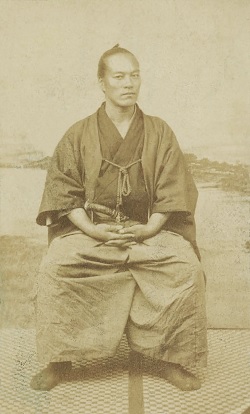
Yamaoka Tesshū ( 山岡 鉄舟 ; 10 tháng 6 năm 1836 – 19 tháng 7 năm 1888), còn được gọi là Ono Tetsutarō hay Yamaoka Tetsutarō, là một samurai nổi tiếng thời kỳ Bakumatsu, người đóng vai trò quan trọng trong cuộc Minh Trị Duy tân. Ông cũng được ghi nhận là người sáng lập trường kiếm thuật Itto Shoden Muto-ryu. Cùng với Katsu Kaishū và Takahashi Deishū họ được gọi là “Ba chiếc thuyền của Bakumatsu (幕末の三舟)”. (Nguồn)
• Thời kỳ Bakumatsu (Mạc mạt) là giai đoạn cuối thời Edo của Nhật Bản, đánh dấu sự sụp đổ của Mạc phủ Tokugawa và sự chuyển giao sang chính phủ Minh Trị Thiên hoàng, xảy ra từ năm 1853 đến năm 1867. Thời kỳ này chứng kiến sự kết thúc chính sách “Bế quan tỏa cảng” của Nhật Bản do Mạc phủ Tokugawa nắm quyền, sự xuất hiện của Hạm đội Hắc thuyền của Phó đề đốc Mỹ Matthew C. Perry, và sự trỗi dậy của phong trào Minh Trị Duy tân (Tôn hoàng, Nhương di – Tôn vua, chống rợ) chống lại Mạc phủ Tokugawa. (Nguồn)
• Muốn kể truyện được như mẹ của Yamaoka, Encho phải làm vài chuyện:
1. Làm cho tâm của mình hoàn toàn trống rỗng, không còn một tí tư tưởng và cảm xúc gì của riêng mình trong đó.
2. Hiểu được tình cảm và xúc cảm của hai mẹ con Yamaoka đối với nhau. (Tha Tâm Thông trong Lục thông của các Thiền sư đã qua Tứ Thiền Định.)
3. Nói được với Yamaoka với mọi tình cảm và xúc cảm như mẹ Yamaoka, và phải thật đến độ Yamaoka tưởng là mình đang nghe mẹ.
Tức là Encho phải làm được tâm trống rỗng lặng hoàn toàn, hiểu được tâm của người khác rất sâu sắc, và hành động như người khác hành động.
Tâm rỗng lặng đó chính là Thiền.
• Thiền là sống ở đây lúc này với tâm rỗng lặng. Có nhiều cách để đạt Thiền, không nhất thiết là phải ngồi Thiền và tụng kinh.
• Chẳng biết Yamaoka có thật muốn nge kể truyện hay không, hay chỉ là tìm cớ để truyền Thiền cho Encho.
(Trần Đình Hoành dịch và bình)
Với yêu thương,
Hoành
o0o
Thiền của người kể truyện – The story teller’s Zen
Dear Brothers and Sisters,
Encho was a famous storyteller. His tales of love stirred the hearts of his listeners. When he narrated a story of war, it was as if the listeners themselves were in the field of battle.
One day Encho met Yamaoka Tesshu, a layman who had almost embraced masterhood of Zen. “I understand,” said Yamaoka, “you are the best storyteller in our land and that you make people cry or laugh at will. Tell me my favorite story of the Peach Boy. When I was a little tot I used to sleep beside my mother, and she often related this legend. In the middle of the story I would fall asleep. Tell it to me just as my mother did.”
Encho dared not attempt this. He requested time to study. Several months later he went to Yamaoka and said: “Please give me the opportunity to tell you the story.”
“Some other day,” answered Yamaoka.
Encho was keenly disappointed. He studied further and tried again. Yamaoka rejected him many times. When Encho would start to talk Yamaoka would stop him, saying: “You are not yet like my mother.”
It took Encho five years to be able to tell Yamaoka the legend as his mother had told it to him.
In this way, Yamaoka imparted Zen to Encho.
Annotation:
• We have met Encho in the Zen story Một nụ cười trong cả một đời – A smile in his lifetime
San’yūtei Enchō (1839–1900) was a pioneering Japanese storyteller and rakugo performer, widely regarded as the founder of modern rakugo. His work helped shape Japanese narrative arts during the transition from the Edo to Meiji periods.
📜 Key Biographical Details
– Birth name: Jirokichi Izubuchi
– Stage name: San’yūtei Enchō (初代 三遊亭 圓朝)
– Born: May 13, 1839, Japan
– Died: August 11, 1900, aged 61
– Profession: Rakugo performer, author, and dramatist
🎭 Artistic Contributions
– Genres mastered: Comedy (rakugo), human drama (ninjobanashi), ghost stories (kaidan), and adaptations of foreign tales (hon’anmono).
• We have met Yamaoka in Zen story Bầy con của Thiên hoàng – The children of his Majesty.
Yamaoka Tesshū (山岡 鉄舟; June 10, 1836 – July 19, 1888), also known as Ono Tetsutarō or Yamaoka Tetsutarō, was a famous samurai of the Bakumatsu period, who played an important role in the Meiji Restoration. He is also noted as the founder of the Itto Shoden Muto-ryu school of swordsmanship. Along with Katsu Kaishū and Takahashi Deishū they were called “The Three Boats of the Bakumatsu (幕末の三舟)”. (Source)
• The Bakumatsu period is the late Edo period of Japan, marking the fall of the Tokugawa shogunate and the transition to Emperor Meiji’s government, occurring from 1853 to 1867. This period saw the end of Japan’s “isolation” policy under the Tokugawa shogunate, the appearance of the Black Fleet of American Vice Admiral Matthew C. Perry, and the rise of the Meiji Restoration movement against the Tokugawa shogunate. (Source)
• To be able to tell a story like Yamaoka’s mother, Encho must do a few things:
1. Make his mind completely empty, without any thoughts or feelings of his own.
2. Understand the feelings and emotions of Yamaoka and his mother towards each other. ( Paracittajñāna in the Six Super-Knowledge of Zen masters who have passed the Fourth Dhyana.)
3. Speak to Yamaoka with all the feelings and emotions like Yamaoka’s mother, and so truly that Yamaoka thinks he is listening to his mother.
That is, Encho must make his mind completely empty and quiet, understand the minds of others very deeply, and act as others act.
That empty and quiet mind is Zen.
• Zen is to live here and now with an empty and quiet mind. There are many ways to attain Zen, not necessarily by sitting in Zen and chanting sutras.
• It is not known whether Yamaoka really wanted to hear the story or was just looking for an excuse to transmit Zen to Encho.
(Translated and commented by Tran Dinh Hoanh)
With compassion,
Hoành
o0o
© copyright 2025
Trần Đình Hoành
Permitted for non-commercial use
www.dotchuoinon.com
# 93
 Đọt Chuối Non