
Chào anh chị em,
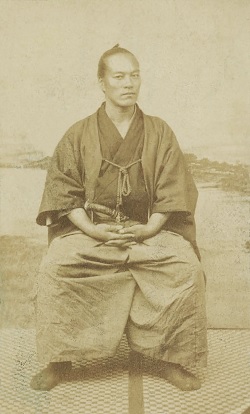
Yamaoka Tesshu, lúc còn là một thiền sinh trẻ, thăm hết thiền sư này đến thiền sư nọ. Chàng đến thăm Dokuon ở chùa Shokoku.

Muốn chứng tỏ là mình đã ngộ, Yamaoka nói: “Tâm, Phật, và mọi sinh linh, rốt cuộc, đều không hiện hữu. Bản chất thật của mọi hiện tượng là không. Không có đạt đạo, không có ảo ảnh, không có thánh nhân, không có phàm phu. Không có bố thí, không có nhận bố thí.”
Dokuon, đang hồi hút thuốc yên lặng, chẳng nói gì. Đột nhiên Dokuon lấy ống píp tre đánh Yamaoka. Chàng thiền sinh tức giận.
“Nếu không có gì hiện hữu,” Dokuon thắc mắc, “vậy thì cơn giận này đến từ đâu?”
Bình:
• Chàng thiền sinh trẻ Yamaoka Teshu này về sau thành thầy của Thiên hoàng, và còn là một Thiền sư và kiếm sư thâm hậu.
• Nói rằng mọi sự “có” tức là “chấp có”, nói rằng mọi sự “không có” là “chấp không”. Cả hai chấp đều là chấp.
Con đường Phật pháp là “trung đạo” (đường giữa) — có mà là không, không mà là có (Sắc bất dị Không, Không bất dị Sắc; Sắc tức thị Không, Không tức thị Sắc) (Bát Nhã Tâm Kinh).
Có đó mà mất đó. Đóa hoa hôm nay thấy đây, ngày mai có thể héo tàn rủ chết.
Con người của ta hôm qua đã chết rồi, và hôm nay đã là một người mới. Sinh tử sinh tử nối tiếp từng sát-na ngắn ngủi trong dòng sống. Trong bài Tái sinh trong nguồn sáng, chúng ta có nói: “Mỗi giây đồng hồ, từ 200 ngàn đến 3 triệu tế bào trong cơ thể chúng ta chết đi và được thay thế bằng tế bào mới. Sau một giây đồng hồ, ta đã là con người mới với ngần ấy tế bào mới. Đời ta là một chuỗi của vô lượng cuộc tái sinh như thế, cũng như một đường kẻ thẳng chỉ là một chuỗi các điểm chấm nằm sát nhau.”
Đó là chuyển dịch liên tục, thay đổi liên tục. Đó là “vô thường” (không cố định, không thường hằng).
• Cô Bình hôm qua rất là sừng sộ, dữ dằn. Nhưng có thể cô Bình đó đã chết rồi và cô Bình hôm nay là một cô Bình mới có thể đầy yêu thương và nhân ái. Cho nên đừng lấy hình ảnh cô Bình hôm qua để đối xử với cô Bình hôm nay.
Thái độ rộng mở như vậy gọi là “vô chấp”.
Vì thế gian “vô thường”, nên ta cần “vô chấp.”
• Khi chúng ta nói “mọi sự đều là Không”, thì Không đây không có nghĩa là không có, mà là bản tính thật của mọi sự, với tên là Không. (Tiếng Phạn Sanskrit gọi Không là Sunyata)
Thí dụ dễ hiểu nhất là nước và sóng. Đứng nhìn biển ta thấy sóng — sóng là hiện tượng vô thường, biến hiện từng giây đồng hồ, sóng sinh ra rồi sóng tan, để con sóng mới đến… Sóng thì phù du vô thường, nhưng nước thì luôn luôn ở đó. Sóng là “hiện tượng” vô thường (non-permanent phenomenon), nước là “bản tính” thường hằng (permanent essence).
Thí dụ cao hơn: Hãy tưởng tượng vũ trụ là một khoảng Không vĩ đại. Từ khoảng Không đó mọi thứ sinh ra – cây cỏ, trái đất, tinh tú, tôi, bạn…–và khi sự gì chết đi thì lại trở về với khoảng Không đó. Mọi sự có sống có chết là hiện tượng vô thường (non-permanent phenomenon). Khoảng Không chẳng bao giờ thay đổi đó là bản tính thường hằng (permanent essence).
Suy tưởng mức cao hơn nữa: Tất cả mọi thứ trong vũ trụ mà ta có thể tưởng tượng được đều là phù du vô thường (non-permanent phenomenon) hay “tương đối” (the relative), và đều được sinh ra từ một cái nền vĩ đại thường hằng (permanent essence) hay “tuyệt đối” (the Absolute) — điều thường hằng vĩ đại này là Không, là Thượng Đế, là Allah, là Tuyệt Đối.
Đó là liên hệ giữa tương đối (the relative) và tuyệt đối (the Absolute) mà mọi triết thuyết đông tây đều cố gắng tìm hiểu từ ngàn xưa.
Mọi tương đối đều từ Tuyệt Đối mà ra và luôn luôn nằm trong Tuyệt Đối.
Nhà Phật nói rằng mọi sự là Không, từ Không mà đến, và lại trở về Không là như thế. Đây là chữ Không của Bát Nhã Tâm Kinh.
Đổi chữ Không thành chữ Chúa hay Allah, thì thành câu nói Thiên chúa giáo hay Hồi giáo: Mọi sự từ Chúa/Allah mà đến, và lại trở về Chúa/Allah.
(Trần Đình Hoành dịch và bình)
Với yêu thương,
Hoành
o0o
Không có gì hiện hữu – Nothing Exists
Dear Brothers and Sisters,
Yamaoka Tesshu, as a young student of Zen, visited one master after another. He called upon Dokuon of Shokoku.
Desiring to show his attainment, he said: “The mind, Buddha, and sentient beings, after all, do not exist. The true nature of phenomena is emptiness. There is no realization, no delusion, no sage, no mediocrity. There is no giving and nothing to be received.”
Dokuon, who was smoking quietly, said nothing. Suddenly he whacked Yamaoka with his bamboo pipe. This made the youth quite angry.
“If nothing exists,” inquired Dokuon, “where did this anger come from?”
Annotation:
• This young Zen student Yamaoka Teshu later became the Emperor’s teacher, and was also a profound Zen master and sword master.
• To say that everything “exists” is to “attach to existence,” (clinging to “is); to say that nothing exists is to “attach to non-existence” (clinging to “is not”). Both attachments are attachments.
The Buddhist path is the “middle way” — Form is not different from Emptiness/Void, Emptiness/Void is not different from Form; Form is Emptiness/Void, Emptiness/Void is Form) (The Heart Sutra).
There is, then there is not. The flower seen here today can wither and die tomorrow.
The person we were yesterday is dead, and today is a new person. Birth and death follow each short moment in the stream of life. In the article Rebirth in the light source, we said: “Every second, from 200 thousand to 3 million cells in our body die and are replaced by new cells. After one second, we are a new person with that many new cells. Our life is a series of countless rebirths like that, just like a straight line is just a series of dots lying close together.”
That is continuous movement, continuous change. That is “impermanence” (not fixed, not permanent).
• Yesterday’s Ms. Binh was very fierce and mean. But maybe that Ms. Binh has died and today’s Ms. Binh is a new Ms. Binh who can be full of love and kindness. So don’t use the image of yesterday’s Ms. Binh to treat today’s Ms. Binh.
Such an open attitude is called “non-attachment”.
Because the world is “impermanent”, we need to live with “non-attachment”.
• When we say “everything is Emptiness”, Emptiness here does not mean non-existence, but is the true nature of everything, called Emptiness/Void (Sunyata in Sanskrist).
The easiest example to understand is water and waves. Standing and looking at the ocean, we see waves — waves are impermanent phenomena, appearing every second, waves are born, then disappear, so that new waves can come… Waves are ephemeral and impermanent, but water is always there. Waves are non-permanent “phenomena”, water is permanent “essence”.
A higher example: Imagine the universe as a great Emptiness. From that Emptiness everything is born – plants, the earth, stars, me, you…–and when something dies, it returns to that Emptiness. Everything that lives and dies is a non-permanent phenomenon. Emptiness never changes, that is the permanent essence.
Thinking even higher: Everything in the universe that we can imagine is a non-permanent phenomenon or “the relative” and is born from a great permanent essence or “the Absolute” –this great permanent essence is Emptiness, Void, God, Allah – the Absolute.
That is the relationship between the relative and the Absolute, which all Eastern and Western philosophies have tried to examine since ancient times.
All the relatives come from the Absolute and always lies within the Absolute.
Buddhism says that everything is Emptiness/Void, comes from Emptiness/Void, and returns to Emptines/Void. This is the word Emtiness/Void of the Heart Sutra.
Changing the word Emptiness/Void to God or Allah, it becomes the Christian or Muslim saying: Everything comes from God/Allah, and returns to God/Allah.
(Translated and annotated by Tran Dinh Hoanh)
With compassion,
Hoành
o0o
© copyright 2025
Trần Đình Hoành
Permitted for non-commercial use
www.dotchuoinon.com
# 82
 Đọt Chuối Non