
Chào anh chị em,
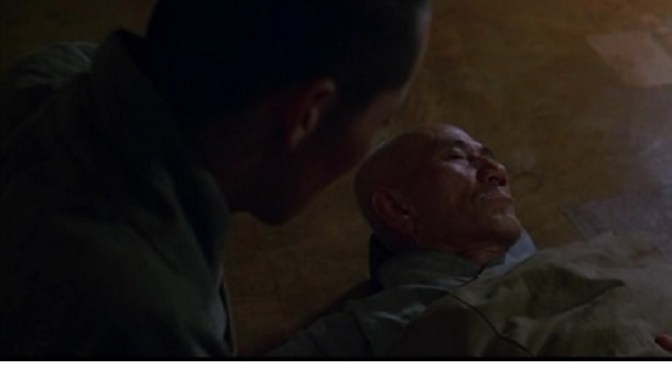
Gasan đang ngồi bên giường thầy của mình, Tekisui, ba ngày trước khi thầy qua đời. Tekisui đã chọn Gasan làm truyền nhân.
Một ngôi chùa đã bị cháy gần đây và Gasan đang bận rộn xây chùa lại. Tekisui hỏi Gasan: “Khi xây xong chùa rồi con sẽ làm gì?”
“Khi thầy khỏe lại, tụi con muốn thầy giảng ở đó,” Gasan nói.
“Nếu như thầy không sống đến lúc đó thì sao?”
“Thì con sẽ tìm một người khác,” Gasan trả lời.
“Nếu con không tìm được người khác thì sao?” Tekisui tiếp tục.
Gasan trả lời lớn tiếng: “Đừng hỏi điên vậy nữa. Thầy ngủ đi.”
Bình:
• Yuri Tekisui là cậu bé bị Thiền sư Gisan Zenrai mắng vì phí phạm một chút nước dư và cậu đổi tên thành Tekisui có nghĩa là “một giọt nước” trong truyện Thiền Một giọt nước.
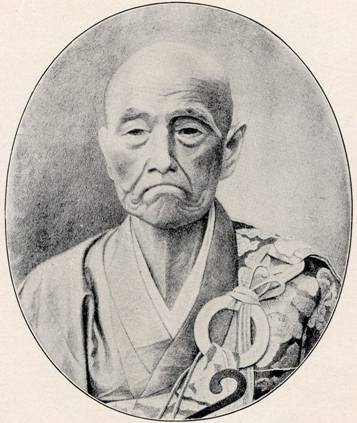
由里滴水 Yuri Tekisui (1822-1899)
滴水宜牧 Tekisui Giboku, aka 由理宜牧 Yuri Giboku
Dòng truyền thừa Pháp của Tekisui
白隱慧鶴 Hakuin Ekaku (1686-1769)
峨山慈棹 Gasan Jitō (1727-1797)
隱山惟琰 Inzan Ien (1751-1814)
太元孜元 Taigen Shigen (1768-1837)
儀山善來 Gisan Zenrai (1802-1878)
滴水宜牧 Tekisui Giboku (1822-1899) [由里 Yuri]
Yuri Takisui là thầy Thiền của Yamaoka Tesshu. Yamaoka Tesshū (山岡 鉄舟; June 10, 1836 – July 19, 1888) sống vào thời cuộc Minh Trị Duy Tân bắt đầu và là Kiếm sư và Thiền sư lừng danh nhất bấy giờ. Yamaoka đóng vai quan trọng trong cuộc Minh Trị Duy Tân và là thầy của Thiên hoàng. (See Zen story The children of His Majesty). (Source).
• Tekisui Giboku (sinh năm 1822, mất năm 1899; tiếng Nhật: 滴水宜牧) là một thiền sư người Nhật thuộc phái Lâm Tế, còn được gọi là Yuri (由理) Tekisui.
Ông sinh ra ở Kyoto. Ông bắt đầu tu tập từ nhỏ tại nhiều chùa chiền và tu viện trong khu vực nơi ông sống. Năm 18 tuổi, ông nghe nói về thiền sư Gisan Zenrai (mất năm 1877), người khi đó đang trụ trì Tu viện Sōgen-ji ở Okayama. Ông đã đến thành phố đó và trở thành đệ tử của thiền sư Gisan. Sau mười năm tu tập chuyên sâu, thiền sư Zenrai đã xác nhận trải nghiệm giác ngộ của ông.
Năm 1849, Tekisui trở về Kyoto, nơi ông trở thành trụ trì của một ngôi chùa ít người biết đến.
Năm 1863, ông đến thăm Tu viện Tenryū. Ông vẫn ở đó ngay cả trong thời gian diễn ra các cuộc bạo loạn, dẫn đến việc các tòa nhà của tu viện bị thiêu rụi. Cả Tekisui và học trò của ông là Gasan Shōtei đều sống sót. Ngay sau khi chiến sự kết thúc, Tekisui bắt đầu xây dựng lại tu viện. Công việc tiến triển rất chậm do thiếu kinh phí, vì vậy Tekisui đã tổ chức các buổi thuyết giảng tại tu viện bị đổ nát.
Năm 1871, ông được bổ nhiệm làm trụ trì thứ 236 của Tenryū-ji, và một năm sau, ông trở thành người đứng đầu dòng truyên thừa Pháp của tu viện đó.
Ông là một nhà lãnh đạo của cuộc kháng chiến chống lại phong trào haibutsu kishaku (một phong trào chống Phật giáo ở Nhật Bản vào thời điểm đó) và là một người bảo vệ kiên định cho Phật giáo. Ngài đã không ngừng du hành khắp Nhật Bản, trong thời gian đó, các công trình mới tại Tenryū-ji được xây dựng dần dần.
Một trong những mục tiêu của ngài là quy tụ đủ đệ tử tại tu viện để đảm bảo sự phát triển liên tục của dòng truyền thừa Pháp này. Điều này trở nên khả thi khi các công trình tu viện và Pháp viện được xây dựng lại.
Năm 1892, Tekisui từ chức trụ trì tu viện để nhường chỗ cho đệ tử của mình là Ryōen Genseki (1842–1918). Tuy nhiên, sau vài năm, khi việc mở rộng tu viện trở nên cần thiết, Ryōen từ chức trụ trì, và Tekisui lại trở thành trụ trì. Năm 1899, việc tái thiết Tenryū-ji cuối cùng đã hoàn thành.
Thiền sư Tekisui Giboku mất năm 1899.
Ngay trước khi qua đời, ngài đã viết một bài thơ:
Một giọt nước từ Sōgen
Trong bảy mươi bốn năm
Nó được sử dụng, không bao giờ cạn kiệt
Khắp trời đất
• Các câu hỏi của Tekisui trong truyện Thiền này rất ngớ ngẩn. Có lẽ là Tekisui đang trong trạng thái nửa mê nửa tỉnh, sắp chết.
Gasan chỉ muốn Tekisui tích cực (nghĩ đến lúc mình hết bệnh) hay là nằm nghỉ.
• Bên ngoài các lý lẽ thường tình này, Thiền là sống ở đây lúc này. Thiền sư chẳng quan tâm đến các chuyện chưa tới “nếu này… nếu nọ…” Các câu bắt đầu bằng chữ “nếu” luôn luôn làm cho người ta sống với những cái “nếu” chưa đến, và không bao giờ sống thực.
Người mà cứ lo “nếu” hoài thì mê sảng như người bệnh sắp chết.
• Gasan rất thông minh, chỉ muốn thầy nằm yên tĩnh dưỡng, không lo nghĩ gì hết, để chống bệnh. Người bệnh cần tĩnh dưỡng, không lo lắng điều gì hết, thì mới có thể hết bệnh. Vừa bệnh vừa lo đủ mọi “nếu”, thì chỉ có thể bệnh nặng thêm.
• Người chăm sóc người bệnh cũng phải hiểu điều đó, để biết bảo vệ người bệnh, bảo họ “ngủ đi”.
Các bệnh viện ngày nay cũng cho người bệnh thuốc ngủ hay thuốc chống đau khi họ mê sảng hoặc đau đớn. Nhưng các thứ thuốc đó làm cho đầu óc và cơ thể người bệnh tê liệt, không tốt cho họ.
(Trần Đình Hoành dịch và bình)
Với yêu thương,
Hoành
o0o
Ngủ đi – Just go to sleep
Dear Brothers and Sisters,
Gasan was sitting at the bedside of Tekisui three days before his teacher’s passing. Tekisui had already chosen him as his successor.
A temple recently had burned and Gasan was busy rebuilding the structure. Tekisui asked him: “What are you going to do when you get the temple rebuilt?”
“When your sickness is over we want you to speak there,” said Gasan.
“Suppose I do not live until then?”
“Then we will get someone else,” replied Gasan.
“Suppose you cannot find anyone?” continued Tekisui.
Gasan answered loudly: “Don’t ask such foolish questions. Just go to sleep.”
Annotation:
• Yuri Tekisui is the boy who was scolded by Zen master Gisan Zenrai for wasting a little extra water and changed his name to Tekisui which means “one drop of water” in the Zen story One drop of water.
由里滴水 Yuri Tekisui (1822-1899)
滴水宜牧 Tekisui Giboku, aka 由理宜牧 Yuri Giboku
Tekisui’s Dharma Lineage
白隱慧鶴 Hakuin Ekaku (1686-1769)
峨山慈棹 Gasan Jitō (1727-1797)
隱山惟琰 Inzan Ien (1751-1814)
太元孜元 Taigen Shigen (1768-1837)
儀山善來 Gisan Zenrai (1802-1878)
滴水宜牧 Tekisui Giboku (1822-1899) [由里 Yuri]
Yuri Takisui was Yamaoka Tesshu’s Zen master. Yamaoka Tesshū (山岡 鉄舟; June 10, 1836 – July 19, 1888) lived during the period in which the Meiji era began and was the greatest swordsman of that time. Yamaoka played an important role in the Meiji Restoration and was the teacher of the Emperor. (See Zen story The children of His Majesty). (Source).
• Tekisui Giboku (born 1822 , died 1899 ; Japanese:滴水宜牧) was a Japanese Zen master of the Rinzai school , also known as Yuri (由理) Tekisui.
He was born in Kyoto . He began practicing at a young age at numerous temples and monasteries in the area where he lived. At the age of 18, he heard of the Zen master Gisan Zenrai (d. 1877 ), who then led Sōgen-ji Monastery in Okayama. He traveled to that city and became a disciple of Master Gisan. After ten years of intensive practice, the master confirmed his experience of enlightenment.
In 1849, Tekisui returned to Kyoto, where he became abbot of a little-known temple.
In 1863, he visited Tenryū Monastery. He remained there even during the riots, which resulted in the monastery buildings being burned down. Both Tekisui and his student Gasan Shōtei survived. Shortly after the fighting ended, Tekisui began rebuilding the monastery. Work progressed very slowly due to lack of funds, so Tekisui held lectures in the ruined monastery.
In 1871 he was appointed the 236th abbot of Tenryū-ji, and a year later he became the head of the Dharma lineage associated with that monastery.
He was a leader of the resistance against the haibutsu kishaku movement (an anti-Buddhism in Janpan at the time) and a staunch defender of Buddhism. He traveled tirelessly throughout Japan, during which time new buildings were slowly constructed at Tenryū-ji.
One of his goals was to gather enough disciples at the monastery to ensure the continued development of this lineage. This became possible when the monastic and Dharma buildings were rebuilt.
In 1892, Tekisui resigned as abbot of the monastery to make way for his disciple Ryōen Genseki (1842–1918). However, after a few years, when expansion of the monastery became necessary , Ryōen resigned as abbot, and Tekisui became abbot again. In 1899, the reconstruction of Tenryū-ji was finally completed.
Zen master Tekisui Giboku died in 1899.
Just before his death he wrote a poem:
One drop of water from Sōgen
For seventy-four years
It was used, never exhausted
Through heaven and earth
• Tekisui’s questions in this stories were silly. Perhaps Tekisui was so sick and in a state of half-consciousness, about to die.
Gasan only wanted Tekisui to be positive (thinking about when he would recover from illness) or just rest.
• Beyond these common sense reasons, Zen is about living here and now. Zen masters do not care about things that have not yet happened, “if this… if that…” Sentences that begin with the word “if” always make people live with “ifs” and never truly live.
A person who is always worried about “if” is delirious like a sick person who is about to die.
• Gasan was very smart, he just wanted the teacher to rest in peace, not worry about anything. Sick peeople need rest, not worrying about anything, then they may get well. Being sick and worrying about all the “ifs” will only make the illness worse.
• The caretaker of the sick must also understand that he needs to protect the sick – by tellimg him to “go to sleep”.
Hospitals today also give patients sleeping pills or painkillers when they are delirious or in pain. But those drugs paralyze the patient’s mind and body, which is not good for them.
(Translated and Annotated by Tran Dinh Hoanh)
With compassion,
Hoành
o0o
© copyright 2025
Trần Đình Hoành
Permitted for non-commercial use
www.dotchuoinon.com
# 81
 Đọt Chuối Non